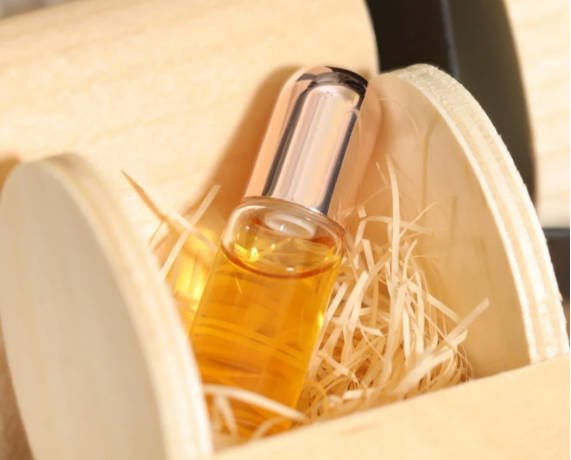
Parfum d’Agarwood 2026 : sourcer et évaluer un vrai oud
Le parfum d’agarwood — la famille de fragrances bâties sur le oud, l’oudh attar et l’huile d’agarwood — est l’une des catégories qui progressent le plus vite, en parfumerie de niche occidentale comme dans le commerce d’attar du Golfe. Mais voici le secret que le secteur imprime rarement : la grande majorité des flacons étiquetés « oud » ne contiennent aucun agarwood réel, seulement des accords de oud synthétiques. Ce guide 2026, écrit du côté de l’approvisionnement en plantation, explique comment sourcer un vrai oud, lire une huile de qualité parfum, ce qu’elle coûte réellement, et la checklist que nous remettons aux marques avant leur première commande.

Rédigé par
Wang Jianyu
Founder & Chief Sourcing Officer, AgarwoodTown
15+ years hands-on experience grading plantation agarwood, sourcing directly from Dianbai and Maoming districts in Guangdong — the world's largest Aquilaria sinensis cultivation region. Wang has personally inspected thousands of CITES export shipments and holds plantation certification from China's National Forestry and Grassland Administration. He advises GCC, European and East Asian wholesale buyers on grade selection, CITES compliance and supply chain due diligence.
CITES Certifié
Dans cet Article
1. Why Agarwood Is a Perfumer’s Holy Grail
Agarwood oil occupies a position no other perfume material holds. Its odour is famously described in the reference literature as a combination of "oriental-woody" and "very soft fruity-floral" notes, with almost no natural analogue.[1] That is exactly why perfumers reach for it, and exactly why it cannot be swapped out.
A single high-grade oud oil carries sweet, balsamic, leathery, smoky, animalic and fruity facets at once. It functions as both a top-line character note and a deep fixative that holds an entire composition together.
The Agarwood Perfume Scent Profile That Sells the Bottle
In practical blending terms, agarwood perfume built on real oud has a signature that mass-market synthetics never quite reach. It evolves on skin for hours, shifting from a tangy, almost fermented opening into a warm, resinous, woody base.
That evolution is what perfume reviewers call "depth," and it is the single most common reason a customer pays luxury prices for an oud fragrance rather than a designer wood scent.
Why supply is the bottleneck, not demand
All Aquilaria species — the source trees for agarwood — have been listed under CITES Appendix II since 2004, which regulates every cross-border shipment of oud oil and wood.[2] Combined with the fact that a healthy tree produces nothing until it is wounded and infected, this makes genuine oud one of the costliest raw materials in all of perfumery. Demand is not the problem for a brand entering this category; reliable, documented supply is.
On our own Guangdong plantations, hydro-distillation yield from well-inoculated 5–7 year Aquilaria sinensis runs just 0.08–0.15% by weight — meaning it can take 600–1,000 kg of milled wood to produce a single kilogram of oil. That yield math is exactly why a plantation-direct source of pure agarwood essential oil changes the economics for a perfume brand.
2. Real Oud vs Synthetic “Oud” Accords
| Caractéristique | Real Agarwood Oil | Synthetic Oud Accord |
|---|---|---|
| Source | Distilled from resinous Aquilaria heartwood | Lab-made molecules (e.g. Oud Synthetic, Kephalis, Amber Xtreme) |
| Cost per kg | USD 28,000–480,000+ (grade-dependent) | USD 40–300 |
| Scent evolution | Shifts over hours; 70+ aromatic compounds | Mostly linear; a handful of molecules |
| Batch consistency | Varies by wood lot — needs GC-MS to standardise | Identical every batch |
| Marketing claim | Can legitimately state "natural / real oud" | Legally only "oud accord" or "inspired by oud" |
| Best use | Luxury, niche, attar, private-label hero SKU | Volume designer scents, budget lines |
The industry consensus is blunt: commercial Western spray fragrances from the biggest houses contain little or no actual oud, because real quality material costs far more than the entire retail price of the bottle it would go into.[3] This is not a scandal so much as basic math — and it is precisely the gap a challenger brand can exploit. If your competitors are all selling synthetic accords, a genuinely oud-rich SKU, honestly documented with a GC-MS report, becomes a defensible point of difference.
The catch is that you must be able to prove it. In our 15+ years supplying GCC and European buyers, the brands that win this category are the ones that can trace an oil back to the wood, the still and the lab data — which is why we release a GC-MS report with every oil order above 5 g.


3. Attar vs Alcohol: Two Ways to Build an Oud Fragrance
The two dominant ways to turn oud oil into a finished product call for different sourcing decisions.
Oudh Attar: the Alcohol-Free Tradition
Oudh attar is an alcohol-free build: pure oud oil, often married with sandalwood, rose, musk or saffron, then aged. It is the traditional format across the GCC and South Asia, sold by the tola (about 11.7 ml) and prized for its intensity and skin longevity.
Because there is nowhere for a weak oil to hide in an attar, attar buyers demand the highest perfume-grade material.
Alcohol Perfume: the Western Eau de Parfum
The alcohol perfume route dilutes oud oil into perfumer’s alcohol at a set concentration, giving the sprayable eau de parfum familiar to Western consumers. This format is more forgiving of a lighter oil and lets a brand stretch a small quantity of expensive material across a larger production run.
Most private-label programmes we supply start here, then add a limited attar line once the brand has an audience. For the underlying extraction science behind both, see our oud essential oil wholesale guide.
4. Perfume-Grade Oud Oil: Grades & 2026 Wholesale Prices
| Grade / Type | Extraction | Scent character | Indicative price (USD/g) |
|---|---|---|---|
| Supercritical CO₂ oud | CO₂ | Clean, bright, true-to-wood; ideal for niche EDP | from $28 |
| Hydro-distilled oud | Steam / hydro | Deep, smoky, animalic; classic attar profile | from $48 |
| Board-head "Guoxiang" grade | Traditional hydro | Rich resinous body, strong fixative | from $60 |
| Shell-grade "Guoxiang" | Traditional hydro | Highest complexity, top-tier attar & hero SKU | from $80 |
| Kynam (Qi-Nan) oil | CO₂ / hydro | Rare, sweet-cooling, collector-grade | on request |
Indicative 2026 wholesale ranges for plantation Aquilaria sinensis oil, factory-direct, before packaging. Prices are per gram and vary with resin grade, distillation method and order volume.
What the price actually buys
Unit price reflects oud content only — not bottles, dilution or branded packaging. A brand launching an oud line should budget separately for perfumer’s alcohol or attar carriers, glass, and design. For live per-gram quotes by grade, volume and distillation method, contact our wholesale team or browse the agarwood essential oil catalogue.
Processus étape par étape
5. How We Distill Perfume-Grade Oud

Grade & mill the wood
Resinous heartwood is sorted by grade, then ground to a coarse powder. Higher resin content going in means higher yield and a deeper scent coming out — sinking-grade feedstock is reserved for attar-tier oil.
Soak & ferment
The milled wood is submerged in water and left to soak for days to weeks. This controlled fermentation opens the wood structure and develops the animalic top notes prized in traditional hydro-distilled oud.
Hydro-distil at low heat
The mash is transferred to distillation kettles and steamed slowly. Low, patient heat protects the fragile sesquiterpenes; rushing this stage is the single most common way cheap oil loses its complexity.
Separate & age the oil
Oud oil floats on the condensed water and is drawn off, then rested. Aging rounds out the sharp opening. CO₂ extraction runs a different, solvent-free path that yields a cleaner, brighter oil favoured by modern niche perfumers.
GC-MS verify & document
A sample from each batch goes to GC-MS analysis to confirm the compound profile and screen for adulteration. Every export ships with CITES Appendix II documentation and a plantation-origin certificate.
6. The Raw Material Behind the Scent
A close-up look at how resin forms in agarwood, the raw material that determines whether a finished oud perfume smells thin and synthetic or deep and natural.
Everything about a finished oud fragrance is decided before distillation even begins — in the wood. Resin only forms when an Aquilaria tree is wounded and colonised by specific fungi, triggering the defensive oleoresins that carry the scent.[4] The higher the resin concentration in the feedstock, the richer and longer-lived the oil. This is why serious brands trace their supply all the way back to the plantation: a beautiful bottle cannot rescue oil distilled from thin, low-resin wood. Buyers evaluating raw material directly can start with our graded oud wood chips, the same feedstock that goes into our perfume-grade distillation runs.
7. Sourcing Checklist for Perfume Brands & Private Label
If you are building an agarwood perfume line — whether a single hero attar or a full private-label range — these are the seven checks we tell brands to run before committing to a supplier.
The Seven-Point Oud Sourcing Checklist
- Ask for a GC-MS report. A genuine oud oil supplier can produce one. If a sample arrives with no chemistry data and no offer to provide it, treat the "pure oud" claim as unverified.
- Confirm CITES documentation upfront. All Aquilaria oil is Appendix II. Your export permit should be included; you are responsible for the import permit in your market.
- Specify extraction method. CO₂ for clean niche EDP, hydro-distillation for classic animalic attar. They are not interchangeable — decide before you sample.
- Trace the wood grade. Perfume-grade oil should come from documented, higher-resin feedstock, not distillery floor sweepings.
- Sample at least three grades. Smell CO₂ against hydro against board-head on skin, over 6–12 hours, before you decide what your brand voice is.
- Separate oil cost from packaging cost. Quoted per-gram prices are oud content only; budget carriers, glass and design separately.
- Start with a trial lot. A credible plantation source can open a small trial quantity because the rest of that grade is already committed to other buyers.
Brands supplying the Gulf hospitality and luxury-gifting channels often pair an oud perfume line with premium bakhoor blends for a coherent scent portfolio. To discuss grades, volumes and private-label lead times for your programme, talk to our wholesale team — we ship factory-direct from Guangdong with full CITES export documentation on every order.
Questions Fréquentes
Agarwood perfume is any fragrance built on oud — the aromatic oil distilled from resinous agarwood (Aquilaria) heartwood. It comes in two main formats: alcohol-free oudh attar and alcohol-based eau de parfum. Genuine versions use real oud oil; most mass-market "oud" scents use synthetic oud accords instead.
Usually very little or none. Real perfume-grade oud oil can cost more than the entire retail price of a designer bottle, so most commercial spray fragrances use synthetic oud accords. Authentic oud is mainly found in traditional attars and niche houses that can document their sourcing.
Oud attar is an alcohol-free, oil-based concentrate — pure oud blended with materials like sandalwood or rose and sold by the tola. Oud perfume (eau de parfum) dilutes oud oil into perfumer’s alcohol to create a sprayable format. Attar is more intense and longer-lasting; alcohol perfume is easier to apply and stretch across production.
Plantation Aquilaria sinensis oil starts around USD 28/g for supercritical CO₂ extraction and USD 48/g for hydro-distilled, rising to USD 80/g+ for top shell-grade material and higher for Kynam. Prices reflect oud content only, before dilution, bottles or branded packaging.
Neither is universally better. Supercritical CO₂ oud is cleaner and brighter, ideal for modern niche eau de parfum. Hydro-distilled oud is deeper, smokier and more animalic, the classic profile for traditional attar. Choose based on the scent character your brand wants, and sample both on skin before deciding.
Ask for a GC-MS report, which maps the oil’s compound profile. Real oud evolves on skin over hours and carries dozens of aromatic compounds; synthetic accords smell mostly linear. A supplier who cannot provide chemistry data, CITES paperwork or plantation traceability should be treated as unverified.
Yes, with proper documentation. All Aquilaria oil is CITES Appendix II, so cross-border shipments need an export permit from the origin country and an import permit in the destination market. We provide the CITES export permit and origin certificate; the buyer obtains the import permit, which most major markets process routinely.
Yes. Most brands start with an alcohol-based eau de parfum using a lighter CO₂ oud to control cost, then add a limited attar line once they have an audience. We supply perfume-grade oud oil factory-direct with GC-MS data and CITES documentation, and can advise on grade selection for your target market.
Complex and evolving — the reference literature describes it as oriental-woody with soft fruity-floral facets, layered with sweet, balsamic, leathery, smoky and animalic notes. A high-grade oil shifts character over hours on skin, which is the "depth" that distinguishes real oud from a flat synthetic accord.
Kynam is the rarest, highest grade of agarwood, with an unusually sweet, cooling scent profile prized by collectors and top perfumers. Both wild and grafted-cultivar Kynam command collector-grade prices, and Kynam oil is typically quoted on request rather than at a fixed per-gram rate.
Références
- 1Fragrantica. Agarwood (Oud) — Fragrance Note Profile. Fragrantica Notes Database, 2024.Voir la source
- 2CITES Secretariat. Appendix II Listing — Aquilaria spp. and Gyrinops spp.. Convention on International Trade in Endangered Species, 2024.Voir la source
- 3Basenotes Community. Is There Any Scent on the Market With Real Agarwood in It?. Basenotes Fragrance Forum, 2023.Voir la source
- 4Tan C.S., Lim Y.W., Lim P.C., et al.. Agarwood — The Fragrant Molecules of a Wounded Tree. Molecules 24(21):4122, 2019.Voir la source
Toutes les références scientifiques sont fournies par souci de transparence. AgarwoodTown résume les études évaluées par les pairs à des fins éducatives uniquement.
Articles Similaires
Essential Oil
Oud Essential Oil 2026: 7 Proven Extraction & Wholesale Insights
12 min read
Sourcing Reference
Bakhoor Sourcing 2026: 7 Premium Standards GCC Luxury Brands Use to Evaluate Source Suppliers
14 min read
Collectibles
Oud Wood Logs & Slabs Wholesale 2026: Best Plantation for Carving, DIY & Collectors
13 min read
Demande de gros
Prêt à Commander en Gros?
MOQ dès 100g · Documentation CITES incluse · DHL & fret maritime mondial. Prix directs depuis notre usine de Guangdong.