Agarwood Price Per Kg 2026: Wild vs Cultivated Kynam & Oud Wood Guide
Understanding agarwood price per kg in 2026 starts with knowing which grade you're buying. Wild vs cultivated agarwood vs kynam — the per-kg gap is 50× depending on category. When evaluating wild vs cultivated agarwood for B2B sourcing, most agarwood buyers get burned once before they really understand what they are paying for. Suppliers blur the terminology on purpose (

Written by
Wang Jianyu
Founder & Chief Sourcing Officer, AgarwoodTown
15+ years hands-on experience grading plantation agarwood, sourcing directly from Dianbai and Maoming districts in Guangdong — the world's largest Aquilaria sinensis cultivation region. Wang has personally inspected thousands of CITES export shipments and holds plantation certification from China's National Forestry and Grassland Administration. He advises GCC, European and East Asian wholesale buyers on grade selection, CITES compliance and supply chain due diligence.
CITES Certified
In this article
1. Wild vs. Cultivated Agarwood: Why the Price Gap Reaches 50×
The price gap between wild and cultivated agarwood is not a marketing premium. It is biology, time, and supply scarcity working together. Both originate from Aquilaria trees, but the trigger for resin production is entirely different in the wild vs cultivated agarwood comparison, and that difference compounds over decades.
How Wild Agarwood Forms, and Why It Is Scarce
A wild Aquilaria tree only produces agarwood resin when it sustains severe physical trauma. Lightning strikes, deep insect infestation, storm-broken branches, animal damage. The tree responds by secreting dark, aromatic resin to seal the wound site.
There is no timetable to any of this. Resin maturation in a wild piece can run anywhere from 10 to over 100 years depending on wound severity, soil conditions, climate, and species. Yields per tree are unpredictable. In practice, the share of any felled wild Aquilaria that actually contains genuine sinking-grade resin can be as low as 3–5% of total wood volume.
That scarcity, plus the CITES Appendix II trade controls in force on all Aquilaria species since 2004, pushes the oud wood price for authenticated wild material to $800–$15,000+ per kg at wholesale depending on resin grade and origin. Vietnamese or Borneo sinking-grade now regularly clears $5,000/kg in verified private trades.
How Cultivated Agarwood Works
Plantation cultivation removes the randomness. Workers trigger the same tree defense mechanism deliberately, most commonly by drilling wound channels or injecting fungal solutions into healthy Aquilaria sinensis trunks.[2] The tree reacts as it would to natural injury, secreting resin around the induced wound site over 2–7 years. Managed cultivation means predictable resin distribution, consistent chip sizes, and harvest timelines you can actually plan around.
Cultivated material trades at $30–$400/kg depending on resin grade and inoculation method.[1] That 10–50× price reduction is the core economics behind the wild vs cultivated agarwood debate, and the reason plantation sourcing has become the working reality for most B2B buyers today. For a full breakdown of plantation techniques and supply chain economics, see our guide to Cultivated Agarwood.
Formation Paths: Wild vs. Cultivated
Wild Path: Healthy Aquilaria tree → Random natural trauma (storm, insects, lightning) → Decades of unmanaged resin maturation → Unpredictable yield, $800–$15,000+/kg
Cultivated Path: Plantation Aquilaria sinensis → Controlled fungi injection or physical drilling → 2–7 years managed resin growth → Consistent yield, $30–$400/kg
The 4 Classic Types of Wild Agarwood Formation
Within the wild category, Chinese traders and collectors use four formation types to classify raw material based on how resin accumulated in the tree. These distinctions are not just academic. Each type carries its own scent profile, visual fingerprint, and price tier at wholesale. Knowing them is the baseline for evaluating any raw wild piece on inspection.
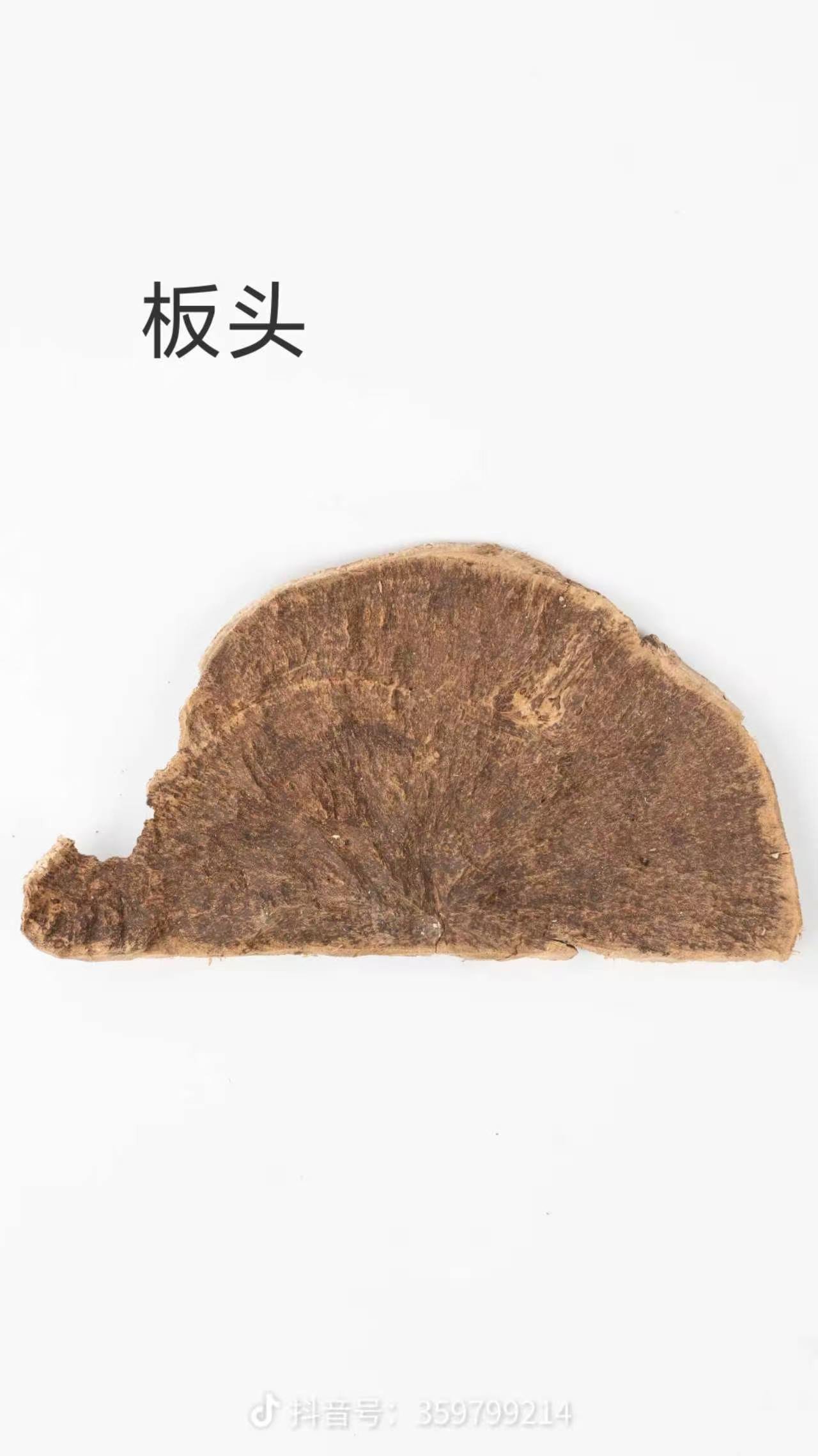
板头 Bǎn Tóu
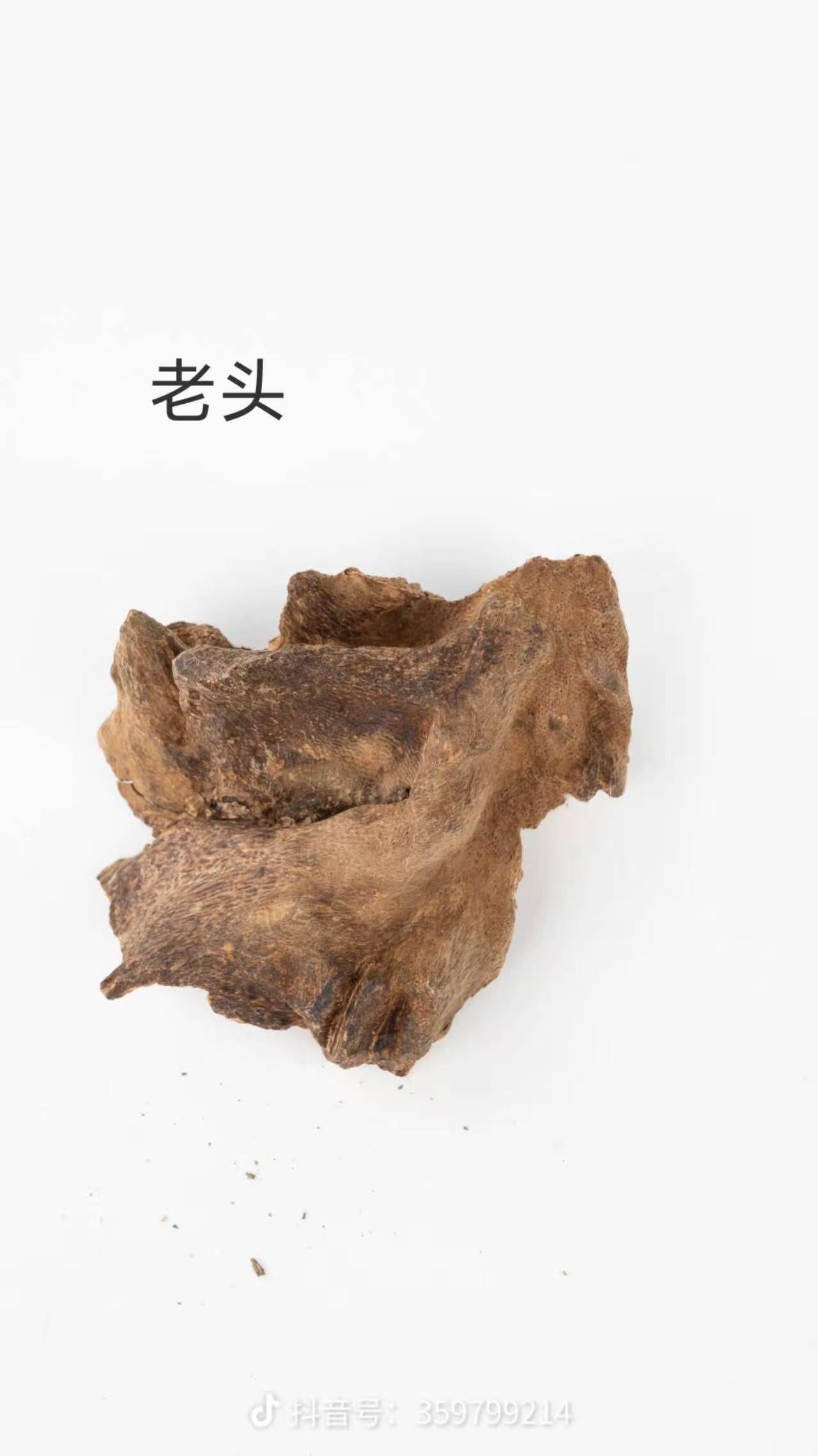
老头 Lǎo Tóu
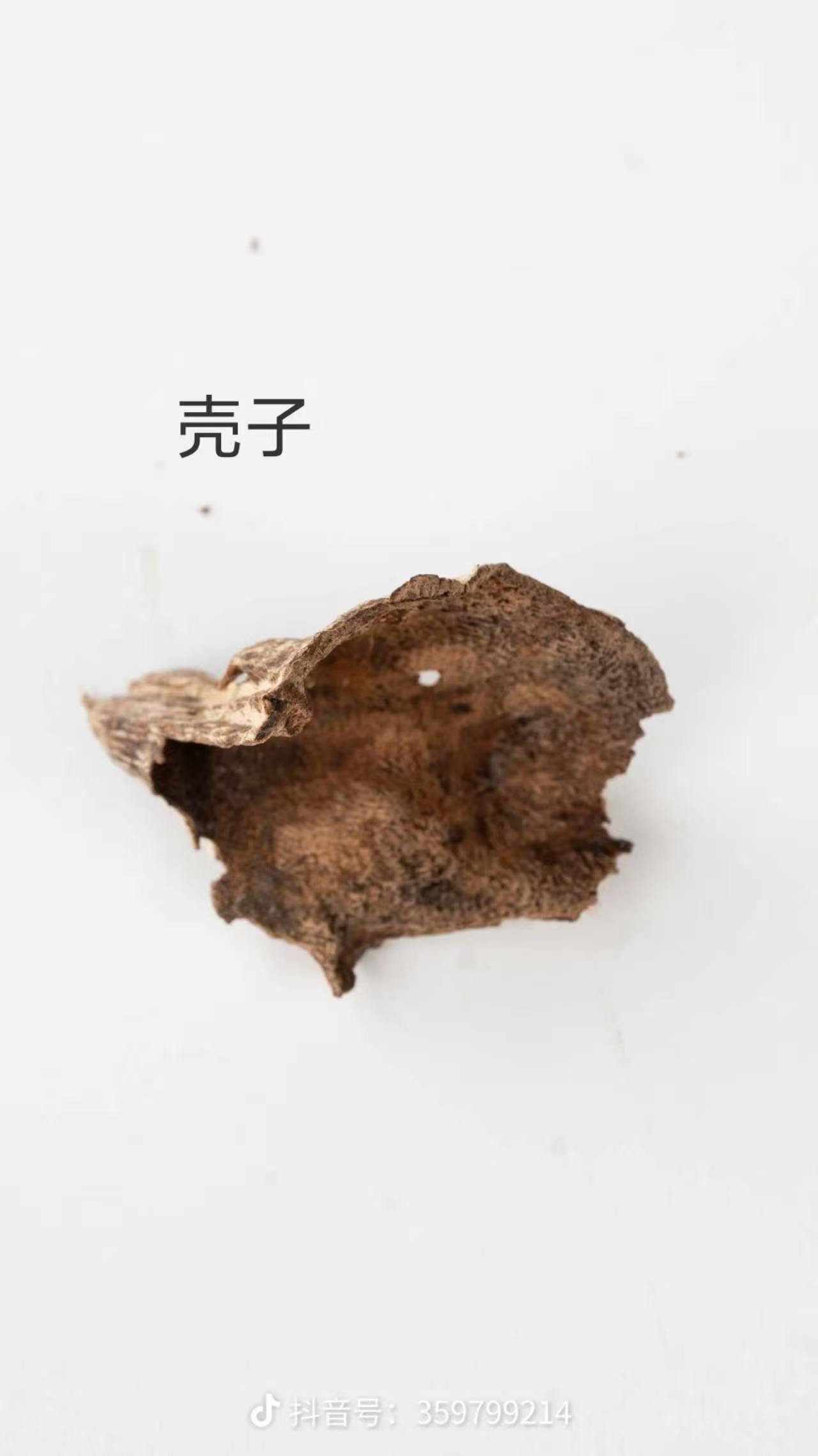
壳子 Ké Zi
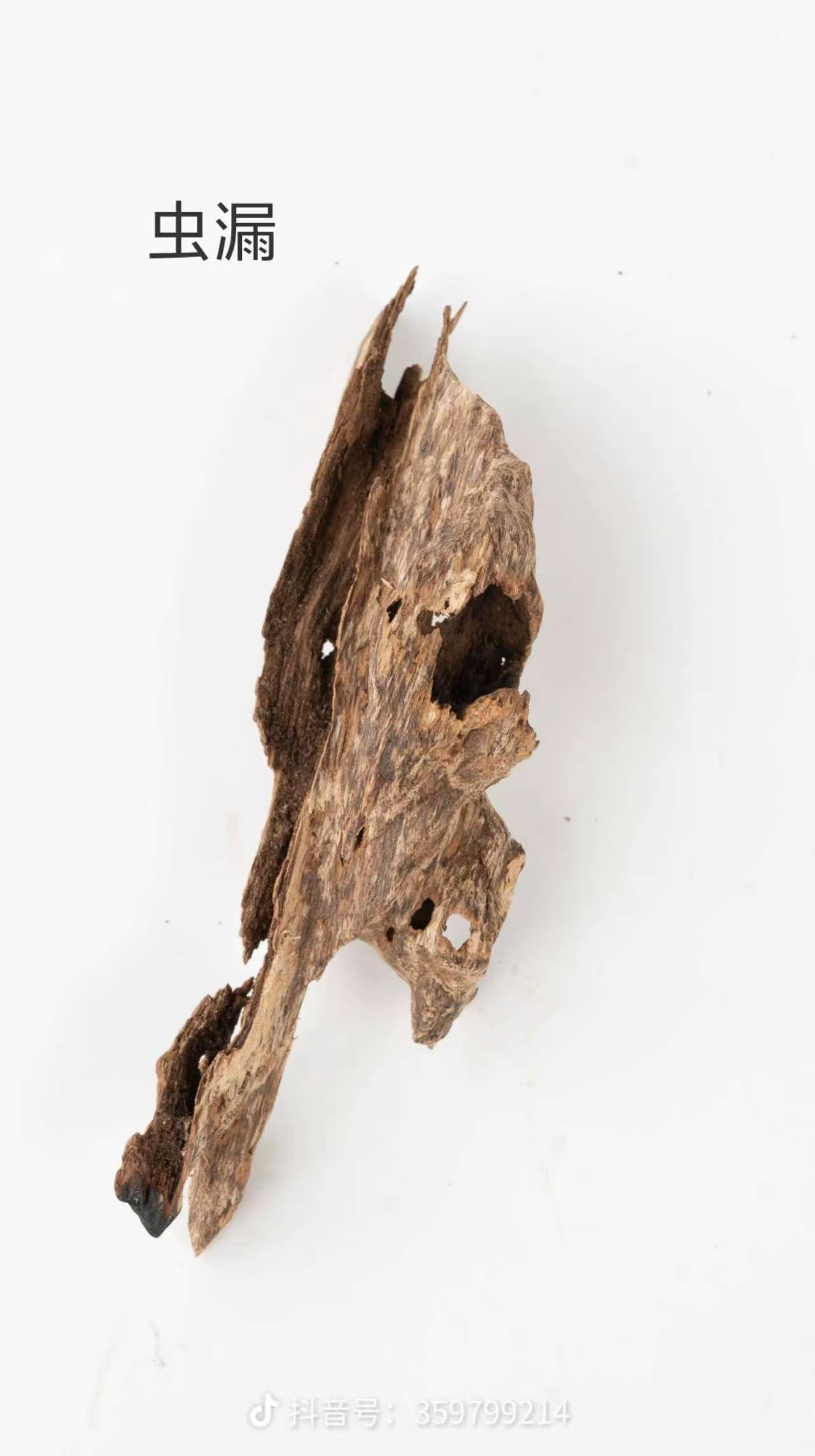
虫漏 Chóng Lòu
生结 (Shēng Jié). Living Knot
This is wild agarwood harvested from a living tree that sustained a wound and was cut before the resin could fully mature. The scent is relatively direct: camphor-forward with a light acidic brightness on the top note. Resin layers are thin and close to the wound surface. In trade terms, it is the most accessible wild type, and (in our experience) the most frequently misrepresented as a higher-grade formation. On physical inspection, the wood grain around the resin is still visibly healthy rather than darkened by long-term decomposition.
熟结 (Shú Jié), Mature Knot
When an Aquilaria tree dies naturally and the fallen wood spends decades decomposing in humid forest soil, the resin undergoes slow anaerobic transformation. The aromatic result is a qualitatively different material: the top-note brightness of living-knot drops away, replaced by a mellow, layered character that builds over a burn. Kōdō practitioners and Gulf bakhoor masters both distinguish this profile specifically. Authenticated sinking-grade 熟结 pieces from Vietnam or Southeast Asia trade at $5,000–$12,000/kg in 2026 private market transactions. Genuine pieces are increasingly difficult to source at any volume.
脱落结 (Tuō Luò Jié) — Break-Point Knot
Forms at the exact site where a branch fractures, from typhoon winds, natural aging, or structural failure. The tree floods the fracture zone with resin as a stress response, concentrating aromatic compounds in an unusually dense band at the break point. The scent profile leans sweet and clean, less camphor than living-knot, without the fermented depth of mature-knot. The morphology of the base fracture is one of the cleaner visual authentication markers: natural fractures are organic and irregular, and the resin pattern follows the wood grain outward from the break in a way that cannot be convincingly replicated by carving.
虫漏 (Chóng Lòu). Insect Bore
Wood-boring insects drill irregular channels through the heartwood. The tree responds by flooding those channels with dense resin, which mixes with insect secretions and hardens within the tunnels over years. The visual result is unmistakable: a porous, sculptural piece with jet-black resin filling honeycomb cavities through the interior. Insect-bore agarwood delivers an earthy, complex, persistently long base note — the profile that high-end bakhoor blenders in Dubai and Riyadh specifically request for room-filling incense formulations. Genuine 虫漏 pieces are among the easiest wild types to authenticate on physical inspection, since the internal channel geometry cannot be faked without destroying the piece.
Aquilaria malaccensis vs sinensis vs crassna
Three Aquilaria species dominate the global oud trade. Aquilaria malaccensis from Assam, Borneo and the Malay Peninsula is the historical reference for premium wild oud — warm, sweet-resinous, and the species most often cited in CITES Appendix II discussions. Aquilaria crassna from Vietnam, Laos and Cambodia is prized for its spicy-floral top notes and is the source of most Hindi-style oud oil at $1,500–$8,000/kg wholesale. Aquilaria sinensis, native to Guangdong and Hainan, anchors the cultivated supply chain — cleaner camphor-forward profile, predictable resin yield, and plantation pricing of $30–$400/kg.
A close-up look at the four wild agarwood raw material classifications used in Chinese trade grading — slab head (板头 bǎn tóu), old root crown (老头 lǎo tóu), shell form (壳子 ké zi), and insect bore (虫漏 chóng lòu). Each type has a different resin distribution pattern, aromatic character, and 2026 wholesale price tier. Understanding the visual differences between these formations is the foundation of accurate raw material evaluation before any water test or GC-MS analysis.
2. Standard Cultivated Agarwood vs. Cultivated Kynam: Not the Same Product
Both categories grow on managed plantations, but standard cultivated agarwood and Cultivated Kynam serve different markets, use different biology, and trade at very different prices. Buyers who treat them as interchangeable usually discover the margin gap after the first production run lands.
What Kynam Actually Means at the Botanical Level
Kynam (also written Kinam or 奇楠) is a specific phenotype of Aquilaria. The trees are genetically predisposed to produce soft, highly aromatic resin with an unusually concentrated sesquiterpene and chromone compound profile. The key word there is "predisposed". You cannot produce true Kynam chemistry by inoculating a standard plantation tree with a special technique. The genetics have to be there from the start.
Responsible Kynam cultivation starts with grafting: taking branches from verified high-resin Kynam mother trees and budding them onto standard Aquilaria sinensis rootstock. The resulting tree inherits the Kynam aromatic phenotype while benefiting from the established root system.
Any supplier offering "Kynam" material from non-grafted plantation stock is selling you the inoculation method, not the wood.
Why the Physical Drilling Method Produces Different Resin
Standard cultivated agarwood uses liquid fungal injection. It is relatively fast and labour-efficient, and it generates resin bands near the wound surface. The output is real agarwood, genuinely aromatic and commercially useful for distillation and incense, but the resin penetration stays shallow and the oil content per gram is moderate.
Cultivated Kynam production in Guangdong uses a different approach entirely. Workers drill calibrated wound channels deep into the grafted heartwood using precision electric drills, then manage those holes (clearing debris, re-opening channels) over a 3–5 year cycle.
The tree has to defend a far larger volume of damaged internal tissue, and the resin it generates in response is proportionally denser, softer in texture, and markedly higher in aromatic oil content. That elevated oil content is what pushes Kynam beads to $400–$3,500/kg wholesale, and makes the aroma still detectable on the wrist 8–12 hours after wearing.
The finishing step matters as much as the resin. Kynam has to be hand-carved and hand-polished throughout. Machine processing generates heat at the cutting surface that degrades the volatile aromatic compounds in the resin, and there is no practical workaround. Legitimate Kynam processors use manual tools for every finishing step, which is also why per-piece labour costs are meaningful and bead prices reflect it.
Cultivation Method at a Glance
Standard Cultivated Agarwood: Any Aquilaria tree → Surface fungi injection → 2–5 years → Thin surface resin bands → Incense chips / distillation oil, $30–$400/kg wholesale
Cultivated Kynam (Drilling Method): Grafted high-resin phenotype → Precision physical drilling into heartwood → 3–5 years managed hole cycles → Dense core resin → Hand-carved beads / pendants — $400–$3,500/kg wholesale


3. Core Differences: Composition, Products, and Commercial Applications
| Feature | Wild Agarwood | Cultivated Agarwood | Cultivated Kynam |
|---|---|---|---|
| 2026 Wholesale Price (per kg) | $800–$15,000+ | $30–$400 | $400–$3,500 |
| Chemical Focus | Diverse chromones + sesquiterpenes | Standard sesquiterpenes | Concentrated sesquiterpenes, high chromone fraction |
| Resin Texture | Hard, dense, unpredictable distribution | Hard, surface-layer bands | Soft, sticky, oil-saturated core |
| Primary Processing | Minimal — preserve natural form | Mechanical chipping or distillation grinding | Strictly hand-carved and hand-polished |
| Best Product Forms | Raw collector pieces, kōdō grade | Essential oils, bakhoor chips, incense | Beads, pendants, high-end bakhoor |
| Commercial Sweet Spot | Heritage collectors, auction market | Fragrance manufacturing, SPA, bakhoor wholesale | Metaphysical jewelry, spiritual e-commerce |
| CITES Requirement | Yes — Appendix II | Yes — Appendix II | Yes — Appendix II |
Price ranges reflect 2026 verified wholesale trades. Wild material prices are highly variable by origin, formation type, and resin grade. All Aquilaria species are <a href="https://cites.org/eng/app/appendices.php" target="_blank" rel="noopener noreferrer">CITES Appendix II</a> — require valid export documentation from your supplier on every shipment.
4. Resin Grading: The Water Test and What It Means for Price
The water submersion test (水试法 / shuǐ shì fǎ) is the single most commonly used quality check in the global agarwood trade. The logic is straightforward: agarwood resin is denser than water, so the resin-to-wood ratio of any piece determines whether it floats, suspends, or sinks.
That one variable drives the wholesale price per kilogram across every market, from Gulf bakhoor distributors to Japanese kōdō workshops to metaphysical jewelry suppliers.
The test is not foolproof on its own. Boiled or resin-coated material can pass the water test temporarily. But for evaluating genuine plantation or wild material from a known source, it is the fastest and most universal grading tool in the trade.
浮水 (Fú Shuǐ) — Floating Grade
The piece floats. Resin-to-wood ratio is low, the Chinese trade classifies this as 黄熟香 (yellow mature agarwood). Floating-grade is commercially useful for entry-level bakhoor blends, aromatherapy incense chips, and spa product formulations. It is the most abundant output from younger plantation harvests (2–4 years post-inoculation) and trades at the lowest wholesale price. Typical plantation floating-grade: $30–$80/kg in 2026 depending on species and origin.
栈香 / 浮沉 (Zhàn Xiāng). Semi-Sinking Grade
The piece suspends mid-column — neither rising nor sinking. Chinese traders subdivide this further as 八分沉 (80% sinking tendency) and 九分沉 (90% sinking tendency). Semi-sinking is the standard grade for premium bakhoor chips and mid-range incense. Most plantation material at 4–7 years post-inoculation falls within this range. It is the practical workhorse grade for volume B2B fragrance buyers. Typical price: $80–$250/kg from Chinese plantation suppliers on 50kg+ orders.
沉水香 (Chén Shuǐ Xiāng), Sinking Grade
The piece sinks to the bottom. Overall density exceeds water (≥1.0 g/cm³), meaning resin saturation is extremely high. Sinking-grade agarwood is the top commercial tier and commands a premium of 5–20× over floating grade from the same source. For B2B buyers supplying luxury bakhoor, collector incense, or high-grade metaphysical jewelry, sinking grade is the minimum specification that premium retail channels will accept. Typical price: $180–$400/kg for plantation sinking-grade; $800–$15,000+ for authenticated wild sinking-grade depending on formation type and origin.
At AgarwoodTown, all sinking-grade material goes through resin-density testing before export packaging. For 2026 sourcing specifications and per-grade pricing tiers, see our Cultivated Agarwood supply chain guide or request a grade-certified sample.
5. B2B Sourcing Strategy: Matching Agarwood Grade to Your Product Line
Kynam for Metaphysical Jewelry and Spiritual E-Commerce
The spiritual wellness market, meditation tools, chakra jewelry, metaphysical e-commerce — is one of the highest-margin channels for cultivated Kynam. Buyers in this segment pay for scent intensity and verifiable craftsmanship, not for volume.
A 108-bead Kynam mala that costs $180 at wholesale consistently retails at $600–$1,200 on specialist platforms, with customers explicitly requesting authenticity certification and natural material documentation.
The requirement that matters most here is manual production. Machine-processed beads underperform in this segment, the finish is inconsistent, heat damage from machine cutting is detectable by experienced buyers, and the aromatic profile degrades significantly within months. If your supplier cannot show you the hand-finishing workshop in operation, assume machine processing. See our Agarwood Bead & Bracelet wholesale collection for verified hand-crafted options.
Standard Cultivated for Fragrance Manufacturing and Bakhoor
For niche perfumery, bakhoor production, and wholesale incense manufacturing, standard cultivated agarwood is the practical choice at volume. Hydro-distillation yield from well-inoculated 5–7 year plantation material runs 0.08–0.15% by weight, low in absolute terms, but consistent enough to plan production batches month to month.
The sesquiterpene profile from Aquilaria sinensis is well-documented and predictable across harvests from the same managed source.
Volume fragrance buyers sourcing bakhoor chip blends should specify 栈香 (semi-sinking) grade as a minimum. Floating-grade material will produce a thin, short-lived aroma that underperforms in GCC hospitality retail contexts. Budget for $80–$250/kg on verified semi-sinking Chinese plantation chips at 50kg+ MOQ in 2026. For distillation, sinking-grade input reduces batch time and improves yield consistency — for a detailed breakdown of extraction methods see our oud essential oil wholesale guide.
6. How to Spot Fake Wild Agarwood: Four Fraud Methods and How to Detect Them
Misrepresentation is the dominant sourcing risk in the agarwood wholesale market. The margin between plantation material and "wild" material at the same visual grade can be 10–20×, which creates a predictable incentive for fraud. These are the four methods B2B buyers encounter most often in 2026:
- Drill Hole Concealment: Cultivated Kynam pieces have uniform, regularly-spaced drill holes from the physical inoculation process. Sellers fill these holes with a paste of wood dust and resin powder, then hand-carve the exterior surface to mimic the organic irregularity of wild material. Detection: examine visible cavities under magnification. Natural wild formation channels follow organic, non-uniform paths through the wood grain. Filled drill holes have a consistent circular cross-section with paste fill that differs in texture and density from the surrounding natural resin.
- Synthetic Oil Boiling: Standard cultivated pieces are submerged in dyed carrier oil, sometimes blended with synthetic agarwood fragrance compounds — to darken the colour and temporarily increase apparent density. The piece may pass the water test initially. Detection: request a sample and let it air for 30 days in ambient conditions. Genuine high-resin material does not lose density during normal storage. False density from oil boiling dissipates within 4–8 weeks of air exposure.
- Origin Mislabelling: Vietnamese, Cambodian, and Borneo wild agarwood commands a significant premium over Chinese plantation material of the same visual grade. Chinese cultivated material is sometimes documented as wild-origin from Southeast Asia. Detection: request full CITES export documentation and cross-reference the species against the claimed origin. Aquilaria sinensis is the dominant Chinese plantation species, if CITES paperwork lists A. crassna or A. malaccensis for a "wild" piece sourced through a Chinese trader, request provenance verification directly from the issuing authority.
- Surface Resin Coating: Wood with low natural resin content is surface-coated with dissolved resin or synthetic oud compounds to fake the visual appearance of high-grade material. Detection: request that a thin cross-section be cut from the piece. Natural resin penetrates throughout the wood grain structure from the wound point outward. Surface coating shows as a distinct outer layer with a sharp boundary that does not follow the grain pattern into the interior.
Legitimate suppliers document the full chain from grafting records through to GC-MS lab reports on finished oil. If a supplier declines to provide process documentation or lab reports, treat that as a disqualifying signal, not a negotiating point.
For external reference, see Wikipedia: Agarwood for the underlying species and historical context.
For trade-policy reference, see CITES Appendix II — Aquilaria spp..
Frequently Asked Questions
Oud wood price per kg in 2026 varies significantly by category. Wild agarwood runs $800–$15,000+ per kg depending on formation type, resin grade, and verified origin — authenticated wild sinking-grade from Vietnam or Borneo regularly exceeds $5,000/kg in private wholesale trades. Standard cultivated plantation material trades at $30–$400/kg depending on inoculation method and resin density grade. Cultivated Kynam, produced via the physical drilling method from grafted trees, trades at $400–$3,500/kg wholesale. The water submersion test (floating / semi-sinking / sinking) is the primary variable that determines where within each range a given lot falls.
Three things really drive Kinam oud price variation: genetics, method, and finishing. Authentic Cultivated Kynam requires grafted trees sourced from verified high-resin mother stock. Suppliers using standard plantation trees and calling the product "Kynam" are selling the technique, not the biology. Physical drilling for resin induction is more labour-intensive and slower than fungal injection, and the 3–5 year managed cycle adds real production cost on top. Real Kynam also has to be hand-finished throughout, since machine processing degrades the aromatic profile. Suppliers pricing Kynam at standard cultivated levels are almost certainly cutting at least one of these three steps.
Source directly from factories that document the full production chain: grafting records for the mother tree stock, drilling cycle logs with dates and spacing parameters, and GC-MS lab reports on finished oil or bead material. A factory with nothing to hide will show you all three without negotiation. Ask specifically whether the Kynam trees are grafted from certified mother stock and whether resin induction uses physical drilling or chemical accelerants. If the answer to the grafting question is vague, the product is likely standard cultivated material with Kynam marketing.
Kynam agarwood has a distinctly softer, sweeter, and more multidimensional scent profile than standard oud wood. Where regular cultivated oud tends to be linear — a consistent woody-resinous character throughout the burn — Kynam evolves perceptibly from cold presentation through the full heat cycle. The top note carries a subtle sweetness and floral lift that standard oud does not produce. Experienced buyers describe the cold-wood scent of high-grade Kynam as detectable on the palm without any heat application, which is the most reliable sensory test for oil content. Standard oud wood requires direct flame or electric heating to release most of its aromatic character.
For practical purposes in metaphysical product lines, high-grade Cultivated Kynam is the commercially rational choice. The scent intensity and depth of quality Cultivated Kynam beads is indistinguishable from low-grade wild material in blind tests. Wild agarwood carries historical and ceremonial significance for established collectors, but the CITES documentation burden, supply inconsistency, and price volatility make it difficult to build a retail product line around. Certified Cultivated Kynam — produced from grafted trees with physical drilling and hand-finished — gives you consistent supply, verifiable provenance, and a retail margin that works.
No, and assuming it does is how buyers overpay. Price reflects resin density, species, origin reputation, piece size and market fashion all at once. A visually striking piece with moderate resin can out-price a plain but denser one. Judge resin by sinking behaviour and burn character first, then let price inform the negotiation rather than the grading.
Substantially, because there is no CITES or ISO standard for agarwood grades — every supplier runs an internal scale. One house's Grade A can sit closer to another's Grade B. This is why we publish burn times against our own grades and encourage buyers to test against the claim. Always compare on measured properties, never on letter grades across two suppliers.
In principle yes, under CITES Appendix II with the correct export and, for the EU, import permits. In practice the supply is small, poorly documented and heavily faked, and several member states scrutinise wild-origin claims closely. For commercial lines the paperwork risk usually outweighs the fragrance premium, which is why most volume has moved to plantation material.
References
- 1CITES Secretariat. Appendix II Listing — Aquilaria spp. and Gyrinops spp.. Convention on International Trade in Endangered Species of Wild Fauna and Flora, 2004.View source
- 2Wang S., Yu Z., Wang C., Wu C., Guo P., Li J.. Chemical Constituents and Pharmacological Activity of Agarwood and Aquilaria Plants. Molecules (NCBI / PMC6017114), 2018.View source
- 3Liu Y., Chen H., Yang Y., Zhang Z., Wei J., Meng H., Chen W., Feng J., Gan B., Chen X., Gao Z., Huang J., Chen B., Chen H.. Whole-tree Agarwood-Inducing Technique: An Efficient Novel Technique for Producing High-Quality Agarwood in Cultivated Aquilaria sinensis Trees. Molecules, 2013.View source
All scientific references are provided for transparency. AgarwoodTown summarises peer-reviewed findings for educational purposes and does not claim to provide medical or regulatory advice.
Wholesale Catalog
Buy the products discussed in this article


Related Articles
Education
Agarwood Tree 2026: 7 Proven Cultivated Kynam & Plantation Oud Insights
12 min read
Bracelets
Agarwood Bracelet Wholesale (2026): Wild vs Cultivated Agarwood Price
14 min read
Sourcing Reference
Bakhoor Sourcing 2026: 7 Premium Standards GCC Luxury Brands Use to Evaluate Source Suppliers
14 min read
Source Direct from Origin
Discuss Your Requirements with Our Team
We respond within 24 hours. Share your target grade, quantity and destination — we'll send current pricing, a sample pack option, and CITES documentation details.