Agarwood Tree 2026: 7 Proven Cultivated Kynam & Plantation Oud Insights
The agarwood tree (Aquilaria sinensis) is the source of all premium oud. Cultivated agarwood now supplies the majority of commercial oud sold worldwide. Wild Aquilaria stocks have collapsed, and serious GCC bakhoor wholesalers, distillers and luxury fragrance houses can no longer build their volume on harvest left to chance. This guide walks through how AgarwoodTown grows, induces and processes plantation oud in Guangdong — the side of the trade buyers don't usually see, but the part that decides whether a kilo of chips actually delivers what the invoice claims.

Written by
Wang Jianyu
Founder & Chief Sourcing Officer, AgarwoodTown
15+ years hands-on experience grading plantation agarwood, sourcing directly from Dianbai and Maoming districts in Guangdong — the world's largest Aquilaria sinensis cultivation region. Wang has personally inspected thousands of CITES export shipments and holds plantation certification from China's National Forestry and Grassland Administration. He advises GCC, European and East Asian wholesale buyers on grade selection, CITES compliance and supply chain due diligence.
CITES Certified
In this article
1. The 2026 Market Shift: Wild vs. Cultivated Agarwood
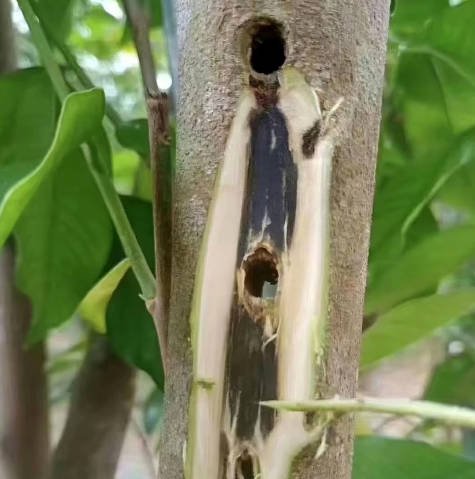
In an undisturbed forest, agarwood forms by accident: a lightning strike, an insect attack, a storm-snapped branch. The wound triggers a defence response, the tree produces resin, and over decades that resin oxidises into the dark fragrant heartwood the market calls oud. Fewer than 2% of wild Aquilaria trees ever do this in commercially useful quantity. That number used to be enough for a niche luxury trade. It is nowhere near enough for the volumes Dubai, Riyadh, Paris and Guangzhou move today.
Plantation production turns that accident into a process. Same wound, same resin response, same chemistry, but induced on a tree we planted, on a calendar we control. Cultivated agarwood is what the modern bakhoor and oud-oil trade actually runs on. Wild material has shrunk to a connoisseur segment sitting on top of a much larger plantation foundation.[1]

2. The Art of Plantation Oud: Grafting & Physical Resin Induction
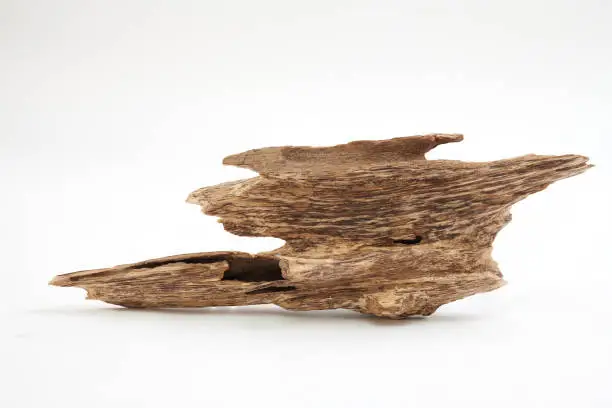
Plantation agarwood done well sits closer to viticulture than to commodity timber. Genetics, induction method and time-under-cure stack into the final smell, get any one wrong and you produce cheap chips no one wants to burn.
The genetics piece is grafting. Pencil-thick scion wood from a verified Kynam-line mother tree — one we already know yields dense, sweet, layered resin, is grafted onto a 1–2 year Aquilaria sinensis rootstock.[2] The graft carries the parent's enzymatic pathway, so the daughter tree responds to induction with the parent's profile, not the plantation average. Take rate runs 70–85% with experienced grafters; failed unions are culled before they ever leave the nursery.
The induction step is where most of the off-notes in the market come from. Cheaper operators inject growth-medium fungus or chemical accelerants and pull a "harvest" in 12–18 months. The wood comes out fast, but it smells sharp, sour, slightly chemical when burned. AgarwoodTown does not do this. We use physical electric drilling only: a 5–8 mm bit, 45° upward, 3–5 cm deep, no inputs added. The tree does the resin chemistry itself, the way it would around a lightning scar.
Then we wait. Resin needs 24–36 months in the trunk to deposit, oxidise and develop the layered notes a bakhoor or kōdō buyer will actually pay for. Pulling earlier means thinner resin and flatter fragrance. We refuse early harvest on principle, and the GC-MS panel on our chips backs it up, clean sesquiterpene and chromone signatures, no inoculant residues showing up where they shouldn't.
▶ Watch: physical resin induction on the plantation
Step-by-Step Process
Agarwood Grafting & Physical Resin Induction Process
Elite Scion Selection
Pencil-thick scion wood is harvested from verified high-resin mother trees — typically Kynam-line parents. The scion carries the parent's enzymatic pathway for high sesquiterpenoid production, setting the quality ceiling of every tree it is grafted onto.
Advanced Grafting Technique
The scion is whip-grafted onto a healthy 1–2 year Aquilaria sinensis rootstock under climate-controlled conditions. With proper technique our nurseries achieve a 70–85% take rate. Failed grafts are removed before transplant; only successful unions enter the plantation.
3–5 Years Maturation Phase
Grafted seedlings are transplanted at 3 × 3 m spacing. Trees grow into mature trunks (4–8 cm diameter) over the next 3–5 years, building enough sapwood mass to sustain the wound-induction phase that follows.
Precision Electric Drilling Induction
No chemical accelerants. A 5–8 mm electric drill creates wounds at a 45° upward angle, 3–5 cm deep, in a controlled spiral pattern. The wound profile mirrors what lightning or insect damage would do in the wild, so the tree responds the same way — defensive resin, no sour-smelling artificial inoculant in the mix.
24–36 Months Natural Resin Curing
The tree deposits oleoresin around each drill site over 2–3 years; the dark zone widens, density rises, and the fragrance gets layered. Pulling early — which is how 12-month plantation chips end up sour and one-dimensional — flattens the cure. AAA-grade output requires the full 30+ months in the trunk.
Selective Harvesting
Only trees showing adequate resin development are harvested at year 6–8. Each log is inspected for resin coverage and density before processing; under-developed trees are left in the ground for an additional cycle.

3. Scale & Standardization: High-Yield Processing Workflows
Volume buyers don't actually have a resin problem, they have a throughput problem. A plantation can grow ten tonnes of standing inventory and still fail you on a 200 kg monthly order if the processing line behind it can't keep up. This is the part of the trade most suppliers gloss over and most buyers underestimate until they see a delivery slip.
A freshly harvested agarwood log is roughly 70–80% bark and pale, scentless sapwood. The dark resin runs in lines, veins and pockets through the heartwood; getting it out without losing yield is hand work, not machine work. AgarwoodTown's facility in Guangdong runs three carving halls with several hundred trained artisans on rotation, each working with a small set of traditional knives — different blade profiles for different cuts, and following the resin lines by eye.
It's slow. A senior carver clears around 1.5–2 kg of finished wholesale agarwood chips from a 5 kg log on a good day. We've tried mechanising parts of it; a band-saw cuts straight, and a straight cut wastes resin. So the line stays manual. The trade-off is unit cost, but the upside is what reaches grading: high-resin chips with sapwood removed, ready for the float test and tier assignment.
▶ Watch: hand-carving inside the factory
Step-by-Step Process
Standardized Agarwood Processing Workflow
Raw Log Harvesting
Mature trees are felled selectively. Each log is tagged with plantation block, harvest date and CITES paperwork from the moment it leaves the field, so chain-of-custody is verifiable for every gram.
Bark & Sapwood Removal
The non-resinous outer bark and white sapwood are removed first — both by mechanical scoring and by hand. This exposes the dark resin-saturated heartwood that buyers actually pay for.
Precision Hand-Carving
Hundreds of trained artisans hand-carve each piece with traditional knives. They follow the resin lines, removing every trace of unsaturated fibre. This is the step that determines whether a kilogram is Grade B or Grade AAA — no machine can do it.
Density & Sinking Grading
Every chip is float/sink tested in fresh water and visually inspected for resin coverage. Sinkers (>1.0 g/cm³) are routed to AAA stock; near-sinkers to AA; floaters to A and B. A grading certificate is generated per batch.
Climate-Controlled Storage
Graded chips are stored in low-humidity, low-light conditions to lock in volatile aromatic molecules. Stock is rotated FIFO; no batch waits more than 90 days before shipment unless the client specifically requests aging.

4. Decoding Quality: How to Evaluate Wholesale Agarwood Chips
If you're buying agarwood by the kilo, the first question to settle with any supplier is: how do you grade? Get this wrong and you either overpay, or end up with chips your distillery can't use. There are two grading systems in serious commercial use, and they don't measure the same thing.
Standard Cultivated Grading: Sinking vs. Non-Sinking
For ordinary plantation agarwood the test is simple physics: drop a chip in fresh water. If resin density pushes it past 1.0 g/cm³ it sinks, that's Sinking Grade (AAA), the tier required for pure oud oil distillation and luxury bakhoor. Floaters and slow-floaters become A, AA, B, scaled by resin coverage and burn quality. Sinking matters because oil yield in distillation correlates with resin saturation; a non-sinker run gives you around 0.6% yield where a sinker run gives you 1.5%, and at $400/kg material cost that gap decides whether the batch is profitable.
The Kynam Evaluation Logic: Why the Standard Is Unique
Kynam (Qinan) doesn't fit the sinking/non-sinking grid, and grading it that way will mislead you. Its value sits in scent character — penetrating, cooling, slightly sweet at the back palate, and in a soft, almost waxy oil-rich structure. Plenty of authentic premium Kynam doesn't sink; the chromone-heavy profile vapourises so cleanly at low heat that density becomes beside the point. If a supplier prices Kynam by sinking grade alone, they either don't know it or are upselling something that isn't Kynam.
5. Core Product Matrix for the High-End Market
One harvest cycle, five product lines. Because we run our own plantation, our own carving halls and our own distillery, the same batch of trees can be allocated to chips, oil, bakhoor, incense or carving stock based on what the order book needs that quarter. The matrix below maps each line to source material, processing method and the buyer profile it actually serves.
AgarwoodTown High-End Product Matrix
| Product Category | Source Material | Processing Method | High-End Market Application |
|---|---|---|---|
| Wholesale Oud Wood Chips → | High-resin cultivated agarwood, Kynam wood | Precision hand-carved, white wood removed | Middle East wholesale, premium Bakhoor |
| Agarwood Essential Oil & Pure Oud Oil → | Selected high-oil dust and chips | Temperature-controlled hydro-distillation | Luxury fragrance formulations, agarwood perfume |
| Premium Bakhoor → | Agarwood base blended with pure oud oil | Traditional Arabic curing methods | High-end hospitality and daily home use |
| Agarwood Incense Sticks → | Pure agarwood powder, no binders or fillers | Cold pressure-moulding, no chemical adhesive | Zen, tea ceremonies, elite collectors |
| Agarwood Bracelets & Collectibles → | High-density solid core, sinking grade | Hand-turned and hand-polished by senior artisans | Luxury VIP gifting, high-net-worth investments |
Click any product link in the table to go to the dedicated sourcing page. All categories ship FOB Guangdong with CITES Appendix II documentation arranged by AgarwoodTown.
6. Securing Your Supply Chain: The Direct Factory Advantage
Most agarwood passing through international wholesale changes hands two or three times before it ships. Every layer adds a margin and a translation error: a Grade AAA spec leaves the plantation, becomes "sinking grade" at the trader, becomes "premium" at the broker, and the buyer's QC team has no idea what they're actually opening when the box lands.
Buying direct from the source removes that whole gap. AgarwoodTown grows the trees in Guangdong, runs the induction line, carves and grades the chips, and distils the oil under one roof, so the grade you specify on the PI is the grade that ships, with the GC-MS panel and CITES paperwork to back it up. For volume buyers planning forward contracts, that consistency is usually worth more than any per-kilo discount.
If you're sourcing a reliable oud oil supplier or a steady origin for wholesale agarwood chips, reach our factory team by WhatsApp or email for the 2026 wholesale catalog and sample protocol.
✅ Ready to Order? AgarwoodTown Shipping Terms
MOQ, Grade B / A chips from 1 kg; Grade AAA from 100 g; Kynam-grafted from 100 g; pure oud oil from 10 tola.
Lead time — 7–14 days for Grade B/A; 14–21 days for AAA and Kynam-grafted. CITES permit processing (15–30 business days) runs in parallel with order preparation, not in series.
Documentation included, CITES Appendix II export permit, plantation-origin certificate, grading certificate (density + resin % + fragrance assessment), phytosanitary certificate. GC-MS lab report available on request at no extra cost for orders ≥ 5 kg.
Payment, 30% deposit at PI, 70% balance against B/L copy. T/T, Letter of Credit or Alibaba Trade Assurance accepted.
Start a quote: share your grade, volume and end product via /contact. Typical reply within 4 business hours (GMT+8).
For external reference, see Wikipedia: Aquilaria sinensis for the underlying species and historical context.
For trade-policy reference, see ITTO Tropical Forest Update on Agarwood.
Frequently Asked Questions
For most commercial uses, yes — and a side-by-side blind smell test usually surprises people who have only heard the marketing line. The chemistry is shared between wild and plantation: sesquiterpenes and 2-(2-phenylethyl)chromones built around the same biosynthetic pathway. Where they diverge is depth of layering. Top-tier wild kyara has 60+ years of resin oxidation behind it, and a 6-year cultivated tree cannot match that bottom layer. But Kynam-grafted plantation material, driven by physical drilling and a long natural cure, covers 80–90% of the wild profile, which is enough for almost every commercial application short of kōdō ceremony.
Cool, dark and dry. Volatile aromatic molecules — the things that make the wood smell — escape fastest under heat, light and oxygen exchange, in that order. Use sealed glass or food-grade acrylic, never plastic bags (plasticisers migrate into the resin over time). Temperature below 25°C, humidity below 60%, and never near a window or a heat source. Stored that way, sinking-grade chips hold their fragrance for 5+ years; some collectors argue the smell actually deepens for the first two.
Single-origin material is half the answer. Every batch in our distillery comes from one plantation block, induced on the same drilling protocol, harvested within the same 30-day window. The other half is process control: temperature curves, soak time and condensate fractioning are logged per still and reproduced batch to batch. We also keep a reference sample from every commercial run for two years, so a customer reordering oil six months later can compare nose-to-nose against the previous shipment.
Trial orders open at 100 g for Grade AAA sinking chips and Kynam-grafted material, 1 kg for Grade A and B chips, 10 tola (about 37.5 ml) for pure oud oil. We can run smaller MOQs than most exporters because nothing in the chain is outsourced — when we open a 1 kg lot for one buyer, the next 99 kg of that same grade is going on someone else's PO the same week.
From PI to customs at destination, 21–30 days door-to-door for typical orders. Production runs 7–14 days for Grade B and A chips, 14–21 days for AAA and Kynam-grafted, 10–15 days for pure oud oil. CITES export permits add 15–30 business days but run in parallel with production, not after. For shipments to Dubai and Riyadh we use DHL Express; sea freight LCL is the default once an order crosses 50 kg.
Agarwood is used in four main commercial applications: incense (chips burned on charcoal or electric burners for Japanese kōdō, Arabic bakhoor and Buddhist meditation), oud oil (steam or hydro-distilled from chips for high-end perfumery and Hindi-style attars), prayer beads and carved jewelry (mala bracelets, pendants, statues), and traditional medicine (Chinese, Ayurvedic and Tibetan formulations for digestive and nervous-system support). Lower-grade material also goes into soap, candles, room sprays and aromatherapy products.
Aloeswood is simply another English name for agarwood — the resin-saturated heartwood of Aquilaria trees. The term shows up most often in older Western literature, in Bible translations referring to "aloes" as a fragrant wood, and in Japanese kōdō documentation translated through 19th-century channels. It is not related botanically to the aloe vera plant. In modern trade, "agarwood" and "oud" dominate; "aloeswood" mainly appears in historical, religious and luxury-incense contexts.
Traditional medicine systems credit agarwood with calming the nervous system, supporting digestion, easing joint discomfort and grounding the mind during meditation — uses documented in Chinese Materia Medica, Ayurveda and Tibetan tradition. Modern interest centres on its sesquiterpene and chromone compounds, which laboratory studies have linked to anti-anxiety, anti-inflammatory and antioxidant activity. Practical day-to-day benefits cited by buyers: better sleep when burned in the bedroom, improved focus during meditation, and a noticeable mood lift in stressful work environments.
Premium agarwood smells like nothing else in the natural world: a deep woody base with sweet honeyed top notes, animalic warmth in the heart, and a soft sandalwood-like dry-down that can last 8–12 hours on skin or in a room. Wild Hindi oud leans barnyard and leathery; Cambodian crassna is fruity and floral; cultivated Aquilaria sinensis tilts cleaner — camphor-forward with cedar and a touch of vanilla. The longer the resin matured in the tree, the more layered and "sticky-sweet" the smoke becomes.
References
- 1International Tropical Timber Organization (ITTO). Sustainable Management and Commercial Trade of Aquilaria. ITTO Technical Report, 2022.View source
- 2Convention on International Trade in Endangered Species (CITES). Export Regulations and Plantation Quotas for Agarwood (Appendix II). CITES Appendices, 2023.View source
All scientific references are provided for transparency. AgarwoodTown summarises peer-reviewed findings for educational purposes and does not claim to provide medical or regulatory advice.
Wholesale Catalog
Buy the products discussed in this article


Related Articles
Source Direct from Origin
Discuss Your Requirements with Our Team
We respond within 24 hours. Share your target grade, quantity and destination — we'll send current pricing, a sample pack option, and CITES documentation details.