Oud Wood Logs & Slabs Wholesale 2026: Best Plantation for Carving, DIY & Collectors
Oud wood logs and slabs are the raw material behind every premium agarwood product. Sourcing agarwood logs wholesale in 2026 is different from 15 years ago. Sourcing agarwood logs and agarwood slabs wholesale in 2026 looks nothing like it did fifteen years ago. A Grade B Aquilaria sinensis carving slab (50–200g) wholesales at USD 8–25 in Guangdong today; fifteen years ago, a comparable piece (if you could even find one through legitimate channels) was effectively off the market. Plantation cultivation didn

Written by
Wang Jianyu
Founder & Chief Sourcing Officer, AgarwoodTown
15+ years hands-on experience grading plantation agarwood, sourcing directly from Dianbai and Maoming districts in Guangdong — the world's largest Aquilaria sinensis cultivation region. Wang has personally inspected thousands of CITES export shipments and holds plantation certification from China's National Forestry and Grassland Administration. He advises GCC, European and East Asian wholesale buyers on grade selection, CITES compliance and supply chain due diligence.
CITES Certified
In this article
- The Collector Era: High Barriers, High Prices
- How Plantation Agarwood Changed Everything
- Wild vs Plantation: What Makers Actually Need
- What You Can Create with Agarwood
- Grades & Forms for Crafters: A Buyer's Reference
- Working Properties: How Agarwood Carves & Finishes
- Still a Collector's Material: The Investment Angle
- How to Source Plantation Agarwood Wholesale
- FAQ
The Collector Era: High Barriers, High Prices
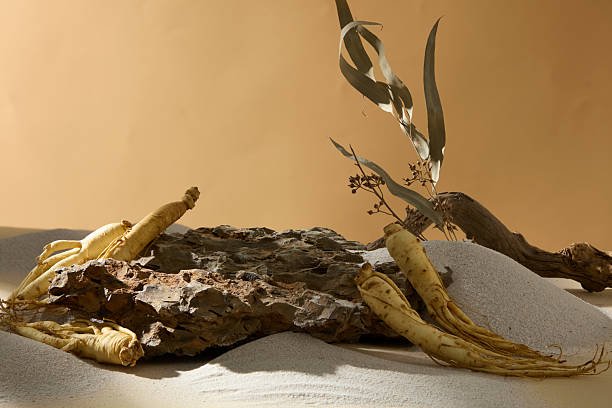
Before plantation agarwood reached commercial scale, roughly pre-2013 in most markets — the structure of the wild agarwood wood trade made it functionally unavailable to anyone outside a narrow collector network. Prices for meaningful wild specimens (Grade AAA, 500g+) ranged USD 2,000–15,000 in primary markets; sinking-grade material from old-growth Borneo or Cambodian trees reached USD 50,000–200,000/kg at specialist auctions.[1] These weren't retail premiums on a commodity. They reflected genuine scarcity: the pool of legally harvestable old-growth Aquilaria producing collector-grade wood had been contracting for decades, and CITES Appendix II listing added documentation requirements that most wild-origin supply couldn't satisfy.
Even buyers willing to pay those prices faced a verification problem. Wild agarwood has no standardised grading system. Provenance claims were seller-generated and largely unverifiable, the market was concentrated among established dealers in Hong Kong, Singapore, and Gulf trading centres, and entry required either deep existing relationships or a high tolerance for misrepresentation risk on high-value purchases. For carvers and woodworkers specifically, the situation was worse: logs suitable for agarwood carving (consistent density, manageable size, stable structure) were a small fraction of an already scarce market, and most material that did reach the trade went to chip and oil production rather than craft applications.[4]
The result was a material category that was widely discussed, highly desired in craft circles, and practically inaccessible to the people who would actually use it. Carvers wanting to work with genuine fragrant agarwood had no legitimate market to enter at any reasonable price.
How Plantation Agarwood Changed Everything
The shift began quietly in Guangdong province, China, where farmers had been cultivating Aquilaria sinensis since the 1990s. The three short videos below show what that transformation looks like on the ground today: an active plantation block, the actual scale of resin-loaded heartwood now reaching wholesale buyers, and the post-harvest log inventory that flows through Guangdong's grading and CITES export network.
As artificial inoculation techniques matured through the 2000s, including the landmark whole-tree agarwood-inducing technique (WTTI)[15] — and early harvests began coming to market in scale around 2012–2015, a new product category emerged: plantation-origin agarwood logs, slabs and chips with legitimate CITES documentation, consistent quality, and, critically, prices that reflected cultivated rather than wild-harvest economics.[26] Farmers in this region had been quietly cultivating Aquilaria sinensis since the 1990s,[188] but only with mature inoculation science did the supply chain become viable at commercial scale.
By 2026, Guangdong's Dianbai and Maoming districts alone produce tens of thousands of kilograms of legal plantation agarwood annually. The infrastructure that supports this production — nurseries, inoculant suppliers, grading facilities, export documentation services, has created a supply chain that simply did not exist 15 years ago. And for the first time in the history of this material, agarwood wood has a wholesale price accessible to makers. Learn more in our guide to what is cultivated agarwood.
What does "accessible" mean concretely? A plantation Grade B agarwood wood log section (500g–1kg, genuine fragrant material with 20–35% resin coverage) now wholesales at USD 35–120 per piece FOB Guangzhou. A carving-grade slab of 200–400g, enough for a medium pendant, a small figurine, or an incense holder — retails at USD 15–60 in the Chinese domestic market. These are the prices of a quality hardwood specialty material, not a luxury collectible. They are prices a working craftsperson can budget for.
The fragrance quality of plantation agarwood is chemically identical to wild material of the same resin grade, gas chromatography studies confirm the same sesquiterpene and chromone compound profiles.[58] The wood works with familiar tools, and every piece comes with CITES documentation that makes cross-border import straightforward in EU, US and UAE markets.
Wild vs Plantation Agarwood: What Makers Actually Need


| Feature | Wild / Collector Grade | Plantation Grade (AgarwoodTown) |
|---|---|---|
| Entry price (carving-grade piece) | USD 500–5,000+ per piece | USD 15–120 per piece |
| Fragrance quality | Superior for aged wild material | Identical chemistry; same sesquiterpenes & chromones |
| CITES documentation | Often unavailable or disputed | Full CITES Appendix II permits included |
| Supply consistency | Unpredictable; each piece unique and unrepeatable | Consistent grade batches; reorder possible |
| Suitability for agarwood carving | Density can be extreme; difficult to work | Grade B–A is workable with standard tools |
| Legal import (EU/US/UAE) | Risky without full documentation chain | Straightforward with supplied CITES permits |
| MOQ | Typically single high-value pieces only | From 100g; carving packs available |
What You Can Create with Agarwood: A Maker's Imagination
Plantation agarwood has opened up a working territory that used to be closed to most makers. The wood has an unusual combination of properties for a craft material: hard enough to take fine detail, fragrant without any treatment, dramatic in cross-section, and (once finished) able to produce pieces that look as good as they smell. Here is what people are actually making with it.
🪬 Pendants & Wearable Jewelry
Small agarwood slabs (20–50g) yield pendants, earrings and amulets that warm against the skin and release fragrance throughout the day. This is one of the fastest-growing segments of the Chinese handcraft market. Plantation Grade A material produces pendants with visible resin patterns, no two pieces identical — that sell at 10–30× their material cost in finished form. Tools needed: scroll saw, rotary tool (Dremel), sandpaper through 2000-grit, finishing oil.
🪔 Incense Holders & Burning Vessels
A hand-carved incense holder in agarwood is itself fragrant before a single incense stick is lit. The wood's natural oils and resin create ambient scent that is gently released by the warmth of a burning stick nearby. Functional incense holders are an ideal first project for agarwood carving, the irregular resin patterns mean minor carving imperfections are hidden in the natural texture. Grade B chips and offcuts work well for this application.
🗿 Small Figurines & Sculptures
The Chinese craft tradition of carved agarwood figurines (Guanyin, Buddhist deities, zodiac animals) is centuries old, but always in wild material. Plantation agarwood now makes this tradition accessible at every skill level. Grade A material with good resin pattern is ideal: the dark resin zones create natural shading that accentuates carved features without any staining. Figures 5–15cm tall (50–200g material) are the most popular format.
🍵 Tea Ceremony & Tableware Accessories
Tea trays, tea pet bases, brush rests, and incense ceremony accessories in agarwood are experiencing growing demand from Japanese and Chinese ceremonial craft buyers. The material's association with traditional ceremony culture makes these functional objects carry cultural weight beyond their material value.
🖼️ Wall Art & Interior Design Panels
Larger slabs (500g–2kg) with dramatic resin pattern work as wall art panels, framed specimens, or decorative inserts in furniture. Interior designers in China and the Gulf increasingly incorporate plantation agarwood slabs as statement elements — the natural pattern is more visually complex than any manufactured material could produce. A split-slab pair (two halves of the same log section, mirror image) is particularly effective as framed wall art.
🪵 Custom Furniture Inlays & Boxes
Agarwood chips and offcuts embedded in resin panels, or agarwood slabs used as drawer fronts or cabinet inlay, bring fragrance and visual drama to furniture. Japanese "kōdō" (incense appreciation) cabinet makers have used this approach for centuries; contemporary furniture designers are rediscovering it. The fragrance slowly diffuses from the wood through the furniture's interior, particularly effective in small enclosed spaces like jewellery boxes or display cabinets.
Plantation Agarwood for Makers: Grades, Forms & 2026 Wholesale Pricing
| Form | Grade | Resin Coverage | Best Application | Wholesale Price |
|---|---|---|---|---|
| Carving chips / offcuts (irregular) | Grade B | 20–35% | Incense holders, small objects, practice pieces | USD 18–35/kg |
| Carving slab (50–200g) | Grade B | 20–35% | Pendants, small figurines, first projects | USD 8–25/pc |
| Carving slab (50–200g) | Grade A | 35–55% | Fine pendants, detailed figurines, jewelry | USD 25–80/pc |
| Log section (200–500g) | Grade B | 20–35% | Incense holders, medium carvings, display | USD 35–80/pc |
| Log section (200–500g) | Grade A | 35–55% | Collector pieces, detailed sculptures | USD 80–250/pc |
| Split slab / display panel (500g–1.5kg) | Grade A | 40–60% | Wall art, interior feature pieces | USD 200–600/pc |
| Display log section (1–3kg) | Grade AAA | 60%+ | Collector specimens, exhibition pieces | USD 700–3,500/pc |
Prices FOB Guangzhou. All material includes CITES Appendix II documentation. Contact AgarwoodTown for current inventory; stock varies by season.
Step-by-Step Process
Working Properties: How Agarwood Carves and Finishes

Assess Your Material Grade
Agarwood hardness varies dramatically with resin content — not species. Grade B (20–35% resin): density similar to mahogany, workable with standard carving tools. Grade A (35–55% resin): denser, requires sharper tools and lighter passes. Grade AAA: approaches ironwood in the darkest resin zones — power tools for rough shaping, hand tools for detail only. Knowing your grade before you cut prevents broken tools and wasted material.
Prepare Your Workspace
Set up dust extraction before starting — fine wood dust is a respiratory irritant at high concentrations. Wear a dust mask regardless of grade. Note: cutting and sanding agarwood releases a mild oud fragrance from the resin's volatile compounds via frictional heat. This is non-toxic at woodworking concentrations and considered one of the most enjoyable aspects of the craft. Work with the grain mapped — resin zones form visible dark ridges that can catch tools moving against the grain.
Rough Shaping
Use a scroll saw or bandsaw for initial cuts. Always choose carbide-tipped blades over standard HSS — agarwood's resin is mildly abrasive and blunts tool edges faster than uniform hardwoods. For log slabbing, a quality handsaw is sufficient. Take lighter passes than you would with mahogany or cherry; irregular resin pockets create sudden density changes that can cause tool catch or tear-out on aggressive cuts.
Detail Carving
Grade B material: standard wood carving gouges and chisels (Pfeil, Two Cherries) work well. Grade A and above: switch to micro-tools with higher-hardness steel (Flexcut Gold or Pfeil 12% chrome-vanadium). Best all-round tool for agarwood at any grade: a rotary tool (Dremel) with carbide burrs — they handle variable density without catching and give fine control over the resin-zone transitions that define the aesthetic quality of the finished piece.
Sanding — Grit Progression
Work through 80 → 120 → 240 → 400 → 800 → 1500 → 2000 grit for pendants and jewelry. Do not skip grits — the resin zones are harder than the wood matrix and require each step to level before the next. At 2000 grit, resin zones polish to a near-mirror finish; lighter wood zones remain slightly matte. This natural contrast — dark glossy resin against lighter satin wood — is the defining visual characteristic of finished agarwood pieces and requires no enhancement.
Finishing — Oil Only, No Lacquer
Agarwood requires no synthetic finish — the natural resin content is self-sealing. For jewelry and pendants: apply a single light coat of jojoba or camellia oil with a soft cloth. This deepens resin colour, slows surface moisture exchange, and maintains the fragrance pathway. Never use synthetic lacquers, polyurethane, or shellac — they form a film that blocks fragrance release and create a visually incongruous glossy surface foreign to the material's character. The oil finish is permanent; buff lightly every 6–12 months.
Still a Collector's Material: The Investment Angle for Finished Pieces
Even as plantation agarwood makes craft accessible, the collector and investment market for significant specimens has not disappeared, it has stratified. The result is a healthy market across the entire quality spectrum:
- Grade B for makers: Entry-level plantation material (USD 18–80/piece) is appropriate for craft practice, first projects, and production jewelry. These pieces have genuine fragrance and visual interest; they are not "second-rate" — they are appropriate material for their application.
- Grade A for serious crafters and gift market: Mid-tier plantation material (USD 25–250/piece) produces finished pieces that command significant premiums in the handcraft market. A well-carved Grade A pendant (USD 40 material cost) sells for USD 150–400 in finished form in Chinese and Southeast Asian craft markets. The ROI on skilled agarwood carving is exceptional.
- Grade AAA display specimens: High-grade logs and slabs (USD 700–3,500/piece) remain serious collector territory. Their value lies in the intact dramatic resin pattern, not in the carving potential. These pieces appreciate over time: Grade AAA plantation specimens from 2018 in pristine condition are trading 40–80% above their original purchase price in the Chinese collector market in 2026.[182]
- The collector future: As plantation agarwood supply matures and buyers become more sophisticated about provenance and documentation, well-documented plantation specimens are gaining acceptance in collector circles that previously only valued wild material. The distinction between "plantation" and "wild" matters less than grade, pattern quality, and documentation, and plantation material wins on all counts for legal certainty and consistent supply. See our agarwood seedlings wholesale guide for cultivar selection and long-term plantation ROI analysis.
How to Source Plantation Agarwood from AgarwoodTown
AgarwoodTown supplies plantation Aquilaria sinensis logs, slabs, and chips for makers, crafters, and collectors from our Guangdong base. All material is CITES-documented and comes with species certification.
For makers and crafters: We offer carving starter packs (mixed Grade B slabs and offcuts, 500g minimum), carving-grade slab selections in Grade B and Grade A, and log sections for display and larger-scale work. Photos and resin coverage assessment provided for each piece above 200g.
For collectors and interior designers: Significant Grade A and AAA display specimens are available on a piece-by-piece basis from our curated inventory. Contact us to receive the current inventory gallery with photographs, dimensions, weight, and pricing for each available specimen.
MOQ: 100g for chip/offcut material; 1 piece for log sections. No minimum for serious collectors. Send your enquiry → | Browse Oud Wood Products →
For external reference, see Wikipedia: Aquilaria malaccensis for the underlying species and historical context.
For trade-policy reference, see CITES Appendix II — Aquilaria spp..
Frequently Asked Questions
Standard woodworking carving tools work for Grade B plantation agarwood. A scroll saw or bandsaw for initial shaping, carving gouges for detail work, and sandpaper through 2000-grit for finishing is all you need to start. For Grade A and AAA material, the resin zones are significantly harder — carbide-tipped rotary tools (Dremel with carbide burrs) handle the density variation better than conventional chisels. The key difference from other hardwoods is that you'll encounter hard resin pockets mid-cut; take lighter passes and use sharp tools throughout.
Plantation Grade A agarwood is genuinely fragrant — chemically identical to wild material of equivalent resin grade. When you sand or cut plantation Grade A material, a distinct, pleasant oud fragrance is released from the heat of friction. Finished pendants and jewelry pieces warm against the skin and release fragrance throughout the day. Grade B material has lighter fragrance (lower resin density) but is still noticeably aromatic. The myth that only wild agarwood smells is incorrect — gas chromatography studies confirm the same sesquiterpene and chromone compounds in plantation material.
For a standard pendant (3–5cm), you need 20–50g of raw material. For a small figurine (5–8cm), budget 80–200g. For a medium incense holder (10–15cm), 150–400g. We recommend ordering 30–50% more material than your target finished weight to account for cutting loss and practice pieces. For first-time agarwood carvers, a Grade B carving starter pack (500g mixed offcuts) is ideal — it provides multiple pieces of varying size and resin density to practice with before committing to better-grade material.
Agarwood has a more variable hardness than sandalwood or rosewood because the resin content creates dense zones within softer wood matrix. This variability is the main adjustment for carvers coming from other materials. The upside: the contrast between hard resin zones and lighter wood creates natural shading and pattern in the finished piece that no other material can replicate. Fragrance: sandalwood and rosewood are pleasant but much lighter than Grade A agarwood — agarwood is in a different class for olfactory impact. Price: Grade B plantation agarwood is now comparable to quality rosewood blanks for carving applications.
Yes — finished craft pieces made from documented plantation agarwood can be legally sold domestically in most countries. For international sales, the CITES regulations apply to the raw material (Aquilaria wood), not to finished craft pieces in most jurisdictions (check your specific country's implementation of CITES Appendix II non-detriment finding policy). AgarwoodTown provides a plantation origin certificate with all material purchases — retain this documentation with your finished inventory as evidence of legal material source. Consult your country's CITES management authority for specific guidance if selling internationally at commercial scale.
Somewhere stable and unheated, sealed against moving air. Agarwood is dimensionally stable compared with most carving woods, but the resin is volatile — a blank stored on a warm shelf for six months will carve identically and smell noticeably weaker. Keep blanks sealed until you are ready to work them, and cut only what a project needs.
Yes, and for most carving buyers it is worth specifying. Sapwood carries little resin, adds shipping weight and has to come off before you start anyway. We can supply blanks trimmed to the resinous heartwood, which raises the price per kilogram while usually lowering total cost, because you stop paying freight on material you were going to discard.
Expect roughly 30 to 50 percent of the log weight to be usable carving stock once sapwood, cracks and low-resin sections are removed. The figure moves with induction method and tree age. We quote on trimmed weight rather than whole-log weight so the number you budget against is the number you can actually carve.
References
- 1Barden A., Anak N.A., Mulliken T., Song M.. Heart of the Matter: Agarwood Use and Trade and CITES Implementation for Aquilaria Malaccensis. TRAFFIC, Cambridge, UK, 2000.View source
- 4Persoon G.A.. Agarwood: The Life of a Wounded Tree. Proceedings of the 2nd International Agarwood Conference, IIAS, Leiden, 2007.View source
- 15Liu Y., Chen H., Yang Y., Zhang Z., Wei J., Meng H., et al.. Whole-tree Agarwood-Inducing Technique: An Efficient Novel Technique for Producing High-Quality Agarwood in Cultivated Aquilaria sinensis Trees. Molecules, 2013.doi:10.3390/molecules18033086
- 26Azren P.D., Lee S.Y., Emang D., Mohamed R.. History and perspectives of induction technology for agarwood production from cultivated Aquilaria in Asia: A review. Journal of Forestry Research, 2018.doi:10.1007/s11676-018-0627-4
- 58Tan C.S., Isa N., Ismail I., Zainal Z.. Agarwood Induction: Current Developments and Future Perspectives. Frontiers in Plant Science, 2019.doi:10.3389/fpls.2019.00122
- 182Adhikari S.R., Pokhrel K., Baral S.D.. Economic Value of Agarwood and Its Prospects of Cultivation. International Journal of Applied Sciences and Biotechnology, 2021.doi:10.3126/ijasbt.v9i1.35984
- 188Persoon G.A.. Growing 'the Wood of The Gods': Agarwood production in Southeast Asia. Smallholder Tree Growing for Rural Development and Environmental Services, Springer, 2008.View source
- 189
- 190
All scientific references are provided for transparency. AgarwoodTown summarises peer-reviewed findings for educational purposes and does not claim to provide medical or regulatory advice.
Wholesale Catalog
Buy the products discussed in this article


Related Articles
Source Direct from Origin
Discuss Your Requirements with Our Team
We respond within 24 hours. Share your target grade, quantity and destination — we'll send current pricing, a sample pack option, and CITES documentation details.