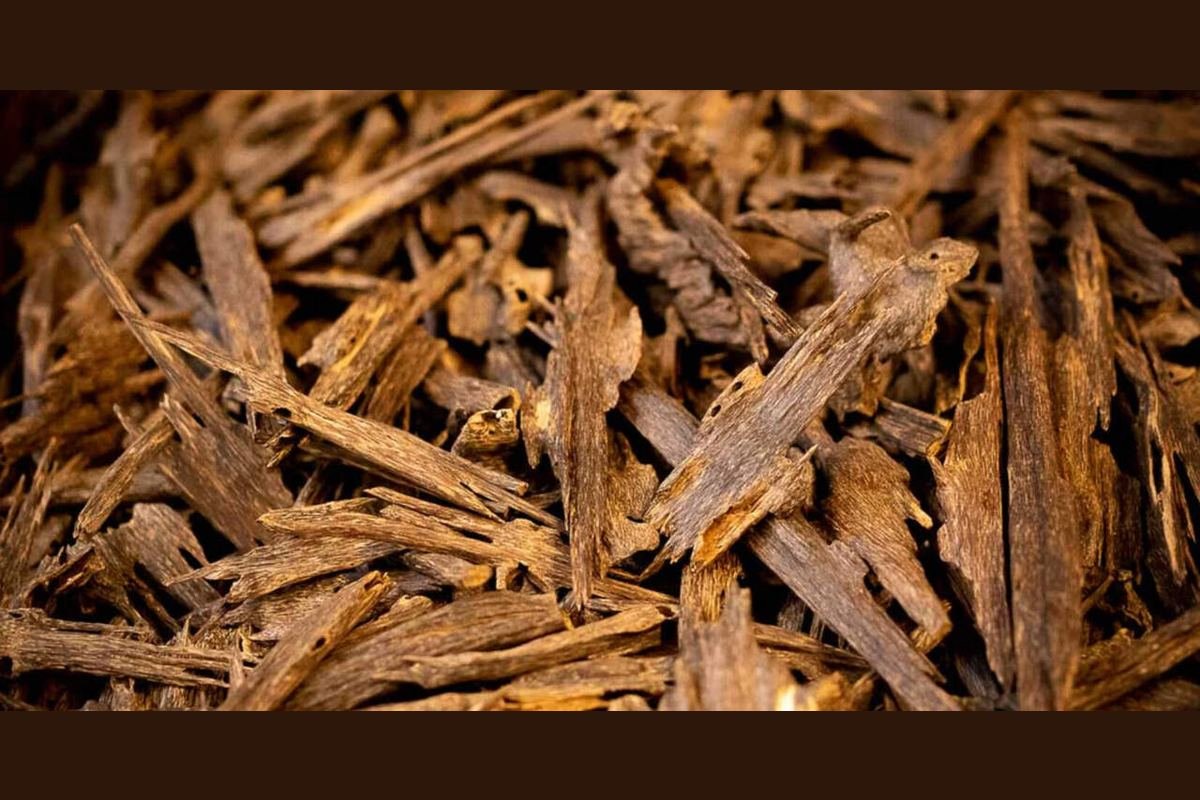
Import Agarwood USA: A Wholesale Buyer's Guide to CITES, US Customs and Oil Labeling
The first question for any American importer is simple: will the goods clear when they land? If you want to import agarwood USA ports will accept without a hold, the paperwork matters as much as the grade. This guide walks through the US side of the trade — which agencies look at an agarwood shipment, which products carry CITES documents, how plant material is declared, what oil labels need, and how long it all takes. It is general information from an exporter, not legal advice, so confirm the details with USFWS or a licensed customs broker.

Written by
Founder & Chief Sourcing Officer, AgarwoodTown
15+ years hands-on experience grading plantation agarwood, sourcing directly from Dianbai and Maoming districts in Guangdong — the world's largest Aquilaria sinensis cultivation region. Wang has personally inspected thousands of CITES export shipments and holds plantation certification from China's National Forestry and Grassland Administration. He advises GCC, European and East Asian wholesale buyers on grade selection, CITES compliance and supply chain due diligence.
CITES Certified
In this article
- Import Agarwood USA: How Does It Work?
- What This Guide Is — and Is Not
- Which US Agencies Handle an Agarwood Shipment?
- Which Agarwood Products Need CITES Paperwork for the US?
- Reading the Annotation Before You Order
- How Is Agarwood Declared at a US Port?
- Plant Clearance vs the Wildlife Declaration Form
- Designated Ports for CITES Plants
- The Lacey Act Plant Declaration
- Step by Step: Import Agarwood to the USA
- FDA and Labeling Basics for Agarwood Oil
- Intended Use Decides the Rulebook
- What a US Retail Label Usually Needs
- Bulk Material vs Retail-Packed Goods
- How Long Does It Take to Import Agarwood into the USA?
- What We Provide on a US-Bound Order
- Frequently Asked Questions
1. Import Agarwood USA: How Does It Work?
To import agarwood USA customs will clear, you need three things in place: a valid CITES document from the exporting country where the product requires one, a correct customs entry filed by you or your broker, and a product that meets US rules for its intended use. Most delays come from a gap in one of those three.
Scarcity starts in the forest. According to a 2013 study in Molecules (Liu 2013), agarwood forms naturally in only about 10% of Aquilaria trees, which is why plantations now induce resin on purpose.[6]
Agarwood comes from Aquilaria and Gyrinops trees, and every Aquilaria species sits in CITES Appendix II.[1] In the United States, the U.S. Fish & Wildlife Service is the national CITES authority and publishes the import and export rules.[2]
We export from our plantation in Guan Zhu Town, Dian Bai District, Maoming, Guangdong. Our stock is plantation Aquilaria sinensis, grown on 100+ mu of our own land and by more than 100 contracted farmers.
What This Guide Is — and Is Not
This is general information written by an exporter. It is not legal advice, and US rules change through new regulations, CITES meetings and trade policy. Therefore treat every point below as a question to confirm with USFWS, USDA or a licensed customs broker before you commit to a shipment.
We also avoid repeating the export side in full. Our step-by-step guide to the CITES agarwood permit covers how the permit is issued in China, what annotation #14 says and which hold-ups occur most. Here we focus on what happens once the goods head for an American port.
General information, not legal advice. Requirements depend on the exact product, its packaging, its tariff classification and the port of entry, and they change over time. Before you import agarwood into the United States, confirm the current rules with the U.S. Fish & Wildlife Service, USDA APHIS and a licensed customs broker who handles CITES-listed plants. Nothing on this page replaces their guidance.
2. Which US Agencies Handle an Agarwood Shipment?
| Agency | Its general role | What it means for an agarwood buyer |
|---|---|---|
| U.S. Fish & Wildlife Service (USFWS) | US CITES Management Authority; sets CITES import, export and re-export rules | Publishes the rules you follow; issues US re-export documents if you later ship CITES goods onward |
| USDA APHIS Plant Protection and Quarantine | Inspects plants and plant products, including CITES-listed plants, at ports of entry | Usually the agency that checks the CITES document against plant material such as chips, logs and bulk oil |
| U.S. Customs and Border Protection (CBP) | Processes the customs entry, tariff classification, duties and origin marking | Your broker files the entry here; wrong descriptions or codes cause holds |
| Food and Drug Administration (FDA) | Regulates cosmetics, drugs and food, including imported ones | Relevant to oils and perfume products sold to consumers; intended use decides which rules apply |
| State authorities | Some states add their own labeling or warning rules | Check the states you sell into, especially for consumer products |
General overview only. Agency roles can overlap, and the exact clearance route depends on the product, its classification and the port. Confirm with your customs broker.
The short version: USFWS writes the CITES rules, while APHIS and CBP apply them at the border. FDA enters the picture once the product is meant for consumers, which mostly concerns oils.


3. Which Agarwood Products Need CITES Paperwork for the US?
| Product | Typical CITES position | What to check | Our starting price · MOQ |
|---|---|---|---|
| Oud wood chips | Generally covered; an export permit is normally expected | Species name, net weight and unit on the permit match the invoice | From $0.24/g · MOQ 100 g |
| Logs and carvings | Generally covered; carvings are named in the annotation as not benefiting from the retail exemption | Piece count and description match the permit | Logs from $88/piece · carvings from $98/piece (MOQ 5) |
| Beads and bracelets | Generally covered; beads are also named as not benefiting from the retail exemption | Do not assume a gift box makes them exempt | From $18/g |
| Bulk agarwood oil | Generally covered as a derivative | Quantity unit (g or kg) is consistent across all documents | CO₂ from $1.50/g · hydro from $7.00/g · MOQ 10 g |
| Retail-packed finished goods | May fall under the finished-product exemption | Whether your exact packaging meets the annotation wording | Incense sticks from $2.35–$5.89 per box · MOQ 1 kg |
| Powder and pressed incense | Some powder forms are treated differently in the annotation | Which powder type you are buying and how it is described | Powder from $10.30 per 50 g |
| Live plants and seedlings | Covered by plant rules; phytosanitary rules also apply | USDA plants-for-planting requirements, which are separate from CITES | Seedlings $15/plant · MOQ 10 |
Indicative only. The CITES annotation for Aquilaria and Gyrinops sets which parts and derivatives are covered and which are exempt. Read the current annotation text and confirm with your broker for every new product line.
The pattern is simple to remember. Raw and semi-processed agarwood — chips, logs, beads, carvings and bulk oil — normally travels with a CITES export permit. Some finished products packed for retail sale may be exempt, but only if they meet the annotation as written.[3]
Weight does not decide the question. A 100 g sample of plantation oud wood chips is the same specimen type as a 50 kg carton, so it follows the same rule.
Reading the Annotation Before You Order
CITES listings for Aquilaria and Gyrinops carry an annotation, currently numbered #14, that lists what the listing covers and what it excludes. Annotations change at CITES Conferences of the Parties, so always read the current text rather than a summary from an old blog.
When in doubt, ship with a permit. A missing permit for goods that needed one can mean seizure.
4. How Is Agarwood Declared at a US Port?
Agarwood is declared through the normal customs entry, with the CITES document presented for plant inspection where the product requires one. Your broker files the entry with CBP, flags the shipment as a CITES-listed plant product and makes the original permit available for inspection.
The entry itself describes the goods, their value, their origin and their tariff classification. Therefore the description on the commercial invoice should name the material plainly, for example "Aquilaria sinensis wood chips, plantation origin", rather than a trade nickname like "oud" or "incense wood".
Plant Clearance vs the Wildlife Declaration Form
Importers who have handled leather, shells or other animal products know USFWS Form 3-177, the declaration for importing fish and wildlife. That form is built for animal wildlife. Agarwood is a plant product, so it generally follows the plant clearance route rather than the wildlife declaration.[2]
The underlying idea is still the same. You give a clear general description of the goods — species, product type, quantity, origin and the CITES document number — and an officer checks that the goods match it. If a shipment mixes plant goods with animal-derived items, such as a gift set with a leather pouch, ask your broker how each part is declared.
Designated Ports for CITES Plants
The United States routes CITES-listed plants through designated ports where inspectors can check them. Not every airport or seaport is set up for this. Consequently, the port your freight forwarder picks by default may not be the right one.
Before you book freight, ask your broker which ports currently handle CITES plant clearance and whether your preferred port qualifies.
The Lacey Act Plant Declaration
The Lacey Act makes it unlawful to import plants taken or traded in breach of the law, including foreign law. For many plant and wood products it also requires a plant product declaration at entry, naming the genus, species, country of harvest and quantity.
Whether your agarwood product needs that declaration depends on its tariff classification, and the covered product list has expanded over time. Ask your broker to check each line.
Step-by-Step Process
5. Step by Step: Import Agarwood to the USA
Define the product and its use
Decide exactly what you are buying — chips, bulk oil, retail-boxed incense or finished oil — and what you will do with it in the US. Resale as-is, repacking and use as a perfume ingredient each lead to different labeling and documentation needs.
Engage a customs broker early
Choose a licensed broker with CITES plant experience before you pay a deposit. Ask them to confirm the tariff classification, any Lacey Act declaration, the designated port, and any duties or additional tariffs that currently apply to goods of Chinese origin.
Check the CITES position of each line
Read the current annotation with your product list and confirm with the broker which lines need a CITES export permit.
Order and test a paid sample
Our samples start from 100 g of chips or 1 g of oil, paid and non-refundable. Remember that a sample of a permit item usually needs the same paperwork as a full order, so plan the sample shipment like a small commercial one.
Align every document
Agree the exact product wording, species name, net weight, unit and consignee before the export permit application goes in. The importer named on the permit should be the consignee on the transport document, not a forwarder or a related company.
Ship to a suitable port and clear
Route the freight to a port your broker has confirmed for CITES plants. The broker files the entry, presents the documents and coordinates any inspection. Keep the original CITES document safe; inspectors may need to see it.
Inspect, label and keep records
Compare the goods with your approved sample, apply any US labels before retail sale, and file the permit, invoice and entry papers together for later audits or re-export.
6. FDA and Labeling Basics for Agarwood Oil
CITES decides whether agarwood oil can cross the border; FDA rules decide how you can sell it once it is in the US. For most buyers, oud oil sold for its scent is regulated as a cosmetic, and the label and claims must fit that category.
US cosmetic law was updated by the Modernization of Cosmetics Regulation Act of 2022, which added duties such as facility registration, product listing and adverse event reporting for many businesses. Small-business exemptions exist, so ask a regulatory consultant which duties apply to you.
Intended Use Decides the Rulebook
Under US law, the same bottle of oil can be a cosmetic, a drug or neither, depending on how it is marketed. A product sold to make a person smell pleasant is generally a cosmetic. However, a product marketed to treat or prevent a condition is generally treated as a drug, with far heavier requirements.
That is why your copy matters as much as your oil. Agarwood has a long history in traditional Asian and Middle Eastern practice, and published reviews describe its chemistry in detail.[4] Even so, describing traditional use is very different from promising a health effect on a US product page.
What a US Retail Label Usually Needs
Consumer cosmetic labels in the US generally carry a statement of identity, the net quantity of contents, the name and place of business of the manufacturer, packer or distributor, and an ingredient declaration. Some products also need warning statements.
Separately, CBP expects imported goods to show their country of origin, for example "Made in China", unless an exception applies. Moreover, some states add their own warning rules; California's Proposition 65 is the one US importers ask about most. For a natural oil, the identity and ingredient lines should name agarwood or Aquilaria oil honestly, without implying content the bottle does not have.
Purity documentation helps here. We provide GC-MS reports on request, and our guide to testing pure oud oil explains what such a report can and cannot show.[5]
Keep claims to scent and tradition. Describe agarwood oil by its aroma, origin, extraction method and grade. Words like "cures", "treats" or "heals" can turn a cosmetic into an unapproved drug in the eyes of US regulators. If you want to mention history, phrase it as "used in traditional practice" and leave health outcomes out of the copy.
Bulk Material vs Retail-Packed Goods
| Feature | Bulk material (chips, logs, bulk oil) | Retail-packed finished goods |
|---|---|---|
| CITES export permit | Normally expected for every shipment | May be exempt if the packaging meets the current annotation; beads and carvings excluded |
| Unit cost | Lower per gram; you add packaging and labor in the US | Higher landed cost per gram, but ready to sell |
| US labeling work | Done by you after import, before retail sale | Must already meet US label rules when it arrives |
| Origin marking | Outer cartons marked; final retail packs marked when you repack | Each retail unit should already show origin |
| Typical buyer | Perfumers, incense makers, repackers, attar houses | Retailers and gift shops with no in-house packing |
| Example from our range | Hydro-distilled oil from $7.00/g, MOQ 10 g | Boxed incense sticks from $2.35–$5.89 per box, MOQ 1 kg |
Neither route is always better. Bulk buying gives you control and lower unit costs, while retail-packed goods save US labor and may simplify CITES handling where the exemption genuinely applies.
For perfumers, the usual starting point is oil. Our hydro-distilled oud oil for attar and perfumery follows the traditional route, while our supercritical CO₂ agarwood oil starts from $1.50/g and suits natural cosmetic formulas. Both ship as bulk oil, so plan for CITES paperwork and your own US labeling.
For incense retailers, the opposite often holds. Sealed boxes of wholesale agarwood incense sticks may travel more simply than loose chips. Even so, confirm with your broker that the exact pack format fits the current annotation before you rely on it.
7. How Long Does It Take to Import Agarwood into the USA?
Plan in weeks, not days. The timeline has three parts: the CITES export permit in China, the transit itself, and US clearance at the port. Each part varies with season, workload and how complete your documents are, so ask for current estimates when you place the order.
The export permit is usually the longest single step for permit items. It cannot start until product, quantity and consignee are fixed, because those details go onto the application. Therefore every change you make after confirming the order can push the whole schedule back.
Transit depends on mode. Air freight suits samples, oils and high-value chips. Ocean freight costs less for larger volumes of incense, but it adds sailing time and an advance security filing that your broker handles.

8. What We Provide on a US-Bound Order
On the export side, our job is to make the paperwork match the goods. Every wholesale shipment carries a grading note or certificate and a CITES Appendix II export permit wherever one is required. Live plants travel with a phytosanitary certificate as well.
We have operated from Dian Bai since 2014. Our 50+ in-house staff process more than 20 tons of agarwood material a month, and we distil around 500 kg of oud oil a year by steam/hydro distillation and supercritical CO₂ extraction. GC-MS reports are available on request for oils.
What we cannot do is clear the goods on the US side. Your broker files the entry, confirms the port and checks any Lacey Act declaration. Consequently, the smoothest US orders start with the buyer sharing the broker's requirements with us before the permit application, not after the goods have shipped.
We supply 500+ B2B buyers in 10+ countries. Our overview of supplying Western markets covers buyer profiles in more detail, and the shipping and export documentation page lists what we arrange from our side. Buyers comparing US and EU routes can also read our walkthrough for importing oud incense into Europe, where an import permit adds a further step.
Planning a first shipment to the United States?
Tell us the products, grades and quantities you have in mind, your US port and your broker's requirements. We reply to enquiries within 4 business hours, Monday to Saturday, 9:00–18:00 China time.
Send a US wholesale enquiry → Before ordering, please read our replacement and credit policy: we do not accept returns, and we resolve genuine problems by replacement or credit.
Frequently Asked Questions
Yes. Agarwood is regulated, not banned. All Aquilaria species are listed in CITES Appendix II, so commercial shipments of most raw and semi-processed agarwood need a valid CITES export permit from the exporting country. The US also expects a correct customs entry and, for consumer products, compliance with labeling rules. Confirm current requirements with USFWS or a customs broker.
For Appendix II plants, the United States has generally relied on the exporting country's CITES document rather than issuing a separate US import permit, unlike the European Union. However, rules can change and specific products or situations may differ. Ask USFWS or a broker experienced with CITES plants to confirm before you order, and keep the original export document safe.
Some finished products packaged and ready for retail sale may be exempt under the current CITES annotation for Aquilaria. Beads, prayer beads and carvings are named as not benefiting from that exemption, and chips, logs and bulk oil are normally covered. Because annotation wording changes, read the current text and confirm each product line with your broker.
Usually yes. The CITES position depends on the type of product, not on the weight, so a 100 g sample of chips is treated like a larger carton of the same chips. Our paid samples start from 100 g of chips or 1 g of oil, and we plan permit items with the same paperwork as a full order.
USFWS sets US CITES policy, but CITES-listed plant products are generally inspected by USDA APHIS Plant Protection and Quarantine at ports designated for CITES plants. CBP processes the customs entry, duties and origin marking. Your customs broker coordinates these steps, which is why choosing a broker with CITES plant experience matters for a first shipment.
Form 3-177 is the USFWS declaration for importing or exporting fish and wildlife, meaning animal products. Agarwood is a plant product, so it generally follows the plant clearance route instead. If your shipment mixes plant goods with animal-derived items, such as leather packaging, ask your broker how each part should be declared at entry.
Cosmetics, including fragrance oils, do not go through FDA pre-market approval, but they must be safe, properly labeled and free of drug claims. Recent US cosmetic legislation added registration, listing and reporting duties for many businesses. If you market the oil with health or treatment claims, it may be treated as a drug, which carries much heavier requirements.
Duties depend on the tariff classification of each product, and goods of Chinese origin may face additional tariffs that change with trade policy. Rules on low-value parcels have also changed recently, so do not assume a small shipment enters duty-free. Ask your customs broker for a current duty estimate for each line before you confirm the order.
Usually you can, but CITES goods leaving the United States generally need US re-export documentation issued under the USFWS CITES programme, referencing the original export permit. That is one reason to keep the original permit, invoice and entry papers together. Check the destination country's import rules as well, because they may differ from US rules.
References
- 1
- 2
- 3
- 4Wang S., Yu Z., Wang C., Wu C., Guo P., Wei J.. Chemical Constituents and Pharmacological Activity of Agarwood and Aquilaria Plants. Molecules, 2018.View source
- 5Ismail N., Ali N.A.M., Jamil M., Rahiman M.H.F., Tajuddin S.N., Taib M.N.. A Review Study of Agarwood Oil and Its Quality Analysis. Jurnal Teknologi, 2014.View source
- 6Liu Y., Chen H., Yang Y., et al.. Whole-tree agarwood-inducing technique: an efficient novel technique for producing high-quality agarwood in cultivated Aquilaria sinensis trees. Molecules, 2013.View source
All scientific references are provided for transparency. AgarwoodTown summarises peer-reviewed findings for educational purposes and does not claim to provide medical or regulatory advice.
Wholesale Catalog
Buy the products discussed in this article


Related Articles
Source Direct from Origin
Discuss Your Requirements with Our Team
We respond within 24 hours. Share your target grade, quantity and destination — we'll send current pricing, a sample pack option, and CITES documentation details.