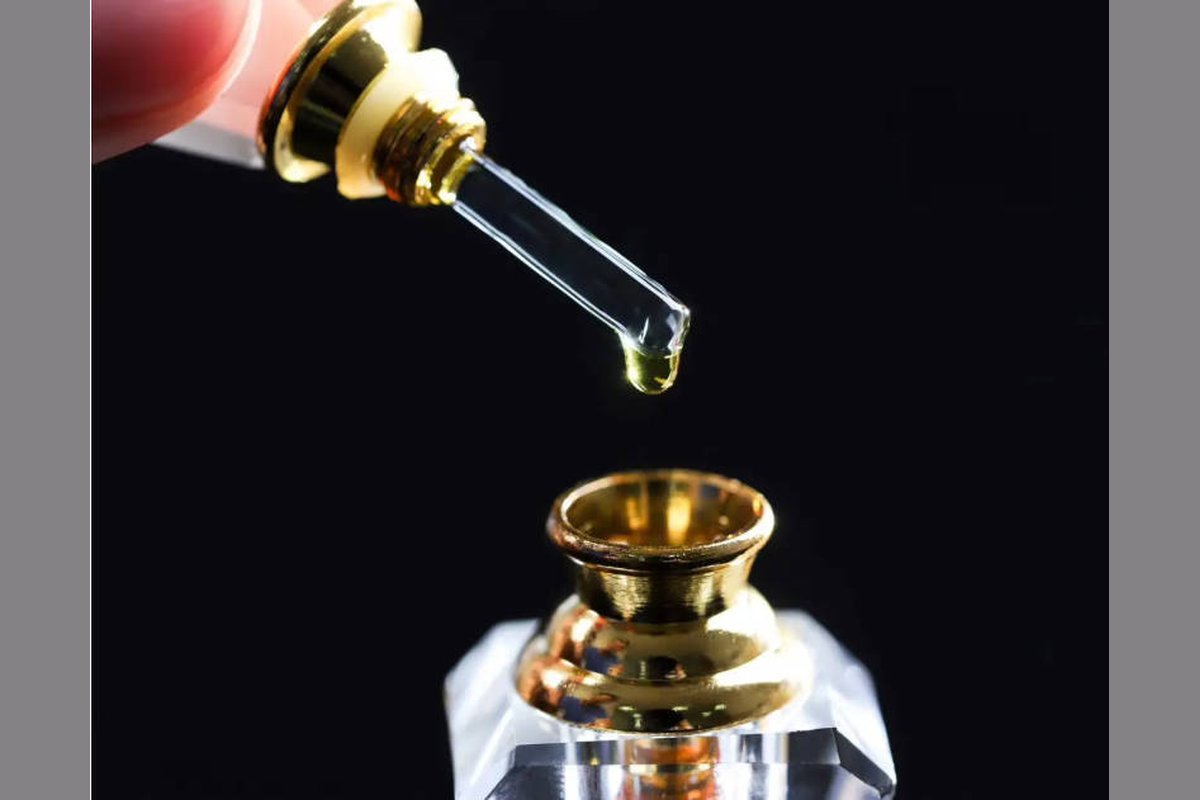
Pure Oud Oil: How Buyers Test Purity Before a Wholesale Order
First enquiries for oil often end with the same question: how do I know this is pure oud oil? It is the right question, because agarwood oil is expensive, easy to stretch and hard to judge from one sniff. No single home test settles it. However, a short routine of paper, evaporation, viscosity and solubility checks, backed by lab data where it matters, catches most cuts before they reach your shelf. This guide sets out that routine step by step, and lists the documents a supplier should hand you.

Written by
Founder & Chief Sourcing Officer, AgarwoodTown
15+ years hands-on experience grading plantation agarwood, sourcing directly from Dianbai and Maoming districts in Guangdong — the world's largest Aquilaria sinensis cultivation region. Wang has personally inspected thousands of CITES export shipments and holds plantation certification from China's National Forestry and Grassland Administration. He advises GCC, European and East Asian wholesale buyers on grade selection, CITES compliance and supply chain due diligence.
CITES Certified
In this article
- What Does "Pure Oud Oil" Actually Mean?
- Pure Oil, Attar and Blends Are Different Products
- Buying Pure Oud Oil: What to Check Before You Pay
- How Is Oud Oil Adulterated?
- Which Simple Tests Show Whether Oud Oil Is Pure?
- The Paper (Blotter) Test
- The Evaporation Test Over 24 Hours
- Viscosity, Colour and Cold Behaviour
- Alcohol and Water Solubility Checks
- A Step-by-Step Protocol for Testing a Pure Oud Oil Sample
- Hydro-Distilled vs CO₂ Oil: Does the Test Change?
- Where Does GC-MS Fit in a Purity Check?
- Red Flags in a Pure Oud Oil Offer
- What Should a Supplier Document?
- Frequently Asked Questions
1. What Does "Pure Oud Oil" Actually Mean?
In the trade, pure oud oil means oil taken from resinated agarwood and nothing else: no carrier, no solvent, no synthetic accord and no other essential oil. It can be hydro-distilled or extracted with supercritical CO₂, but the bottle should hold only what came out of the wood.
Real oud oil is scarce for a simple reason. According to Liu et al. (2013), only about 10% of Aquilaria trees form agarwood naturally, and only that resinated wood yields oud oil when it is distilled.[7]
Agarwood is the resin-loaded heartwood of Aquilaria trees, and its oil is a complex mixture of sesquiterpenes and 2-(2-phenylethyl)chromones.[1] That complexity is exactly what makes the oil hard to fake well and easy to fake badly.
Purity and quality are not the same thing. A low-grade oil distilled from Grade D chips can be completely pure, while a strong, pleasant oil can be heavily cut. Therefore a purity test answers one question only: is this oil what the label says it is?
For the background on how oud oil is extracted and traded, our oud essential oil extraction guide covers the basics. This post stays on the buyer's bench: how to check a sample before you pay for volume.
Pure Oil, Attar and Blends Are Different Products
Much of the confusion comes from labels rather than fraud. An attar is traditionally an oil-based perfume, often built on sandalwood oil, and an oud attar may contain only a modest share of agarwood oil.[2] That is a legitimate product, provided it is sold as an attar.
Perfume oils and oud "blends" are also honest products when labelled honestly. The problem starts when a blend is invoiced as pure oil. Our guide to attar and how it differs from pure oil explains the categories in more detail.
In practice, write the word "pure" into your purchase order together with a definition. For example: "100% agarwood oil, hydro-distilled, no carrier or additive". A supplier who hesitates to sign that line has already answered your question.
Buying Pure Oud Oil: What to Check Before You Pay
Most people searching for pure oud oil are about to buy a small bottle. Four checks protect you. First, compare price per gram, not per bottle. Second, look for a stated origin and extraction method. Third, ask for a sample before a larger order. Fourth, for any volume purchase, ask for a GC-MS report on the same batch.
Price is a useful warning sign. Pure agarwood oil is costly to make; our hydro-distilled oud oil starts from $7.00/g and our CO₂ agarwood oil from $1.50/g, both with a 10 g MOQ. A 3 ml bottle of "pure oud" sold for a few dollars is very unlikely to be pure.
2. How Is Oud Oil Adulterated?
| Adulterant | Why it is used | What it does to the oil | First clue on the bench |
|---|---|---|---|
| Odourless solvents and diluents (e.g. dipropylene glycol, diethyl phthalate) | Add volume cheaply without adding smell | Thins the scent; the oil may look clearer and pour faster | Weak, short trail on a blotter; volume loss in a water shake test |
| Mineral oil or paraffin oil | Cheap, colourless, almost no odour | Adds body and an oily feel; does not evaporate | Greasy ring on paper that never dries; cloudiness in alcohol |
| Vegetable carrier oils | Easy to buy, slows evaporation | Can turn rancid with age and change the smell | Oily, slightly fatty base note; cloudiness in alcohol |
| Synthetic oud accords | Imitate the animalic, woody top of real oud | Loud opening, flat and linear drydown | Smells the same at 10 minutes and at 6 hours; drops away overnight |
| Other essential oils or resins | Fill out a thin oil with a sweet or woody base | Shifts the profile towards a different material | Notes that do not belong to agarwood appear as the oil dries |
| Re-extracted or exhausted material | Sell low-yield oil under a higher grade | Oil is genuine but weak or "burnt" | Pure, but thin and smoky for the grade quoted |
These are the cutting patterns buyers and perfumers discuss most often. Several can be combined in one bottle, and none of them is visible in a sales photo. The "first clue" column lists hints, not proof.
3. Which Simple Tests Show Whether Oud Oil Is Pure?
Four bench checks catch most crude cuts: a paper test, an evaporation test over a day, a look at viscosity and colour, and a solubility check. None of them proves purity on its own. Together, however, they tell you whether a sample deserves lab money.
Run every test side by side with a reference oil you trust. Without a reference, you are judging one unknown against your memory, and memory is unreliable after the third sample.
The Paper (Blotter) Test
Put one drop of the sample on a perfumer's blotter strip or plain white paper, and one drop of your reference beside it. Label both and leave them at room temperature.
The classic rule for light essential oils says a pure oil leaves no oily ring. That rule does not transfer cleanly to oud. Agarwood oil is heavy and resinous, so even pure oil usually leaves a translucent, tinted stain. Therefore the useful question is not "is there a stain?" but "how does the stain behave?"
Pure oil tends to soak in and darken the paper while the scent keeps changing. In contrast, a mineral-oil cut often leaves a greasy, spreading halo that still feels oily days later. The scent over that halo is usually thin.
The Evaporation Test Over 24 Hours
Keep the same blotters and smell them at fixed times: after 10 minutes, 1 hour, 6 hours and 24 hours. Write short notes each time, because you will forget the early stages.
Genuine agarwood oil develops. The opening may be sharp or barnyard-like, then woody, sweet and resinous notes take over as the lighter compounds leave. For vocabulary, our guide to how oud smells at each stage is a useful companion.
A synthetic accord usually behaves differently. It opens loud, stays on one note, and then fades almost at once when the aroma chemicals run out. Meanwhile, an oil stretched with odourless diluent smells like a quieter version of itself from the very start.
Viscosity, Colour and Cold Behaviour
Tilt the vial slowly and watch how the oil moves. Hydro-distilled oud oil is often thick and slow, while CO₂ oil can be lighter in body. Colour ranges from golden to deep brown depending on feedstock and process.
These signs are weak evidence. Colour can be adjusted, and viscosity varies honestly between batches and methods. However, a sample that is noticeably thinner or clearer than the supplier's own earlier sample is worth a question.
Some oud oils thicken or cloud slightly in a cold room and clear again when warmed. That behaviour is normal for many resinous oils and is not, by itself, a sign of either purity or fraud.
Alcohol and Water Solubility Checks
Two simple solubility checks help with crude cuts. First, add a few drops of the sample to a small amount of high-proof perfumer's alcohol in a clear glass vial and swirl. Essential oils generally dissolve well, whereas mineral oil and many vegetable oils tend to leave cloudiness or droplets.
Second, shake a measured amount of oil with water in a narrow, marked vial and let it settle. Agarwood oil does not mix with water. If the oil layer shrinks noticeably, a water-miscible diluent such as glycol or alcohol may be present.
Both checks only flag crude adulteration. A skilled blender can cut oil with materials that pass both. That is the gap lab analysis fills.

Step-by-Step Process
4. A Step-by-Step Protocol for Testing a Pure Oud Oil Sample
Fix the specification before the sample arrives
Write down what you are buying: pure agarwood oil, the extraction method, the species and the grade or feedstock. A test only means something against a written claim, so agree the claim first and keep the supplier's message on file.
Order a paid sample and keep part of it sealed
Order enough to test and to keep a sealed reference. Our oil samples start from 1 g, paid and non-refundable. Use part of the vial for testing and store the rest cool and dark, so you can compare it with the bulk shipment later.
Run the blotter and evaporation checks side by side
Put the sample and a trusted reference on labelled strips and smell them at 10 minutes, 1 hour, 6 hours and 24 hours. Note the opening, the heart and what is left the next day. A flat, linear drydown is the most common warning sign.
Check body, colour and solubility
Compare viscosity and colour against the reference in identical vials. Then run the alcohol and water checks. Cloudiness in alcohol or a shrinking oil layer after the water shake means the sample goes to a lab before any further talk about price.
Send a split sample for lab analysis if the order justifies it
For volume or for regulated markets, ask the supplier for a GC-MS report on the batch and consider an independent test on your own split. If both reports describe the same oil, you have far more confidence than any bench check can give.
Compare the bulk shipment with your sealed reference
When the order arrives, repeat the blotter test with the bulk oil next to the sealed sample. They should match in opening, development and drydown. If they do not, raise it straight away with photos and notes while the batch is still unopened.


5. Hydro-Distilled vs CO₂ Oil: Does the Test Change?
| Feature | Hydro-distilled oud oil | Supercritical CO₂ agarwood oil |
|---|---|---|
| How it is made | Soaked agarwood is boiled or steamed and the oil is separated from the distillate | Pressurised CO₂ acts as a solvent, then returns to gas and leaves the extract behind |
| Typical scent character | Deeper, often with smoky or barnyard notes from long heating | Often closer to the smell of the raw wood, brighter and less cooked |
| Body and colour | Usually thicker and darker | Often lighter in body; colour depends on feedstock |
| Bench test focus | Watch for a thin, fast drydown that does not match the depth of the opening | Watch for solvent-like brightness that disappears within an hour |
| What GC-MS should show | Agarwood sesquiterpenes and chromones; no carrier or plasticiser peaks | The same compound families, often in a different balance; no carrier peaks |
| Our wholesale price | From $7.00/g, MOQ 10 g | From $1.50/g, MOQ 10 g |
6. Where Does GC-MS Fit in a Purity Check?
GC-MS is the test that turns a suspicion into evidence. The instrument separates the volatile compounds in a sample and identifies them by their mass spectra, so it can show both what should be there and what should not.[3]
For pure agarwood oil, a report should show the compound families that define agarwood: sesquiterpenes and 2-(2-phenylethyl)chromones.[4] Chinese grading research also treats chromone content as one of the useful chemical markers of agarwood quality.[5]
Equally important are the peaks that should be absent. Glycol solvents, phthalate plasticisers, paraffinic hydrocarbons from mineral oil and isolated aroma chemicals all leave recognisable traces. A clean report is no guarantee of grade, but a dirty one ends the discussion.
Keep three limits in mind. First, a report describes one batch; ask for the batch number to match your invoice. Second, there is no single official purity threshold for agarwood oil, so interpretation needs a lab or perfumer who knows the material. Third, a report the supplier commissioned should ideally be confirmed by your own split sample for large orders.
We provide GC-MS reports on request for our oils. A detailed walk-through of how to read the chromatogram itself, peak by peak, belongs in a separate guide; here it is enough to know what to ask for.
7. Red Flags in a Pure Oud Oil Offer
Most bad oil is visible in the offer before it reaches your bench. These are the warning signs we would act on if we were buying:
- A price far below distilled-oil cost: agarwood oil yields are small, so very cheap "pure" oil needs an explanation. Our own hydro-distilled oil starts from $7.00/g; offers far below the going rate for distilled oil deserve questions, not excitement.
- No method or species named: a supplier who cannot say whether the oil is hydro-distilled or CO₂-extracted, or which Aquilaria species it came from, probably did not make it.
- Refusal to sign "100% agarwood oil": if the word "pure" appears in the chat but not on the invoice, treat the oil as a blend.
- No batch number: without a batch number, a GC-MS report can belong to any oil.
- Unlimited volume at a fixed price: real oil supply follows feedstock. We produce around 500 kg of oud oil a year across all grades, and top grades are always the smallest share.
- Origin stories without paperwork: "old stock", "wild Cambodian" or "Hindi" claims need documents behind them, including CITES papers for international trade.
- Sample and bulk from different sources: if the bulk smells different from the sample, stop and compare against your sealed reference before you use any of it.
8. What Should a Supplier Document?
| Document or record | What it should state | Why it matters for purity |
|---|---|---|
| Product specification | Pure agarwood oil, extraction method, species, grade or feedstock | Gives every test a written claim to measure against |
| Commercial invoice | The same product description, batch number, quantity and price | Ties the specification to the goods you actually paid for |
| Grading note or certificate | Grade and the basis of grading | Shows how the supplier judged the oil, in writing |
| GC-MS report (on request) | Batch number, lab, date and compound profile | Lab evidence for agarwood markers and against common cuts |
| CITES export permit (where required) | Species, quantity and legal origin of the agarwood product | Confirms the material is Aquilaria and was exported legally |
| Sample record | Which batch the paid sample came from | Lets you match the bulk shipment against your sealed reference |
This is what a buyer should ask any supplier to provide for wholesale oil orders. It is a practical checklist, not a legal standard; your importing country or your own customers may require more.
The CITES line matters more for oil than many buyers expect. All Aquilaria species have been listed in CITES Appendix II since 2004, so international shipments of agarwood products often need an export permit.[6] The listing carries annotation #14, which exempts some finished, retail-packaged products, so check the current annotation text for your exact product before you ship.
A permit is not a purity certificate. Nevertheless, it names the species and the exporter, and an oil sold without any traceable paperwork has a weaker claim to being pure agarwood from the start.
On our side, every wholesale shipment travels with a grading note and the CITES Appendix II export permit wherever one is required. We grade the agarwood that feeds our stills by visual inspection, aroma, resin content and sink test, using our internal D, C, B, A and AAA scale. That scale is our own, not an ISO or CITES standard, so always compare grades through samples.
Test our oil on your own bench
Start with a 1 g paid sample of our hydro-distilled agarwood oud oil or our supercritical CO₂ agarwood essential oil, and ask for the GC-MS report on the same batch. Buyers who prefer to judge the raw material first can order graded oud wood chips from 100 g.
We reply to enquiries within 4 business hours, Monday to Saturday, 9:00–18:00 China time. Request an oil sample and batch report → and read our replacement and credit policy before you order.
Frequently Asked Questions
Run a blotter test next to a trusted reference and smell both at 10 minutes, 1 hour, 6 hours and 24 hours. Pure oil keeps developing; cut oil stays flat or fades fast. Add alcohol and water solubility checks to catch crude carriers. These steps flag problems, but only lab analysis can confirm purity.
Usually, yes. Agarwood oil is heavy and resinous, so even pure oil tends to leave a tinted, translucent mark on paper. The paper test for light essential oils therefore does not apply directly. Watch how the stain behaves instead: a greasy halo that spreads and stays oily for days suggests mineral or vegetable oil.
The cuts buyers meet most often are odourless solvents such as dipropylene glycol or diethyl phthalate, mineral or paraffin oil, vegetable carrier oils, synthetic oud accords and other essential oils. Some sellers also pass off weak, re-extracted oil as a higher grade. Several of these can appear together in the same bottle.
It is the strongest single piece of evidence, but it has limits. A report covers one batch, so the batch number must match your invoice. There is no official purity threshold for agarwood oil, so someone who knows the material should read it. For large orders, confirm the supplier's report with an independent test on your own split sample.
No. Both methods can produce pure agarwood oil; they simply extract a different balance of compounds, so the scent and body differ. Supercritical CO₂ leaves no solvent behind once the gas is released. Purity depends on what the supplier adds afterwards, not on the extraction method. Our CO₂ oil starts from $1.50/g and our hydro-distilled oil from $7.00/g.
Pure oil made from low-grade feedstock costs less than oil from high-grade wood, so price alone does not prove a cut. However, agarwood oil yields are small and the wood itself is costly, so a price far below the going rate for distilled oil needs a clear explanation. Ask for the method, species, grade and a batch GC-MS report.
Agarwood oil is a natural product. Feedstock grade, the trees it came from, distillation time and ageing all change the profile, so some variation between pure batches is normal. A big drop in depth or a flat, linear drydown is different, and it is a reason to compare the oil with your sealed reference sample and ask questions.
State the product as 100% agarwood oil with no carrier or additive, then name the extraction method, the Aquilaria species, the grade or feedstock, the quantity and the batch number. Ask for the GC-MS report and grading note to reference the same batch. A clear written claim makes any later dispute much simpler to resolve.
Often, yes. All Aquilaria species are listed in CITES Appendix II, so many international shipments of agarwood oil need an export permit. Annotation #14 exempts some finished, retail-packaged products, so check the current annotation text for your product. Your own country may add import rules, so confirm them with your national CITES authority.
One gram is enough for blotter, evaporation and simple solubility checks, with a little left as a sealed reference. If you plan an independent lab test as well, order more so you can split the sample. Our oil samples start from 1 g; they are paid and non-refundable, and we can include the batch GC-MS report on request.
There is no single price, because species, grade and extraction method all move it. As a reference, our pure hydro-distilled oud oil starts from $7.00/g and our CO₂ agarwood oil from $1.50/g, both with a 10 g MOQ. An offer far below the market for the claimed grade is the first sign to test it carefully.
References
- 1Naef R.. The volatile and semi-volatile constituents of agarwood, the infected heartwood of Aquilaria species: a review. Flavour and Fragrance Journal, 2011.View source
- 2
- 3Ismail N., Ali N.A.M., Jamil M., Rahiman M.H.F., Tajuddin S.N., Taib M.N.. A Review Study of Agarwood Oil and Its Quality Analysis. Jurnal Teknologi, 2014.View source
- 4Li W., Chen H.-Q., Wang H., Mei W.-L., Dai H.-F.. Natural products in agarwood and Aquilaria plants: chemistry, biological activities and biosynthesis. Natural Product Reports, 2021.View source
- 5Liu Y.Y., Wei J.H., Gao Z.H., et al.. A Review of Quality Assessment and Grading for Agarwood. Chinese Herbal Medicines, 2017.View source
- 6
- 7Liu Y., Chen H., Yang Y., et al.. Whole-tree agarwood-inducing technique: an efficient novel technique for producing high-quality agarwood in cultivated Aquilaria sinensis trees. Molecules, 2013.View source
All scientific references are provided for transparency. AgarwoodTown summarises peer-reviewed findings for educational purposes and does not claim to provide medical or regulatory advice.
Wholesale Catalog
Buy the products discussed in this article


Related Articles
Source Direct from Origin
Discuss Your Requirements with Our Team
We respond within 24 hours. Share your target grade, quantity and destination — we'll send current pricing, a sample pack option, and CITES documentation details.