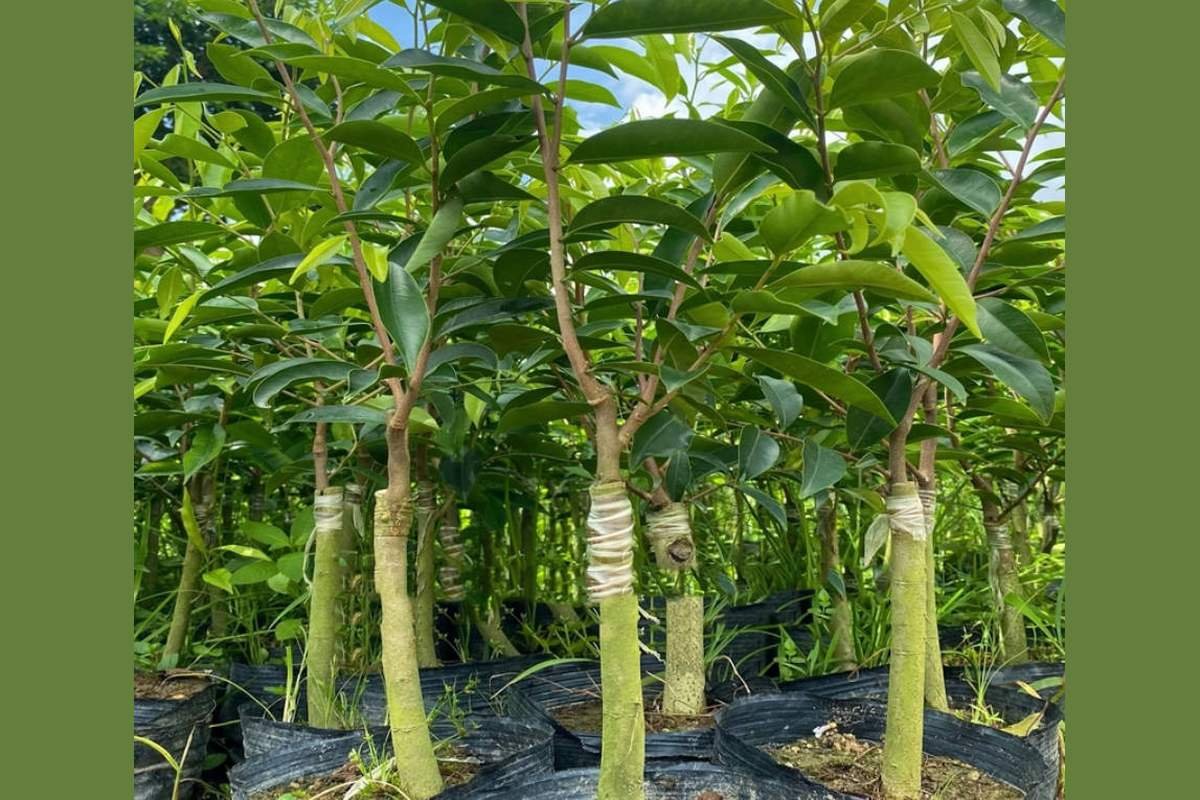
Agarwood Seed Guide: Fruiting, Viability, Germination and Seed vs Seedling
Growers sometimes write to us asking to buy an agarwood seed lot for a new plantation. It is a fair question, because every Aquilaria tree starts as a small seed in a split capsule. However, seeds are the most fragile stage of the whole crop, and they rarely survive a long journey. This guide explains when Aquilaria trees fruit, why their seeds lose viability so fast, how nurseries germinate them, and why we sell young seedlings rather than seeds.

Written by
Founder & Chief Sourcing Officer, AgarwoodTown
15+ years hands-on experience grading plantation agarwood, sourcing directly from Dianbai and Maoming districts in Guangdong — the world's largest Aquilaria sinensis cultivation region. Wang has personally inspected thousands of CITES export shipments and holds plantation certification from China's National Forestry and Grassland Administration. He advises GCC, European and East Asian wholesale buyers on grade selection, CITES compliance and supply chain due diligence.
CITES Certified
In this article
- What Is an Agarwood Seed?
- From Flower to Capsule to Seed
- When Do Aquilaria Trees Produce Seed?
- How Seed Is Collected on a Plantation
- How Long Does an Agarwood Seed Stay Viable?
- How to Germinate Agarwood Seeds
- Agarwood Seed vs Seedling: Which Should a Plantation Start With?
- Other Propagation Routes: Cuttings, Grafts and Tissue Culture
- Moving Plant Material Across Borders
- Phytosanitary Certificates
- CITES and Aquilaria Plant Material
- Planning Planting Material for a New Plantation
- Frequently Asked Questions
1. What Is an Agarwood Seed?
An agarwood seed is the seed of an Aquilaria tree, the genus that produces agarwood resin. It is small, dark and soft-coated, and it carries no oud at all — the resin only forms decades later, in wounded wood.
Why is resinous agarwood scarce? According to Liu et al. (2013), only about 10% of Aquilaria trees form agarwood naturally; the rest stay pale, almost scentless wood unless they are wounded and infected.[6]
That distinction matters for buyers. A seed is planting material, not an aromatic product. Its value lies entirely in the tree it may become, so its quality depends on the mother tree, the freshness of the seed and how it was handled after collection.
On our plantation in Guan Zhu Town, Dian Bai District, all our trees are Aquilaria sinensis, the species native to southern China and often called white wood incense tree (土沉香) locally.[1] Other species, such as A. malaccensis and A. crassna, produce seed in the same basic way, although size and timing differ.
From Flower to Capsule to Seed
Aquilaria trees carry small, yellow-green flowers in clusters. After pollination, each flower can set a woody, slightly flattened capsule that hangs from the twig.
When the capsule ripens, it splits open along its seams. Usually one or two seeds sit inside, and each seed hangs on a short thread before it drops. Botanical descriptions of the genus also note a tail-like appendage on the seed, which helps identify it.
In practice, growers recognise ripe fruit by colour and by the first capsules that crack. A green capsule that is picked too early rarely gives a strong seedling. Therefore timing the harvest is the first real decision in seed propagation.
2. When Do Aquilaria Trees Produce Seed?
In southern China, Aquilaria sinensis flowers in spring and its fruit ripens in summer. The exact weeks shift every year with rainfall, temperature and the age of the trees, so growers watch the trees rather than the calendar.
Not every tree fruits every year. Young trees may flower lightly or not at all, while older, open-grown trees usually carry heavier crops. Moreover, a wet, windy flowering period can leave a poor fruit set even on mature trees.
For a buyer, this creates a hard constraint. Fresh seed exists for only a few weeks each year in any one region. Outside that window, anyone offering "fresh" seed is offering stored seed, and stored Aquilaria seed is a gamble, as section 3 explains.
How Seed Is Collected on a Plantation
Seed collection is manual work. Growers typically pick capsules as they begin to open, or spread nets under productive trees so that falling seeds do not land in wet soil and rot.
Good nurseries also choose mother trees deliberately. A seed carries half its genetics from an unknown pollen parent, so a grower can only influence one side. Even so, vigorous, straight, disease-free trees with a good growth record are the usual choice.
After picking, the seeds come out of the capsules within a day or two. Nurseries typically clean off loose material, keep the seeds shaded and moist, and sow them quickly. Finally, anything that looks shrivelled, mouldy or hollow goes to the compost, not the nursery bed.

3. How Long Does an Agarwood Seed Stay Viable?
Not long. Aquilaria seed is widely reported to be short-lived and recalcitrant, which means it does not tolerate drying and cannot be stored like grain or most vegetable seed.
A recalcitrant seed keeps a high moisture content when it ripens. If it dries out, the embryo dies. If it stays too wet and warm in a sealed bag, it may sprout early or go mouldy instead. Consequently, the safe storage window is narrow from both directions.
We do not publish a germination percentage or a fixed shelf life, and we are wary of anyone who does without stating the conditions. Results depend on ripeness at picking, days since collection, temperature, moisture and the seed lot itself. The clearest rule is simply this: sow it fresh.
This is the main reason long-distance seed trade in Aquilaria is unreliable. A parcel that spends two or three weeks in transit, customs and a warm warehouse can arrive looking fine and still fail to germinate. Moreover, the buyer usually only discovers the failure after weeks of waiting at the nursery bed.
Before you buy agarwood seed online
- Ask for the collection date. Seed without a stated collection date is effectively an unknown quantity.
- Ask for the species and origin. "Agarwood seed" can mean several Aquilaria species, or a different genus such as Gyrinops, and they are not interchangeable in the field.
- Ask how it was stored. Dry, open packets are a warning sign for a recalcitrant seed.
- Ask about paperwork. Your country may require a phytosanitary certificate or an import permit for any seed, and parcels without one can be seized.
- Be sceptical of out-of-season offers. Fresh seed only exists for a few weeks a year in each growing region.
Step-by-Step Process
4. How to Germinate Agarwood Seeds
Start with fresh, ripe seed
Use seed from capsules that have just opened, ideally sown within days of collection. Discard seeds that are shrivelled, soft, cracked or mouldy, because they rarely recover and can spread fungus through the bed.
Clean and prepare the seed
Remove remaining capsule material by hand. Many nurseries soak the seed briefly in clean water before sowing; however, long soaks or harsh treatments are unnecessary for fresh Aquilaria seed and can do more harm than good.
Sow in a free-draining medium
Sow shallowly in a light, well-drained mix, such as sand blended with fine organic matter, in trays or raised beds. Waterlogged media are the usual cause of rot, so drainage matters more than fertility at this stage.
Give shade, warmth and steady moisture
Keep the beds under shade netting, warm and evenly moist, never soaked and never dry. In the warm, humid climate of Guangdong this is straightforward in summer; in cooler regions, growers often need a greenhouse or propagation house.
Watch for emergence and losses
Fresh seed in good conditions usually emerges within a few weeks, although timing varies with the lot and the temperature. Remove damped-off or diseased seedlings promptly and keep air moving through the beds.
Prick out into individual containers
Once seedlings have a few true leaves and a sturdy stem, move them into individual bags or pots. From here they enter normal nursery care: partial shade at first, then gradual hardening to more light before field planting.
Germination is the easy part when the seed is fresh. The harder part is the following months in the nursery, when young Aquilaria plants are tender and sensitive to waterlogging, strong sun and leaf-eating insects.
For that reason, a propagation programme is best judged by the number of healthy plants that reach field size, not by how many seeds sprouted. A tray that germinates well but loses half its plants to rot has not really succeeded.
Nurseries raise plants until they are sturdy enough to handle transport and transplanting. That nursery period is exactly the work a buyer skips by ordering seedlings instead of seed.


5. Agarwood Seed vs Seedling: Which Should a Plantation Start With?
| Feature | Starting from agarwood seed | Starting from nursery seedlings |
|---|---|---|
| Unit cost | Very low per seed, but losses in transit and nursery raise the real cost per surviving plant | Higher per unit; our seedlings are $15/plant with an MOQ of 10 |
| Timing | Only available fresh for a few weeks each year | Can be planned around your planting season, subject to nursery stock |
| Transport risk | High; recalcitrant seed loses viability with delays and drying | Moderate; live plants need careful packing but are far more robust |
| Skills needed | Nursery beds, shade, irrigation and daily attention | Field planting and aftercare only |
| Time to field | Adds the full nursery period before planting | Ready to plant on arrival after a short recovery period |
| Uniformity | Variable; you discover weak plants as they grow | Pre-selected; weak plants are culled before dispatch |
| Paperwork | Seed import rules vary; may need phytosanitary certificate and permits | Phytosanitary certificate supplied; CITES permit where required |
For most new plantations, seedlings are the better start. The seed route only makes sense when you have a nursery, local access to fresh seed, and enough scale that losses do not hurt.
That is why we sell Aquilaria sinensis seedlings at $15 per plant, with a minimum order of 10, rather than seeds. To be clear, we do not sell agarwood seed. We have tried to imagine a seed shipment that reliably arrives alive in another country, and we cannot promise one.
Growers who live in an Aquilaria region are in a different position. If trees fruit nearby, collecting and sowing local fresh seed is a sensible, low-cost route, provided you follow local forestry rules on collection.
The choice of cultivar is a separate question from the choice of seed or seedling. We cover cultivar selection and seedling grades in our Aquilaria seedlings and cultivars guide, so this article stays with propagation decisions.
6. Other Propagation Routes: Cuttings, Grafts and Tissue Culture
| Method | How it works | Main advantage | Main limitation |
|---|---|---|---|
| Fresh seed | Seed sown within days of collection | Cheap and simple; broad genetic diversity | Short viability; variable offspring; seasonal |
| Stem cuttings | Semi-hardwood shoots rooted under mist or high humidity | Copies a chosen mother tree | Needs propagation facilities; rooting can be slow and uneven |
| Grafting | A shoot from a chosen tree joined onto a seedling rootstock | Fixes the traits of a selected line, such as grafted kynam lines | Skilled labour; graft unions need care; more expensive per plant |
| Air layering | Roots induced on a branch while still attached to the tree | Large plant quickly; true to type | Few plants per tree; labour-intensive |
| Tissue culture | Plantlets grown from tissue in sterile laboratory media | Many uniform plants from elite material | Requires a laboratory; plantlets need careful hardening |
General overview of propagation methods used for Aquilaria. Success rates vary widely with species, nursery skill and climate, so we do not quote figures here.
Seed remains the backbone of most Aquilaria nurseries because it is cheap and easy when fresh. However, seedlings from seed vary, and that variation carries through to growth rate and, in time, to how a tree responds to inoculation.
Vegetative methods — cuttings, grafts, layering and tissue culture — copy a selected tree. They cost more per plant, but they let a grower reproduce a line that has proven itself. For example, many grafted kynam plantations in southern China rely on grafting precisely because kynam-type resin traits do not reliably pass through seed.
Whichever route you choose, remember that no planting material contains oud. Resin forms only after the tree reaches working size and is wounded and inoculated, a process described in research on induction technology for cultivated Aquilaria.[2] Our guide to cultivated agarwood tree maturity covers that later stage.
7. Moving Plant Material Across Borders
Seeds and seedlings are living plant material, so they cross borders under plant-health rules first and wildlife-trade rules second. Both sets of rules apply to Aquilaria, and buyers should check them before ordering anything.
Agarwood trees also have a conservation history. Heavy harvesting of wild trees for resin led to concern across Asia, and FAO reviews of agarwood describe how wild stocks came under pressure.[3] Plantations exist partly because of that pressure, and good planting material is how the trade moves away from wild trees.
Phytosanitary Certificates
A phytosanitary certificate is issued by the plant-health authority of the exporting country. It states that the consignment was inspected and meets the importing country's plant-health requirements, such as freedom from specified pests.
Every seedling order we ship travels with a phytosanitary certificate. Many importing countries also require an import permit, set rules on growing media, or ask for plants to be shipped bare-root. Therefore the importer should check national rules before we pack.
Seed is not exempt from plant-health rules just because it is small. Many countries regulate seed imports closely, and some restrict seed of particular plant families. A packet of agarwood seed sent without paperwork can be destroyed at the border.
CITES and Aquilaria Plant Material
All Aquilaria species have been listed in CITES Appendix II since 2004.[4] The listing carries annotation #14, which defines which parts and derivatives are covered and which are exempt.
The annotation has treated some plant material, including seeds, differently from wood and oil. However, annotations change at CITES meetings, so check the current annotation text before you plan a shipment. Do not rely on an old summary, including this one.
For live seedlings, we supply a CITES Appendix II export permit where one is required, alongside the phytosanitary certificate. Your own country may add import requirements on top. Our step-by-step guide to CITES agarwood permits explains the export side in detail, and national authorities such as GOV.UK publish their own import guidance.[5]
| Document | Issued by | Applies to | Who checks it |
|---|---|---|---|
| Phytosanitary certificate | Plant-health authority of the exporting country | Every live plant consignment we ship; seed shipments in most countries | Plant-health inspectors at import |
| CITES Appendix II export permit | CITES Management Authority of the exporting country | Aquilaria material covered by the listing and annotation #14 | Customs and the importing CITES authority |
| Import permit (plants) | Importing country's plant-health authority | Varies by country and plant type | Importer obtains it before shipment |
| Commercial invoice and packing list | Exporter | All shipments | Customs at import |
Requirements differ by country and change over time. Confirm the current rules with your national plant-health and CITES authorities before ordering.
8. Planning Planting Material for a New Plantation
Plan planting material backwards from your planting season. Decide when the ground will be ready, then work out whether seed, seedlings or vegetative stock can realistically arrive in time and in good health.
We grow Aquilaria sinensis on our own 100+ mu plantation, and we work with 100+ contracted plantation farmers around Dian Bai. Most of what we know about planting material comes from that daily work, not from theory.
Here is how we would advise a new grower to think about it:
- Match the species to your climate. Aquilaria are tropical and subtropical trees. They dislike frost, waterlogged soil and long dry seasons without irrigation.
- Check legal status locally. Some countries protect native Aquilaria or restrict planting of non-native species. Confirm with your forestry department.
- Start small. A trial block of a few dozen trees teaches you more about your site than any guide. Our 10-plant MOQ makes that kind of trial easy.
- Budget for time. Trees need years of growth before inoculation makes sense, and resin then needs further time to form. Do not plant on the expectation of quick returns.
- Keep records. Note the source, species and planting date for every block. Buyers of wood and oil increasingly ask where material came from, and CITES paperwork relies on legal origin.
Meanwhile, the end product shapes the plan as well. A plantation aimed at distillation feedstock can accept more variation than one aimed at carving-grade logs or premium chips.
When plantation trees eventually yield wood, the grade decides its value. We grade on our internal D, C, B, A, AAA scale, plus Kynam for allocation-only pieces, using visual inspection, aroma, resin content and the sink test. Entry-grade oud wood chips from plantation trees start from $0.24/g, while whole resinated agarwood log sections start from $88 per piece.
Those prices are not a forecast for your own trees. Instead, they show how much value depends on resin quality, which depends on years of care after the seed or seedling goes into the ground.
Ordering Aquilaria seedlings from AgarwoodTown
We sell Aquilaria sinensis seedlings, not seeds: $15 per plant, minimum order 10 plants, shipped with a phytosanitary certificate and a CITES export permit where required. Tell us your country, your planned quantity and your planting season, and we will confirm availability and the documents your import needs.
We reply to enquiries within 4 business hours, Monday to Saturday, 9:00–18:00 China time. Send a seedling enquiry → or browse the full agarwood plant range first. For delivery options, see our shipping information.
Frequently Asked Questions
No. We sell Aquilaria sinensis seedlings at $15 per plant with a minimum order of 10, shipped with a phytosanitary certificate. We do not sell seed because Aquilaria seed is short-lived and does not tolerate drying, so we cannot promise it would arrive alive after international transit and customs.
Only a short time. Aquilaria seed is widely reported to be recalcitrant, meaning it dies if it dries out and cannot be stored like ordinary seed. We do not quote a fixed shelf life, because viability depends on ripeness, storage temperature, moisture and days since collection. The safest approach is to sow seed fresh, within days of collection.
In southern China, Aquilaria sinensis usually flowers in spring and ripens its fruit in summer. The exact timing shifts each year with weather and tree age, and other species in other regions follow their own calendars. Fresh seed is therefore available for only a few weeks a year in any one growing area.
Start with fresh, ripe seed and remove any capsule material. Sow it shallowly in a light, free-draining mix, keep the bed shaded, warm and evenly moist, and watch for rot. Fresh seed usually emerges within a few weeks. Then move seedlings with a few true leaves into individual containers for nursery care.
For most new plantations, seedlings are the safer choice. They skip the fragile seed stage, arrive ready for planting and let you plan around your season. Seed makes sense mainly for growers who live near fruiting Aquilaria trees, run their own nursery and can sow fresh seed immediately after collection.
Not by itself. A healthy Aquilaria tree, whether grown from seed, cutting or graft, contains no oud. Resin only forms after the tree is wounded and infected, naturally or through deliberate inoculation, once it reaches working size. Planting material sets the starting point, but care and induction decide whether the tree produces agarwood.
Aquilaria species are listed in CITES Appendix II, and annotation #14 defines which parts are covered. Some plant material, including seeds, has been treated differently from wood and oil, but you should check the current annotation text. For seedlings, we supply a CITES export permit where required, together with the phytosanitary certificate.
Possibly, if your climate is tropical or warm subtropical, frost-free and has reliable rainfall or irrigation. Aquilaria dislike waterlogged soil and cold. Also check whether your country allows planting of non-native species and what plant-health rules apply to importing seedlings. A small trial block is the best way to test a new site.
No. A seedling grown from seed has its own mix of genetics from both parents, so it varies. A grafted plant carries a shoot from a chosen tree on a seedling rootstock, so it copies that tree. Grafting costs more and needs skill, and it is the usual route for kynam-type lines.
Seed prices vary widely by species, freshness and season, and listings are often quoted per kilogram. Freshness matters more than price, because Aquilaria seed loses viability quickly. We do not list seed for export; instead we sell Aquilaria sinensis seedlings at $15 per plant with an MOQ of 10, shipped with a phytosanitary certificate.
References
- 1
- 2Azren P.D., Lee S.Y., Emang D., Mohamed R.. History and perspectives of induction technology for agarwood production from cultivated Aquilaria in Asia: a review. Journal of Forestry Research, 2018.View source
- 3FAO Forestry. Agarwood (Non-Wood Forest Products). Food and Agriculture Organization, 2004.View source
- 4
- 5
- 6Liu Y., Chen H., Yang Y., et al.. Whole-tree agarwood-inducing technique: an efficient novel technique for producing high-quality agarwood in cultivated Aquilaria sinensis trees. Molecules, 2013.View source
All scientific references are provided for transparency. AgarwoodTown summarises peer-reviewed findings for educational purposes and does not claim to provide medical or regulatory advice.
Wholesale Catalog
Buy the products discussed in this article


Related Articles
Plantation
Agarwood Plant Seedlings Wholesale 2026: 6 Proven Aquilaria sinensis Cultivars, Planting Guide
17 min read
Education
Agarwood Tree 2026: 7 Proven Cultivated Kynam & Plantation Oud Insights
12 min read
Sourcing Reference
CITES Agarwood Permit Guide: Exporting Oud from China, Step by Step
15 min read
Source Direct from Origin
Discuss Your Requirements with Our Team
We respond within 24 hours. Share your target grade, quantity and destination — we'll send current pricing, a sample pack option, and CITES documentation details.