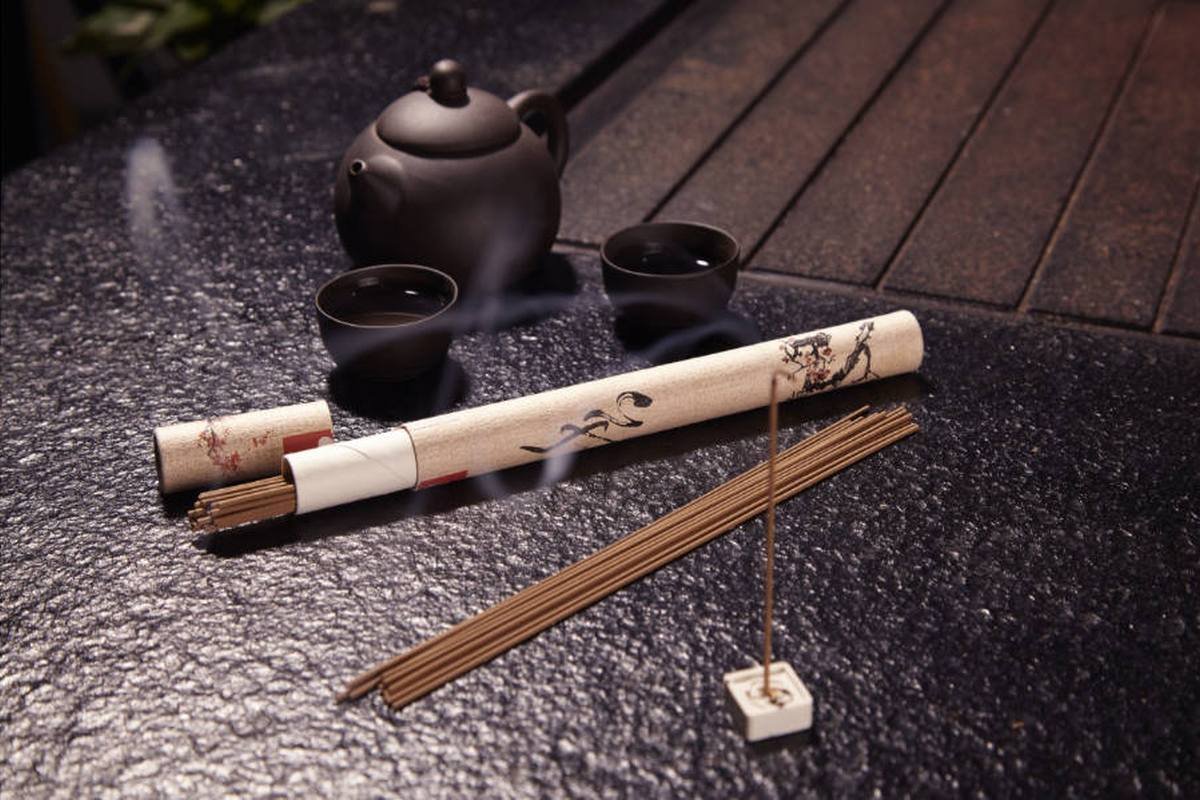
Agarwood Incense Cones: A Buyer's Guide to Cones, Backflow Cones, Sticks and Coils
Cones are the format buyers ask about once their stick line is selling. Agarwood incense cones, often sold as oud incense cones, use the same agarwood powder as sticks, but the shape changes how they burn, how they pack and how a shopper uses them. Backflow cones add a hollow channel and a visual effect that sells well on video. This guide compares cones, sticks and coils, explains binders, burn time and agarwood content, and lists what to ask a supplier before you commit to a cone line.

Written by
Founder & Chief Sourcing Officer, AgarwoodTown
15+ years hands-on experience grading plantation agarwood, sourcing directly from Dianbai and Maoming districts in Guangdong — the world's largest Aquilaria sinensis cultivation region. Wang has personally inspected thousands of CITES export shipments and holds plantation certification from China's National Forestry and Grassland Administration. He advises GCC, European and East Asian wholesale buyers on grade selection, CITES compliance and supply chain due diligence.
CITES Certified
In this article
- What Are Agarwood Incense Cones?
- How a Cone Is Formed
- Oud Incense Cones vs Sticks vs Coils
- What Are Backflow Oud Incense Cones?
- Why the Smoke Falls
- Trade-offs for Retailers
- What Goes Into a Cone? Powder, Binder and Fillers
- Binders: Makko, Joss Powder and Gums
- How Much Agarwood Is in a Cone?
- How Long Do Oud Incense Cones Burn?
- What Changes Burn Time
- Storing Cones and Burning Them Safely
- Retail Formats, Packaging and MOQ
- MOQ Reality for a Cone Line
- How to Source Oud Incense Cones from a Supplier
- Do Cones Need CITES Paperwork?
- Frequently Asked Questions
1. What Are Agarwood Incense Cones?
Agarwood incense cones are small, self-burning cones pressed from agarwood powder, a binder and usually some filler. You light the tip, blow out the flame and the cone smoulders down to its base.
The numbers explain the price. According to Liu et al. (2013), only about 10% of Aquilaria trees produce agarwood without human help, so most supply today comes from induced, cultivated trees.[4]
They belong to the family of combustible incense, alongside sticks and coils. In other words, the cone carries its own fuel, so no charcoal or electric burner is needed. That separates cones from oud wood chips and bakhoor, which are heated from below.
For a shopper, the appeal is simplicity. A cone needs only a heat-proof dish, it gives a concentrated burst of scent, and it leaves no bamboo core behind. For a retailer, the appeal is a different shelf position from sticks, often at a different price point.
We do not list cones as a stock product. Our wholesale range covers agarwood powder, coreless and cored sticks, Japanese-style koh incense, bakhoor and chips. Cones are therefore a format you discuss with a supplier, and this guide covers what that discussion should include.
How a Cone Is Formed
The basic method is old and simple. Makers mix dry powders, add water until the mass behaves like stiff clay, then press or roll it into a cone. The cones dry slowly before packing.
Small workshops shape cones by hand or with hand-filled moulds. Larger makers use pressing machines with multi-cavity moulds, which keeps the size and weight consistent from cone to cone.
Drying matters more than most buyers expect, and we would ask about it first. A cone that dries too fast can crack, while one packed too wet can grow mould in transit. Ask any cone supplier how they dry and how they check moisture before packing.
2. Oud Incense Cones vs Sticks vs Coils
| Feature | Cones | Sticks (cored or coreless) | Coils |
|---|---|---|---|
| Shape and fuel | Solid or hollow cone of pressed powder; burns from the tip down | Powder rolled or extruded as a thin rod, with or without a bamboo core | Long strand of paste wound into a flat spiral |
| Burn time | Short; the widening base burns more material per minute | Medium; set mainly by length and diameter | Long; the main reason buyers choose coils |
| Scent release | Concentrated burst that fills a small room quickly | Steady, even release along the length | Low and continuous over a long period |
| Ash and residue | Compact ash pile in the dish | Fine ash plus a bamboo core on cored sticks | Spiral of ash; needs a hanger or a wide tray |
| Accessories | Heat-proof dish, or a backflow burner for backflow cones | Stick holder or ash catcher | Coil holder or hanging stand |
| Typical setting | Homes, gift sets, short sessions | Homes, temples, shops, daily use | Temples, large rooms, long sessions |
| Main buyer question | Does it stay lit and burn to the base? | Is the core clean and the scent true? | Will it last the stated time? |
General characteristics of each format. Exact burn time and scent strength vary with formula, density, size and room conditions.
Shape decides how much fuel burns at once. A cone starts narrow and widens towards the base, so the burning area grows as it burns down. Therefore cones give stronger scent per minute than a stick of similar weight, but they finish sooner.
Sticks give the most even burn and the widest range of formats. Our own agarwood incense sticks in cored and coreless styles cover daily-use and gift lines. We explain stick formats, kyara-grade sticks and quality checks in our guide to agarwood incense sticks.
Coils, to our mind, sit at the other end. They are built for long sessions in temples and large rooms, where a cone would finish too fast. However, coils need careful packing, and many retail buyers outside East Asia never stock them.
3. What Are Backflow Oud Incense Cones?
| Feature | Standard cone | Backflow cone |
|---|---|---|
| Shape | Solid cone of pressed powder | Cone with a hollow channel running up from a hole in the base |
| Smoke direction | Rises from the tip, like a stick | Part of the smoke runs down through the channel and pours out below |
| Burner needed | Any heat-proof dish | A backflow burner with a hole or channel under the cone |
| Visual effect | Ordinary rising smoke | Slow, waterfall-like smoke flowing over the burner |
| Scent emphasis | Agarwood and resin character can lead | Formula must also produce heavy, visible smoke |
| Failure modes | Goes out mid-burn if too dense or damp | Weak or no backflow if the channel is blocked, damp or badly formed |
| Retail story | Fragrance first | Display and gift first, fragrance second |
A backflow cone is a hollow cone designed to make smoke flow downwards. It sits on a special burner, often shaped like a mountain, a lotus or a small waterfall, and the smoke runs over it like mist.
Why the Smoke Falls
The hole in the base opens into a channel that runs up inside the cone. As the cone burns down, part of the smoke is drawn into that channel and cools as it passes through. Cooler, denser smoke then sinks out of the base and spills over the burner.
We should stress that the effect only works in still air. A fan, an open window or air conditioning will break the stream and lift the smoke instead. That is worth printing on a pack, because otherwise a customer may assume the cone is faulty.
The effect also depends on smoke density. A formula that burns very cleanly, with little visible smoke, gives a weak backflow. For that reason, backflow formulas are often built for heavier smoke than standard cones.
Trade-offs for Retailers
Backflow oud incense cones sell on looks. They film well, they suit gift sets with a burner, and they give shops a reason to sell accessories. Moreover, the burner itself becomes a repeat-purchase driver for refill cones.
The trade-off, as we see it, is the scent. A cone tuned for dense smoke is not always the cone that shows agarwood at its best. Fine agarwood character usually comes through better in a gently heated chip or a well-made stick than in heavy smoke.
So we suggest deciding early what the line is for. If it is a display and gift product, backflow makes sense. If it is a fragrance product for oud lovers, a standard cone or a stick may serve the customer better.
4. What Goes Into a Cone? Powder, Binder and Fillers
Every cone is a recipe of three parts: an aromatic material, a binder that holds the shape, and fuel that keeps it burning. In oud incense cones, the aromatic part is agarwood powder, sometimes with added oils or other aromatics.
Agarwood itself is resin-loaded Aquilaria wood. Its scent comes from sesquiterpenes and 2-(2-phenylethyl)chromones that form in the resinated wood, and heat releases them into the air.[1] Pale, unresinated wood contributes bulk and burn, but very little oud character.
Binders: Makko, Joss Powder and Gums
The binder decides how a cone burns as much as how it holds together. Japanese-style incense traditionally uses makko, a powder from the bark of the tabu-no-ki tree, which binds and burns with little scent of its own.[2]
Chinese and South Asian makers often use joss powder, a sticky bark powder, for the same job. Natural gums such as gum arabic or guar also appear, usually in small amounts, because too much gum makes a cone hard to light.
Some lower-cost cones add charcoal powder, plain wood flour or a burn aid so that they stay lit. Those additives are not wrong in themselves. However, they change the smoke, and a buyer should know they are there.
How Much Agarwood Is in a Cone?
There is no industry standard for agarwood content in cones. One maker's "oud cone" may be mostly agarwood powder; another may hold a little agarwood plus a synthetic oud fragrance oil.
No self-burning cone can be pure agarwood, because it needs a binder to hold its shape. Therefore the honest questions are how much agarwood the formula holds, what grade of powder it uses, and whether any fragrance oil is added on top.
In our view, grade matters as much as percentage. Powder milled from entry-grade D or C material burns with a lighter, woodier note, while powder from better-resinated wood smells deeper. Our agarwood powder for incense making starts from $10.30 per 50 g, and price rises with the grade of wood it is milled from.
We cover mesh size, makko blends and other powder applications in our agarwood powder uses guide. For cones specifically, a fine, even mesh presses more cleanly and burns more evenly than coarse powder.
| Ingredient | Role in the cone | What to ask the supplier |
|---|---|---|
| Agarwood powder | Main aromatic; also burns as fuel | Share of the formula, grade of source wood, species and origin |
| Makko (tabu-no-ki bark powder) | Binder and smooth, low-scent fuel | Is makko the main binder, and roughly what share? |
| Joss powder | Sticky bark binder common in Chinese and South Asian incense | Source and whether it adds its own scent |
| Natural gums | Extra binding strength in small amounts | Which gum, and does it affect lighting? |
| Charcoal or wood flour | Cheap fuel and bulk | Is any present, and how much of the weight is it? |
| Burn aid | Helps dense cones stay lit | Is one used, and is it declared on the label? |
| Fragrance or essential oil | Boosts or imitates oud scent | Natural agarwood oil, synthetic accord, or none? |
| Other aromatics | Sandalwood, resins or spices in blended cones | Full aromatic list for label and allergen review |
Typical roles in cone formulas across the trade. Ask any supplier for the actual ingredient list of the cone you are quoting.

5. How Long Do Oud Incense Cones Burn?
Burn time varies, and in our view any fixed number on a pack should come from testing that exact cone. Size, density, binder, moisture and airflow all change how long a cone lasts.
As a general pattern, a cone burns faster than a stick of similar weight, because its base is wider. A coil of similar weight lasts longest, since it burns a thin strand over a long path.
What Changes Burn Time
- Size and weight: a taller, heavier cone holds more fuel and lasts longer.
- Density: firmly pressed cones burn slower than loose ones, but very dense cones can go out.
- Binder and fuel: makko and burn aids keep a cone lit; gums and heavy resins slow it.
- Moisture: damp cones light poorly and smoulder unevenly; humid storage makes this worse.
- Airflow: a draught speeds burning and, for backflow cones, breaks the smoke stream.
- Backflow channel: the hollow core removes material, so backflow cones are often shorter-burning than solid cones of the same size.
For private-label work, ask the supplier to burn-test several cones from each batch in still air and record the range. Then print a range, not a single number, and keep the test notes on file.
We would also check the ending. A good cone burns down to the base. A cone that dies halfway usually points to uneven density or too much moisture, and customers notice it at once.
Storing Cones and Burning Them Safely
Cones keep best in a sealed container away from damp and heat, because humidity makes them hard to light and dulls the scent. Retail packs with an inner bag or tin last longer on the shelf.
Burn cones on a heat-proof dish or a matching backflow burner, never directly on wood or fabric. Backflow cones need a hollow base and a burner made for them. Keep the room ventilated, as with any incense.
6. Retail Formats, Packaging and MOQ
| Retail format | What it is | Best suited to |
|---|---|---|
| Small tin or box of standard cones | Loose cones in a rigid tin or carton, often with a small dish | Gift shops, online stores, first-time oud buyers |
| Backflow cone refill pack | Hollow cones in a carton or pouch, sold apart from the burner | Stores that already sell backflow burners |
| Burner and cone gift set | Ceramic backflow burner bundled with a starter pack of cones | Seasonal gifting, display-led retail, video marketing |
| Bulk cones for repacking | Unbranded cones in sealed bags for your own packaging | Private-label brands with their own filling and boxing |
Formats seen across the incense trade. AgarwoodTown does not list cones as a stock product; MOQs quoted below refer to our listed incense, powder and wood lines.
Cones pack more efficiently than sticks, because they are short and solid. However, they still need moisture protection. A sealed inner bag or a lined tin protects both scent and lighting quality, especially in humid markets.
Labels should state the main ingredients, safe-use guidance and, for backflow cones, the still-air note. Your market may have its own rules on labelling of combustible incense, so confirm them with your importer or regulator.
MOQ Reality for a Cone Line
Cone MOQs depend on the maker, the mould and whether the formula is custom, so we quote them per project. A custom mould, a custom scent blend or printed packaging will usually raise the first order size.
Our own published minimums give a useful reference point for adjacent lines. Bakhoor incense sticks and our other stick lines run from $2.35–$5.89 per box with an MOQ of 1 kg. Japanese koh incense starts from $6/g with an MOQ of 100 g, and oud wood chips start from $0.24/g with an MOQ of 100 g.

Step-by-Step Process
7. How to Source Oud Incense Cones from a Supplier
Define the product before you ask for prices
Decide whether you want standard or backflow cones, roughly what size, and whether the line is fragrance-led or display-led. Note your target market too, because labelling rules and scent preferences differ between the Gulf, Japan, Europe and North America.
Ask whether the supplier makes cones or sources them
Some incense suppliers press cones in-house; others buy them from specialist workshops. Neither is wrong, but you should know who controls the formula, the drying and the batch testing, and who answers if a batch arrives cracked or damp.
Request the formula in writing
Ask for the approximate share of agarwood powder, the grade and species of the source wood, the binder, any fuel or burn aid, and whether fragrance oil is added. A clear written answer protects your label claims and makes later reorders consistent.
Order paid samples and burn-test them
Burn several cones in still air and note lighting, burn time range, ash, smoke volume and whether each cone burns to the base. For backflow cones, test on the burner you plan to sell. Compare the scent against a gently heated agarwood chip of known grade.
Agree MOQ, packaging and moisture protection
Confirm the minimum order per scent and per pack format, the inner bag or liner, the outer carton and how cones are cushioned. Ask how the supplier dries cones and how long they recommend storing them before sale.
Settle documents before shipping
Ask which export documents apply to the finished cones and to any bulk powder in the same order. For agarwood products this may include a CITES permit, depending on the product form and the current annotation text, plus your own country's import checks.
If you are building a cone line from our materials, the starting point is usually powder and an existing incense order. You can test our powder grades and our Japanese-style koh incense as reference scents before briefing a cone maker.
A gently heated chip is the best benchmark for what agarwood should smell like. Our guide to burning oud wood chips explains how to heat chips without scorching them, which makes the comparison fair.
Paid samples from us start from 100 g of plantation oud wood chips graded D to AAA or 1 g of oil. Samples are non-refundable, and we reply to enquiries within 4 business hours, Monday to Saturday, 9:00–18:00 China time, through our wholesale contact page.
8. Do Cones Need CITES Paperwork?
Sometimes. All Aquilaria species have been listed in CITES Appendix II since 2004, and the listing covers many agarwood products, not only raw wood.[3]
- Annotation #14: the listing carries an annotation that exempts some finished products packaged for retail. Check the current annotation text before you plan a shipment, because it can change at CITES meetings.
- Bulk powder and chips: powder and wood sold for further processing are not retail-packaged, so they may need an export permit.
- Bulk cones for repacking: unbranded cones in bulk bags may be treated differently from cones in retail tins. Confirm with the authorities before you choose your pack format.
- Our shipments: every wholesale shipment from us travels with a grading note or certificate, plus a CITES Appendix II export permit wherever one is required.
- Your side: importing countries can add their own rules. EU buyers should read our notes on importing oud incense into Europe.
Frequently Asked Questions
Oud incense cones are made from agarwood powder mixed with a binder, such as makko or joss powder, and sometimes extra fuel, natural gums or fragrance oil. The share of agarwood varies widely between makers, so ask the supplier for the approximate formula and the grade of powder in writing.
They usually feel stronger for a shorter time. A cone widens towards the base, so it burns more material per minute than a stick of similar weight and fills a small room quickly. A stick gives a steadier, longer release. Which is better depends on the room and on how long the customer wants scent.
It varies with size, density, binder, moisture and airflow, so there is no single honest figure. Cones generally burn faster than sticks and much faster than coils of similar weight. For a private-label line, burn-test cones from each batch in still air and print a range on the pack rather than one number.
A backflow cone has a hollow channel that runs up from a hole in its base. When it burns on a backflow burner, part of the smoke cools in the channel and sinks, pouring out underneath like mist. The effect needs still air and a formula that makes dense smoke, so it suits display and gift products.
Not always. Backflow formulas are often built to make heavy, visible smoke, and that can mask fine agarwood character. A standard cone, a good stick or a gently heated chip usually shows the scent more clearly. Many retailers therefore sell backflow cones as a display product and keep a separate fragrance-led line.
Cones are not one of our listed products. We supply agarwood powder, cored and coreless incense sticks, Japanese-style koh incense, bakhoor and graded oud wood chips. Buyers building a cone line often use our powder grades and stick lines as a reference, and we can discuss what is possible for a specific project on enquiry.
Check that cones are whole, dry and evenly shaped, then light several in still air. Note how easily they light, whether they burn to the base, the burn time range, smoke volume and ash. Compare the scent with a gently heated agarwood chip of known grade, and confirm the stated formula matches what you smell.
It can be sold, but the label should be honest. If the cone contains little agarwood and relies on a synthetic oud accord, avoid wording that suggests natural agarwood content. If it contains real agarwood powder plus fragrance oil, say both. Clear labelling protects your brand and keeps you on the right side of consumer rules.
It depends on the maker, the mould, the formula and the packaging. Custom scents and printed packs usually raise the first order. For reference, our listed stick lines start at an MOQ of 1 kg and koh incense at 100 g. Many brands launch cones alongside an existing stick or chip order to keep the first run small.
It depends on the product form. Aquilaria is listed in CITES Appendix II, and annotation #14 exempts some finished retail-packaged products, so check the current annotation text. Bulk powder or unbranded bulk cones for repacking may be treated differently. Confirm with your national CITES authority before choosing a pack format.
References
- 1Naef R.. The volatile and semi-volatile constituents of agarwood, the infected heartwood of Aquilaria species: a review. Flavour and Fragrance Journal, 2011.View source
- 2
- 3
- 4Liu Y., Chen H., Yang Y., et al.. Whole-tree agarwood-inducing technique: an efficient novel technique for producing high-quality agarwood in cultivated Aquilaria sinensis trees. Molecules, 2013.View source
All scientific references are provided for transparency. AgarwoodTown summarises peer-reviewed findings for educational purposes and does not claim to provide medical or regulatory advice.
Wholesale Catalog
Buy the products discussed in this article


Related Articles
Source Direct from Origin
Discuss Your Requirements with Our Team
We respond within 24 hours. Share your target grade, quantity and destination — we'll send current pricing, a sample pack option, and CITES documentation details.