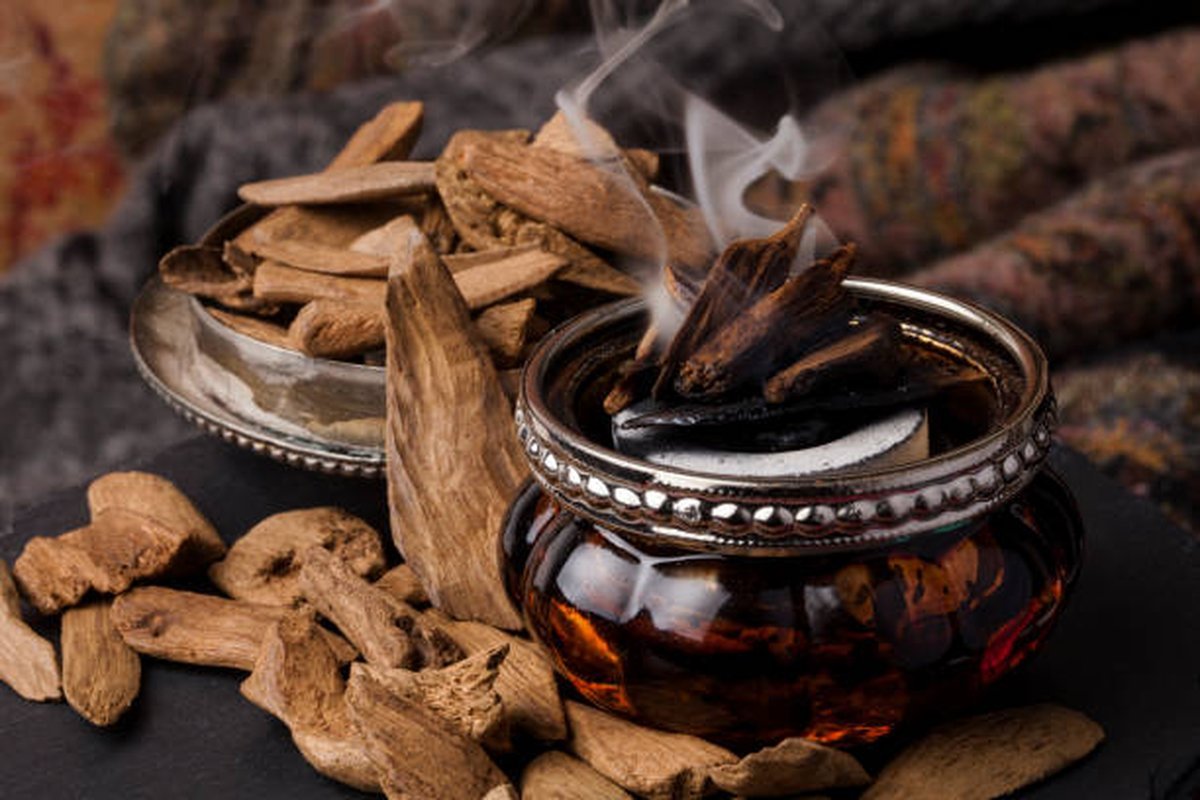
How to Burn Bakhoor: A Step-by-Step Guide for Charcoal and Electric Burners
The retailers who buy bakhoor and oud chips from us hear one question from their own customers more than any other. Knowing how to burn bakhoor sounds simple, yet most first attempts end in thick smoke and a burnt smell. The fix is to heat the bakhoor, not set it on fire. In this guide we walk through both methods we use on our own test bench, charcoal and electric, step by step. We also cover how much to use, what the smoke tells you, and how to stay safe indoors.

Written by
Founder & Chief Sourcing Officer, AgarwoodTown
15+ years hands-on experience grading plantation agarwood, sourcing directly from Dianbai and Maoming districts in Guangdong — the world's largest Aquilaria sinensis cultivation region. Wang has personally inspected thousands of CITES export shipments and holds plantation certification from China's National Forestry and Grassland Administration. He advises GCC, European and East Asian wholesale buyers on grade selection, CITES compliance and supply chain due diligence.
CITES Certified
In this article
- How to Burn Bakhoor: The Short Answer
- Before You Start: What You Need
- Know What You Are Burning
- Step 1 — Choose Charcoal or an Electric Burner
- Step 2 — Light Bakhoor Charcoal Safely
- Quick-Light vs Natural Bakhoor Charcoal
- Step 3 — Add the Bakhoor and Read the Smoke
- How Much Bakhoor to Use
- Scenting Clothes and Hair the Gulf Way
- Step 4 — How to Burn Bakhoor Without Charcoal
- Testing Samples Side by Side
- Gentle Heat vs Too Much Heat
- Common Mistakes and Safety Indoors
- Putting Out Charcoal and Storing Bakhoor
- Which Chips and Bakhoor Suit Which Heat
- Frequently Asked Questions
1. How to Burn Bakhoor: The Short Answer
Here is how to burn bakhoor in one line: put one small piece on gentle, indirect heat and let the oils and resin warm until a thin, sweet wisp rises. If you see thick smoke, the heat is too high.
Demand is steady because use is daily. According to a 2012 study in Environmental Health Perspectives (Yeatts 2012), 86% of the 628 UAE households surveyed burned incense at least weekly and 44% burned it every day.[5]
Bakhoor is scented wood or a scented paste made to be heated on a burner, a tradition rooted in the Arabian Peninsula.[1] In Gulf homes it perfumes rooms, clothes and hair before guests arrive. The same method also works for plain oud wood chips, which are simply natural agarwood with no added oils.
Technique changes the result more than most buyers expect. A good bakhoor burned badly smells worse than an average one burned well, which is why we suggest testing every sample on the burner your customers will actually use.
Heat is also how we judge our own wood. Aroma under gentle heat is one of the four tests our founder, Wang Jianyu, uses on every lot of chips, along with visual inspection, resin content and the sink test. So the advice below follows the same logic we use when we grade.
Before You Start: What You Need
- Bakhoor or oud chips: a few small pieces, not a handful.
- A heat source: charcoal in a heat-proof burner, or an electric bakhoor burner.
- A heat-proof base: a ceramic tile, stone slab or metal tray under the burner.
- Tongs or tweezers: for the coal and the bakhoor.
- Fresh air: a window you can open, and ideally a carbon monoxide alarm in the room.
Know What You Are Burning
Three products end up on the same burner. Soaked chips (mabsoos) are agarwood pieces steeped in oils. Pressed tablets (ma'amoul) are powder, oils and binder shaped into small cakes. Natural oud chips carry only their own resin.
Each one behaves differently on heat. Sugar-bound tablets melt and smoke sooner, soaked chips release oil fast, and natural chips open slowly. Our guide to what goes into bakhoor explains why.
2. Step 1 — Choose Charcoal or an Electric Burner
| Feature | Charcoal burner (mabkhara) | Electric bakhoor burner |
|---|---|---|
| How it heats | A glowing coal under or beside the bakhoor | A metal plate with a dial or fixed setting |
| Scent | Fuller, smokier, the traditional Gulf effect | Cleaner and gentler, with less smoke |
| Control | Hard to adjust once lit | Turn the heat down in seconds |
| Set-up time | Several minutes for the coal to ash over | A minute or two to warm |
| Indoor safety | Produces carbon monoxide; needs good ventilation | No combustion of fuel; still needs care with heat |
| Best for | Majlis use, festive occasions, scenting clothes | Apartments, beginners, daily use, shop testing |
For first-timers, we usually suggest an electric burner. It teaches you what good bakhoor smells like before you have to master charcoal. Many Gulf households own both and choose by occasion.
If you are choosing burners to stock, our bakhoor burner guide for retailers compares models, heat settings and pack instructions. The rest of this guide focuses on technique.
Step-by-Step Process
3. Step 2 — Light Bakhoor Charcoal Safely
Open a window first
Charcoal produces carbon monoxide as it burns. Start the air moving before you light anything, and keep the room ventilated for the whole session.
Hold the coal with tongs and light one edge
Work over a heat-proof surface. A quick-light disc catches within seconds and sparks across its surface; natural charcoal needs a longer flame and more patience.
Set it in the burner and wait
Place the coal in the mabkhara and leave it until a thin grey-white ash covers the surface. This takes several minutes. Putting bakhoor on too early is the most common reason for a harsh first smell.
Soften the heat
Bare, glowing charcoal is too hot for good bakhoor. Let the ash build, or bury the coal partly in clean burner ash or sand so only the top shows. A thin mica plate on the ash gives the gentlest heat of all.
Quick-Light vs Natural Bakhoor Charcoal
Quick-light discs contain an accelerant, so they light fast but can add a sharp, sulphurous edge until they finish igniting. Natural bakhoor charcoal made from coconut shell, bamboo or hardwood takes longer but smells cleaner.
Either kind works if you wait for the ash coat. For high grades, we recommend natural charcoal, because the cleaner heat makes small differences in scent easier to notice.
4. Step 3 — Add the Bakhoor and Read the Smoke
Use tweezers to set one small piece at the cooler edge of the coal, not in its centre. Within a minute you should see a thin, pale wisp and notice a sweet, resinous scent.
Now watch. If the piece blackens fast, crackles, or pours out thick grey smoke, move it further from the heat or lift it off and let the coal cool for a minute. You cannot rescue a piece that has caught fire, but you can save the next one.
When the scent fades and the piece looks dry and black, lift it off. Add a fresh piece only if you want to continue. In Gulf homes, people often pass the burner around guests, or hold clothing above it for a few moments, keeping the fabric moving.
How Much Bakhoor to Use
One or two small pieces fill a normal room. Soaked bakhoor and high-grade chips project strongly, so a single piece the size of a fingernail is often enough.
A pile of bakhoor on hot coal traps heat, chars fast and mostly makes smoke. So add pieces one at a time. For lower-grade natural chips, which hold less resin, people use a little more, but still one at a time.
Scenting Clothes and Hair the Gulf Way
In much of the Gulf, burning bakhoor is as much about clothes as rooms. People hold a garment or a scarf above the burner for a few seconds at a time, turning it so the smoke reaches the inside. Some stand the burner on the floor and let the smoke rise under a long robe.
The rules are the same as for a room: gentle heat, a small piece, and fabric that never touches the burner. Synthetic fabrics can melt, so keep a hand-width of space at all times. For hair, many people use a few seconds of smoke at the ends rather than near the scalp.
5. Step 4 — How to Burn Bakhoor Without Charcoal
To burn bakhoor without charcoal, use an electric bakhoor burner. Start at a low setting, add one piece, and raise the heat one step at a time until the scent opens. Stop there.
Every burner model heats differently, so there is no single correct setting. Start low and wait one to two minutes before stepping up. If visible smoke appears, step back down.
Pressed tablets need the most care, because their sugar or honey binder can caramelise and smoke at high heat. Natural oud chips usually need slightly more heat to open than soaked bakhoor. High grades need less.
Electric burners are also the easiest way to compare samples. With our paid sample sets, we suggest testing each one on the same burner, at the same setting, with a short break in between.
Testing Samples Side by Side
If you are choosing bakhoor to stock, test it the way your customers will burn it. We suggest three rules. Use one burner and one setting for every sample. Burn one piece of the same size from each lot. And smell each sample at the start, after three minutes and after ten, writing a note each time.
Then repeat the best two on charcoal. A blend that shines on an electric plate can smoke on bare coal, and the reverse also happens. A ten-minute test like this costs a few grams of each sample and can save a wholesale order that would not sell.


6. Gentle Heat vs Too Much Heat
| What you notice | Gentle heat (what you want) | Too much heat (what to avoid) |
|---|---|---|
| Smoke | A thin, pale wisp that rises and fades | Thick grey or white smoke, sometimes a flame |
| Scent | Sweet, resinous, layered, changing over minutes | Sharp, acrid, burnt sugar or charred wood |
| The piece | Darkens slowly, often keeps its shape | Blackens, bubbles or crumbles within moments |
| The room afterwards | Soft, lingering scent and little residue | Smoky haze; heavy smell on fabric |
| What it means | Heat is right for this bakhoor | The wood or binder is burning, whatever the grade |
More smoke does not mean better bakhoor. Smoke is mostly the visible product of wood or sugar burning.
Thick smoke can also hide a quality problem. Some cheap chips are dipped in perfume oil to make plain wood smell rich. On heat, they often smoke heavily, smell loud for a minute, then turn flat and sour.
Natural agarwood behaves differently. Studies of agarwood smoke and oil describe dozens of volatile compounds, mainly sesquiterpenes and chromones, released as the resin warms.[2] That is why a resin-rich chip changes its scent over several minutes instead of giving one loud burst.
7. Common Mistakes and Safety Indoors
Most problems come from impatience and too much heat. These are the mistakes we see most, followed by basic safety.
- Adding bakhoor before the coal ashes over. The first smell turns harsh and smoky.
- Piling pieces on. One piece at a time gives more scent and less smoke.
- Using the centre of a bare coal. Start at the cooler edge, or on ash or mica.
- Judging bakhoor by its smoke. Judge it by the scent after two or three minutes.
- Holding fabric still above the burner. Keep clothing moving and well above the heat.
Fire services give clear advice for bakhoor at home. Greater Manchester Fire and Rescue Service asks people to burn it in a well-ventilated room, fit a carbon monoxide alarm where it burns, never leave it unattended, and set the holder on a heat-resistant surface.[3] The same service warns against burning solid fuels such as coals indoors, which is one more reason we point apartment users to electric burners.
When you finish with charcoal, let it burn out in the burner, away from fabric. Leave the ash to cool for several hours, then empty it into a metal container. Warm ash in a plastic bin is a fire risk. We also suggest airing the room for 5 to 10 minutes after each charcoal session, even if you liked the scent.
Putting Out Charcoal and Storing Bakhoor
When you finish, we suggest letting the coal burn out in the burner on a heat-proof surface, or smothering it with sand or ash. Never pour water into a hot ceramic burner, because it can crack, and never empty warm ash into a bin.
Store bakhoor in an airtight jar away from heat and sunlight. Oils evaporate from an open jar, and a blend that smelled rich last month can turn flat. Close the lid straight after each use.
8. Which Chips and Bakhoor Suit Which Heat
| Product | How it behaves on heat | Suggested way to burn it |
|---|---|---|
| Pressed bakhoor tablets (ma'amoul) | Binder melts and smokes early | Electric burner on low, or the cool edge of an ashed coal |
| Soaked chips (mabsoos) | Oils release fast and project strongly | Charcoal with an ash coat, or electric at low to medium |
| Natural oud chips, grade D–C | Light scent; more bare wood, so smokes sooner | Charcoal or electric, gentle heat, slightly larger pieces |
| Natural oud chips, grade B–A | Fuller scent, longer per piece | Electric at low to medium, or mica plate |
| Natural oud chips, AAA and Kynam | Very strong; easily wasted by heat | Mica plate or the lowest electric setting, tiny flakes |
Grades follow AgarwoodTown's internal D–AAA scale plus Kynam. This scale is ours, not an ISO or CITES standard.
We grade our natural chips from D to AAA, with Kynam on allocation only, and every wholesale shipment carries a grading note. If your customers burn mainly on charcoal, we usually suggest starting them on C or B chips; for electric burners and gifting, A and AAA show their quality best.
The rule is easy to remember: the higher the grade, the lower the heat and the smaller the piece. High grades carry more resin per gram, so they need less heat to release scent and lose more value when overheated.
Our wholesale bakhoor chips start from $6/g with a 250 g MOQ, and natural oud wood chips from $0.24/g at grade D, with a 100 g MOQ. Customers who want scent with no burner at all often prefer agarwood incense sticks, from $2.35–$5.89 per box. For agarwood trade paperwork, all Aquilaria species sit in CITES Appendix II, and our wholesale shipments carry an export permit where required.[4]
Want to test bakhoor on your own burner first?
The best way to judge bakhoor is to heat it yourself. Paid, non-refundable samples start from 100 g of chips, and we reply within 4 business hours, Monday to Saturday, 9:00–18:00 China time.
Ask for a bakhoor and chip sample set → Comparing formats first? Read bakhoor vs incense sticks.
Frequently Asked Questions
Open a window, light one edge of a charcoal disc with tongs, and set it in a heat-proof burner. Wait until a grey-white ash covers it, which takes several minutes. Then place one small piece of bakhoor at the cooler edge of the coal and watch for a thin, sweet wisp rather than thick smoke.
Use an electric bakhoor burner. Start at the lowest setting, add one small piece, and raise the heat one step at a time until the scent opens, then stop. Electric burners give steadier, gentler heat with less smoke, which suits apartments and beginners. Pressed tablets in particular do better on low electric heat.
Quick-light discs are convenient and light in seconds, but they can add a sulphurous edge until fully lit. Natural charcoal from coconut shell, bamboo or hardwood takes longer but smells cleaner. Either works if you wait for a full ash coat before adding bakhoor. For high grades, natural charcoal under a layer of ash is kinder.
One or two small pieces are enough for a normal room. Soaked bakhoor and high-grade oud chips project strongly, so a single fingernail-sized piece is often plenty. Add pieces one at a time; a pile traps heat, chars quickly and produces mostly smoke instead of scent.
The heat is almost always too high. Either the bakhoor went on before the charcoal ashed over, it sat on the hottest part of a bare coal, or an electric burner was set too high. Move the piece to the edge, lower the heat, or let the coal cool for a minute, and use smaller pieces.
It varies with the product, the size of the piece and the heat. Soaked chips often give a strong burst for a few minutes, while natural oud chips release more slowly. The scent can linger in fabric and the room for much longer. When the piece looks dry and black, remove it and add another if you want.
It can be, with care. Fire services advise good ventilation, a carbon monoxide alarm in the room, a heat-resistant surface and never leaving it unattended. Charcoal produces carbon monoxide, so many people in apartments prefer electric burners. Let charcoal ash cool fully before disposal in a metal container.
Yes. Natural oud chips use the same burners and the same rule: gentle heat, one small piece at a time. They usually need slightly more heat than soaked bakhoor to open, but high grades need less. Our natural chips start from $0.24/g at grade D with a 100 g MOQ.
For most bakhoor, the edge of a charcoal disc with a full ash coat is fine. For delicate, high-grade material, partly burying the coal in ash, or adding a thin mica plate, gives gentler heat and a cleaner scent. Bare, glowing charcoal is the quickest way to scorch good bakhoor.
Partly. A piece removed early, before it turns dry and black, can go back on later and will still give some scent. Once it is fully spent, it only adds smoke. Natural oud chips of high grade can often be warmed again on a mica plate, because gentle heat releases their resin slowly.
You need a burner made for the job: a heat-proof mabkhara or censer for charcoal, or an electric bakhoor burner. Do not improvise with plates, pans or plastic holders. Set the burner on a heat-resistant surface such as a ceramic tile or metal tray, away from fabric and paper.
References
- 1
- 2Naef R.. The volatile and semi-volatile constituents of agarwood, the infected heartwood of Aquilaria species: a review. Flavour and Fragrance Journal, 2011.View source
- 3
- 4
- 5Yeatts K.B., et al.. Indoor air pollutants and health in the United Arab Emirates. Environmental Health Perspectives, 2012.View source
All scientific references are provided for transparency. AgarwoodTown summarises peer-reviewed findings for educational purposes and does not claim to provide medical or regulatory advice.
Wholesale Catalog
Buy the products discussed in this article


Related Articles
Incense
Bakhoor Burner Guide for Retailers: Electric vs Charcoal, Heat and Safety
15 min read
Sourcing Reference
Bakhoor Sourcing 2026: 7 Premium Standards GCC Luxury Brands Use to Evaluate Source Suppliers
14 min read
Incense
Mabkhara Guide: The Gulf Incense Burner, Its Forms and Its Place in Hospitality
15 min read
Source Direct from Origin
Discuss Your Requirements with Our Team
We respond within 24 hours. Share your target grade, quantity and destination — we'll send current pricing, a sample pack option, and CITES documentation details.