Agarwood Powder Uses: A Maker's Guide to Grades, Mesh, Makko Blends and Bakhoor
For an incense maker, two questions decide whether a powder is usable: how it smells when it burns, and how fine it is. Those questions sit at the heart of agarwood powder uses, because powder is the working material behind sticks, cones, Japanese koh, Chinese seal incense and much Gulf bakhoor. This guide explains how powder is graded, which fineness suits which product, how makko blends and bakhoor binders change the picture, and how to store powder so it keeps its aroma. It is written for manufacturers and private-label buyers, not for home crafters.

Written by
Founder & Chief Sourcing Officer, AgarwoodTown
15+ years hands-on experience grading plantation agarwood, sourcing directly from Dianbai and Maoming districts in Guangdong — the world's largest Aquilaria sinensis cultivation region. Wang has personally inspected thousands of CITES export shipments and holds plantation certification from China's National Forestry and Grassland Administration. He advises GCC, European and East Asian wholesale buyers on grade selection, CITES compliance and supply chain due diligence.
CITES Certified
In this article
- What Are the Main Agarwood Powder Uses?
- What Agarwood Powder Actually Is
- How Is Agarwood Powder Graded?
- Why Powder Is Harder to Grade Than Chips
- What Mesh Size Does Each Use Need?
- Agarwood Powder Uses in Incense Making
- Sticks: Cored and Coreless
- Makko Blends and Japanese Koh
- Cones and Backflow Cones
- Seal Incense (Xiang Zhuan)
- Burning Loose Powder and Other Uses
- How Is Agarwood Powder Used in Bakhoor?
- Pure Powder vs Blended Powder
- How Should You Store Agarwood Powder?
- Buying Agarwood Powder Wholesale
- Frequently Asked Questions
1. What Are the Main Agarwood Powder Uses?
The main agarwood powder uses are incense sticks, cones, Japanese-style koh, Chinese seal incense and bakhoor tablets. In each case the powder supplies the scent, while a binder, a combustion base or a carrier supplies the shape and the burn.
Why is resinous agarwood scarce? According to Liu et al. (2013), only about 10% of Aquilaria trees form agarwood naturally; the rest stay pale, almost scentless wood unless they are wounded and infected.[5]
Agarwood has been burned as incense across Asia and the Middle East for centuries, and powdered aromatics have long been part of that practice. For the wider map of what the wood is used for, from oil to beads, see our overview of agarwood uses by form and grade. This article stays with powder.
For a sense of cost, our pure agarwood powder sells for $10.30 per 50 g, about $0.21/g. A 10 g batch of cones at 30% agarwood therefore carries roughly $0.62 of powder before binder, labour and packing.
What Agarwood Powder Actually Is
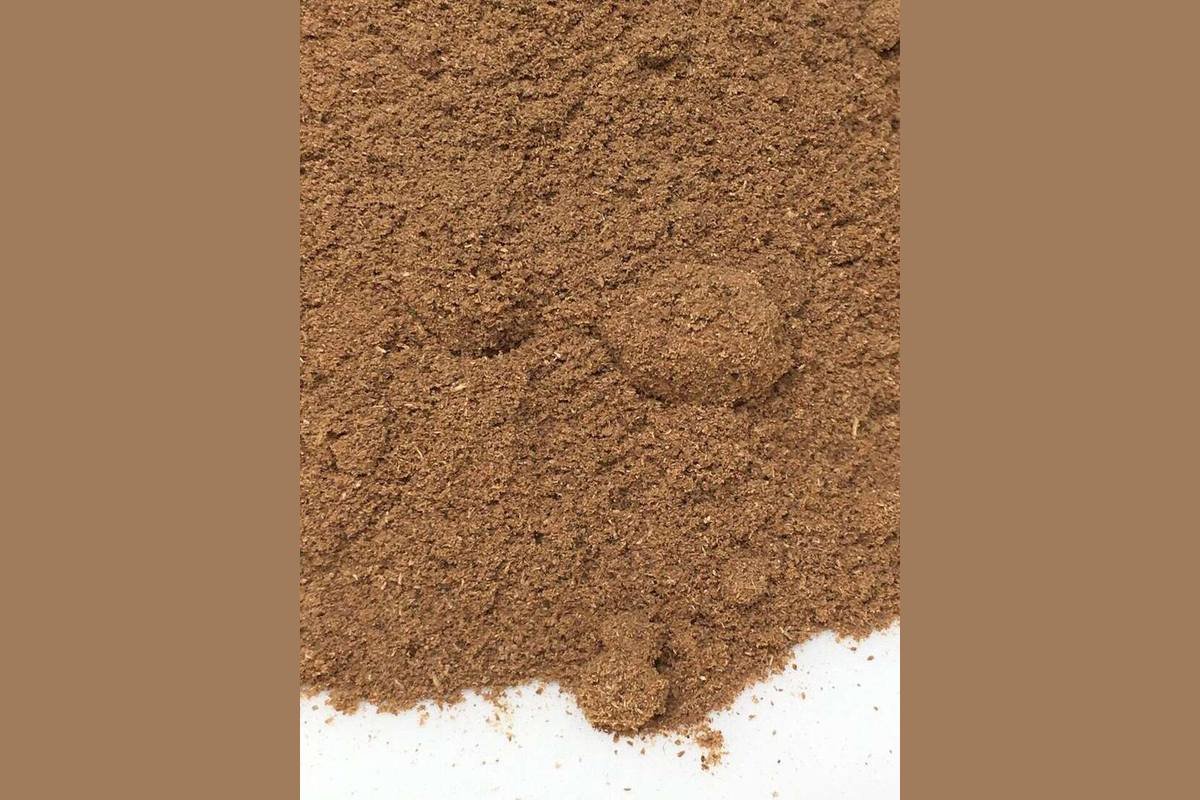
Agarwood powder is resinated Aquilaria wood that has been milled and sieved. Nothing more should be in it. That definition sounds obvious, yet it is the first thing a buyer should confirm, because "agarwood powder" on a label can cover very different contents.
Our powder comes from plantation Aquilaria sinensis grown and inoculated at our 100+ mu plantation in Guan Zhu Town, Dian Bai District, Maoming, Guangdong. Milling turns material that would never sell as whole chips — thin pieces, offcuts and trimmings from carving and bead work — into a usable product.
2. How Is Agarwood Powder Graded?
| Source grade | What the powder is like | Typical agarwood powder uses |
|---|---|---|
| D | Light tan to mid-brown; gentle, woody aroma that fades quickly on a heater | Everyday sticks and cones, bakhoor filler, blends where agarwood is one note among several |
| C | Darker brown with more resinous flecks; steadier aroma when warmed | Mid-market sticks, makko blends, seal incense, mid-range bakhoor |
| B | Dark brown, slightly oily to the touch; rich, longer-lasting scent | Premium sticks and cones, koh blends with a higher agarwood share |
| A–AAA | Very dark, clumps a little under pressure; deep, layered aroma | Small-batch koh, top-tier seal incense, specialist blends; rarely milled, because whole pieces usually earn more |
Grades follow AgarwoodTown's internal D–AAA scale for the wood the powder is milled from. This scale is ours, not an ISO or CITES standard. Kynam is allocation only and is not normally milled.
Powder is graded by the wood it comes from and then checked by aroma. In practice, most powder in the trade is milled from lower grades, because dense, high-resin pieces earn more as chips, beads or carvings than as dust.
Our grading of the source wood uses the same four tests we apply to chips: visual inspection, aroma, resin content and the sink test. Academic reviews of agarwood quality describe a similar mix of sensory and physical criteria, and they note that no single universal grading standard exists.[1]
Why Powder Is Harder to Grade Than Chips
Milling removes the evidence a grader normally reads. With a chip, you can see resin veins, feel the weight and run a sink test. With powder, colour is the main visual clue, and colour can mislead.
For example, bark, dark heartwood from other species or a light oil spray can all darken a powder. Therefore the burn test matters more for powder than for any other agarwood form. Warm a small pinch on an electric heater or a mica plate, and judge the scent over several minutes, not the first few seconds.
The chemistry explains why. Agarwood aroma comes from a complex mix of sesquiterpenes and 2-(2-phenylethyl)chromones locked in the resin.[2] Real resin keeps releasing scent as it heats. A sprayed fragrance, by contrast, flashes off fast and then leaves plain burnt wood. Our guide to spotting fake agarwood covers these tests in more detail.
3. What Mesh Size Does Each Use Need?
| Use | Fineness needed | Why it matters |
|---|---|---|
| Extruded sticks and coreless sticks | Fine, flour-like powder | Coarse particles block extrusion dies and leave weak spots where a stick can break or go out |
| Dipped or rolled cored sticks | Fine to medium | The paste must cling evenly to the bamboo core without lumps |
| Cones and backflow cones | Fine | An even particle size gives an even burn and a clean tip; backflow channels clog with grit |
| Makko and koh blends | Fine, close to the makko particle size | Particles of similar size mix evenly and burn at a similar rate |
| Seal incense (xiang zhuan) | Fine to medium, free-flowing | The powder must fill a stencil cleanly and hold its line after the mould lifts |
| Bakhoor tablets and maamoul | Medium to coarse, sometimes mixed with small chips | Texture holds oils and gives the slow smoulder Gulf buyers expect |
| Loose powder on a heater | Medium granules | Very fine dust scorches fast; granules release scent more slowly |
Mesh numbers describe sieve openings per linear inch: the higher the number, the finer the powder. The right fineness varies with the machine, the binder and the formula, so always test a sample on your own line.
Mesh size is a frequent technical question about powder, and the honest answer is that it depends on your process. Stick extruders in the trade often ask for something in the region of 80 to 120 mesh, while bakhoor makers may want a much coarser cut. The right figure varies by machine, binder and recipe.
Finer is not automatically better. Fine powder binds more easily; however, it also loses aroma faster in storage.
The practical route is to agree a fineness with your supplier in plain language, then fix it against a physical sample. If your line has a sieve, run the sample through it. Keep a retained sample of each approved lot so later deliveries can be compared side by side.
4. Agarwood Powder Uses in Incense Making
Incense making is the largest group of agarwood powder uses. The core recipe is always the same: an aromatic powder, a binder or combustion base, and water, shaped and then dried slowly. What changes between products is the ratio, the binder and the shape.
Agarwood itself does not hold a flame well. Resinated wood smoulders rather than burns, so almost every self-burning format needs a base that carries the burn from one end to the other. That base is where most quality and cost differences hide.
Sticks: Cored and Coreless
Cored sticks have a bamboo splint coated in paste. Coreless sticks are solid, extruded rods of powder and binder, a style common in Japanese and Chinese premium incense. Coreless sticks show the powder more honestly, because no bamboo smoke mixes with the scent.
Both styles use powder from the lower and middle grades in most commercial lines. Our own finished agarwood incense sticks run from $2.35 to $5.89 per box with a 1 kg MOQ, for buyers who prefer to buy the product rather than make it. Our agarwood incense sticks sourcing guide covers binders, burn time and packaging, so we will not repeat it here.
Makko Blends and Japanese Koh
Makko is a powder made from the bark of the tabu tree (Machilus thunbergii), used in Japanese incense as both binder and combustion base. Once wet, it becomes sticky. Once dry, it burns steadily with very little scent of its own.
That neutrality is why makko pairs well with agarwood. A makko blend lets the agarwood note come through clearly, and the ratio sets the character: more agarwood gives a richer, slower burn, while more makko gives a brighter, more reliable one. Japanese incense traditions developed this pressed-powder craft alongside the ceremonial appreciation of whole wood.
There is a clear line between the two. Kōdō uses solid slivers of wood warmed on a mica plate, never powder; koh incense is the everyday pressed product. Our kōdō incense ceremony guide explains the ceremony side. On the product side, we also sell finished Japanese-style koh incense from $6/g with a 100 g MOQ.
Cones and Backflow Cones
Cones use the same paste as sticks but in a denser shape. The wide base burns longer and gives off more smoke at the end, so the agarwood share and the dryness of the paste both matter.
Backflow cones add a hollow channel through the base. Smoke cools in the channel and sinks, which creates the waterfall effect in a matching burner. For this format the powder must be fine and evenly milled; grit or fibre blocks the channel and the effect fails. We cover formats, binders and retail packs in our separate guide to oud incense cones.
Seal Incense (Xiang Zhuan)
Seal incense, called xiāng zhuàn (香篆) in Chinese, is a powder-only format. The maker levels a bed of fine ash in a censer, sets a stencil mould on top, fills the pattern with incense powder and lifts the mould away. Lit at one end, the powder line burns slowly along the pattern.
This use is demanding. The powder needs to flow, fill sharp corners and hold its edge, and it must keep burning without a binder in many recipes. Therefore seal incense makers often blend agarwood with a small share of a combustion aid, and they test every new lot of powder before they sell it.
Burning Loose Powder and Other Uses
You do not have to make incense to use agarwood powder. A small pinch can be warmed on an electric burner or on the ash of a charcoal disc, which releases the scent quickly. Use very little, because powder burns faster than chips.
Two related products cause confusion. Spent powder left after oil distillation has given up most of its aroma and should be sold as such. Perfume, candle and diffuser makers usually need the oil, not the powder, so ask what your end product really requires.

Step-by-Step Process
5. How Is Agarwood Powder Used in Bakhoor?
Choose the wood base
Bakhoor is burned on charcoal or an electric burner in a mabkhara, and its base is aromatic wood, either as small chips, powder or a mix of both. Powder gives a smoother tablet; chips give texture and a visible wood character. Many makers combine the two.
Blend the aromatics
The wood base is mixed with perfume oils, resins such as frankincense, musk-type notes, rose or other floral oils, depending on the house recipe. Agarwood powder absorbs oil well, so it acts as a scent carrier as well as a scent source.
Add the binder
Traditional recipes often use sugar syrup, honey or natural gums to bind the mixture. The binder must hold the tablet together and melt cleanly on heat, without a burnt-sugar smell that overrides the wood.
Press, shape or roll
Moist paste is pressed into moulds for maamoul-style tablets, rolled into small balls, or left as loose, oily chips. Coarser powder gives a firmer, more open tablet that smoulders slowly; very fine powder can pack too tightly.
Dry and pack airtight
Bakhoor is usually rested so the oils settle into the wood, then packed in sealed jars or tins. Because it contains oils and sugars, it must be packed airtight to keep scent in and moisture out.
Powder is the hidden backbone of much Gulf bakhoor, the scented wood burned for hospitality across the Arabian Peninsula.[3] Chips carry the visual appeal, but powder fills the tablet, carries the oils and keeps cost per unit under control.
The agarwood share varies enormously between brands. Some premium bakhoor is mostly wood with a light oil finish, while some low-cost lines contain very little agarwood at all. For a private-label buyer, the agarwood share and the grade of powder are the two numbers to agree in writing.
If you would rather source finished material, our bakhoor chips for Gulf retail start from $6/g with a 250 g MOQ. Our bakhoor sourcing guide covers formulation, packaging and market expectations in Saudi Arabia and the UAE.


6. Pure Powder vs Blended Powder
| Feature | Pure agarwood powder | Blended or bulked "agarwood" powder |
|---|---|---|
| Contents | Milled resinated Aquilaria wood only | Agarwood plus other woods, makko, fillers or added fragrance |
| Aroma on a heater | Develops slowly and stays agarwood-like for minutes | Often strong at first, then fades into plain burnt wood |
| Colour | Varies with grade, from tan to very dark brown | Can be darkened by bark, dye or oil, so colour proves little |
| Cost | Higher per gram; ours starts from $10.30 per 50 g | Lower, because agarwood is only part of the mix |
| Label claim | Can honestly state 100% agarwood | Should state the blend, not imply pure agarwood |
Neither type is wrong, but they are different products. A premix with makko and other aromatics can be a perfectly good incense base. The problem arises only when a blend is sold as pure agarwood powder at a pure-powder price.
Exhausted wood is a further point to check. After distillation, the spent wood still looks like agarwood but has given up much of its aroma. Some powder on the market is milled from this residue. It has uses as a cheap filler, yet it should never be priced or labelled as aromatic powder.
Therefore ask any supplier three plain questions: what species, what grade of source wood, and whether anything else is in the bag. Our agarwood powder for incense makers is milled from plantation Aquilaria sinensis wood, and every wholesale shipment carries a grading note.
7. How Should You Store Agarwood Powder?
Store agarwood powder airtight, cool, dry and dark, away from strong smells. Powder has far more exposed surface than a chip, so it loses aroma and picks up odours and moisture much faster.
Heat drives off the lighter aromatic compounds. Light can dull colour and scent over time. Moisture is the bigger risk, however, because damp powder clumps, sticks inside machinery and can grow mould.
In practice, keep powder in its sealed inner bag inside a tin or a lidded drum, and open only what you will use soon. Reseal opened bags with as little air as possible, and keep them off concrete floors and away from outside walls where damp collects.
We do not give a fixed shelf life, because it depends on grade, fineness and how the powder is kept. Instead, keep a retained sample from each lot and compare it on a heater every few months. When the scent of stored stock falls clearly behind the retained sample, use that lot first or move it to a lower-grade product.
Handle fine powder as a combustible dust
Any fine, dry wood powder can burn fast if a cloud of it meets a spark or flame. On a production floor, keep milling and sieving areas clean, avoid open flames near loose powder, and follow your local rules for combustible dust and ventilation.
Agarwood powder from us is sold for incense and fragrance making only. It is not sold as a food, supplement or medicine, and we make no health claims for it. Agarwood does appear in traditional Chinese medicine practice, but that is a separate, regulated field, and buyers in it should source through the proper channels.
Step-by-Step Process
8. Buying Agarwood Powder Wholesale
Define the use before the grade
Tell the supplier what you will make — sticks, cones, koh, seal incense or bakhoor — and on what equipment. The use sets the fineness and a sensible grade, so this one line saves rounds of samples.
Ask for species, source grade and contents
Confirm the Aquilaria species, the grade of the source wood and whether the powder is pure or blended. For our powder the answer is plantation Aquilaria sinensis, graded on our internal D–AAA scale, with nothing added unless you order a blend.
Test a small lot on your own line
Our powder is priced from $10.30 per 50 g, so a first trial can stay small. Run a heater test for scent and a production test for binding, burn and finish. Keep part of the approved sample as your reference for future lots.
Agree fineness, packing and tolerance in writing
Write down the fineness in plain words or against your sample, the inner and outer packing, and what happens if a lot falls short. We do not accept returns, but we resolve problems through replacement or credit, as set out on our refund page.
Check CITES paperwork for your destination
All Aquilaria species are listed in CITES Appendix II, and bulk agarwood powder is a wood product that can need an export permit. We ship every wholesale order with a CITES Appendix II export permit where one is required. Annotation #14 exempts some finished retail-packaged products, so check the current annotation text and your own import rules.
Planning an incense or bakhoor line?
Send us your format, target retail price and market, and we will suggest a powder grade to trial alongside matching graded oud wood chips if your recipe uses both. Paid, non-refundable sample orders start from 100 g for chips. We reply within 4 business hours, Monday to Saturday, 9:00–18:00 China time.
Aquilaria species have been listed in CITES Appendix II since 2004, and the listing and annotations are published by the CITES Secretariat.[4] Since 2014 we have shipped plantation agarwood to 500+ B2B buyers in 10+ countries, with the permits each destination requires.
Frequently Asked Questions
The most common uses are incense sticks, cones, Japanese-style koh made with makko, Chinese seal incense and bakhoor tablets. Some buyers also warm loose powder on an electric heater or add it to sachets. Most trade powder goes to manufacturers who bind and shape it into finished incense.
Most commercial sticks use powder milled from D or C grade wood, because those grades give a clear agarwood note at a workable cost. Premium and coreless lines often move up to B grade. Higher grades are usually worth more as whole chips, so A–AAA wood is rarely milled into powder anywhere in the trade.
It varies with the intended use. Extruded sticks and cones need a fine, flour-like powder, often quoted somewhere around 80 to 120 mesh in the trade, while bakhoor and loose burning suit coarser granules. The right figure depends on your machine and binder, so fix it against a physical sample.
Makko is a powder made from the bark of the tabu tree, used in Japanese incense as a binder and combustion base. It turns sticky when wet and burns steadily with little scent of its own. Mixing it with agarwood powder lets the agarwood burn evenly in stick or cone form without masking its aroma.
In bakhoor, agarwood powder forms part of the wood base and acts as a carrier for perfume oils, resins and other aromatics. A binder such as sugar syrup, honey or a natural gum holds the paste together before it is pressed into tablets or rolled. Coarser powder usually gives a slower, more even smoulder.
There is no fixed shelf life, because it depends on grade, fineness and storage. Fine powder loses aroma faster than chips because more surface is exposed. Kept airtight, cool, dry and dark, it holds its scent far longer. Compare stored stock with a retained sample every few months to judge it.
Our agarwood powder starts from $10.30 per 50 g. Price rises with the grade of the source wood and with any custom milling. Because powder is priced in small units, a manufacturer can trial a lot on their own line before scaling up. Contact us with your format and volume for a quote.
Often, yes. All Aquilaria species are listed in CITES Appendix II, and bulk powder is a wood product that can require an export permit. Annotation #14 exempts some finished retail-packaged products, so check the current annotation text. We ship wholesale orders with a CITES export permit wherever one is required.
We sell agarwood powder for incense and fragrance making only, not as a food, supplement or medicine, and we make no health claims for it. Agarwood appears in traditional Chinese medicine practice, but that is a separate regulated field. Buyers in that field should source through properly licensed channels in their own country.
References
- 1Liu Y.Y., Wei J.H., Gao Z.H., et al.. A Review of Quality Assessment and Grading for Agarwood. Chinese Herbal Medicines, 2017.View source
- 2Naef R.. The volatile and semi-volatile constituents of agarwood, the infected heartwood of Aquilaria species: a review. Flavour and Fragrance Journal, 2011.View source
- 3
- 4
- 5Liu Y., Chen H., Yang Y., et al.. Whole-tree agarwood-inducing technique: an efficient novel technique for producing high-quality agarwood in cultivated Aquilaria sinensis trees. Molecules, 2013.View source
All scientific references are provided for transparency. AgarwoodTown summarises peer-reviewed findings for educational purposes and does not claim to provide medical or regulatory advice.
Wholesale Catalog
Buy the products discussed in this article


Related Articles
Source Direct from Origin
Discuss Your Requirements with Our Team
We respond within 24 hours. Share your target grade, quantity and destination — we'll send current pricing, a sample pack option, and CITES documentation details.