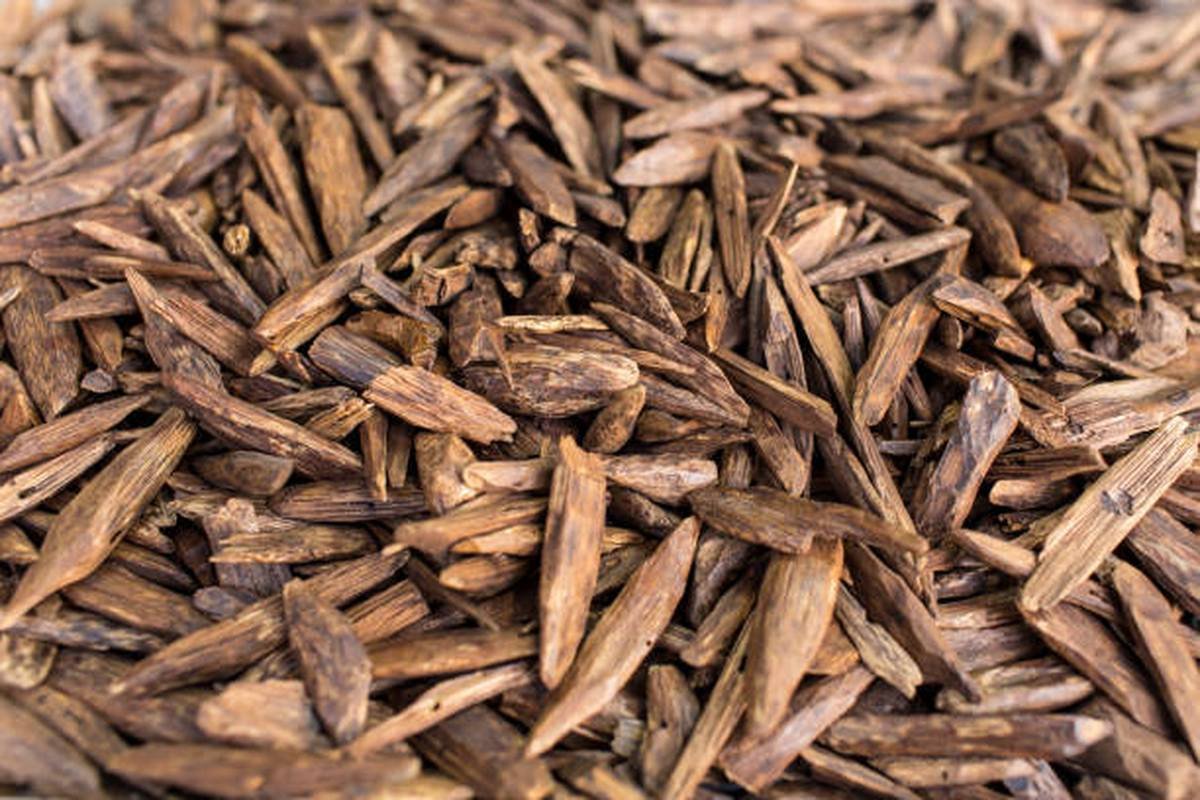
Gaharu Explained: A Plantation Grower's Guide to Agarwood in the Malay Trade
Buyers from Kuala Lumpur, Jakarta and Singapore usually ask not for agarwood but for gaharu, the Malay and Indonesian name for the same resin-darkened wood. Gaharu chips, oil and incense are all agarwood. Yet the regional trade has its own grade words, its own species and its own export rules. This guide explains what gaharu is and how Southeast Asian grade names line up with our D–AAA scale. It also shows how to source plantation gaharu from our grading table in Dian Bai, Guangdong.

Written by
Founder & Chief Sourcing Officer, AgarwoodTown
15+ years hands-on experience grading plantation agarwood, sourcing directly from Dianbai and Maoming districts in Guangdong — the world's largest Aquilaria sinensis cultivation region. Wang has personally inspected thousands of CITES export shipments and holds plantation certification from China's National Forestry and Grassland Administration. He advises GCC, European and East Asian wholesale buyers on grade selection, CITES compliance and supply chain due diligence.
CITES Certified
In this article
- What Is Gaharu?
- Where the Word Comes From
- Gaharu Leaves and Gaharu Tea
- Which Aquilaria and Gyrinops Species Are Involved?
- Daun Gaharu and Bibit Gaharu: Leaves and Seedlings
- How Is Gaharu Traded in Malaysia and Indonesia?
- Indonesia: Wild Collection and Cultivation
- Malaysia: Trading Hub and Oil Market
- How Are Gaharu Grades Named?
- Why Regional Grades Do Not Convert Exactly
- Southeast Asian Wood vs Chinese Plantation Agarwood
- Is It Legal to Export and Import? CITES in Brief
- What Sets the Wholesale Price?
- Oil Pricing: Hydro vs CO₂
- How to Buy Gaharu Chips and Oil from a China Plantation
- Frequently Asked Questions
1. What Is Gaharu?
Gaharu is agarwood: the fragrant, resin-filled heartwood that forms when an Aquilaria or Gyrinops tree is wounded and infected. It is the everyday trade word in Malaysia, Indonesia, Brunei and Singapore.[1]
The numbers explain the price. According to Liu et al. (2013), only about 10% of Aquilaria trees produce agarwood without human help, so most supply today comes from induced, cultivated trees.[7]
Healthy wood from these trees is pale, light and nearly odourless. Only the zone where the tree has defended itself turns dark and aromatic. Therefore a tree can grow for decades and hold no resin at all.
In daily speech, Malay speakers say kayu gaharu for the wood and minyak gaharu for the oil, since kayu means wood and minyak means oil. In practice, both phrases appear on trade quotations from the region.
So when a buyer asks us for gaharu, we read it just as we read "oud" from a Gulf buyer. It is the same wood. It is the same material. The name simply tells us which market the buyer serves and which grade vocabulary they expect.
Where the Word Comes From
The word is generally traced to the Sanskrit agaru, which also gave rise to the English "agarwood" and the older "aloeswood".[1] Indian and Malay sea traders shared this vocabulary for centuries, which explains the family resemblance.
That shared root matters for paperwork. An invoice may use the Malay name, a CITES permit will name the genus or species, and a perfume brief may just say oud. For a short tour of the core material, our plain-language explainer on oud covers how the resin forms in the first place.
Gaharu Leaves and Gaharu Tea
In Malaysia and Indonesia, the word gaharu also appears on tea. Growers dry the leaves of young Aquilaria trees and sell them as gaharu tea, and some plantations, such as the Gaharu Tea Valley in Perak, run tours around it.
Leaf products come from the living tree, not from resinated wood, so they belong to a different trade from the chips, oil and beads in this guide. We do not sell gaharu tea, and we make no health claims for any agarwood product.
2. Which Aquilaria and Gyrinops Species Are Involved?
| Species or genus | Main natural range | Role in the regional trade | What buyers should note |
|---|---|---|---|
| Aquilaria malaccensis | Northeast India and Bangladesh through Myanmar, Thailand, Peninsular Malaysia, Sumatra and Borneo | The classic species of the Malay world and long the main wild-harvested source | First Aquilaria species listed by CITES; wild stocks are heavily depleted |
| Other Aquilaria of Borneo and Sumatra (e.g. A. microcarpa, A. beccariana, A. hirta) | Borneo, Sumatra and the Malay Peninsula | Sold alongside malaccensis, often without species separation | Ask which species is declared on the permit |
| Aquilaria crassna | Cambodia, Laos, Vietnam and Thailand | Widely planted across mainland Southeast Asia; a major source of plantation oil | Often marketed by country of origin rather than under the Malay name |
| Gyrinops (e.g. G. versteegii) | Eastern Indonesia, Papua and Papua New Guinea | Traded under the same name in Indonesia, especially from eastern provinces | Covered by the same CITES listing as Aquilaria |
| Aquilaria sinensis | Southern China, including Guangdong, Hainan and Guangxi | Known in China as chén xiāng; the species on our own plantation | Plantation material with traceable origin; sold to regional buyers on request |
Ranges are simplified. Each species grows across a wider area, and plantations now exist well outside the natural range of several of them.
For gaharu buyers, Aquilaria malaccensis is the reference species. It was the backbone of the wild trade across the Malay Peninsula, Sumatra and Borneo for generations.[2]
However, the label gaharu does not guarantee a species. Indonesian traders apply it to Gyrinops wood from the eastern islands, and mixed lots from Borneo may contain several Aquilaria species. Consequently, a buyer should confirm which species their customers or regulators expect before ordering.
Our own stock is plantation Aquilaria sinensis. It shares the same resin chemistry families as malaccensis, but the scent balance differs. Ask any supplier to explain those differences before a first order.
Daun Gaharu and Bibit Gaharu: Leaves and Seedlings
Two more Malay terms come up often in search and in trade. Daun gaharu means gaharu leaves, and bibit gaharu means gaharu seedlings. Neither is resinated wood, so neither is graded like chips.
Leaves are sold locally for herbal tea, while seedlings feed new plantations. We sell agarwood seedlings for new plantations at $15 per plant with an MOQ of 10, and they travel with a phytosanitary certificate. Indonesian research has also compared the chemistry of Gyrinops and Aquilaria wood.[5]
3. How Is Gaharu Traded in Malaysia and Indonesia?
Gaharu has moved through Southeast Asian ports for centuries. It began as an inland forest product and became a high-value export to Arabia, India and East Asia. Today the regional trade mixes wild collection, plantation output and re-export.
The TRAFFIC study of Aquilaria malaccensis documented how collectors, middlemen and exporters handled wild agarwood across the range states, and how much of it ended up in Middle Eastern markets.[2] That chain still shapes how the wood is described, sorted and priced.
Indonesia: Wild Collection and Cultivation
Indonesia has historically been one of the largest sources of agarwood. Collectors in Sumatra, Kalimantan and the eastern islands searched forests for trees that had formed resin naturally, then sold pieces to local traders.
Because collectors could not see resin from outside the trunk, many healthy trees were felled for nothing. The FAO review of agarwood as a non-wood forest product describes this pattern of destructive harvesting across the region.[3]
In response, Indonesian growers and research bodies have promoted cultivation and inoculation, so plantation wood now sits alongside wild material. Moreover, Indonesian traders built a detailed grade vocabulary, which we cover in section 4.
Malaysia: Trading Hub and Oil Market
Malaysia is both a source and a trading hub. Wild material from Peninsular Malaysia, Sabah and Sarawak has long reached Gulf buyers, and many Malaysian firms distil minyak gaharu for attar houses and perfumers.
Malaysian growers have also planted Aquilaria on a commercial scale. As a result, plantation oil, plantation chips and imported wood now sit side by side. Labels do not always tell them apart.
For buyers who serve these two countries, we keep a dedicated Malaysia and Indonesia buyer overview with notes on documents and shipping.

4. How Are Gaharu Grades Named?
| Common Southeast Asian term | What traders usually mean | Closest tier on our scale | Typical use |
|---|---|---|---|
| Gubal (often with "super" or letter suffixes) | Dense, dark, heavily resinated wood with little pale fibre | A to AAA; exceptional pieces assessed separately | Burning chips, collector pieces, beads |
| Kemedangan | Wood with partial resin: brown to mottled, lighter, mixed with pale fibre | C to B | Mid-grade chips, distillation, bakhoor blends |
| Abu or bubuk (dust, powder) | Fine residue and scrapings left after carving and sorting | D or below; sold as powder | Incense making, cones, low-cost distillation |
| Kynam / kyara-type (rarely offered in this trade) | Soft, waxy, resin-saturated wood with a cool, sweet note | Kynam (allocation only) | Collectors, kōdō, specialist incense |
Indicative alignment only. Regional terms vary between traders and islands, and no official conversion exists between them and our internal scale. Always grade against a physical sample.
Gaharu grading in Indonesia and Malaysia uses the same senses we use. Graders look at colour, resin spread and weight, smell the wood when warmed, and sink-test dense pieces. The regional words describe bands of quality rather than fixed laboratory values.[4]
Our own scale runs D, C, B, A and AAA, with Kynam handled by allocation. Founder Wang Jianyu grades by visual inspection, aroma, resin content and sink test. Note that this scale is ours; it is not an ISO or CITES standard, and neither are the Southeast Asian terms.
Why Regional Grades Do Not Convert Exactly
A gaharu grade from one trader can sit higher or lower than the same word from another. For example, one house may call a piece gubal while a stricter grader would call it upper kemedangan. Furthermore, suffixes such as "super", "AB" or numbered sub-grades are house conventions, not shared standards.
Species adds another layer. Plantation A. sinensis and wild A. malaccensis can look similar on the table yet smell different when heated. Therefore we never promise that our A grade "equals" a named regional grade. Instead, we send a paid sample and let buyers compare it with their own reference pieces.
In practice, the most reliable approach is simple. Agree the grade on a physical sample, photograph it, and write that reference into the purchase order. Our comparison of wild and cultivated agarwood prices shows why that reference matters when wild and plantation material sit in the same price list.
5. Southeast Asian Wood vs Chinese Plantation Agarwood
| Feature | Typical Southeast Asian lot | Our plantation Aquilaria sinensis |
|---|---|---|
| Species | Often A. malaccensis, other Bornean Aquilaria or Gyrinops; mixed lots are common | A. sinensis only, named on the CITES export permit |
| Origin of resin | Wild formation, plantation inoculation or a mix, depending on the trader | Artificial inoculation on our 100+ mu plantation and on trees from 100+ contracted farmers |
| Grade language | Gubal, kemedangan, abu, plus house suffixes | D, C, B, A, AAA, with Kynam by allocation |
| Scent profile | Varies widely by species and island; malaccensis is often described as deep and woody | Sweet, woody, balsamic; varies by grade and by distillation method |
| Traceability | Can be strong from good exporters, weak from multi-layer traders | Plantation origin, grading note and permits supplied with each wholesale shipment |
| Lab data | Depends on the supplier | GC-MS reports for oils on request |
| CITES status | Appendix II; some range states manage exports through quotas | Appendix II; we arrange the export permit where required |
Neither column is simply better. Some buyers want the depth of old malaccensis wood for collectors, and plantation stock will not replace that. Others need consistent volume, stable pricing and clean paperwork, which is where plantation material earns its place.
We sell plantation material only. When a buyer needs a gubal-style chip for retail in Malaysia or the Gulf, we usually suggest our plantation agarwood chips graded D to AAA and let the sample decide. Buyers who grow their own trees can start further back with Aquilaria sinensis seedlings, shipped with a phytosanitary certificate.
6. Is It Legal to Export and Import? CITES in Brief
Yes, gaharu is legal to trade, but international shipments are regulated. Aquilaria malaccensis was listed in CITES Appendix II in the mid-1990s, and all Aquilaria and Gyrinops species have been listed in Appendix II since 2004.[6]
- Same rules under any name: calling the goods gaharu, oud or agarwood changes nothing. Customs officers read the species on the permit, not the trade name on the invoice.
- Export permits: every wholesale shipment from us travels with a grading note and a CITES Appendix II export permit wherever one is required.
- Annotation #14: the listing exempts some finished products packaged for retail. Check the current annotation text before you plan a shipment, because annotations can change at CITES meetings.
- Range-state rules: Malaysia and Indonesia run their own CITES management systems, and buyers re-exporting wood from there need permits from those authorities.
- Import side: your country may add its own requirements, as the EU does. Confirm with your national CITES authority before the goods leave.
- Live plants: seedlings also need a phytosanitary certificate.


7. What Sets the Wholesale Price?
Gaharu prices depend mainly on resin content, then on species, origin, piece size and documentation. A dense gubal-type chip and a pale kemedangan offcut from the same tree can differ in price many times over.
Wild material adds scarcity and risk to that equation. Wild Aquilaria has declined, so wild wood with clean papers sells at a premium. Wild wood without papers carries legal risk that no discount can fix.[3]
Plantation material follows a more predictable curve. Our current list prices start at $0.24/g for chips (MOQ 100 g, grades D–AAA) and rise with grade. Soft, resin-saturated pieces fall into our kynam wood range, which starts from $0.89/g and is offered by allocation.
Lower grades still have a market. For instance, sorting residue that an Indonesian trader would call abu becomes incense raw material, and our milled agarwood powder for incense makers starts from $10.30 per 50 g.
Oil Pricing: Hydro vs CO₂
Minyak gaharu is priced by method as much as by grade. Traditional Malaysian and Indonesian oil is hydro-distilled: ground wood is soaked, then water and steam carry the aromatics out over a long run.
Our hydro-distilled agarwood oil follows that route and starts from $7.00/g with a 10 g MOQ. By contrast, our supercritical CO₂ agarwood extract starts from $1.50/g, also with a 10 g MOQ, and gives a brighter, lighter profile.
Neither oil is a universal winner. Attar houses with seasoned regional customers usually prefer the hydro profile. Formulators who need a clean natural base often choose CO₂. Our guide to how oud oil is extracted compares the two methods in detail.
Step-by-Step Process
8. How to Buy Gaharu Chips and Oil from a China Plantation
Define your gaharu reference
Tell us what your customers already know. If they buy gubal-style chips from Kalimantan or malaccensis oil from Malaysia, describe that reference or send a photo. A clear reference lets us suggest the grade on our scale most likely to satisfy them.
Order a paid sample set
Samples start from 100 g of chips or 1 g of oil. They are paid and non-refundable. We usually suggest two or three neighbouring grades, so you can compare them side by side with your existing stock.
Fix grade and species in writing
Write the agreed grade, the species (Aquilaria sinensis) and the plantation origin into the purchase order. For oil, request a GC-MS report if your customers or regulators expect lab data. This avoids the label confusion common in mixed regional lots.
Confirm documents for both ends
We arrange the CITES export permit where required; ask for copies before dispatch if your broker needs them. Meanwhile, you confirm the import rules in your own country, including any re-export permit if you plan to ship onward from Malaysia or Indonesia.
Ship, inspect and reorder
On arrival, compare the goods with your retained sample. We do not accept returns, but we fix genuine problems by replacement or credit. Once a grade works for your market, reorders against the same written reference are simple.
An operator's note on judging samples
Warm every gaharu sample the same way before you judge it. Use one heater, one temperature and the same chip size for each piece, and give your nose a break between samples.
Smoke volume tells you little about quality. A good chip releases a clean, layered scent at low heat, while oil-soaked wood often smells loud at first and then flat. Burn small pieces, take notes, and decide on the second or third session, not the first.
Sourcing gaharu for Malaysia, Indonesia or the Gulf?
Send us your market, the form you need and the grade your customers expect, and we will propose a sample set. We reply within 4 business hours, Monday to Saturday, 9:00–18:00 China time.
Ask for a gaharu sample quote → and read our replacement and credit terms before you order.
Frequently Asked Questions
Yes. Gaharu is the Malay and Indonesian name for agarwood, which Gulf buyers call oud and Japanese buyers call jinkō. All of these names describe resin-filled wood from Aquilaria or Gyrinops trees. The name tells you the market, not a different material, so always check the species and grade instead.
Gaharu is generally traced to the Sanskrit word agaru, which also lies behind the English word agarwood. In Malay and Indonesian it refers to the fragrant resinated wood itself. The phrase kayu gaharu refers to the wood and minyak gaharu to the oil, and both are common on regional quotations.
In Malaysia and western Indonesia, it traditionally comes from Aquilaria malaccensis and several other Aquilaria species native to Borneo and Sumatra. In eastern Indonesia and Papua, traders also sell Gyrinops wood under the same name. Our own plantation grows Aquilaria sinensis, and that species is named on our CITES export permits.
They are common Indonesian and Malay trade terms for quality bands. Gubal usually means dense, dark, heavily resinated wood, while kemedangan means wood with partial resin and more pale fibre. Abu refers to dust or powder. Traders add their own suffixes, so the same word can cover different qualities from different sellers.
Only approximately. Gubal-type wood usually sits in our A to AAA range, kemedangan-type wood in C to B, and powder-grade residue at D or below. However, no official conversion exists, and our scale is our own rather than an ISO or CITES standard. We therefore agree grades on a physical sample.
Yes. Plantation gaharu forms through the same defence response as wild wood; growers simply start it deliberately by wounding and inoculating the tree. Scent and density can differ from old wild wood, and species matters too. We sell plantation Aquilaria sinensis only, and our CITES export permits name the species.
Often, yes. All Aquilaria and Gyrinops species are listed in CITES Appendix II, so many shipments of chips, logs, beads and bulk oil need an export permit. Annotation #14 exempts some retail-packaged finished products, so check the current text. Your own country may also require an import permit or declaration.
Minyak gaharu simply means agarwood oil. Traditionally, producers grind resinated wood, soak it, and then hydro-distil it so that water and steam carry the aromatic compounds out. We produce hydro-distilled oil from $7.00/g and supercritical CO₂ oil from $1.50/g, both with a 10 g MOQ, and supply GC-MS reports on request.
You can use the regional trade name. But your labels and papers should state the true species and origin: plantation Aquilaria sinensis from Guangdong, China. Customers and regulators increasingly ask about origin. Honest labelling also protects you if a buyer later compares your stock with local malaccensis material.
Our chips start at a 100 g MOQ across grades D to AAA, and both oils start at 10 g. Paid, non-refundable samples begin at 100 g of chips or 1 g of oil. We reply to enquiries within 4 business hours, Monday to Saturday, during China working hours.
References
- 1
- 2Barden A., Anak N.A., Mulliken T., Song M.. Heart of the Matter: Agarwood Use and Trade and CITES Implementation for Aquilaria malaccensis. TRAFFIC International, 2000.View source
- 3FAO Forestry. Agarwood (Non-Wood Forest Products). Food and Agriculture Organization, 2004.View source
- 4Liu Y.Y., Wei J.H., Gao Z.H., et al.. A Review of Quality Assessment and Grading for Agarwood. Chinese Herbal Medicines, 2017.View source
- 5Nasution A.A., Siregar U.J., Miftahudin, Turjaman M.. Identification of chemical compounds in agarwood-producing species Aquilaria malaccensis and Gyrinops versteegii. Journal of Forestry Research, 2019.View source
- 6
- 7Liu Y., Chen H., Yang Y., et al.. Whole-tree agarwood-inducing technique: an efficient novel technique for producing high-quality agarwood in cultivated Aquilaria sinensis trees. Molecules, 2013.View source
All scientific references are provided for transparency. AgarwoodTown summarises peer-reviewed findings for educational purposes and does not claim to provide medical or regulatory advice.
Wholesale Catalog
Buy the products discussed in this article


Related Articles
Source Direct from Origin
Discuss Your Requirements with Our Team
We respond within 24 hours. Share your target grade, quantity and destination — we'll send current pricing, a sample pack option, and CITES documentation details.