Agarwood Scent: How Real Oud Smells, Note by Note — A Grower's Guide
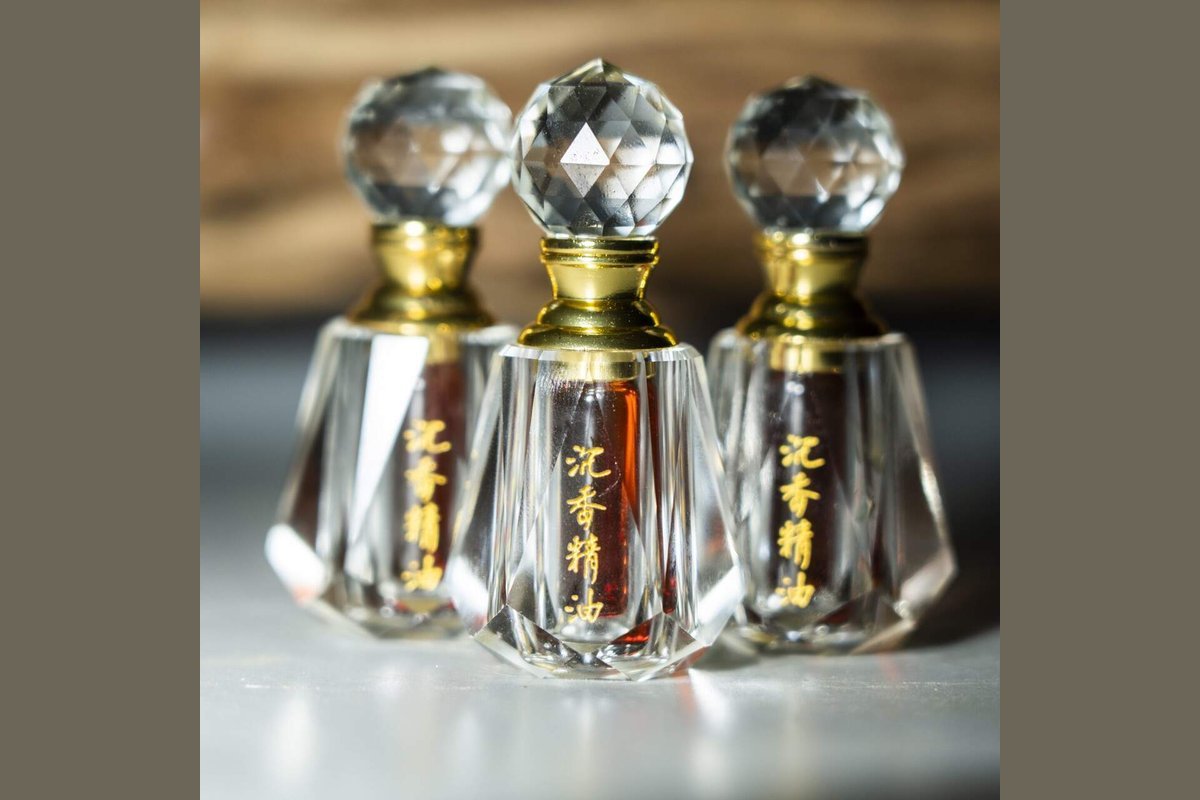
Buyers who have never handled real agarwood usually start with one question. What does the agarwood scent really smell like, and why do two samples labelled "oud" smell so different? The honest answer is that oud is not one smell but a family of them: woody, resinous, sweet, smoky, sometimes leathery or animalic. Grade, species, extraction method and whether you burn wood or wear oil all shift the balance. This guide gives you the vocabulary we use at our Dian Bai grading table, and a practical routine for judging a sample by nose.

Written by
Founder & Chief Sourcing Officer, AgarwoodTown
15+ years hands-on experience grading plantation agarwood, sourcing directly from Dianbai and Maoming districts in Guangdong — the world's largest Aquilaria sinensis cultivation region. Wang has personally inspected thousands of CITES export shipments and holds plantation certification from China's National Forestry and Grassland Administration. He advises GCC, European and East Asian wholesale buyers on grade selection, CITES compliance and supply chain due diligence.
CITES Certified
In this article
- Agarwood Scent: The Short Answer
- Why Oud Has So Many Facets
- Agarwood as a Base Note in Perfume
- The Agarwood Scent Vocabulary
- How Does Grade Change the Smell of Oud?
- Entry Grades: Light and Woody
- What Does Kynam Smell Like?
- Does Origin Change What Oud Smells Like?
- Plantation vs Wild Agarwood Scent
- Burning Oud Wood vs Wearing Oud Oil
- Hydro-Distilled vs CO₂ Oil: Two Different Smells
- How to Evaluate an Oud Sample by Smell
- Smell Red Flags in Oud Samples
- Which Oud Smell Suits Which Market?
- Frequently Asked Questions
1. Agarwood Scent: The Short Answer
So, what is the agarwood scent like? Good oud smells deep and woody, with a resinous sweetness underneath and a dry, slightly smoky edge. Many oils also carry a leathery or animalic facet that surprises first-time buyers.
Real oud oil is scarce for a simple reason. According to Liu et al. (2013), only about 10% of Aquilaria trees form agarwood naturally, and only that resinated wood yields oud oil when it is distilled.[7]
The first impression often depends on the format. Warmed wood releases a soft, sweet, balsamic vapour. By contrast, a drop of hydro-distilled oil can open sharp and almost medicinal before it settles into warm wood and honeyed resin.
Oud is the resin-loaded heartwood of Aquilaria trees, so its smell comes from the resin, not from the pale wood around it. If you want the background on how that resin forms, our plain-language explainer on oud and agarwood covers it in full.
Why Oud Has So Many Facets
Oud resin is chemically crowded. Published analyses list a long catalogue of volatile and semi-volatile compounds, dominated by sesquiterpenes and 2-(2-phenylethyl)chromones.[1]
Each group contributes something different to the nose. Broadly, the sesquiterpenes lean woody and balsamic, while the chromones become important when the wood is heated. Moreover, the ratio between them shifts from tree to tree and batch to batch.[2]
That is why no two lots smell identical, even from the same plantation block. It is also why we describe oud with a vocabulary of notes rather than a single word. In practice, a buyer who learns that vocabulary can talk to any supplier precisely.
Agarwood as a Base Note in Perfume
In perfumery, agarwood sits at the base. Its heavy, slow-evaporating molecules show up after the bright top notes fade, and they can hold on skin for many hours. That is why perfumers use it to anchor a blend rather than to open it.
Common partners are rose, saffron and other spices, sandalwood, amber and leather accords. Next to sandalwood, which smells creamy and soft, agarwood reads darker, more resinous and sometimes animalic. Our rose oud accord guide and agarwood vs sandalwood comparison go deeper.
2. The Agarwood Scent Vocabulary
| Note | What it smells like | Where you usually notice it |
|---|---|---|
| Woody | Dry, clean timber; the backbone of almost every oud | All grades, both wood and oil; strongest in the dry-down |
| Resinous / balsamic | Thick, warm, slightly sticky; close to old varnish or tree sap | Well-resinated chips when heated; rich hydro oils |
| Sweet / honeyed | Soft sweetness, sometimes like dried fruit or brown sugar | Higher grades on a heater; aged oils; kynam |
| Smoky | Dry smoke without harshness when wood is heated gently | Chips on charcoal; some hydro oils in the opening |
| Leathery / animalic | Warm skin, hide or stable; the note that divides opinion | Many hydro-distilled oils, especially in the first minutes |
| Earthy / mossy | Damp forest floor, cellar or mushroom | Some oils; young material; lower grades |
| Spicy / peppery | Faint pepper or clove-like warmth | Some hydro and CO₂ oils; certain chip lots |
| Cool / floral | Fresh, almost minty lift with a floral edge | Kynam and some top-grade chips; brighter CO₂ oils |
| Sour / fermented | Vinegar-like or sharp fermented edge | Opening of some hydro oils; should fade, not dominate |
These descriptors are the working terms we use at our grading table. They are sensory language, not lab categories, and other graders may use different words for the same impression.
Few samples show every note at once. Instead, most lots have two or three dominant notes and a few quieter ones that appear over time. Therefore it pays to smell a sample at several points, not just on opening.
The words also help when you write a specification. For example, "woody-sweet, low animalic, no sour opening" tells us much more than "premium oud". Clear language shortens the sampling loop and saves both sides money.
3. How Does Grade Change the Smell of Oud?
Higher grades smell deeper, sweeter and longer; lower grades smell lighter, drier and fade faster. The reason is simple: grade tracks resin content, and the resin carries the scent.
We grade every lot on four tests: visual inspection, aroma, resin content and the sink test. Aroma is one of the four, not an afterthought. Academic reviews of agarwood quality assessment describe a similar mix of sensory and physical criteria.[3]
Our internal scale runs D, C, B, A and AAA, with Kynam held for allocation only. It is our own scale, not an ISO or CITES standard, so treat any supplier's letter grade as a claim that the sample must confirm.
Entry Grades: Light and Woody
Grade D chips are mostly pale wood with thin resin lines. On a heater they give a light, clean woody smell, with a short sweet phase and little depth. However, that is exactly what many incense and powder makers want.
C and B grades add body. The resinous and sweet notes become clearer, and the scent lasts noticeably longer on the heater. Moreover, B-grade wood starts to show the layered development that collectors look for.
A and AAA chips smell dense and rounded from the first minute. The sweetness feels heavier, the smoke stays soft, and the aroma changes in stages as the resin warms. Many AAA pieces also sink in water, which confirms density but not scent on its own.
Price follows this curve steeply. Our graded oud wood chips start from $0.24/g at entry grades with a 100 g MOQ, and the price rises considerably through B, A and AAA.
What Does Kynam Smell Like?
Kynam, called kyara in Japan, smells different from ordinary oud even at AAA. It is softer and waxier to the touch, and when heated it gives a distinctive cool, sweet note that some describe as almost milky or floral.
Kynam often releases scent at room temperature too, which ordinary chips rarely do. Because supply is tiny, we do not hold it as stock. Instead, we allocate kynam wood pieces per enquiry, with list pricing starting from $0.89/g for the entry lots.

4. Does Origin Change What Oud Smells Like?
Yes, origin matters, but less than most marketing suggests. Species, climate, the age of the resin and the processing method all shape the smell, and those factors overlap.
Trade conversations often sort oud by region. Buyers talk about Indian or Assam oils as strongly animalic, Cambodian and Thai material as sweeter and fruitier, and Chinese Aquilaria sinensis as clean, woody and slightly cool. These are trade shorthand, not fixed rules.
Species is the most solid part of that picture. For example, Aquilaria crassna is the main species across Cambodia, Thailand and Vietnam, while our plantation grows Aquilaria sinensis.[4] Different species build resin with different chemical balances, so their oils rarely smell identical.
However, processing can outweigh origin. A long soak before distillation pushes almost any oil towards a stronger animalic, fermented opening. Meanwhile, a short soak and careful distillation keep the woody and sweet notes cleaner.
Plantation vs Wild Agarwood Scent
Old wild resin and young plantation resin do not smell the same. Wild material has often aged inside the tree for a long time, which tends to give a deeper, rounder scent.
Plantation resin is younger, because growers induce it deliberately by wounding and inoculating cultivated trees. Its smell is usually cleaner and brighter, and it varies with the inoculation method and how long the resin had to develop.
We sell plantation material only, from our 100+ mu Aquilaria sinensis plantation in Guan Zhu Town and from 100+ contracted plantation farmers. Wild oud still circulates in the market, but it raises origin and legality questions that plantation stock avoids.
5. Burning Oud Wood vs Wearing Oud Oil
| Feature | Heated or burned oud wood | Oud oil on skin or blotter |
|---|---|---|
| First impression | Soft, sweet, balsamic vapour that fills the room | Concentrated and sharper; may open medicinal, sour or animalic |
| Dominant notes | Resinous, sweet, smoky, woody | Woody, leathery, earthy, with sweetness in the dry-down |
| How it develops | Changes in stages as the resin warms, then fades to dry wood | Develops slowly over hours on skin or paper |
| Effect of heat | Gentle heat keeps it sweet; too much heat turns it harsh and burnt | Body heat only; temperature changes little |
| Longevity | Lingers in fabric and rooms after the session | Very long on skin and paper; often outlasts other naturals |
| Typical buyers | GCC bakhoor users, kōdō practitioners, incense makers | Attar houses, perfumers, cosmetics formulators |
| Our starting price | Chips from $0.24/g (MOQ 100 g) | Hydro oil from $7.00/g; CO₂ oil from $1.50/g (MOQ 10 g) |
Wood and oil come from the same resin, yet they reach your nose in different ways. Heat drives the resin out of the wood as vapour, while oil evaporates slowly from skin. Consequently, many people who love burned oud dislike their first oil, and the reverse also happens.
Heat level is the variable buyers forget. On an electric heater at a low setting, chips stay sweet and clean for a long time. On a hot coal, the same chips burn quickly and give more smoke than scent.
Incense sits between the two. Sticks blend agarwood powder with a binder, so the smell is softer and more diffuse than a chip on charcoal. Our guide to agarwood incense sticks and kyara incense explains how blend and grade change the burn.
Hydro-Distilled vs CO₂ Oil: Two Different Smells
Extraction method changes the smell of oud oil as much as grade does. We run both routes in-house, and the two oils from similar wood rarely smell alike.
Hydro-distillation soaks ground wood, then uses water and steam to carry the aromatics out over a long cycle. The result is usually darker, with a stronger animalic and leathery opening and a deep woody dry-down. Our hydro-distilled oud oil starts from $7.00/g with a 10 g MOQ.
Supercritical CO₂ extraction works at lower temperatures with pressurised carbon dioxide as the solvent.[5] It tends to keep lighter, brighter notes closer to the smell of warmed wood. Our CO₂-extracted agarwood oil starts from $1.50/g, also with a 10 g MOQ.
Neither oil is the "real" smell of oud; both are. For the full technical comparison of the two routes, see our oud oil extraction guide.
Step-by-Step Process
6. How to Evaluate an Oud Sample by Smell

Prepare a neutral space
Smell samples in a room free of perfume, cooking and smoke, ideally in the morning. Keep a cup of coffee beans or plain water nearby to reset your nose, and avoid wearing fragrance yourself on sampling day.
Smell the oil cold, then on a blotter
Open the vial and note the first impression without touching it. Then dip a paper blotter, label it with the batch number and smell it at once, after 15 minutes, after an hour and the next day. Oud oil changes a lot over time, so a single sniff tells you little.
Test on skin separately
Apply a small amount to the inside of the wrist and compare it with the blotter. Skin brings out warmth and sweetness, while paper shows the structure more clearly. Write down which notes appear on each surface.
Heat chips gently, never on high flame
Place a small chip on an electric heater at a low setting or on a mica plate over ash. Smell the vapour at the start, the middle and the end of the session. Moreover, compare chips from the same lot to check consistency rather than judging one piece.
Compare against a reference
Smell the new sample side by side with an oil or chip you already know. A reference anchors your judgement, because the nose adapts quickly and loses its scale after a few minutes of continuous sampling.
Record notes in shared vocabulary
Write the dominant notes, the opening, the dry-down and how long the scent lasted. Use the same terms each time, so that your notes can become a written specification for repeat orders with us or any supplier.
Ask for documents alongside the smell
Smell tells you whether you like an oil; documents tell you what it is. Ask for the grading note, and for oils ask for a GC-MS report, which we provide on request. Then check the CITES position before you plan a volume shipment.
A structured routine matters more than an experienced nose. In practice, buyers who follow the same steps every time make better decisions than buyers who rely on a quick sniff from the vial.
Our samples are paid and non-refundable, starting from 100 g of chips or 1 g of oil. That is enough material to run the full routine above on several days, which we strongly recommend before any volume order.
Smell is also where a GC-MS report earns its place. The report cannot tell you whether an oil smells good. However, it can confirm that the compounds typical of agarwood are present, which the nose alone cannot prove.
7. Smell Red Flags in Oud Samples
Some smells should make you slow down and ask questions. None of them proves fraud on its own, but each one deserves a follow-up before you order in volume.
- Loud and linear: an oil that smells identical from opening to dry-down may be built on a synthetic oud accord rather than real agarwood. Natural oud develops.
- Solvent or alcohol sharpness: a thin, chemical top note that vanishes fast can point to dilution or residual solvent.
- Sourness that never fades: a fermented opening is common in hydro oils, but it should soften within minutes. If it stays, the soak or storage may have gone wrong.
- Chips that smell only when cold: wood that smells strongly at room temperature but weakly on the heater may have been soaked in oil. Kynam is the exception, which is why it needs expert verification.
- Burnt or acrid smoke at low heat: this usually signals little resin and mostly plain wood, whatever the grade label says.
Documents complete the picture. Aquilaria species have been listed in CITES Appendix II since 2004, so bulk wood and oil usually travel with an export permit.[6] Annotation #14 exempts some retail-packaged finished products, so check the current annotation text for your product.
8. Which Oud Smell Suits Which Market?
| Market | Scent profile buyers usually want | Formats that fit | What to specify |
|---|---|---|---|
| Saudi Arabia, UAE and the wider GCC | Rich, sweet, smoky; tolerance for strong animalic oils | Chips, bakhoor, hydro oil for attar | Grade, heat behaviour, oil strength |
| Japan | Refined, quiet, layered; sweetness without heavy smoke | Small graded chips for kōdō, koh incense | Piece size, consistency, subtle aroma |
| Greater China | Cool, clean, sweet; high value on kynam character | Chips, beads, carvings, sinking-grade pieces | Grade, sink test, resin pattern |
| Europe and North America | Woody and clean, often softer animalic notes | CO₂ oil, hydro oil for blending, incense sticks | Extraction method, GC-MS, CITES papers |
| India and South Asia | Deep, earthy and animalic in attar traditions | Hydro oil, attar blends | Oil character, dilution, base oil |
These are general buying patterns in the trade across regions, not rules. Individual buyers within each market vary widely, so always confirm with samples.
Each market has its own idea of what good oud smells like. For example, a Gulf buyer may praise an oil that a European perfumer finds too animalic, and both can be right for their customers.
That is why a useful first conversation with any supplier covers the market before the price. We work with 500+ B2B buyers in 10+ countries, and scent briefs vary widely between markets.
Finished incense is the easiest way to show customers the warmed-wood side of oud. Our agarwood incense sticks for retail and temple lines start from $2.35–$5.89 per box with a 1 kg MOQ.
Want to smell plantation oud side by side?
Tell us your market, your preferred notes and the format you need, and we will put together a sample set of chips and oils to compare. We reply to enquiries within 4 business hours, Monday to Saturday, 9:00–18:00 China time.
Request an oud sample set → and read our replacement and credit policy before you order.
Frequently Asked Questions
Imagine dry, aged wood combined with warm tree resin, a little honey and a faint trace of smoke. Many oils add a leathery or animal-like note that can feel strange at first. Heated chips smell softer and sweeter than oil, so the format you try first shapes your impression a great deal.
That animalic note is common in hydro-distilled oud oil. Wood is soaked before distillation, and the soak and the long distillation cycle help create leathery, stable-like facets. A strong animalic opening is normal in many markets and often softens over time. If you prefer a cleaner profile, ask for a short-soak oil or a CO₂ oil.
Yes. Heated chips release resin as vapour, so the smell is sweeter, more balsamic and gently smoky, and it fills a room. Oil on skin evaporates slowly and shows more woody, leathery and earthy notes over several hours. Both come from the same resin; they simply reach the nose in different ways.
Higher grades carry more resin, so they usually smell deeper, sweeter and longer. However, "better" depends on use. Incense and powder makers often prefer clean entry grades, while collectors want the layered development of A or AAA chips. On our D to AAA scale, aroma is one of four grading tests, not the only one.
Kynam has a cool, sweet note that ordinary oud lacks, often described as creamy, milky or lightly floral. It is soft and waxy, and it can give off scent even at room temperature. Because supply is very limited, we hold kynam for allocation only and quote it per enquiry instead of keeping it as listed stock.
No. Hydro-distilled oil is usually darker and more animalic, with a deep woody dry-down. CO₂ oil is extracted at lower temperature and often smells brighter, closer to warmed wood, with less fermented character. We produce both in-house. Hydro oil starts from $7.00/g and CO₂ oil from $1.50/g, each with a 10 g MOQ.
Real oud develops: its opening, heart and dry-down smell noticeably different over hours. Synthetic accords tend to stay linear and loud from start to finish. Smell alone is not proof, though. For wholesale purchases, ask for a GC-MS report to confirm agarwood marker compounds, plus a grading note and the relevant CITES documents.
Oud oil is one of the longest-lasting natural materials on skin and paper, often noticeable for many hours and sometimes into the next day. Burned chips leave a scent in fabrics and rooms well after the session. Longevity rises with grade and resin content, and it varies between batches.
Oud resin is a complex mixture, and its balance shifts with the tree, the resin age, the grade of wood and the distillation run. Even one plantation block yields lots that differ. That is why a buyer should ask for samples labelled by batch, and we recommend a paid sample of the exact lot before a volume order.
Use specific notes rather than quality words. For example, ask for "woody-sweet, low animalic, no lasting sour opening, good longevity on paper". Name the format, your market and the grade range too. A clear brief like this lets a supplier match lots quickly and reduces rounds of sampling for both sides.
References
- 1Naef R.. The volatile and semi-volatile constituents of agarwood, the infected heartwood of Aquilaria species: a review. Flavour and Fragrance Journal, 2011.View source
- 2Li W., Chen H.-Q., Wang H., Mei W.-L., Dai H.-F.. Natural products in agarwood and Aquilaria plants: chemistry, biological activities and biosynthesis. Natural Product Reports, 2021.View source
- 3Liu Y.Y., Wei J.H., Gao Z.H., et al.. A Review of Quality Assessment and Grading for Agarwood. Chinese Herbal Medicines, 2017.View source
- 4Van Thanh L., Van Do T., Son N.H., Sato T., Kozan O.. Impacts of biological, chemical and mechanical treatments on sesquiterpene content in stems of planted Aquilaria crassna trees. Agroforestry Systems, 2015.View source
- 5
- 6
- 7Liu Y., Chen H., Yang Y., et al.. Whole-tree agarwood-inducing technique: an efficient novel technique for producing high-quality agarwood in cultivated Aquilaria sinensis trees. Molecules, 2013.View source
All scientific references are provided for transparency. AgarwoodTown summarises peer-reviewed findings for educational purposes and does not claim to provide medical or regulatory advice.
Wholesale Catalog
Buy the products discussed in this article


Related Articles
Source Direct from Origin
Discuss Your Requirements with Our Team
We respond within 24 hours. Share your target grade, quantity and destination — we'll send current pricing, a sample pack option, and CITES documentation details.