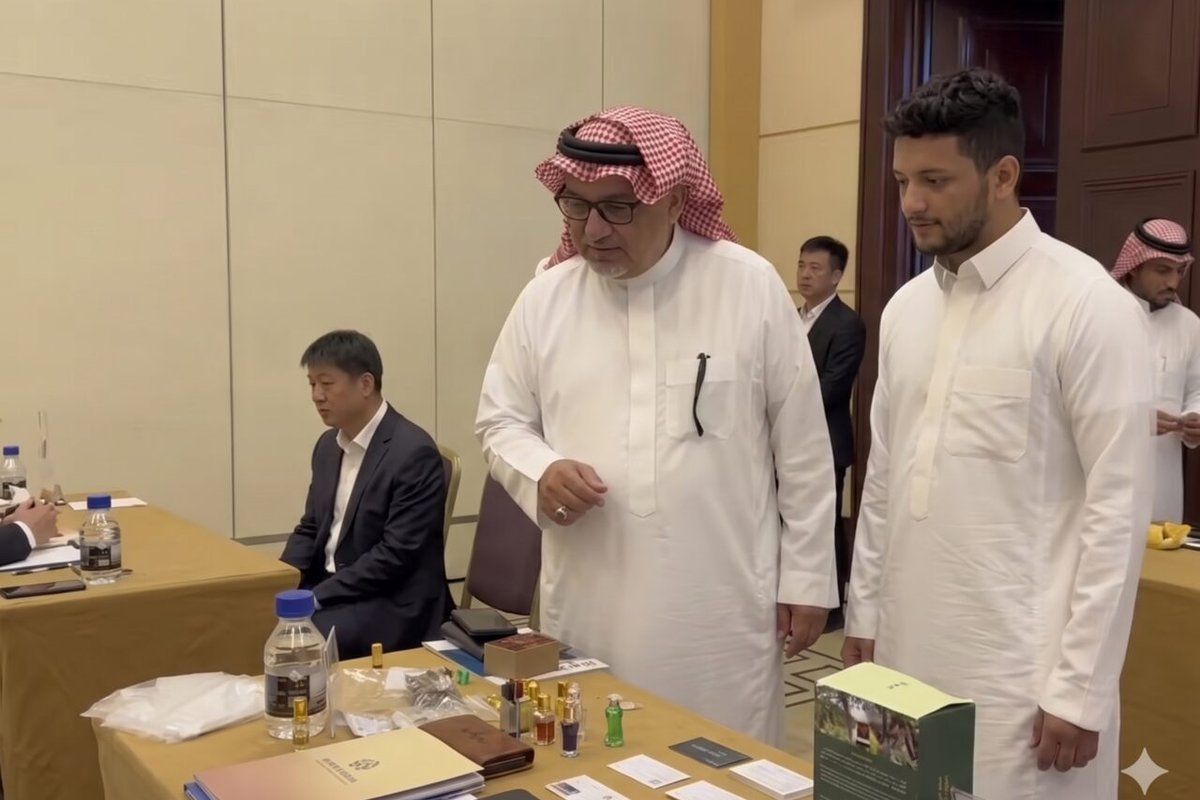
Oud in Islam: Aloeswood in the Hadith, at the Mosque and in Gulf Hospitality
Few materials we grow carry as much cultural weight as agarwood does in the Muslim world. Oud in Islam is not a marketing story; it rests on narrations that Muslim scholars have transmitted for over a thousand years, and on customs that shape how Gulf buyers order oud every season. This guide sets out what the well-known hadith collections record about aloeswood, how oud is used at mosques, on Fridays, in Ramadan, at Eid and at weddings, and which questions GCC buyers should put to any supplier. We write as growers, not as scholars.

Written by
Founder & Chief Sourcing Officer, AgarwoodTown
15+ years hands-on experience grading plantation agarwood, sourcing directly from Dianbai and Maoming districts in Guangdong — the world's largest Aquilaria sinensis cultivation region. Wang has personally inspected thousands of CITES export shipments and holds plantation certification from China's National Forestry and Grassland Administration. He advises GCC, European and East Asian wholesale buyers on grade selection, CITES compliance and supply chain due diligence.
CITES Certified
In this article
- What Is the Place of Oud in Islam?
- Al-Uluwwah, Al-Ud and Bakhoor: The Arabic Names
- Islamic Incense: Is There One Formula?
- Is Oud Halal?
- What Do the Hadith Collections Say About Aloeswood?
- The Ibn Umar Narration in Sahih Muslim
- The Censers of Paradise
- A Common Mix-Up: Al-Ud al-Hindi
- Documented References at a Glance
- How Is Oud Used at the Mosque and on Friday?
- Perfuming the Mosque
- Friday Preparation
- Oud in Islam Across Ramadan, Eid, Weddings and Hospitality
- Ramadan and the Fasting Question
- Hajj, Umrah and the State of Ihram
- Burned or Worn? Oud Wood vs Oud Oil
- What Should GCC Buyers Ask an Oud Supplier?
- Selling Oud Respectfully
- Frequently Asked Questions
1. What Is the Place of Oud in Islam?
This guide is about oud the fragrant wood, not the musical instrument of the same name. The place of oud in Islam is that of a valued, well-documented fragrance. Hadith collections record that the Prophet Muhammad used aloeswood incense, and Muslim households have burned and worn oud ever since.
Incense is an everyday habit in the Gulf, not a special-occasion one. According to a survey of 628 households in the United Arab Emirates (Yeatts 2012), 86% burned incense such as oud and bakhoor at least once a week, and 44% burned it daily.[4]
Oud is agarwood: the resin-darkened heartwood of Aquilaria trees, traded for centuries from South and Southeast Asia into Arabia.[1] In the Gulf today, it sits at the centre of hospitality, worship preparation and celebration.
However, there is a clear line we keep in this article. We can describe what the major collections record and what buyers in the region do. We do not give religious rulings. Where scholars hold different views, we say so and point readers to their own scholars.
That line matters for suppliers too. A wholesale catalogue is not a place for doctrine, and Gulf buyers notice quickly when a foreign seller makes religious claims about a product.
Al-Uluwwah, Al-Ud and Bakhoor: The Arabic Names
Classical Arabic sources use several words for the material. The narrations discussed below use al-uluwwah (الألوّة), which commentators and translators generally render as aloeswood or agarwood.
Everyday Gulf Arabic simply says ʿūd, literally "wood". Meanwhile, bakhoor refers to incense more broadly, including wood chips soaked or blended with oils, musk, amber and other aromatics.[2]
Finally, dehn al oud means "oil of oud": the distilled oil worn on skin and clothing. For a buyer, these three words map neatly onto three product lines: wood chips, bakhoor and oil.
Islamic Incense: Is There One Formula?
No single recipe counts as "Islamic incense". The phrase usually means the incense customs of Muslim households and mosques: plain aloeswood chips, bakhoor blends of wood, oils and resins, and, in the narration discussed below, aloeswood burned with camphor.
What links them is purpose rather than ingredients. Incense is burned to give a good scent to a home, a mosque or clothes before prayer and before guests arrive. For a supplier, that means the product range follows local taste, not a religious specification.
Is Oud Halal?
Oud wood and pure oud oil are plant materials, and pure oud oil contains no alcohol, so many Muslims treat them as straightforwardly permissible. The question usually arises with alcohol-based perfumes, where scholars hold different views.
We do not issue religious rulings; buyers should follow their own scholars. What a supplier can do is state clearly whether a product contains alcohol or any animal-derived ingredient, and we would include that on every specification sheet.
2. What Do the Hadith Collections Say About Aloeswood?
The best-known references to aloeswood appear in the two most widely accepted Sunni collections, Sahih Muslim and Sahih al-Bukhari. They describe how the Prophet perfumed himself with it and mention it in descriptions of Paradise.
We summarise the wording rather than quote translations, because translations differ in detail. Readers who want the exact text should consult a printed edition or a qualified teacher. Moreover, hadith numbering differs between editions, so always check the book and chapter as well as the number.
The Ibn Umar Narration in Sahih Muslim
The most cited narration sits in Sahih Muslim, in the Book of Words and Expressions (Kitab al-Alfaz min al-Adab wa Ghayriha). In the common Abd al-Baqi numbering it appears as hadith 2254.
In it, Nafi', the freed servant of Abdullah ibn Umar, reports how Ibn Umar perfumed himself with incense. He would burn aloeswood on its own, and at other times aloeswood with camphor added to it. Ibn Umar then said that this was how the Messenger of Allah used to perfume himself.
Two details stand out for anyone in the trade. First, the narration describes burning wood, not wearing oil, so it concerns incense smoke. Second, it records two practices side by side: plain aloeswood and a simple blend. In practice, that is still the basic split between pure oud chips and blended bakhoor.
The Censers of Paradise
A second group of narrations, found in both Sahih al-Bukhari and Sahih Muslim, describes the people of Paradise. Among other details, it says that their censers will burn aloeswood.
These narrations are about the hereafter, not about worldly practice. Nevertheless, they help explain why aloeswood carries such a positive association in Muslim culture. A fragrance named in a description of Paradise naturally holds a special place at home and in the mosque.
A Common Mix-Up: Al-Ud al-Hindi
Many online articles quote a narration about al-ud al-hindi, "the Indian wood", as if it referred to agarwood. However, many classical commentators explain the term in that narration as costus root (qust), a different plant altogether.
Scholars and translators differ on how to read some of these terms, and we are not the people to settle it. Therefore we do not use that narration to market agarwood, and we would advise any brand owner to avoid it as well.
How we approach religious topics
We are a plantation and processing business in Guangdong, not a religious authority. On this page we describe documented sources and common customs only.
- We paraphrase well-known narrations and name the collection; we do not issue or imply rulings.
- Where scholars differ — fasting, ihram, alcohol in perfume — we say so and leave the decision to the reader and their scholars.
- We make no health or spiritual-benefit claims for any product.
3. Documented References at a Glance
| Source | What it describes | Material | Notes for the trade |
|---|---|---|---|
| Sahih Muslim, Book of Words and Expressions (Kitab al-Alfaz min al-Adab) | Ibn Umar burning aloeswood alone, and aloeswood with camphor, and saying the Prophet perfumed himself this way | Al-uluwwah (aloeswood), kafur (camphor) | Concerns incense smoke from wood; the most cited narration on oud |
| Sahih al-Bukhari and Sahih Muslim, narrations on Paradise | The censers of the people of Paradise burning aloeswood | Al-uluwwah | About the hereafter; explains the strong positive association, not a usage instruction |
| Narrations on Friday preparation (Bukhari, Muslim) | Encouragement to bathe, wear clean clothes and apply perfume if available before Friday prayer | Perfume in general (tib) | Oud is not named; many Gulf households choose it for this occasion by custom |
| Narration on al-ud al-hindi (Bukhari) | A remedy called "the Indian wood" | Often explained as costus root (qust) | Interpretations differ; we do not use it to market agarwood |
Summaries are paraphrased. Hadith numbering varies by edition; check the book and chapter in a printed edition. This table describes sources and does not state rulings.
4. How Is Oud Used at the Mosque and on Friday?
Oud is used in two main ways around worship. Mosques are perfumed with bakhoor or oud smoke, and worshippers perfume themselves before prayer, especially on Friday.
Neither use is unique to oud. Incense and perfume in general are part of the picture. Even so, in the Gulf oud has become the default choice whenever a family, a host or a mosque committee wants the best.
Perfuming the Mosque
Perfuming the mosque is an old and widespread custom across the Muslim world. The Grand Mosque in Mecca and the Prophet's Mosque in Medina are widely known for their incense, and many neighbourhood mosques follow the same habit on a smaller scale.
In practice, mosque buyers have different needs from retail buyers. They burn more often and in larger rooms, so they look for steady supply and consistent scent rather than collector-grade pieces. For example, mid-grade plain oud chips for burning or a stable bakhoor blend often suit a mosque budget better than AAA wood.
Smoke management matters too. Larger halls usually rely on electric heaters or carefully tended charcoal burners, and our guide to choosing a bakhoor burner covers the trade-offs for retailers who supply them.
Friday Preparation
Well-known narrations in Sahih al-Bukhari and Sahih Muslim encourage Muslim men to bathe, wear clean clothes and use perfume if they have it before Friday prayer. The narrations speak of perfume in general and do not name oud.
By custom, however, many Gulf men wear a touch of oud oil on Friday and pass their clothes over a burner of oud smoke before leaving home. As a result, Thursday and Friday are reliable retail days for oud sellers across the region.
For a wholesaler, that weekly rhythm means steady small-pack demand. Retailers tend to reorder little and often rather than in large seasonal blocks, except before Ramadan and Eid.

5. Oud in Islam Across Ramadan, Eid, Weddings and Hospitality
| Occasion | How oud is commonly used | Formats retailers stock | Planning note for buyers |
|---|---|---|---|
| Friday | Oil on clothing or skin; clothes perfumed over a burner before prayer | Dehn al oud in small bottles, oud chips | Steady weekly demand; small pack sizes sell best |
| Ramadan | Bakhoor burned at home after iftar and for evening guests; mosques perfumed for night prayers | Bakhoor, mid-grade chips, incense sticks | Peak ordering in the weeks before Ramadan starts |
| Eid al-Fitr and Eid al-Adha | New clothes perfumed with oud; homes prepared for visitors; gifts exchanged | Gift boxes of oil and bakhoor, higher-grade chips | Gift packaging and higher grades move faster |
| Weddings | Bakhoor and oud for the bride, the groom and the guests; oud included in wedding gifts | Premium chips, oil sets, bakhoor in decorated jars | Seasonal and family-driven; quality expectations are high |
| Majlis hospitality | Guests welcomed with coffee, dates and a passing mabkhara | Chips and bakhoor in everyday grades | The largest volume use; consistency matters more than rarity |
| Return from Hajj or Umrah | Oud and bakhoor among gifts brought or given on return | Small oil bottles, gift packs | Gifting packs; see the ihram note below |
Customs vary by country, family and community. This table describes common Gulf practice as a guide for product planning, not as religious guidance.
Across all these occasions, one thread is constant: oud signals respect for the guest, the day or the place. That is why the custom of offering incense to guests runs so deep in Gulf hospitality, and why we discuss it at length in our mabkhara guide for the majlis.
From a supply point of view, the calendar is predictable. Because the Islamic calendar is lunar, Ramadan and both Eids move about eleven days earlier each Gregorian year. Therefore buyers who plan orders around these dates need to move their order windows forward every year.
Ramadan and the Fasting Question
Ramadan raises a question that buyers often ask us. Does burning bakhoor or wearing oud oil affect the fast?
We cannot answer that, and scholars differ in their views. Some scholars advise fasting people not to inhale incense smoke deliberately, while wearing perfume oil on skin is widely regarded differently. Consequently, many households simply burn bakhoor after iftar. Anyone unsure should ask a scholar they trust.
For retailers, this has a practical effect. Evening and night trade tends to dominate in Ramadan, and stock needs to be on the shelf before the month begins.
Hajj, Umrah and the State of Ihram
Pilgrims in the state of ihram are generally required to avoid applying perfume. Scholars discuss the details differently, for example regarding scent applied before entering ihram.
For the trade, the point is simple. Oud gifts linked to Hajj and Umrah are usually bought for giving after the pilgrimage, or brought home as gifts. Retailers near pilgrimage routes therefore stock gift packs rather than products meant for use during the rites.


6. Burned or Worn? Oud Wood vs Oud Oil
| Feature | Burned: oud chips and bakhoor | Worn: dehn al oud (oud oil) |
|---|---|---|
| Link to the narrations | Directly matches the Sahih Muslim description of burning aloeswood | Falls under perfume in general; oil is not the form described in that narration |
| Typical use | Perfuming rooms, mosques, clothes and guests in the majlis | A small amount on skin, beard or clothing, often before prayer or visits |
| Typical occasions | Majlis, Ramadan evenings, Eid visits, weddings, mosques | Friday, Eid, weddings, personal daily use |
| Alcohol question | Plain chips contain no alcohol; ask for the ingredient list for blended bakhoor | Pure distilled oil is alcohol-free; many GCC buyers prefer it for that reason |
| Our starting price | Oud chips from $0.24/g (MOQ 100 g); bakhoor chips from $6/g (MOQ 250 g) | Hydro-distilled oud oil from $7.00/g (MOQ 10 g) |
| Paperwork | Loose wood usually needs a CITES export permit | Bulk oil may also need CITES documents; check the current annotation text |
Both forms belong in a Gulf assortment, and most retailers carry both. However, they serve different moments: smoke fills a room for everyone, while oil marks one person.
On the oil side, the tradition of wearing pure oud oil without an alcohol base is strong, which links to the wider attar tradition of oil-based perfumes. Scholars differ on alcohol-based perfumes, and many consumers in the region simply prefer oil. Our dehn al oud buyer guide explains tola measures and quality tiers in detail.
For buyers who want the traditional route, our hydro-distilled oud oil for attar and dehn al oud is the closest match. Buyers building a smoke-based range can start with wholesale bakhoor chips or Arabic-style agarwood incense sticks, which start from $2.35–$5.89 per box with a 1 kg MOQ.
Step-by-Step Process
7. What Should GCC Buyers Ask an Oud Supplier?
Ask which species and origin the wood comes from
Gulf customers often ask where their oud comes from, and a good retailer should be able to answer. Ask the supplier to state the species and whether the material is plantation or wild. Our own stock is plantation Aquilaria sinensis from Dian Bai, Guangdong, and our CITES export permits name the species.
Ask for a full ingredient list for any blend
Plain oud chips and pure oud oil are single-ingredient products. Bakhoor, by contrast, can contain oils, musk, amber, sugar or other aromatics. Ask for a written ingredient declaration so you can answer customer questions about alcohol and animal-derived ingredients, and so you can seek halal certification yourself if your market expects it.
Ask how the oil is made and whether it contains alcohol
Ask whether the oil is hydro-distilled, steam-distilled or CO₂-extracted, and whether anything has been added. We produce hydro, steam and supercritical CO₂ oils in-house and provide GC-MS reports on request, which helps when customers ask whether an oil is pure.
Ask how grades are defined and documented
Grades are not standardised across suppliers. Ask what each grade means on the grading table and request a grading note with every shipment. Our internal scale runs D, C, B, A and AAA, with Kynam on allocation only; it is our own scale, not an ISO or CITES standard.
Ask for samples before the season, not during it
Order samples well before Ramadan, Eid or the wedding season so there is time to test burn behaviour and scent. Our samples start from 100 g of chips or 1 g of oil, are paid and non-refundable, and are the fairest way to compare suppliers on the same mabkhara.
Ask which export and import documents travel with the goods
Ask which CITES permits the shipment needs and request copies before dispatch. Every wholesale shipment from us carries a grading note and a CITES Appendix II export permit where required. Your importer should confirm national import rules in Saudi Arabia, the UAE or elsewhere in the Gulf.
The Gulf is not a new market for agarwood. TRAFFIC's study of the trade identified the Middle East as a major destination for agarwood chips and oil, with deep-rooted consumer demand.[1] Buyers there know the material well, and they test suppliers accordingly.
In our experience on the grading table, Gulf buyers judge by burning, not by photographs. That is why the questions above focus on documents and samples rather than on sales language. For market-specific notes, see our pages on supplying oud to Saudi Arabia and oud wholesale for the UAE.
8. Selling Oud Respectfully
Oud carries religious and cultural meaning for many of your customers, so product copy deserves care. These are the habits we recommend to brand owners who sell into Muslim markets.
- No rulings on labels: do not describe a product as "sunnah oud" or imply that buying it fulfils a religious duty. Describe the material, grade and origin instead.
- No health or spiritual claims: avoid claims that oud heals, protects or brings blessings. Describe traditional use neutrally.
- Sacred text: many brands avoid printing Quranic verses or the names of Allah on packaging that will be burned, stained or thrown away. Check with your local partners before you design packs.
- Honest content claims: if a bakhoor contains synthetic aromatics or alcohol-based ingredients, say so. Customers who avoid alcohol rely on accurate labels.
- Legal trade: all Aquilaria species have been listed in CITES Appendix II since 2004.[3] Annotation #14 exempts some finished, retail-packaged products, so check the current annotation text before you plan a shipment.
Planning stock for Ramadan, Eid or the wedding season?
Tell us your market, the occasions you sell for and the grades you need, and we will suggest a sample set of chips, bakhoor and oil. We reply to enquiries within 4 business hours, Monday to Saturday, 9:00–18:00 China time.
Request samples and a wholesale quote → Buyers looking for a softer, ready-blended format can also review our oudh incense range, and our replacement and credit policy explains how we resolve problems after delivery.
Frequently Asked Questions
Yes. Aloeswood, called al-uluwwah in the Arabic text, appears in well-known narrations. The most cited is in Sahih Muslim, in the Book of Words and Expressions, where Ibn Umar burns aloeswood alone or with camphor and says the Prophet perfumed himself this way. Narrations in both Bukhari and Muslim also mention aloeswood in the censers of Paradise.
We are suppliers, not scholars, so we do not give rulings on that question. What we can say is that the hadith collections record the Prophet using aloeswood incense and encourage perfume before Friday prayer in general. How these narrations apply to personal practice is a matter for scholars, and buyers should consult those they trust.
Al-uluwwah is the classical Arabic word used in the narrations for the incense wood burned by Ibn Umar and mentioned in descriptions of Paradise. Commentators and translators generally render it as aloeswood, which is the same material traded today as agarwood or oud: the resin-darkened heartwood of Aquilaria trees.
Not necessarily. Many classical commentators explain al-ud al-hindi in the well-known remedy narration as costus root, known in Arabic as qust, which is a different plant from agarwood. Scholars and translators differ on how to read some of these terms, so we do not use that narration to promote agarwood products.
Scholars differ on this. Some advise fasting people not to deliberately inhale incense smoke during fasting hours, while perfume applied to skin is widely viewed differently. Many Gulf households therefore burn bakhoor after iftar. We cannot give a ruling, so anyone unsure should ask a scholar they trust before deciding.
Pure distilled oud oil is alcohol-free, because it is the aromatic oil itself rather than a solution in alcohol. Perfume sprays labelled oud often use an alcohol base, however. Buyers serving customers who avoid alcohol should ask suppliers for a written ingredient declaration and choose pure oil or oil-based attar instead.
Mosques burn often and in large rooms, so most buyers choose consistent mid-grade chips or a stable bakhoor blend rather than collector wood. On our internal D to AAA scale, C and B grades usually balance scent and budget for regular burning. A paid sample lets the mosque committee test the scent in its own hall first.
Order samples several weeks before you need stock, then place the main order with enough time for production, CITES paperwork and shipping. Because the Islamic calendar is lunar, Ramadan and Eid move about eleven days earlier each Gregorian year. Your order window should therefore move forward every year as well.
Usually, yes. All Aquilaria species are listed in CITES Appendix II, and loose wood chips generally travel with an export permit. Some finished, retail-packaged products are exempt under annotation #14, so check the current annotation text. We supply a CITES Appendix II export permit with every wholesale shipment where one is required.
Many brands avoid printing Quranic verses or the names of Allah on packaging, because boxes and wrappers are often burned, stained or thrown away. Practice and opinion vary, so check with your local partners and customers before you design. Plain branding with clear grade and origin information is the safer route.
In Islam, oud is aloeswood: the resinous wood of Aquilaria trees, called al-uluwwah in the narrations. Hadith collections record that the Prophet Muhammad perfumed himself with aloeswood incense, so many Muslims value it as a well-documented, recommended fragrance for prayer, Friday, Eid and receiving guests.
In religious terms, the value people describe is good scent, cleanliness and hospitality: perfuming the home, the mosque and clothes before prayer and before guests. That is a cultural and devotional point, not a medical one. We make no health claims for bakhoor or oud, and sellers should avoid them on packaging.
Oud wood and pure oud oil are plant materials and pure oud oil contains no alcohol, so many Muslims consider them permissible. Questions mostly concern alcohol-based perfumes, where scholars differ. We do not give religious rulings; we state clearly on specifications whether a product contains alcohol or animal-derived ingredients.
References
- 1Barden A., Anak N.A., Mulliken T., Song M.. Heart of the Matter: Agarwood Use and Trade and CITES Implementation for Aquilaria malaccensis. TRAFFIC International, 2000.View source
- 2
- 3
- 4Yeatts K.B., et al.. Indoor air pollutants and health in the United Arab Emirates. Environmental Health Perspectives, 2012.View source
All scientific references are provided for transparency. AgarwoodTown summarises peer-reviewed findings for educational purposes and does not claim to provide medical or regulatory advice.
Wholesale Catalog
Buy the products discussed in this article


Related Articles
Source Direct from Origin
Discuss Your Requirements with Our Team
We respond within 24 hours. Share your target grade, quantity and destination — we'll send current pricing, a sample pack option, and CITES documentation details.