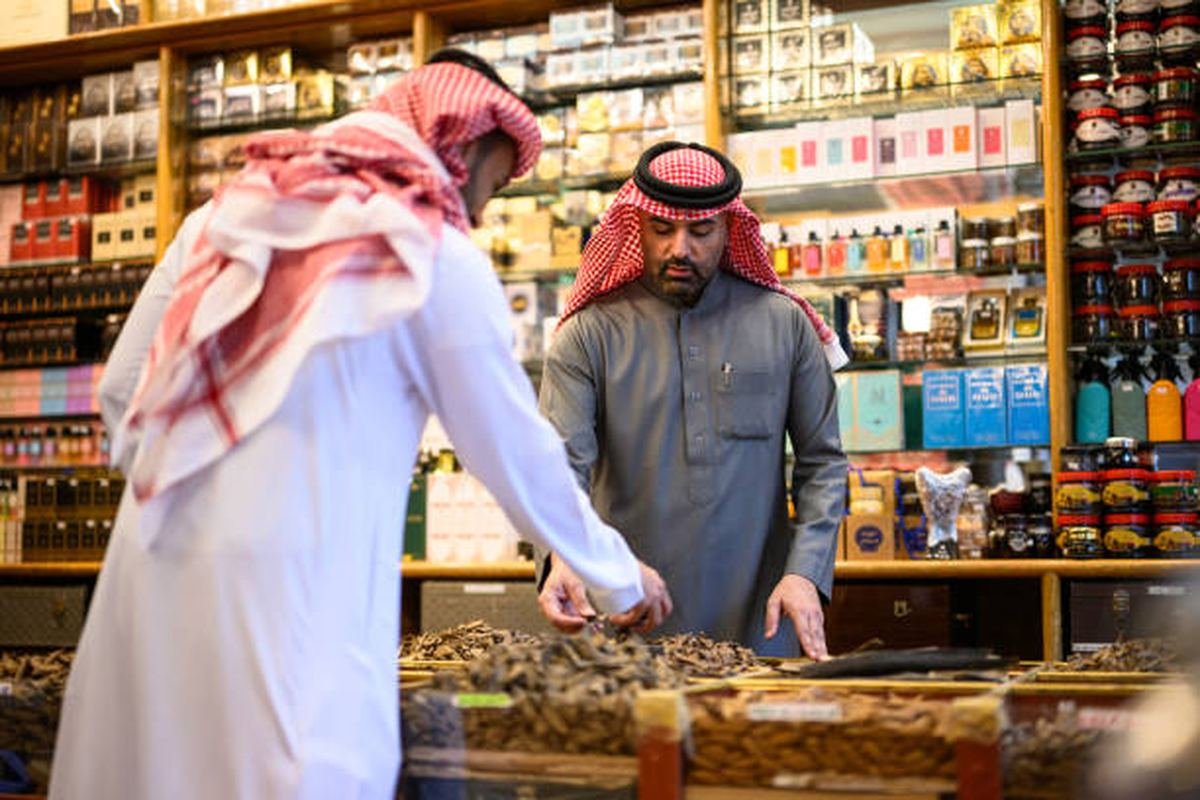
Agarwood History: 2,000 Years of Trade From the Maritime Silk Road to Modern Plantations
People have burned, traded and argued over this wood for well over two thousand years. Agarwood history is really trade history: a material that grows in the forests of South and Southeast Asia and southern China, and is prized most in places far away from them. We grow Aquilaria sinensis in Dian Bai, Guangdong, a province that sat at one end of that trade for centuries. This guide follows the wood from early written records, along the Maritime Silk Road, into Japan's imperial treasury and Gulf households, through the 2004 CITES listing and into the plantations that now supply most of the market.

Written by
Founder & Chief Sourcing Officer, AgarwoodTown
15+ years hands-on experience grading plantation agarwood, sourcing directly from Dianbai and Maoming districts in Guangdong — the world's largest Aquilaria sinensis cultivation region. Wang has personally inspected thousands of CITES export shipments and holds plantation certification from China's National Forestry and Grassland Administration. He advises GCC, European and East Asian wholesale buyers on grade selection, CITES compliance and supply chain due diligence.
CITES Certified
In this article
- What Is the Short Version of Agarwood History?
- Why the Names Tell the Story
- Agarwood History at a Glance: A Timeline
- What Do the Earliest Records Say?
- Are the "Aloes" in the Bible Agarwood?
- How Did Agarwood Travel the Maritime Silk Road?
- Guangzhou, Quanzhou and the Song Incense Trade
- Hong Kong, the "Fragrant Harbour"
- Agarwood History in Japan: From Awaji to the Ranjatai
- The Ranjatai in the Shōsōin
- From Court Scent to Kōdō
- Why Did the Middle East Become the Biggest Buyer?
- The Oil Era and Modern Demand
- India, Assam and the Attar Link
- Why Was Agarwood Listed by CITES in 2004?
- After 2004: How the Rules Kept Moving
- How Plantations Rewrote the Supply Side
- Historic Trade vs Today's Trade
- Frequently Asked Questions
1. What Is the Short Version of Agarwood History?
In one sentence, agarwood history is the story of a rare resinous wood moving from Asian forests to distant buyers who valued it above almost any other aromatic. The routes, the buyers and the rules changed many times, but the basic pattern never did.[1]
The numbers explain the price. According to Liu et al. (2013), only about 10% of Aquilaria trees produce agarwood without human help, so most supply today comes from induced, cultivated trees.[6]
The wood itself is simple to describe. Agarwood is the dark, fragrant heartwood that forms when an Aquilaria tree is wounded and infected, and fills the damaged tissue with resin. For a fuller explanation of the material, our guide what oud actually is and how it forms covers the biology.
What made it valuable is just as simple. Resin forms only in a small share of wild trees, and nobody could see it from outside the bark. Therefore supply was always uncertain, and the best pieces were always scarce.
That scarcity shaped two thousand years of trade. It explains why agarwood was a tribute item for emperors, a ship cargo worth insuring, a collector's object in Japan and, eventually, a species protected under international law.
Why the Names Tell the Story
The names of agarwood trace its trade routes. The English word "agar" is usually traced back to Sanskrit aguru, by way of Malay gaharu. The Arabic ʿūd simply means wood, and Greek writers used a word close to agallochon.[1]
Chinese calls it chén xiāng (沉香), "sinking fragrance", because the densest pieces sink in water. Japanese calls it jinkō, and older English texts often say aloeswood. Every major culture on the route gave the wood its own name, which is a good sign of how far it travelled.
2. Agarwood History at a Glance: A Timeline
| Approximate date | Event | Why it matters for the trade | How firm is the evidence? |
|---|---|---|---|
| First millennium BCE onward | Sanskrit texts use the word aguru for a fragrant wood | Shows early use in South Asia, close to natural Aquilaria range | Well attested in texts; exact identification debated |
| 1st century CE | Greek and Roman writers describe agallochon imported from the East | Agarwood was already a long-distance luxury good | Well attested |
| Han to Tang dynasties | Southern Chinese ports trade aromatics with Southeast Asia and beyond | Guangzhou grows into a major sea-trade port | Well attested for ports; agarwood volumes unknown |
| 595 CE | Nihon Shoki records a fragrant log washing ashore on Awaji Island | Classic starting point of agarwood in Japanese records | Recorded chronicle; details are traditional |
| 8th century | Ranjatai log enters the imperial collection later held in the Shōsōin, Nara | Becomes Japan's most famous single piece of agarwood | Object survives; arrival date debated |
| Song dynasty (960–1279) | Maritime trade offices at Guangzhou, Quanzhou and other ports tax aromatics | Incense becomes a large, organised import category | Well attested |
| 15th–16th centuries | Kōdō schools take shape in Japan | Creates lasting demand for top-grade wood, including kyara | Well attested |
| Ming and Qing periods | Guangdong incense tree wood (guanxiang) shipped through the Hong Kong area | Commonly linked to the name "fragrant harbour" | Widely told; not the only explanation |
| Late 20th century | Rising Gulf demand for oud oil and wood | Middle East becomes the largest consumer market | Described in trade reports |
| 1995 | Aquilaria malaccensis listed in CITES Appendix II | First international control on agarwood trade | Documented |
| 2004 | All Aquilaria and Gyrinops species listed in CITES Appendix II | Permits needed for most international trade | Documented |
| 2000s–today | Plantations and induction methods scale up across Asia | Cultivated wood becomes the main source for most products | Documented in research reviews |
Dates for early periods are approximate. The last column is our own plain-language judgement of how firm the evidence is, so readers can separate record from tradition.
3. What Do the Earliest Records Say?
The earliest records show agarwood as a luxury aromatic in South Asia, the Mediterranean and China well before the modern era. However, ancient texts rarely describe species, so some identifications rely on scholarly interpretation.
In South Asia, Sanskrit literature mentions aguru among fragrant woods used in worship and perfumery. That fits the botany, because Aquilaria grows naturally in north-east India and neighbouring regions.
In the Mediterranean, the first-century Greek physician Dioscorides described agallochon as an imported fragrant wood. Roman buyers paid for it as a long-distance luxury, much like pepper or frankincense.
Are the "Aloes" in the Bible Agarwood?
Several biblical passages mention "aloes" alongside myrrh and cinnamon. Many scholars read these as agarwood rather than the aloe plant, because the texts treat it as a perfume material. Nevertheless, this remains an interpretation, not a settled fact.
The naming confusion still affects buyers today. Our post on why aloeswood is not aloe vera explains how that old word survives in Western incense catalogues.
4. How Did Agarwood Travel the Maritime Silk Road?
Agarwood moved mainly by sea. Ships carried it along the Maritime Silk Road, the network of routes linking southern China, Southeast Asia, India, the Persian Gulf and East Africa.
Sea transport suited the material well. Agarwood is light for its value, it keeps for years if stored dry, and it does not spoil like food cargo. Moreover, the monsoon winds made seasonal voyages predictable enough for regular trade.
Wood flowed in more than one direction. Southeast Asian forests, including the coasts of present-day Vietnam, Cambodia and the Malay world, supplied China, India and the Arab world. Meanwhile, southern China had its own native species, Aquilaria sinensis, which also entered the trade.
Guangzhou, Quanzhou and the Song Incense Trade
Guangzhou, the capital of our province, was a major port for foreign trade from at least the Tang dynasty. Arab and Persian merchants lived and traded there, and aromatics were among the goods they handled.
Under the Song dynasty, the state set up maritime trade offices in Guangzhou, Quanzhou and other ports to register and tax foreign cargo. Aromatics such as agarwood, frankincense and other resins formed a large category of these imports. For that reason, some historians describe this sea route as an "incense road".
Song writers also wrote about agarwood with real connoisseurship. They compared origins, praised wood from Hainan Island and from Champa in central Vietnam, and graded pieces by density and scent.
Hong Kong, the "Fragrant Harbour"
Hong Kong's name, 香港, means "fragrant harbour". A commonly told explanation links the name to the incense trade from Guangdong. In this account, wood from local incense trees was gathered in the Dongguan area and today's New Territories, then shipped from a small harbour on Hong Kong Island.
That local agarwood was known as guanxiang (莞香), after Dongguan, and came from Aquilaria sinensis, the same species we grow. According to the story, the cargo went on to Guangzhou and further north, and the harbour took its name from the trade.
We repeat this with a caveat. Historians also mention other explanations for the name, and the incense account is a widely accepted tradition rather than a proven fact. Even so, Aquilaria sinensis still grows wild in Hong Kong's countryside, which keeps the connection visible.
5. Agarwood History in Japan: From Awaji to the Ranjatai
Japan's agarwood history begins, by tradition, in 595 CE. The chronicle Nihon Shoki records that a log drifted ashore on Awaji Island, and that islanders burning it as firewood noticed its remarkable scent and sent it to the court.[2]
The story may be partly legend, but its message is accurate. Japan has no native Aquilaria, so every piece of jinkō ever burned there arrived by sea. Consequently, Japanese buyers have always been importers, and very demanding ones.
Agarwood reached Japan together with Buddhism and continental court culture. It was burned in temples, used to scent robes and rooms, and later blended into kneaded incense for aristocratic games.
The Ranjatai in the Shōsōin
The most famous piece of agarwood in Japan is the Ranjatai, a large hollow log kept in the Shōsōin, the imperial treasure house in Nara. It has been part of that collection for many centuries, although scholars still discuss exactly when and from where it arrived.
Its name is a small puzzle. The three characters 蘭奢待 each contain one character of Tōdaiji (東大寺), the temple that the Shōsōin served. In other words, the name hides the temple inside it, which tells you how highly the wood was regarded.
Tradition also records that powerful rulers were allowed to cut small pieces from it. Labels on the log mark cut points traditionally attributed to the shogun Ashikaga Yoshimasa, the warlord Oda Nobunaga and the Meiji Emperor. Therefore the Ranjatai was not only a fragrance; it was also a symbol of political rank.
From Court Scent to Kōdō
Between the fifteenth and sixteenth centuries, appreciation of agarwood became a formal art called kōdō, "the way of incense". Schools such as Oie-ryū and Shino-ryū set rules for heating small slivers of wood and identifying them by scent.[2]
Kōdō created a lasting market for top-grade wood, especially kyara, the Japanese term for the finest resin. Our post on the kōdō incense ceremony and its tools explains how the practice works today.
For modern buyers, Japan remains a market that values consistency and documentation. Incense makers there still buy fine agarwood powder and wood for pressed incense, and our Japanese-style koh incense starts from $6/g with a 100 g MOQ.

6. Why Did the Middle East Become the Biggest Buyer?
The Middle East became the biggest buyer because agarwood sits at the centre of everyday hospitality, personal fragrance and religious life across the Arabian Peninsula. Demand there is old, broad and steady, rather than limited to collectors.
The trade link is ancient. Arab and Persian ships carried aromatics between the Gulf, India and China for centuries, and medieval Arabic writers on perfume treated ʿūd as one of the noblest materials. They also classified it by place of origin, much as buyers ask about origin today.
Hadith collections record the use of ʿūd as incense, and burning it remains a common way to honour guests. In a Gulf home, a mabkhara of smouldering chips or bakhoor often closes a visit. We keep this description to well-documented custom rather than doctrine.
The Oil Era and Modern Demand
Demand grew sharply in the late twentieth century as Gulf incomes rose. A TRAFFIC study of Aquilaria malaccensis trade described the Middle East as a leading consumer of both wood and oil, with regional hubs re-exporting material from producing countries.[1]
That pressure fell mostly on wild trees. Collectors cut many trees to find the few with resin, and wild stocks declined across several producing countries. As a result, regulators began to pay attention.
Today Gulf buyers purchase across the whole product range. Oud wood chips for burning start from $0.24/g on our graded oud chips page, and blended bakhoor for majlis use starts from $6/g with a 250 g MOQ.
India, Assam and the Attar Link
India played two roles. Assam and the north-east supplied wood and oil from local Aquilaria, while perfumers in Kannauj built a long tradition of distilling attars, including oils containing agarwood.
Distilled oud oil, called dehn al oud in the Gulf, made agarwood easier to wear and transport. Today we produce it in-house by hydro distillation, and our hydro-distilled oud oil starts from $7.00/g with a 10 g MOQ.
7. Why Was Agarwood Listed by CITES in 2004?
Agarwood was listed because heavy demand was depleting wild Aquilaria populations. Aquilaria malaccensis entered CITES Appendix II in 1995, and in 2004 the listing was extended to all Aquilaria and Gyrinops species.[3]
- What Appendix II means: trade is allowed, but exporting countries must issue permits showing the material was legally obtained and that trade does not threaten the species.
- Plantation material: cultivated agarwood is still Aquilaria, so it still needs CITES paperwork for most international shipments.
- Annotation #14: the listing carries an annotation that exempts some finished, retail-packaged products. Check the current annotation text before you plan a shipment, because CITES meetings can change it.
- Our practice: every wholesale shipment leaves with a grading note and a CITES Appendix II export permit where required, plus a phytosanitary certificate for live plants.
For the step-by-step paperwork, see our CITES agarwood permit guide.
After 2004: How the Rules Kept Moving
The 2004 listing was a beginning, not an end. Annotation #14 later exempted some finished, retail-packaged products, and CITES has kept agarwood on its agenda at later meetings.
National rules move too. In 2024 India's annual export quota for cultivated agarwood chips and powder rose from 25,000 kg to 151,080 kg, and for oil from 1,500 kg to 7,050 kg.[4] History, in other words, is still being written.
Step-by-Step Process
8. How Plantations Rewrote the Supply Side
Wild collection reaches its limits
For most of agarwood history, every piece came from wild trees that formed resin by chance. As demand rose in the twentieth century, collectors had to search deeper into forests and cut more trees for each kilogram of resinated wood, and wild supply became both scarcer and harder to verify.
Growers plant Aquilaria on purpose
Farmers across South and Southeast Asia and southern China began planting Aquilaria in large numbers. A review of induction technology traces how cultivation and research expanded across Asia from the late twentieth century onward.
Induction replaces chance
Because a healthy tree holds no resin, plantations needed ways to trigger it. Growers developed drilling, wounding and inoculation methods, and later whole-tree techniques, so that resin forms on a planned schedule instead of by accident.
Plantation wood enters the legal trade
Cultivated agarwood still falls under the CITES Appendix II listing, so it moves with export permits like wild material. However, plantations can document origin far more clearly, which helps importers and customs officers.
Grading becomes the key skill
Plantation supply is larger and steadier, but quality still varies from tree to tree. Therefore grading by resin, aroma, density and sink test has become the main way buyers separate one lot from another.
Research reviews confirm how much the supply side has changed. Azren and colleagues describe induction technology spreading across cultivated Aquilaria in several Asian countries, turning a wild harvest into a farmed crop.[5]
Our own operation is part of that shift. AgarwoodTown was founded in 2014 in Guan Zhu Town, Dian Bai District, Maoming, and we inoculate our own 100+ mu plantation of Aquilaria sinensis. We also work with more than 100 contracted plantation farmers.
We sell plantation material only, and founder Wang Jianyu grades it on our internal D, C, B, A and AAA scale, with Kynam offered by allocation. That scale is ours, not an ISO or CITES standard. For the species side of the story, our guide to the main Aquilaria species compares sinensis with malaccensis, crassna and others.
Plantations also sell the starting point itself. Growers who want to join the trade can buy Aquilaria sinensis seedlings from $15 per plant with a 10-plant MOQ, shipped with a phytosanitary certificate.

Historic Trade vs Today's Trade
| Feature | Historic agarwood trade | Modern agarwood trade |
|---|---|---|
| Main source | Wild trees that formed resin by chance | Mostly plantation trees with induced resin; wild wood is a shrinking niche |
| Routes | Monsoon voyages between Asian, Indian Ocean and Gulf ports | Air and sea freight, often direct from producer to importer |
| Key hubs | Guangzhou, Quanzhou, Gulf and Indian ports | Producer countries, Gulf distributors and regional re-export centres |
| Grading | Origin, density and scent judged by experienced merchants | Supplier grade scales, sink tests, aroma tests and GC-MS reports on request |
| Regulation | Port taxes and tribute rules | CITES Appendix II permits since 2004, plus national import rules |
| Buyers | Courts, temples, wealthy households | Perfumers, incense makers, Gulf retailers, collectors and brands in many countries |
| Price logic | Scarcity and reputation of origin | Grade, form and documentation; entry grades far cheaper than collector lots |
History is not only background for a buyer. It explains why grades exist, why origin claims matter, and why paperwork travels with every carton.
For example, a Gulf distributor asking for "Hindi" or "Cambodi" profiles is using categories that merchants built over centuries. Similarly, a Japanese incense maker who insists on fine, consistent powder is continuing a kōdō standard, while a CITES permit is the modern answer to the over-harvesting that history recorded.
We see the same pattern every week on the grading table. Buyers still pay for scent, resin and trust in the source, exactly as merchants did in Guangzhou a thousand years ago.
Bring the history into your product line
We supply 500+ B2B buyers in 10+ countries with plantation agarwood from Guangdong, with a grading note and CITES export permit where required. Samples start from 100 g of chips or 1 g of oil, paid and non-refundable; problems are fixed by replacement or credit under our replacement and credit terms.
We reply within 4 business hours, Monday to Saturday, 9:00–18:00 China time. Ask for a sample set and wholesale quote →
Frequently Asked Questions
Written records show agarwood traded as a luxury aromatic for roughly two thousand years. Greek and Roman writers described it as an imported wood in the first century CE, and Sanskrit texts mention aguru earlier still. Exact starting dates are uncertain, because ancient sources rarely identify plant species clearly.
It was the main highway. Agarwood is light, valuable and keeps well, so ships carried it between Southeast Asia, southern China, India and the Gulf on monsoon winds. Ports such as Guangzhou and Quanzhou taxed aromatics as a major import category, especially during the Song dynasty.
The name means "fragrant harbour", and a commonly told explanation links it to incense tree wood from Guangdong, known as guanxiang, shipped through a small harbour on Hong Kong Island. Historians also offer other explanations, so treat the incense account as a widely accepted tradition rather than proven fact.
The Ranjatai is a large, famous piece of agarwood kept in the Shōsōin treasure house in Nara, Japan. Its name hides the characters of Tōdaiji temple. Tradition holds that rulers including Ashikaga Yoshimasa and Oda Nobunaga were allowed to cut small pieces, which made it a symbol of power as well as fragrance.
By tradition, in 595 CE, when the Nihon Shoki records a fragrant log washing ashore on Awaji Island. Japan has no native Aquilaria, so all agarwood used there has always been imported. It later became central to temple incense, court fragrance games and the formal art of kōdō.
Oud is part of everyday hospitality and personal fragrance across the Gulf. Hosts burn chips or bakhoor for guests, and many people wear oud oil. The trade link with Asia is centuries old, and rising incomes in the late twentieth century made the region the largest consumer market for agarwood wood and oil.
Aquilaria malaccensis was listed in CITES Appendix II in 1995. In 2004 the listing was extended to all Aquilaria and Gyrinops species. Appendix II allows trade with export permits, and an annotation exempts some finished retail-packaged products, so always check the current annotation text before shipping.
In most cases, yes. Cultivated agarwood is still an Aquilaria product, so international shipments of chips, oil, logs and similar materials generally need CITES documents. We ship every wholesale order with a CITES Appendix II export permit where required, and importers should confirm their own national rules as well.
Plantations turned a chance wild harvest into a farmed crop. Growers now induce resin by drilling, wounding or inoculating trees, which makes supply larger and steadier and origin easier to document. Quality still varies between trees, so careful grading has become more important, not less, for wholesale buyers.
Old wild wood can show very deep, complex resin, and collectors value it highly. However, its origin is harder to prove and wild stocks are under pressure. Plantation wood ranges from entry grades to top grades, and for most commercial uses it offers more consistent supply and clearer documentation.
References
- 1Barden A., Anak N.A., Mulliken T., Song M.. Heart of the Matter: Agarwood Use and Trade and CITES Implementation for Aquilaria malaccensis. TRAFFIC International, 2000.View source
- 2
- 3
- 4Down To Earth. CITES notified increase in annual export quota for agarwood in India. Down To Earth, 2024.View source
- 5Azren P.D., Lee S.Y., Emang D., Mohamed R.. History and perspectives of induction technology for agarwood production from cultivated Aquilaria in Asia. Journal of Forestry Research, 2018.View source
- 6Liu Y., Chen H., Yang Y., et al.. Whole-tree agarwood-inducing technique: an efficient novel technique for producing high-quality agarwood in cultivated Aquilaria sinensis trees. Molecules, 2013.View source
All scientific references are provided for transparency. AgarwoodTown summarises peer-reviewed findings for educational purposes and does not claim to provide medical or regulatory advice.
Wholesale Catalog
Buy the products discussed in this article


Related Articles
Incense
Kodo Incense: The Japanese Art of Listening to Agarwood, Explained by a Supplier
14 min read
Education
What Is Oud? A Plantation Grower's Guide to Agarwood, Its Forms and Grades
13 min read
Plantation
Aquilaria Species Guide: Sinensis, Malaccensis, Crassna, Subintegra and Gyrinops Compared
13 min read
Source Direct from Origin
Discuss Your Requirements with Our Team
We respond within 24 hours. Share your target grade, quantity and destination — we'll send current pricing, a sample pack option, and CITES documentation details.