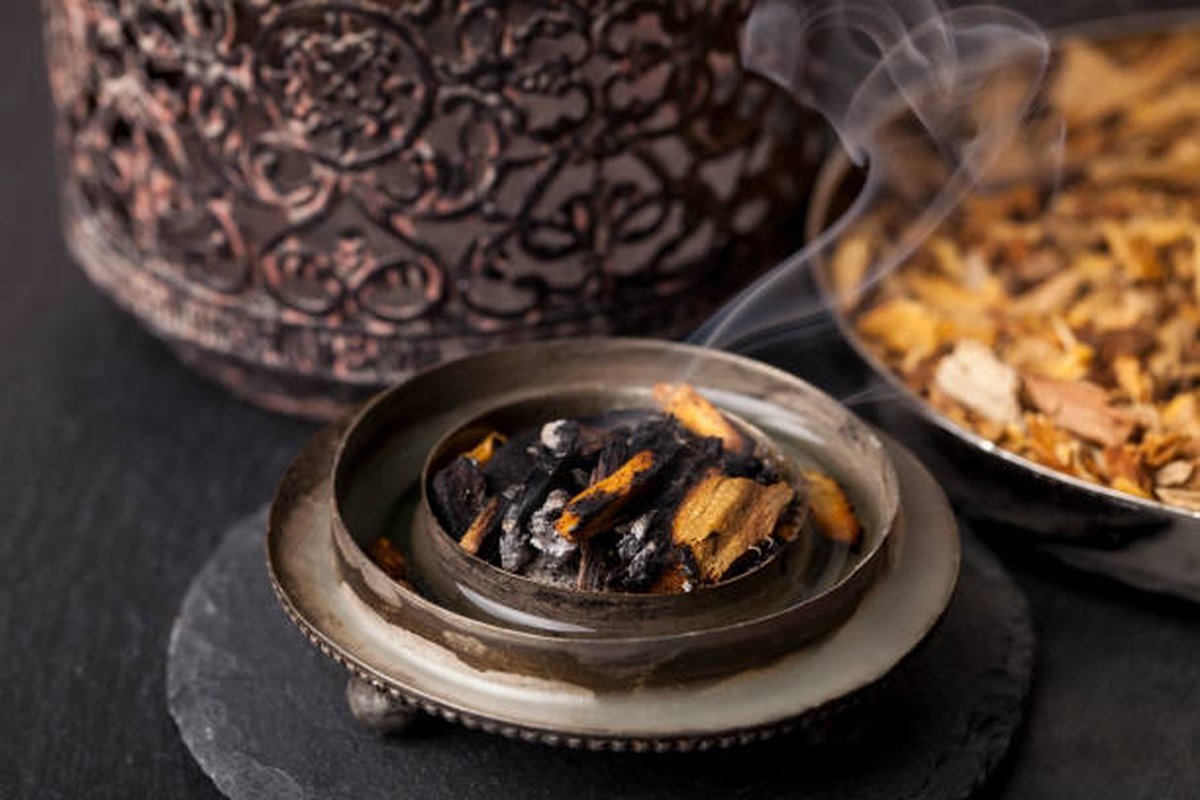
Bakhoor Burner Guide for Retailers: Electric vs Charcoal, Heat and Safety
Retailers who stock bakhoor often ask us which bakhoor burner they should stock beside our bakhoor. It is a fair question, because the burner decides how the product smells in the customer's home. We do not make or sell burners. We grow, grade and blend what goes into them at our plantation in Dian Bai, Guangdong. This guide compares electric and charcoal burners, explains heat for chips versus ma'amoul, covers charcoal types and safety, and shows how to match each burner to the products on your shelf.

Written by
Founder & Chief Sourcing Officer, AgarwoodTown
15+ years hands-on experience grading plantation agarwood, sourcing directly from Dianbai and Maoming districts in Guangdong — the world's largest Aquilaria sinensis cultivation region. Wang has personally inspected thousands of CITES export shipments and holds plantation certification from China's National Forestry and Grassland Administration. He advises GCC, European and East Asian wholesale buyers on grade selection, CITES compliance and supply chain due diligence.
CITES Certified
In this article
- What Is a Bakhoor Burner?
- Why We Sell the Fuel, Not the Burner
- Buying a Bakhoor Burner: Features That Matter
- Electric vs Charcoal: Which Bakhoor Burner Suits Your Customers?
- Electric Burners in Practice
- Charcoal Burners in Practice
- How Hot Should a Bakhoor Burner Run for Chips vs Ma'amoul?
- Why Lower Heat Flatters Better Grades
- Which Bakhoor Charcoal Should You Stock?
- How Should Customers Light a Charcoal Burner?
- Bakhoor Burner Safety: What to Print on the Pack
- Matching the Bakhoor Burner to the Product on Your Shelf
- Bundling Burners With Bakhoor
- How to Source the Bakhoor That Goes in the Burner
- Frequently Asked Questions
1. What Is a Bakhoor Burner?
A bakhoor burner is any vessel that heats bakhoor or oud chips gently enough to release fragrant smoke without burning them to ash. In the Gulf the traditional form is the mabkhara, a footed bowl that holds a lit coal under the bakhoor.[1]
Demand is steady because use is daily. According to a 2012 study in Environmental Health Perspectives (Yeatts 2012), 86% of the 628 UAE households surveyed burned incense at least weekly and 44% burned it every day.[4]
Today the category splits into two families. Charcoal burners still use a glowing coal as the heat source, while electric burners use a heated metal plate. Both do the same job; however, they behave very differently in a customer's hands.
Bakhoor itself is the fuel. It can be dry agarwood chips, chips soaked in perfume oil, or moulded tablets bound with sugar, resins and oils. Each of those formats reacts to heat in its own way, which is why the burner matters so much to a retailer.
Burning aromatic wood and resin is one of the oldest fragrance practices on record. Nevertheless, the modern retail question is narrow and practical: which heat source will make the bakhoor you sell smell the way it should?
Why We Sell the Fuel, Not the Burner
Let us be clear at the start. AgarwoodTown does not manufacture, stock or resell burners of any kind. We are a plantation and processing operation, so our work ends at the bakhoor, chips and incense that go into the burner.
The burner question still matters to us, because it affects how buyers judge our product. A grade B chip on a scorching plate can smell harsher than a grade D chip on a gentle one. Therefore this guide is about helping you choose and explain burners, not about selling you one.
Buying a Bakhoor Burner: Features That Matter
Most people searching for a bakhoor burner are about to buy one. We do not sell burners, but the same features come up again and again in buyer questions and shop listings. Portable, USB-rechargeable units suit cars and desks. Adjustable heat and an automatic timer matter more than looks, because heat control decides whether bakhoor smells sweet or burnt.
Check the plate and body too. Ceramic and metal plates clean differently, and a heavy base is safer near fabric. Whatever you choose, match it to the bakhoor you sell, using the heat table below.
2. Electric vs Charcoal: Which Bakhoor Burner Suits Your Customers?
| Feature | Electric burner | Charcoal burner (mabkhara) |
|---|---|---|
| Heat source | Metal plate warmed by a heating element, mains or rechargeable | A lit charcoal disc or briquette resting in the bowl |
| Start-up | Switch on and wait a few minutes for the plate to warm | Light the coal and wait until it is covered in grey ash |
| Heat control | Dial or preset levels on many models; easy to repeat | Controlled by coal size, ash layer and where the bakhoor sits |
| Smoke volume | Usually softer, with more warm vapour and less dense smoke | Usually denser, more traditional plume of smoke |
| Scent character | Cleaner reading of the wood and oils at low settings | Fuller, smokier impression; charcoal type affects the result |
| Residue | Sugary bakhoor can caramelise onto the plate and needs cleaning | Residue falls into the ash and is tipped out with it |
| Where it works | Apartments, offices, hotel rooms, smoke-sensitive spaces | Majlis, outdoor seating, homes used to the traditional ritual |
| Main risk | Overheating at maximum setting; hot plate left on | Live embers, hot vessel and combustion fumes in closed rooms |
Neither burner is better across the board. The right choice depends on who your customer is, where they live and what bakhoor format they buy most.
Electric Burners in Practice
Electric burners have become the everyday choice in many Gulf apartments and in Western homes. They need no lighter, produce no live ember and can be switched off instantly. For a first-time oud customer, that convenience removes most of the fear.
The weak point is heat. Some cheaper units have a single setting that runs hot, and a hot plate scorches oil-soaked chips within minutes. When you test a model, look for an adjustable control and a removable or easy-wipe plate.
Moreover, check the plate material. Sugary ma'amoul and oil-soaked chips leave a sticky film, so a plate that customers can clean easily keeps the scent fresh from one session to the next.
Charcoal Burners in Practice
The charcoal mabkhara is the traditional bakhoor burner, and many Gulf households still prefer it for guests. It gives a dense, visible plume, and the ritual of lighting the coal is part of the hospitality.
However, charcoal asks more of the user. The coal must be fully lit, it must settle under a layer of ash, and the bakhoor must sit where the heat suits it. Get any of those wrong and the first minute smells of smoke rather than oud.

3. How Hot Should a Bakhoor Burner Run for Chips vs Ma'amoul?
| What goes in the burner | Electric setting to start | Charcoal placement | What goes wrong when too hot |
|---|---|---|---|
| Dry oud wood chips, higher grades (B–AAA) | Low, then step up only if the scent stays faint | On foil or a mica plate above the coal, not on the ember | Resin boils off fast; sharp, acrid smoke replaces the sweet woody notes |
| Dry oud wood chips, entry grades (D–C) | Low to medium | At the edge of the coal or on foil | Pale wood chars and smells of plain burning wood |
| Oil-soaked bakhoor chips (mu'attar) | Low | On foil or the cooler rim of the coal | Perfume oil flashes off in seconds and leaves a burnt, sugary note |
| Moist blended bakhoor (mabsoos) | Low to medium | Small pinch near the coal, not on top of it | Binders bubble and blacken; heavy smoke with little fragrance |
| Ma'amoul tablets and pressed bakhoor | Medium, on a tray or foil | A piece on top of a well-ashed coal | Sugar caramelises and sticks; scent turns to burnt caramel |
| Japanese-style koh incense pieces | Low on a dedicated heater | On a mica plate over coal buried in ash | Delicate top notes are lost almost immediately |
Burner dials are not standardised, and few models show a true temperature. Treat "low", "medium" and "high" as positions on the dial and confirm each one by testing with your own stock.
The short rule is simple: start low, wait, and raise the heat only if the scent stays faint. Across the trade, many complaints about "weak" or "harsh" bakhoor turn out to be heat problems rather than product problems.
Dry chips and oil-soaked chips behave differently on the same plate. Dry wood needs enough heat to warm the resin inside it, while soaked chips carry volatile perfume oil on the surface that leaves quickly. Therefore a setting that suits one format can ruin the other.
Why Lower Heat Flatters Better Grades
Agarwood resin is a complex mixture of sesquiterpenes, chromones and other aromatic compounds.[2] These compounds do not all leave the wood at the same temperature. Gentle heat lets the lighter, sweeter notes come off first, followed by the deeper resinous body.
High heat compresses that sequence into a burst of smoke. As a result, the subtle differences that justify a higher grade disappear, and an A-grade chip can read much like a C-grade chip. In practice, the better the bakhoor you sell, the more your customers need a burner they can turn down.
This is also why Japanese incense practice heats agarwood on a mica plate rather than directly on coal. We cover that tradition in our guide to kōdō incense heating, and the same principle applies to any good bakhoor burner.
4. Which Bakhoor Charcoal Should You Stock?
| Charcoal type | How it lights | Effect on scent | Best suited to |
|---|---|---|---|
| Quick-light (self-igniting) discs | Catches from a lighter within seconds; contains an ignition additive | Gives off a sharp, sparky smell until the additive has burned off | Customers who want speed; must be fully ashed before use |
| Natural charcoal briquettes (e.g. coconut shell, bamboo) | Needs a stove ring or a long lighter for several minutes | Cleaner once lit; less interference with the bakhoor | Regular bakhoor users and better grades of chips |
| Lump wood charcoal | Variable; pieces differ in size and density | Can add its own woody smoke | Outdoor use and large traditional burners |
| Japanese-style incense charcoal | Lit fully, then buried in ash under a mica plate | Very low interference by design | Kōdō-style heating of small koh pieces |
Composition varies by brand. Ask your charcoal supplier for an ingredient statement and lighting instructions before you put any charcoal on the shelf.
Charcoal is the hidden variable in every charcoal bakhoor burner. Customers rarely blame the coal; they blame the bakhoor. Therefore, if you sell charcoal burners, the charcoal you recommend deserves as much thought as the burner itself.
Quick-light discs are the most common retail choice because they are fast. However, the ignition additive smells sharp while it burns. Tell customers to wait until the disc has stopped sparking and turned grey before any bakhoor goes on.
Natural charcoal takes longer to light but interferes less with the fragrance. For customers who buy higher-grade chips, it is usually the better recommendation, even though it asks for more patience.
5. How Should Customers Light a Charcoal Burner?
Customers new to bakhoor mostly struggle with the charcoal, not the burner. In short: light the coal with tongs over a heat-proof surface, wait until a white ash coat covers it, set it in the burner, then add a small piece of bakhoor.
We wrote the full step-by-step, including electric burners and common mistakes, in our guide on how to burn bakhoor. Retailers can link it from a QR code on the pack, so the instructions stay short on the box and complete online.
That is the whole method for a charcoal bakhoor burner. We keep it short here because chip technique, chip size and quantity per session have their own guide: read how to burn oud wood chips for the detail on loose wood.
For electric models the method is shorter still. Switch on at the lowest setting, wait a few minutes, add a small amount of bakhoor, and only then adjust. Finally, switch off and let the plate cool before cleaning it.
6. Bakhoor Burner Safety: What to Print on the Pack
A bakhoor burner is a heat source inside the home, so safety notes belong on the pack and on the shelf card. These are the points we suggest retailers print, in the customer's language:
- Ventilation: burning charcoal produces carbon monoxide. Use charcoal burners only in a ventilated room and never in a closed car, tent or small sealed space.
- Never unattended: do not leave a lit coal or a switched-on electric burner alone, and keep both away from children and pets.
- Heat-proof base: stand the burner on stone, metal or a tile, never directly on wood, fabric or plastic.
- Tongs, not fingers: handle charcoal and hot chips only with tongs, and remember the vessel itself stays hot long after the smoke stops.
- Smoke alarms: dense bakhoor smoke can trigger detectors in hotels and offices; check the building rules first.
- Cool before storing: let ash and the burner cool fully before disposal or storage; tip ash into a metal container.
- Electric units: follow the maker's instructions, check the plug type and voltage for your market, and switch off at the wall after use.
Keep the wording factual. A fragrance product should not carry health claims of any kind, so avoid lines about the smoke being "purifying" or "healing".

7. Matching the Bakhoor Burner to the Product on Your Shelf
| Product you sell | Best burner match | Pack instruction to print | Our starting price · MOQ |
|---|---|---|---|
| Graded oud wood chips (D–AAA) | Electric with low setting, or charcoal with foil | Start low; use one or two chips at a time | From $0.24/g · MOQ 100 g |
| Bakhoor chips, oil-soaked or blended | Electric on low, or well-ashed charcoal | Wait for grey ash; never place on a fresh flame | From $6/g · MOQ 250 g |
| Ma'amoul and pressed bakhoor | Charcoal, or electric on medium with foil | Use a small piece; clean the plate after use | Ask for availability and a quote |
| Japanese-style koh incense | Dedicated low-heat heater or mica plate over buried coal | Do not place directly on charcoal | From $6/g · MOQ 100 g |
| Bakhoor and agarwood incense sticks | No burner needed — a stick holder or ash bowl | Light the tip, blow out the flame, let it smoulder | From $2.35–$5.89 per box · MOQ 1 kg |
Prices are AgarwoodTown wholesale starting prices in USD; they rise with grade. We supply the products in the first column only — burners and charcoal come from your own suppliers.
For example, a shop that sells mostly plantation oud wood chips by grade should stock at least one electric model with a real low setting. Without it, customers cannot taste the difference between grades, and the price ladder stops making sense to them.
A shop focused on oil-soaked and blended bakhoor can serve both camps. Gulf customers who love the charcoal ritual will want quick-light discs and tongs. Meanwhile, apartment dwellers will want an electric unit with a plate that wipes clean.
Sticks are the exception. Our bakhoor-style incense sticks need only a holder, which makes them a useful entry product for customers not ready to own a bakhoor burner at all.
Bundling Burners With Bakhoor
Many retailers sell a starter set: one burner, a pack of bakhoor and, for charcoal models, a box of coal and a pair of tongs. A bundle answers the customer's first question before they ask it.
Gift sets for Ramadan, Eid and weddings are a strong season for this kind of bundle in Gulf markets. For background on how bakhoor is blended and sourced for those markets, see our bakhoor sourcing guide.
Step-by-Step Process
8. How to Source the Bakhoor That Goes in the Burner
List the burners your customers already use
Start from the market, not from our catalogue. Note whether your customers mostly use charcoal mabkharas, electric units or both, because that decides which formats and grades will perform for them.
Order paid samples across formats
Samples start from 100 g of chips. They are paid and non-refundable, and they let you test each format on your own burners before you commit. Include at least one entry grade and one higher grade so you can hear the difference heat makes.
Test on every burner you plan to sell
Run each sample on each burner at the setting you would print on the pack. Write down what works. This short test is the most useful product development a bakhoor retailer can do, and it costs only the sample.
Fix grade, format and documents
Agree the grade in writing; every wholesale shipment from us carries a grading note or certificate. Our grade scale runs D, C, B, A and AAA, plus Kynam by allocation, and it is our internal scale rather than an international standard.
Confirm CITES and import rules
Aquilaria species are listed in CITES Appendix II, so loose chips and bakhoor shipments may need an export permit, which we arrange where required. Annotation #14 exempts some finished retail-packaged products, so check the current annotation text and your own import rules first.
CITES is the step new bakhoor retailers most often overlook. All Aquilaria species have been listed in Appendix II since 2004, and the listing covers agarwood in most of the forms that go into a burner.[3] Our CITES permit walkthrough for agarwood explains the paperwork step by step.
Grades matter for the burner question as well. If you want to understand what separates a C from an A before you test, our agarwood grading guide describes what we look for on the table.
The full range of formats sits in our bakhoor wholesale catalogue, with bakhoor chips from $6/g at a 250 g MOQ. For koh-style heating, our Japanese agarwood incense starts at $6/g with a 100 g MOQ.
Testing bakhoor for your burner range?
Tell us which burners your customers use, the formats you want to test and your target grades, and we will suggest a sample set. We reply to enquiries within 4 business hours, Monday to Saturday, 9:00–18:00 China time.
Ask for a bakhoor sample set → and read our replacement and credit policy before you order. We do not accept returns, but genuine problems are fixed by replacement or credit.
Frequently Asked Questions
For most beginners an electric burner with an adjustable dial is the easiest start. It needs no lighter or charcoal, it can be switched off at once, and a low setting keeps chips and oil-soaked bakhoor from scorching. Charcoal burners give a more traditional plume, but they ask for more care and practice.
No. We do not make, stock or resell burners or charcoal. We are a plantation and processing company, and we supply what goes into the burner: graded oud wood chips, bakhoor chips, Japanese-style koh incense and incense sticks. Retailers source burners from housewares or giftware suppliers and pair them with our products.
Neither is better in every case. Electric burners give softer smoke, easy control and suit apartments and offices. Charcoal burners give a denser, traditional plume and suit the majlis and outdoor seating. The best choice depends on your customers and on the format of bakhoor they buy, so test both with your own stock.
Start at the lowest setting and step up only if the scent stays faint. Dials are not standardised and few burners show a real temperature, so judge by smell. Oil-soaked chips and higher-grade wood need low heat, while ma'amoul and pressed bakhoor usually need a medium setting on a piece of foil.
Burnt-smelling bakhoor is almost always a heat problem. On charcoal, the coal may not have ashed over, or the bakhoor sits directly on the hottest point. On an electric burner, the setting may be too high or old residue may be scorching on the plate. Lower the heat, use foil and clean the plate.
Quick-light discs are fast and widely sold, but they smell sharp until the ignition additive burns off, so wait for grey ash. Natural charcoal, such as coconut-shell or bamboo briquettes, takes longer to light but interferes less with the fragrance. Japanese incense charcoal suits mica-plate heating of small koh pieces.
It can be used indoors with care, as it has been for generations, but burning charcoal produces carbon monoxide. Use it only in a ventilated room, never in a closed car or small sealed space, stand it on a heat-proof base, use tongs and never leave a lit coal unattended. Electric burners avoid combustion fumes.
Often, yes. Aquilaria species are listed in CITES Appendix II, so wholesale shipments of oud chips and many bakhoor products need an export permit, which we arrange where required. Annotation #14 exempts some finished retail-packaged products, so check the current annotation text and your national import rules before ordering.
Neither is better for every customer. An electric bakhoor burner gives lower, steadier heat, less smoke and no charcoal to light, which suits apartments and beginners. Charcoal gives a fuller, smokier release that many Gulf households prefer for majlis use. Most retailers we supply stock one of each.
Quick-light discs are convenient but can add a sulphur note, while natural coconut-shell or bamboo charcoal burns cleaner and longer once lit. For delicate high-grade chips, many users prefer natural charcoal under a layer of ash. Test each type with the bakhoor you sell before you stock it.
References
- 1
- 2Naef R.. The volatile and semi-volatile constituents of agarwood, the infected heartwood of Aquilaria species: a review. Flavour and Fragrance Journal, 2011.View source
- 3
- 4Yeatts K.B., et al.. Indoor air pollutants and health in the United Arab Emirates. Environmental Health Perspectives, 2012.View source
All scientific references are provided for transparency. AgarwoodTown summarises peer-reviewed findings for educational purposes and does not claim to provide medical or regulatory advice.
Wholesale Catalog
Buy the products discussed in this article


Related Articles
Sourcing Reference
Bakhoor Sourcing 2026: 7 Premium Standards GCC Luxury Brands Use to Evaluate Source Suppliers
14 min read
Incense
Kodo Incense: The Japanese Art of Listening to Agarwood, Explained by a Supplier
14 min read
Sourcing Reference
Oud Wood Price by Grade: How Agarwood Is Graded from D to AAA and Kynam
15 min read
Source Direct from Origin
Discuss Your Requirements with Our Team
We respond within 24 hours. Share your target grade, quantity and destination — we'll send current pricing, a sample pack option, and CITES documentation details.