Agarwood Buddhism: Temple Incense, Malas and What Suppliers Should Know
Buyers who supply temples and Buddhist shops often start with the same question. What is the real connection in agarwood buddhism, and which material actually belongs on an altar or a mala string? Agarwood has been burned as an offering and turned into prayer beads across Buddhist Asia for many centuries. This guide sets out what is well documented, how temple incense differs in China and Japan, which grades the trade typically uses, and what to ask before you supply a temple or a Buddhist retailer.

Written by
Founder & Chief Sourcing Officer, AgarwoodTown
15+ years hands-on experience grading plantation agarwood, sourcing directly from Dianbai and Maoming districts in Guangdong — the world's largest Aquilaria sinensis cultivation region. Wang has personally inspected thousands of CITES export shipments and holds plantation certification from China's National Forestry and Grassland Administration. He advises GCC, European and East Asian wholesale buyers on grade selection, CITES compliance and supply chain due diligence.
CITES Certified
In this article
- Agarwood Buddhism: What Is the Link?
- What Is Well Documented, and What Is Not
- How Is Agarwood Used in Buddhist Incense Offerings?
- Sticks, Coils, Powder and Chips on the Altar
- Agarwood Buddhism in China and Japan
- Chinese Temple Incense and Chén Xiāng
- Jinkō in Japanese Temples
- The Ranjatai and Carved Agarwood Images
- Agarwood Malas and Prayer Beads
- Bead Counts, Sizes and Styles
- Which Agarwood Grades Are Typically Used?
- Agarwood or Sandalwood for Temple Use?
- Supplying Temples and Buddhist Retailers: What to Ask
- Respectful Selling and CITES Rules
- Frequently Asked Questions
1. Agarwood Buddhism: What Is the Link?
The link in agarwood buddhism is practical rather than doctrinal. Agarwood is one of the aromatic woods burned as incense in Buddhist temples and homes, and it is also turned into beads for malas and prayer strings.
Scarcity starts in the forest. According to a 2013 study in Molecules (Liu 2013), agarwood forms naturally in only about 10% of Aquilaria trees, which is why plantations now induce resin on purpose.[4]
Incense has a long place in Buddhist ritual across Asia, where it is offered before images and during chanting. Agarwood, sandalwood and other aromatics became the raw materials for that incense as Buddhism spread along trade routes into China, Korea and Japan.
For a supplier like us, that history matters in a simple way. Temple incense and Buddhist beads are steady, conservative product lines. Buyers in this segment care about material honesty and consistency far more than about novelty.
The link is old. According to Japan's Nihon Shoki, a piece of fragrant wood washed ashore on Awaji Island in 595, and it is usually cited as the first record of aloeswood reaching Japan, at a time when Buddhism was spreading there.
What Is Well Documented, and What Is Not
We would separate two kinds of claim. Some points are firmly recorded. Incense offerings are a standard part of Buddhist devotional practice in East Asia, and Japanese incense culture developed alongside Buddhism from around the sixth century.[1] Agarwood itself is recognised across many religious traditions as a prized aromatic.[2]
Other claims, we find, circulate in the retail market with much weaker support. Statements that a specific bead or stick brings merit, protection or particular spiritual effects are matters of personal belief. We do not make them, and we advise retailers not to put them on labels either.
In practice, the safest product copy describes what the material is, where it comes from and how it is traditionally used. Leave the meaning to the customer and to their teachers. That approach also keeps you clear of consumer-protection problems in strict markets.
2. How Is Agarwood Used in Buddhist Incense Offerings?
Agarwood is used in Buddhist offerings mainly as incense: sticks, coils, cones, powder and small chips heated or burned before an altar. The form depends on the country, the school and the occasion.
Incense is commonly listed among the traditional offerings placed before a Buddha image, alongside flowers, light, water and food. However, the exact list, its number and its interpretation vary between traditions. We describe the practice, not its meaning.
Agarwood sits at the upper end of the incense materials. Therefore many temples use blended incense for daily offerings and reserve higher-agarwood products for festivals, memorials or special ceremonies. That pattern is general trade knowledge, and it shapes how retailers build their ranges.
Sticks, Coils, Powder and Chips on the Altar
Sticks are the everyday form. Chinese-style sticks usually have a bamboo core, while Japanese-style sticks are coreless and burn cleanly to ash. Both can carry a high or a low share of agarwood, so the label alone tells you little.
Coils hang from temple ceilings in parts of southern China and can burn for many hours. They use the same powder base as sticks but need a stronger binder and careful drying.
Powder and chips serve more formal uses. Powder is sprinkled on smouldering incense in a censer, or burned in trails, while small chips are warmed on ash or a heater. Our milled agarwood powder for incense making starts from $10.30 per 50 g, and graded oud wood chips in grades D to AAA start from $0.24/g with an MOQ of 100 g.
For a buyer, in our view, each form raises its own questions about binder, core, burn time and smoke. We cover those in the supplier checklist in section 7.

3. Agarwood Buddhism in China and Japan
China and Japan both burn agarwood in temples, but as we see it they buy it differently. Chinese buyers tend to think in terms of wood quality and sinking grades, while Japanese buyers think in terms of finished, carefully blended incense.
Chinese Temple Incense and Chén Xiāng
In Chinese, agarwood is chén xiāng (沉香), literally "sinking fragrance", after the way dense resinous pieces sink in water.[2] The name tells you how the domestic market judges it: by density, resin and aroma when heated.
Large temples in China burn a great deal of incense, much of it in big courtyard censers. Most of that volume is blended stick incense, and only part of it contains meaningful agarwood. Meanwhile, devotees and temple shops buy higher-agarwood sticks, coils and chips for home altars and special occasions.
Some temples have also moved towards fewer, smaller or lower-smoke sticks for fire safety and air quality. For suppliers, that shift favours cleaner-burning, better-made incense over sheer quantity. Our Greater China market overview covers how domestic buyers specify agarwood more broadly.
Jinkō in Japanese Temples
In Japan, agarwood is jinkō (沈香), and the top tier is kyara. Incense arrived with Buddhism, and the Nihon Shoki records a piece of fragrant wood washing ashore on Awaji Island in 595.[1] Temple use came first; aristocratic and later secular incense appreciation grew from it.
That secular branch became kōdō, the art of "listening to incense", which judges single pieces of aloeswood heated on mica. Kōdō is not a Buddhist rite in itself, although the two share materials and history. Our guide to kōdō incense and its tools explains the ceremony in detail.
Japanese temple incense is usually coreless and finely blended. Agarwood may be combined with sandalwood, clove, cinnamon and other aromatics, held together with a plant-based binder. Consequently Japanese buyers ask detailed questions about each ingredient, its grade and its origin.
For this market we supply Japanese-style koh agarwood incense from $6/g with an MOQ of 100 g, as well as kyara-grade incense for ceremonial lines. Our Japan buyer page covers documentation and shipping for Japanese importers.
The Ranjatai and Carved Agarwood Images
Japan's most famous piece of aloeswood, the Ranjatai, has been kept in the Shōsōin treasure house of Tōdai-ji in Nara since the eighth century, which ties agarwood closely to Japan's great Buddhist temple tradition.
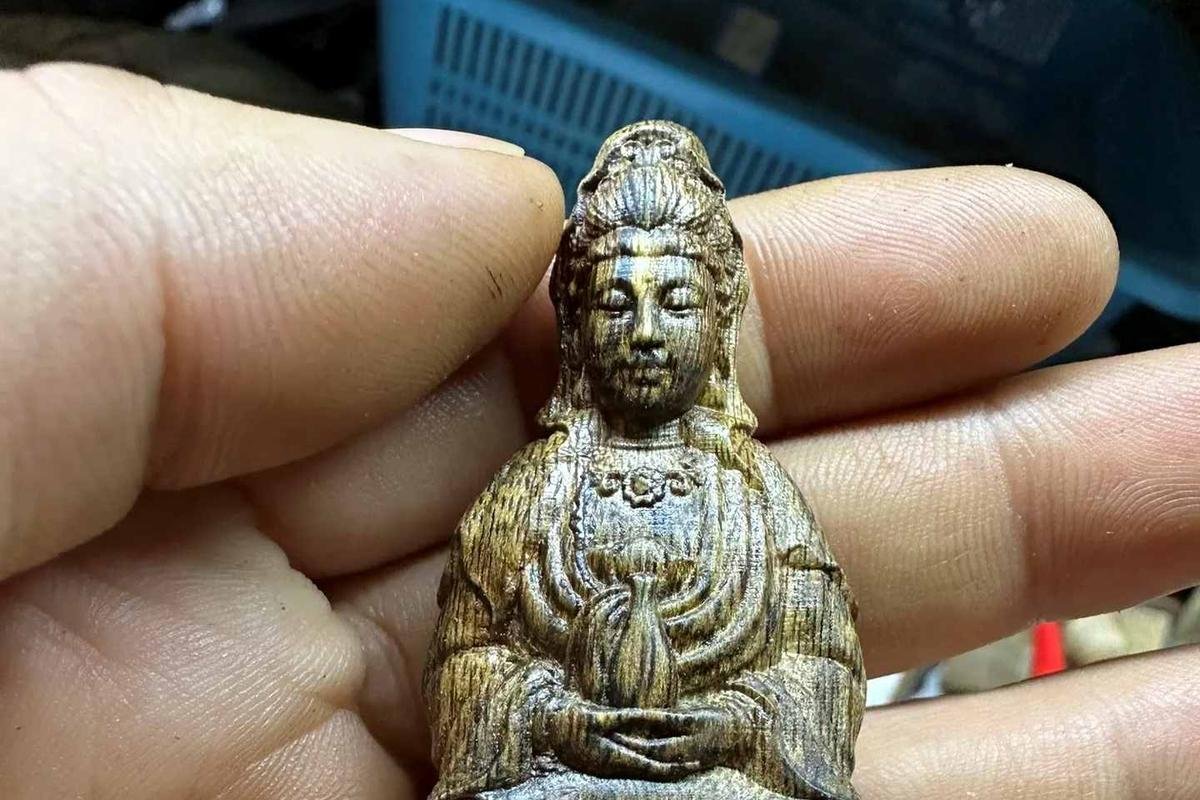
Agarwood is also carved into devotional images, including Buddha and Guanyin figures and small shrine pieces. Such objects call for sound, evenly resinated wood and careful handling. If you supply them, describe the material honestly and treat the subject with the respect the buyer expects.
4. Agarwood Malas and Prayer Beads
Agarwood malas are strings of turned agarwood beads used for counting recitations, and they are among the most valued bead materials in Buddhist retail. The wood is light, warm to handle and gives off a soft scent, especially when warmed by the hand.
A mala is a string of beads used to count mantras, prayers or breaths. The full traditional count of 108 beads is widely recognised in Buddhist practice, although shorter strings are just as common. In Japan the equivalent is the juzu, and its form varies by school.
Agarwood is not the only bead material. Sandalwood, bodhi seed, rudraksha, crystal and many other materials are used too. However, agarwood holds a special place in Chinese retail because collectors value resin content, density and scent, just as they do with chips.
Bead Counts, Sizes and Styles
Retailers usually stock three broad formats. First, full 108-bead malas, often with a guru bead and tassel. Second, shorter wrist malas of 18, 21 or 27 beads. Third, simple single-wrap bracelets sold for daily wear rather than recitation.
Bead diameter drives price as much as grade does. A larger bead needs a thicker, cleaner section of resinated wood, and those sections are scarce. Therefore the same grade of wood costs more per gram when it is turned into 15 mm beads than into 8 mm beads.
We price agarwood bracelets by weight from $18/g. A multi-wrap string such as our round-bead multi-wrap agarwood bracelet works as a 108-bead style mala for many retailers. For care instructions you can pass on to customers, see our agarwood bead and bracelet care guide, and for the wider bead market read our agarwood bracelet wholesale guide.

5. Which Agarwood Grades Are Typically Used?
| Grade | What we see on the grading table | Typical Buddhist-market use |
|---|---|---|
| D | Mostly pale wood with thin, scattered resin lines; light aroma when heated | Powder for blended daily incense, coils and sticks for large-volume temple use |
| C | Clearer resin streaks over part of the piece; moderate aroma | Mid-range sticks and cones for home altars; chips for occasional offerings |
| B | Resin spread across much of the piece; fuller, warmer aroma | Higher-agarwood incense, entry-level bead strings, festival offerings |
| A | Dense, dark resin across most of the piece; rich and lasting aroma | Premium malas and wrist malas, ceremonial chips, quality koh incense |
| AAA | Heavy, oily, resin-saturated wood; deep and complex aroma | Collector malas, special ceremonies, gifts to teachers or temples |
| Kynam | Soft, sticky, exceptionally aromatic resin; allocation only | Kyara-grade incense and collector pieces; very small volumes |
Grades refer to AgarwoodTown's internal D–AAA + Kynam scale, which is not an ISO or CITES standard. The use patterns are general trade practice and vary by temple, school and retailer.
6. Agarwood or Sandalwood for Temple Use?
| Feature | Agarwood (chén xiāng / jinkō) | Sandalwood (tán xiāng / byakudan) |
|---|---|---|
| Source | Resinated heartwood of Aquilaria trees, formed after wounding and infection | Fragrant heartwood of Santalum trees, scented throughout as the tree matures |
| Scent when burned | Deep, resinous, woody; varies strongly with grade and origin | Creamy, soft and sweet; more consistent from batch to batch |
| Typical temple role | Higher-value offerings, ceremonies, premium blends | Daily incense and the base of many blends |
| Bead use | Valued for resin, density and scent; priced by grade and bead size | Common, affordable mala material with a steady scent |
| Grading | Wide quality range; grading needs experience and samples | Narrower range; oil content and origin drive price |
| Trade rules | All Aquilaria species are in CITES Appendix II | Rules depend on species and origin; check each source |
Step-by-Step Process
7. Supplying Temples and Buddhist Retailers: What to Ask
Ask what the buyer actually burns or sells
Temples, monastery shops and Buddhist retailers buy very different things. Ask whether the product is for daily offerings, festival use, home altars or recitation beads, because that answer decides the form, the grade and the price band before anything else.
Ask for the agarwood share in writing
Incense labelled as agarwood can contain anything from a trace to a high share of real wood. Ask the supplier to state the approximate agarwood proportion, the other aromatics and the binder, and keep that statement with your purchase records for later batches.
Ask about added fragrance and dyes
Many temple buyers prefer incense without synthetic fragrance oils, and many bead buyers reject dyed or oil-soaked beads. Ask the supplier directly whether anything has been added, and request a GC-MS report for oils or chips where the value justifies one.
Test burn behaviour and smoke
Ask for sample sticks or coils and burn them in the conditions the buyer will use. Check burn time, ash, whether the stick stays lit and how much smoke it produces indoors. Temples with enclosed halls usually care about smoke more than retailers do.
Check bead grade, size and consistency
For malas, ask for the grade, bead diameter, bead count and total weight, plus photos of the actual string rather than a catalogue image. Ask how the supplier keeps colour and resin pattern consistent across a repeat order of the same design.
Confirm documents, packaging and lead time
Ask which shipments need a CITES export permit, what the grading note covers and how the goods are packed. Temple orders often tie to festival dates, so agree the lead time early and build in time for permits and customs clearance.
8. Respectful Selling and CITES Rules
Selling into the Buddhist market brings two kinds of responsibility: respect for the people who use the product, and compliance with wildlife-trade law. Both protect your business as much as your customers.
- No spiritual or health promises: describe agarwood as "traditionally used in Buddhist offerings" or "used for prayer beads". Do not claim that a product brings blessings, luck, healing or calm, and do not invent doctrine to support a sale.
- Imagery with care: avoid printing Buddha images on packaging that will be thrown away or placed on the floor. Ask your temple customers what they consider appropriate.
- Honest material claims: say plantation agarwood when it is plantation agarwood. Our own stock is cultivated Aquilaria sinensis from Dian Bai, and we do not sell wild material.
- CITES Appendix II: all Aquilaria species have been listed since 2004.[3] We ship wholesale orders with a CITES export permit wherever one is required.
- Annotation #14: some finished, retail-packaged products are exempt under the listing annotation. Check the current annotation text before you assume beads or incense are covered, because annotations change.
- Your import side: some countries add rules on top of CITES. Confirm requirements with your national CITES authority before the first shipment.
For temple and Buddhist-retail buyers, a small, paid sample set is the sensible first step. Sample orders start from 100 g of chips or 1 g of oil, are non-refundable, and let you compare grades in your own burner or on your own bead counter.
Every wholesale shipment comes with a grading note and, where required, a CITES export permit. Our founder, Wang Jianyu, grades the wood himself, using visual inspection, aroma, resin content and the sink test. Moreover, we process 20+ tons of agarwood material a month from our own 100+ mu plantation and 100+ contracted farmers.
If you are building a range from scratch, our agarwood incense sticks for altar and retail use start from $2.35–$5.89 per box with an MOQ of 1 kg. For collector-tier malas, some bead makers start from kynam-grade agarwood wood, which we list from $0.89/g. For background on stick construction, read our guide to agarwood incense sticks, and for the long view see our history of the agarwood trade.
Supplying a temple or Buddhist shop?
Tell us what you burn or sell, your target grade and your festival dates, and we will suggest a sample set. We reply to enquiries within 4 business hours, Monday to Saturday, 9:00–18:00 China time.
Ask for temple incense and mala samples → or read our replacement and credit policy before you order.
Frequently Asked Questions
Agarwood is one of the aromatic woods traditionally burned as incense in Buddhist temples and homes, and it is also turned into beads for malas. Its use spread with Buddhism along Asian trade routes. The reasons people give for choosing it are personal and traditional, so retailers should describe the use rather than promise any particular effect.
Not always. Much everyday temple incense is a blend in which agarwood is a minor ingredient or absent, with sandalwood, other aromatics and binders making up the bulk. Higher-agarwood incense costs more and is often kept for ceremonies, festivals or home altars. Ask the supplier to state the agarwood share in writing before you buy.
A full traditional mala has 108 beads, and that count is widely recognised in Buddhist practice. Shorter wrist malas of 18, 21 or 27 beads are also common, as are single-wrap bracelets for daily wear. Japanese juzu follow their own forms, which vary by school, so check what your customers expect before ordering.
There is no single best grade, because it depends on your customers and price point. On our internal scale, B grade suits entry-level bead strings, A grade suits premium malas, and AAA or kynam suits collector pieces. Bead size matters too, since large beads need thick, clean sections of resinated wood and therefore cost more per gram.
Chinese buyers tend to judge agarwood as wood, by density, resin and aroma, and buy sticks, coils and chips. Japanese temple incense is usually coreless and finely blended, with agarwood combined with sandalwood and spices. Japanese buyers therefore ask detailed questions about every ingredient, its grade and its origin, while Chinese buyers focus more on the wood itself.
Kōdō is a Japanese art of appreciating incense, often called listening to incense, and it is not a Buddhist rite in itself. However, it grew from incense culture that arrived in Japan with Buddhism, and it uses the same agarwood materials, including jinkō and kyara. Many suppliers serve both temple buyers and kōdō practitioners from similar stock.
We advise against it. Claims that a product brings merit, protection, luck or healing are matters of belief, and in many markets they can also create consumer-protection or advertising problems. Safer copy states the material, the grade, the origin and that agarwood is traditionally used in Buddhist offerings or for prayer beads.
They may. All Aquilaria species have been listed in CITES Appendix II since 2004, and wholesale shipments of wood, beads and many other products need an export permit. The listing annotation exempts some finished, retail-packaged products, so check the current annotation text and confirm your own import rules with your national CITES authority.
Start with a small paid sample set covering two or three grades in the forms you sell. Burn the incense in your own hall or check the beads in your own shop, then agree the grade, agarwood share, packaging and lead time in writing. Plan around festival dates so permits and customs do not delay delivery.
References
- 1
- 2Liu Y.Y., Wei J.H., Gao Z.H., et al.. A Review of Quality Assessment and Grading for Agarwood. Chinese Herbal Medicines, 2017.View source
- 3
- 4Liu Y., Chen H., Yang Y., et al.. Whole-tree agarwood-inducing technique: an efficient novel technique for producing high-quality agarwood in cultivated Aquilaria sinensis trees. Molecules, 2013.View source
All scientific references are provided for transparency. AgarwoodTown summarises peer-reviewed findings for educational purposes and does not claim to provide medical or regulatory advice.
Wholesale Catalog
Buy the products discussed in this article


Related Articles
Source Direct from Origin
Discuss Your Requirements with Our Team
We respond within 24 hours. Share your target grade, quantity and destination — we'll send current pricing, a sample pack option, and CITES documentation details.