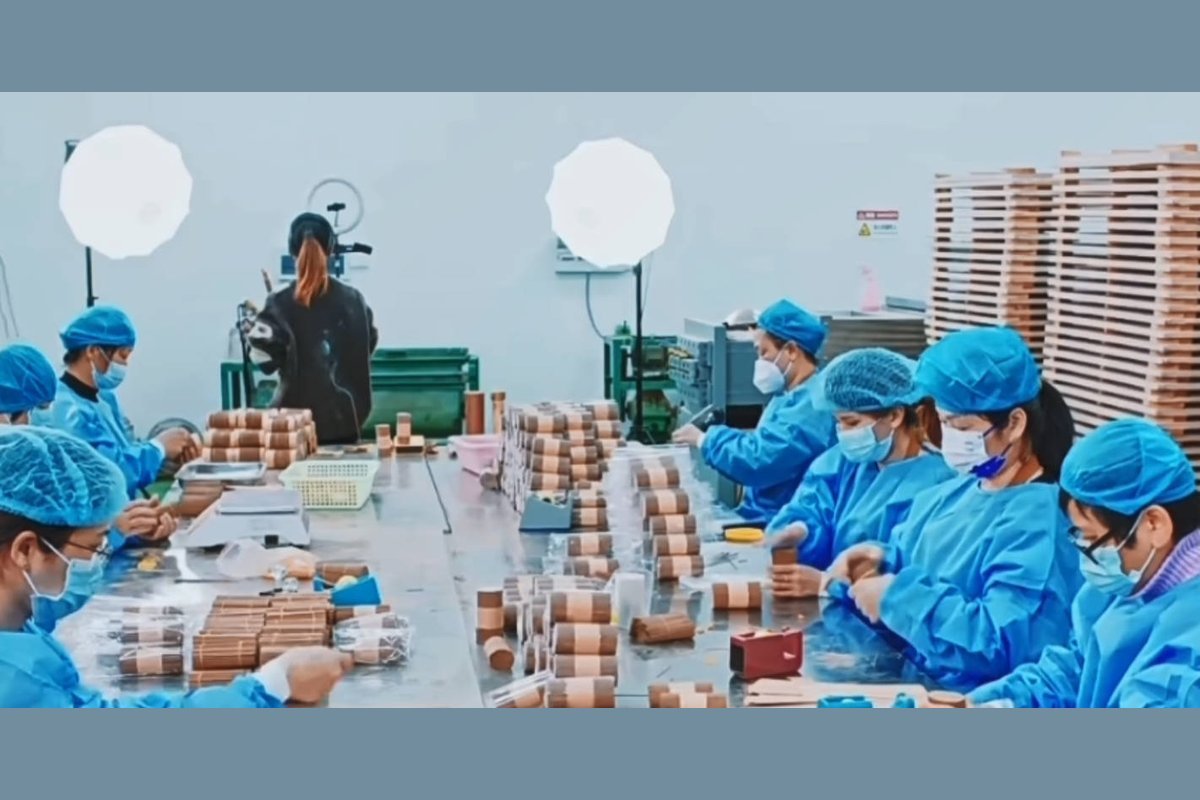
Oud Wood Price by Grade: How Agarwood Is Graded from D to AAA and Kynam
Two suppliers can quote "Grade A" oud chips at very different prices, and both can be honest. Oud wood price follows grade more than anything else, yet agarwood grades have no global standard, so every grade is only as good as the method behind it. This guide opens our grading table in Dian Bai, Guangdong. It explains how we judge resin colour, density, aroma and weight, how our D–AAA and Kynam scale works, how it compares with Chinese, Japanese and Gulf trade systems, and which questions protect you before you pay for volume.

Written by
Founder & Chief Sourcing Officer, AgarwoodTown
15+ years hands-on experience grading plantation agarwood, sourcing directly from Dianbai and Maoming districts in Guangdong — the world's largest Aquilaria sinensis cultivation region. Wang has personally inspected thousands of CITES export shipments and holds plantation certification from China's National Forestry and Grassland Administration. He advises GCC, European and East Asian wholesale buyers on grade selection, CITES compliance and supply chain due diligence.
CITES Certified
In this article
- What Are Agarwood Grades?
- Why There Is No Universal Standard
- How Is Agarwood Graded on Our Table?
- What Each Agarwood Grading Test Tells You
- Resin Colour and Spread
- The Sink Test and Its Limits
- The Aroma Test on Heat
- Weight, Size and Form
- Oud Wood Price by Grade: Our D–AAA and Kynam Scale
- Oud Wood Price per Kg at the Top of the Market
- Why Kynam Sits Outside the Scale
- How Does Our Scale Compare with Chinese, Japanese and Gulf Grading?
- Grading Chips vs Grading Oil: What Changes?
- What Can Make an Agarwood Grade Misleading?
- What Should You Ask a Supplier About Agarwood Grading?
- How Agarwood Grading Connects to Price and Paperwork
- The Grade on Your Documents
- Frequently Asked Questions
1. What Are Agarwood Grades?
Oud wood price is set mainly by grade. Agarwood grading sorts resinated Aquilaria wood into price tiers by how much resin it holds and how well it smells. Agarwood grades are the labels that come out of that sorting, from D at the entry end to AAA and Kynam at the top. In practice, a grader judges colour, density, aroma and form, then assigns a letter that sets the price per gram.
Is there an official quality bar? According to the Chinese Pharmacopoeia, as cited by Liu et al. (2013), medicinal agarwood must contain at least 10% alcohol-soluble extractive. In that study, induced plantation samples measured 11.60–18.08%, against 10.56% and 19.30% for two wild samples.[8]
Resin is the whole point. Healthy Aquilaria wood is pale and almost scentless, while the dark aromatic material forms only where the tree has reacted to a wound and infection. Therefore two pieces cut from the same trunk can sit four grades apart.
Published reviews of agarwood quality describe the same basic toolkit we use: appearance, resin content, density, aroma and, increasingly, chemical analysis.[1] However, those reviews also note that the criteria are applied differently from market to market.
Why There Is No Universal Standard
No international body publishes a binding agarwood grading standard. CITES regulates whether the wood may cross a border, not how good it is. Consequently, each supplier, region and trade tradition runs its own scale.
Our scale is the one founder Wang Jianyu has applied since we started in 2014: D, C, B, A and AAA, with Kynam handled separately. It is our internal scale, not an ISO or CITES standard. For that reason, we pair it with paid samples and a written grading note, so the letter means something you have seen with your own eyes.
Plantation wood adds another layer. Induction methods, inoculants and the time a tree is left to build resin all shape what reaches the grading table.[2] Our stock comes from our own 100+ mu Aquilaria sinensis plantation and from 100+ contracted plantation farmers, so grading, not origin alone, decides the grade of a lot.
Step-by-Step Process
2. How Is Agarwood Graded on Our Table?
Clean, dry and log the incoming lot
A careful grader starts with a source record for each lot, removes loose bark and dust, then lets wet material dry before any judgement. Moisture darkens wood and adds weight. A damp chip can look and weigh like a better grade than it is.
Sort by form and size first
Before grading by quality, graders typically separate solid pieces, thin flakes, offcuts and pieces large enough for beads, carvings or log sections. Form decides which use a piece can serve, so it decides which grade ladder the piece climbs.
Read the resin by eye
Under steady, even light, graders look at colour depth, how far resin spreads across the piece and how much pale wood remains. Cut faces matter more than the outer surface, so a fresh face is often cut on doubtful pieces.
Weigh, then test density in water
Pieces of similar size are compared by weight in the hand and on the scale. Representative pieces then go into a water test, which shows whether they float, hang at mid-depth or sink. The result confirms or challenges the visual read.
Heat a sample for aroma
A common method is to warm a small sliver from each candidate grade gently on an electric heater. Graders note the opening, the body and how long the scent lasts. Aroma can move a piece up or down one grade from where its appearance placed it.
Assign the grade and write the note
The final grade combines all four tests. Each grade should be bagged separately and labelled with a lot reference; our result goes on the grading note that travels with every wholesale shipment.
3. What Each Agarwood Grading Test Tells You
In agarwood grading, each test answers a different question, and none is enough alone. Visual inspection shows where the resin is, weight and water show how much there is, and aroma shows whether it is any good.
Resin Colour and Spread
Colour is the first and fastest signal in agarwood grading. Resin-rich wood ranges from deep brown to near-black, often with a glossy or oily look on a fresh cut. By contrast, low-grade material shows thin dark lines running through pale, fibrous wood.
Spread matters as much as depth. A chip with one black streak and a pale body is weaker than a chip that is evenly brown all the way through. In practice, graders look at the ratio of dark to pale across every face, not just the best one.
Colour can also mislead. Some plantation wood darkens quickly but carries little aroma, while some lighter wood smells better than it looks. That is why colour opens the grading process but never closes it.
The Sink Test and Its Limits
The sink test works because resin is denser than water while healthy Aquilaria wood is much lighter. A heavily resinated piece can sink, a partly resinated one may hang at mid-depth, and a lightly resinated one floats. The Chinese term chén xiāng (沉香), "sinking fragrance", comes from this behaviour.
However, the test proves density, not quality. Mineral deposits, waterlogging or added oils can make poor wood heavy. Moreover, shape and trapped air change how a piece behaves, so graders compare pieces of similar size and let them settle before reading the result.
For plantation stock, sinking pieces are the exception rather than the rule. Most cultivated material sits in the floating or half-sinking range, and we grade it honestly on that basis instead of pretending every lot can reach sinking grade.
The Aroma Test on Heat
Aroma is the agarwood grading test buyers care about most, because it is what their customers pay for. Graders usually heat a thin sliver gently on an electric heater rather than burning it on charcoal, since flame adds smoke and hides the true profile.
A good piece opens cleanly, develops sweet, resinous and woody layers, and keeps releasing scent for a long time. A weak piece gives a short, sharp opening and then fades into plain burning wood. The chemistry behind this is complex: agarwood contains a large family of sesquiterpenes and 2-(2-phenylethyl)chromones, and their balance varies widely between samples.[3]
Cold smell matters too. High-grade wood often carries a noticeable scent at room temperature, while low grades smell of very little until heated. Finally, experienced graders compare against reference pieces from earlier lots, because a nose without a reference drifts over a long grading day.
Weight, Size and Form
Weight in the hand is a quick proxy for resin content when pieces are the same size. Two chips of equal volume, one noticeably heavier, almost always grade differently.
Size and form then decide the use. A large solid piece of A-grade wood may be worth more as a bead blank, a carving or a log section than broken into chips. Meanwhile, thin flakes of the same resin quality usually go to chips, powder or distillation.

4. Oud Wood Price by Grade: Our D–AAA and Kynam Scale
| Grade | Look and resin spread | Water test (typical) | Aroma on gentle heat | Where it usually goes |
|---|---|---|---|---|
| D | Pale body with thin, scattered dark lines | Floats | Light and short; mostly woody | Entry chips, powder, incense sticks, distillation feedstock |
| C | Clear resin streaks over part of the piece | Floats | Moderate, pleasant, fades fairly soon | Everyday chips, bakhoor bases, incense |
| B | Resin across much of the piece, some pale wood left | Floats or rides low | Fuller and sweeter, lasts noticeably longer | Retail chips, bead stock, oil feedstock |
| A | Dark resin through most of the piece on cut faces | Often half-sinks | Layered, sweet-resinous, long-lasting | Premium chips, bracelets, gift lines |
| AAA | Near-solid resin, heavy and oily on a fresh cut | Half-sinks or sinks | Deep, complex, scent noticeable even cold | Collector lots, kōdō-grade pieces, top beads |
| Kynam (奇楠) | Soft, waxy resin that can be cut or dented | Varies; not a reliable test | Distinctive cool, sweet, evolving profile | Allocation only, quoted per enquiry |
This is AgarwoodTown's internal agarwood grading scale for plantation Aquilaria sinensis. It is not an ISO or CITES standard. Descriptions are what we typically see on the grading table; individual lots vary.
The scale is a ladder, but the steps are not equal. The jump in price from D to C is modest, while the jump from A to AAA is steep, because AAA material is a small share of any harvest.
Our D to AAA oud wood chips start from $0.24/g at entry grades with an MOQ of 100 g, and the price rises with each step. We quote the exact figure per grade, because a single headline price would hide the gap between a D lot and an AAA lot.
Oud Wood Price per Kg at the Top of the Market
Wild, old-growth wood sits in a different price world from plantation chips. At a Sharjah oud exhibition in October 2025, Khaleej Times reported top-grade wild chips at roughly AED 70,000–105,000 per kg. One Philippine variety was quoted above AED 100,000 per kg, up from about AED 10,000 in 2017.[4]
Those are retail asking prices for scarce wild material, not wholesale prices for plantation wood. We think they are useful for one thing: they show how steeply oud wood price climbs with resin, age and scarcity. The same report notes that a ton of agarwood may yield only one or two kilograms of high-quality oud, and that the best wood comes from trees at least 25 years old. For a plantation lot, the honest way to compare is price per gram at a stated grade, checked against a paid sample.
Why Kynam Sits Outside the Scale
Kynam, called kyara in Japan and qí nán (奇楠) in China, is not simply "AAA plus". It behaves differently: the resin is softer and waxier, a fingernail can mark it, and its scent is often noticeable without heat.
Because of those differences, we grade kynam with its own references rather than placing it on the D–AAA ladder. Our kynam wood listing starts from $0.89/g, while the scarcest pieces are never stock-held; we allocate them and quote per enquiry. Treat any offer of large, cheap, ready-stock "kynam" with caution, and ask to see the specific pieces.
5. How Does Our Scale Compare with Chinese, Japanese and Gulf Grading?
| System | How grades are named | What drives the grade | What a buyer should check |
|---|---|---|---|
| AgarwoodTown (plantation) | D, C, B, A, AAA, plus Kynam by allocation | Visual resin read, water test, aroma on heat, weight and form | Paid sample and the written grading note for the lot |
| Chinese domestic trade | Sinking classes (沉水 sinking, 半沉 half-sinking, 浮水 floating), formation types, origin names such as Hainan | Density, formation type, origin and age of the resin | Whether an origin name describes the wood or only the style |
| Japanese kōdō tradition | Six "countries" (rikkoku): kyara, rakoku, manaka, manaban, sasora, sumotara | Character of the scent, judged against five tastes | That the pieces suit the client's school; size and cut matter |
| Gulf retail trade | Origin labels and house tiers such as "super" or "double super" | Aroma on charcoal, oiliness, origin story, shop reputation | What "super" means in that shop, and whether chips were oiled |
| Southeast Asian gaharu trade | Letter or "super" tiers down to low-resin kemedangan and dust | Colour, resin share and density | Species and legal origin on the CITES paperwork |
Trade terms vary between shops, cities and decades. Use this table to translate a quotation, not as a conversion chart; a letter or label from one system never maps exactly onto another.
Comparative reviews confirm that grading practice differs between producing and consuming countries, and that most systems still rely heavily on the senses of experienced graders.[1] For medicinal-use agarwood, the Chinese Pharmacopoeia adds chemical requirements, such as a minimum extract content, which a pure sensory grade does not cover.
The Japanese system is the most different. Kōdō practitioners classify pieces into six "countries" and describe them through five tastes. A kōdō buyer therefore asks what a piece is like, not only how dense it is.[5] Therefore, Japanese buyers usually look for small, carefully cut pieces from A and AAA material and place the wood in their own tradition.
Gulf buyers, by contrast, often grade by burning. A chip that throws a rich, long scent on charcoal earns its tier, regardless of the letter on the bag. For that market it is worth testing samples on charcoal as well as on an electric heater, because the two methods can rank the same chips differently.
6. Grading Chips vs Grading Oil: What Changes?
| Feature | Oud wood chips | Agarwood oil |
|---|---|---|
| What is judged | The piece itself: colour, resin spread, density, aroma on heat | The liquid: scent profile, colour, viscosity, consistency between batches |
| Main tool | Eyes, hands, a scale, water and a heater | A trained nose on blotter strips over hours, backed by lab data |
| Lab support | Rarely needed for chips; the sample speaks for itself | GC-MS reports on request to show the agarwood compound profile |
| What sets the grade | Resin content and quality of each piece | Feedstock grade, extraction method and how the oil is aged and handled |
| Sample size we offer | From 100 g, paid and non-refundable | From 1 g, paid and non-refundable |
| Common trap | Low-grade chips soaked in oil to fake aroma and weight | Oil cut with carriers or synthetic oud accords |
The feedstock grade sets the ceiling for the oil. Higher-grade wood generally yields richer oil, but extraction method changes the profile too. Our hydro-distilled oud oil starts from $7.00/g, while our supercritical CO₂ agarwood oil starts from $1.50/g; both have a 10 g MOQ.
For oil, lab work matters more. Gas chromatography–mass spectrometry separates and identifies the volatile compounds in a sample, so a GC-MS report can show whether an oil carries the compound families typical of agarwood.[6] We provide GC-MS reports on request. The extraction routes themselves are covered in our guide to how oud oil is extracted.

7. What Can Make an Agarwood Grade Misleading?
Agarwood grading misleads when one test is allowed to outvote the others. These are the most common patterns in the trade:
- Oil-soaked chips: low-grade wood soaked in oil smells strong when cold and looks darker, but the scent on gentle heat is flat and fades fast. A fresh cut often shows pale wood under a dark skin.
- Wet weight: damp wood is darker and heavier. If chips feel cool and slightly soft, ask how and when they were dried before you pay by the gram.
- Sinking without scent: a piece can sink because of minerals, added resin or waterlogging. Sinking is a density result, never a grade on its own.
- Top-of-bag grading: the best pieces sit on top of the sample photo. Ask for photos or video of the whole lot, spread out, not one hand-picked chip.
- Grade without a reference: "Grade A" on a quotation means nothing until you have seen that supplier's Grade A. Always compare a paid sample with the shipped goods.
Step-by-Step Process
8. What Should You Ask a Supplier About Agarwood Grading?
Ask who grades and by which tests
A serious supplier can name the person or team who grades and the tests they use. At our plantation, founder Wang Jianyu leads grading, and every lot passes visual inspection, aroma, resin content and the sink test.
Ask whether the scale is internal
Any letter scale is a house scale. A supplier who claims an "international grade" for chips is overselling. Ask for a written description of each grade, then judge it against a sample.
Ask for a paid sample from the actual lot
Request the sample from the lot you will buy, not from a showroom tin. Our samples start from 100 g of chips or 1 g of oil; they are paid and non-refundable, which keeps them honest on both sides.
Ask what travels with the goods
Confirm that a grading note or certificate will name the grade and lot, and that the CITES Appendix II export permit will be arranged where required. For oil, ask whether a GC-MS report is available.
Ask what happens if the grade is wrong
Agree the remedy before you order. We do not accept returns, but when a genuine grading problem arises we fix it by replacement or credit, as set out in our refund policy.
How Agarwood Grading Connects to Price and Paperwork
Grade is the single biggest driver of price per gram within one species and source. However, it sits alongside origin, wild versus cultivated status and form, which we compare in detail in our wild vs cultivated agarwood price breakdown.
Form changes the agarwood grading question as well. A log section is graded on how much usable resin it holds and how it can be cut, so our resinated agarwood log sections, from $88/piece, are assessed whole rather than chip by chip. Bracelets and beads, meanwhile, are priced by weight from $18/g because the grade is already locked into the bead.
The Grade on Your Documents
Agarwood grading only protects you if the result is written down. Every wholesale shipment from us carries a grading note or certificate that names the grade and lot, alongside a CITES Appendix II export permit where one is required. All Aquilaria species have been listed in Appendix II since 2004, and annotation #14 exempts some finished, retail-packaged products, so check the current annotation text for your goods.[7]
Our grading, testing and export services page lists the documents and lab options in one place. In practice, matching the grade note, the invoice description and the permit before dispatch saves most of the delays buyers meet at customs.
See our grades for yourself
Tell us your market, your target grade and the form you need, and we will put together a graded sample set from current lots. We reply to enquiries within 4 business hours, Monday to Saturday, 9:00–18:00 China time.
Ask for a graded sample set → or read our replacement and credit terms before you order.
Frequently Asked Questions
No. CITES controls whether agarwood can be traded across borders, but it does not grade quality, and no ISO standard covers chip grades. Every supplier and trade tradition runs its own scale. Our D, C, B, A, AAA and Kynam scale is internal, which is why we pair it with samples and a written grading note.
In our scale, Grade A shows dark resin through most of each piece and often half-sinks in water. AAA is near-solid resin, heavier and oilier on a fresh cut, and frequently carries scent even when cold. AAA is a small share of any harvest, so its price step above A is steep.
No. Sinking shows that a piece is denser than water, which usually means heavy resin, but minerals, waterlogging or added resin can also make wood sink. A sinking piece with weak aroma is still a weak piece. We use the water test to confirm or challenge the visual read, never as a grade on its own.
Spread the whole sample out and look at cut faces, not only the outer surface. Compare weight between similar-sized pieces, then heat a thin sliver gently on an electric heater and note how long the scent lasts. Keep part of your sample as a reference so you can compare it with the shipped goods later.
Because their grades are not the same. Each supplier applies its own house scale, so one supplier's Grade A can match another's Grade B or AA. Species, origin, wild versus plantation status and drying also change the price. Compare suppliers by paid samples from the actual lots, not by the letters on their price lists.
Oil is graded as a liquid from a whole batch, mainly by scent on blotter strips over several hours, plus colour, viscosity and consistency with reference batches. Feedstock grade and extraction method both shape the result. For lab support, we provide GC-MS reports on request, which show the compound profile typical of agarwood.
Kynam, known as kyara in Japan, sits outside our D–AAA ladder. Its resin is softer and waxier, it can be marked with a fingernail, and its cool, sweet scent is often noticeable without heat. We grade it against its own reference pieces, allocate the scarcest material and quote those pieces per enquiry.
Ask for a grading note or certificate naming the grade and lot, an invoice that matches it, and a CITES Appendix II export permit where the product requires one. For oil, ask whether a GC-MS report is available. Every wholesale shipment from us carries the grading note, with the CITES permit arranged where required.
No. No international body publishes a binding chart of agarwood grades, and CITES regulates trade, not quality. China, Japan, the Gulf and Southeast Asia each use their own terms. Our D, C, B, A, AAA and Kynam scale is our internal system, so we put it on a grading note that travels with every wholesale shipment.
Start with two or three neighbouring grades rather than the top one. For bakhoor or incense, C and B chips usually show the price-to-scent balance best; for gifting or collectors, A and AAA make more sense. Our chip samples start from 100 g, paid and non-refundable, and chips start from $0.24/g at grade D.
References
- 1Liu Y.Y., Wei J.H., Gao Z.H., et al.. A Review of Quality Assessment and Grading for Agarwood. Chinese Herbal Medicines, 2017.View source
- 2Tan C.S., Isa N., Ismail I., Zainal Z.. Agarwood Induction: Current Developments and Future Perspectives. Frontiers in Plant Science, 2019.View source
- 3Naef R.. The volatile and semi-volatile constituents of agarwood, the infected heartwood of Aquilaria species: a review. Flavour and Fragrance Journal, 2011.View source
- 4Zakir S.M.A.. Dh100,000 for 1kg wood in Sharjah: What's so special about oud?. Khaleej Times, 2025.View source
- 5
- 6Ismail N., Ali N.A.M., Jamil M., Rahiman M.H.F., Tajuddin S.N., Taib M.N.. A Review Study of Agarwood Oil and Its Quality Analysis. Jurnal Teknologi, 2014.View source
- 7
- 8Liu Y., Chen H., Yang Y., et al.. Whole-tree agarwood-inducing technique: an efficient novel technique for producing high-quality agarwood in cultivated Aquilaria sinensis trees. Molecules, 2013.View source
All scientific references are provided for transparency. AgarwoodTown summarises peer-reviewed findings for educational purposes and does not claim to provide medical or regulatory advice.
Wholesale Catalog
Buy the products discussed in this article


Related Articles
Source Direct from Origin
Discuss Your Requirements with Our Team
We respond within 24 hours. Share your target grade, quantity and destination — we'll send current pricing, a sample pack option, and CITES documentation details.