What Is Aloeswood? The Old Name for Agarwood, Explained for Incense Buyers
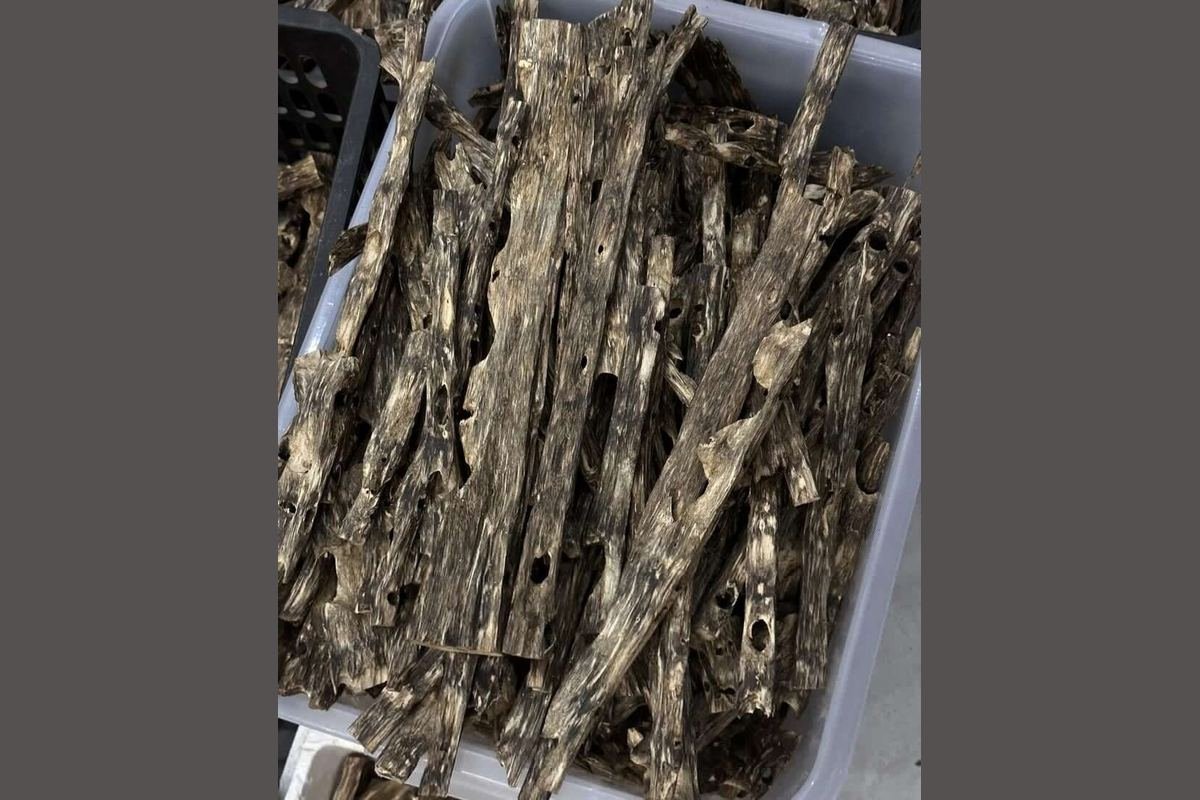
Incense shops in Europe and North America still write a word that confuses new buyers. What is aloeswood, and why does it sit next to sandalwood on so many incense labels? Aloeswood is simply agarwood — the resin-darkened heartwood of the Aquilaria tree — under an older English name. It has nothing to do with aloe vera. This guide traces where the name came from, why Western incense catalogues kept it, how aloeswood products are sold and graded, and what to check before you buy aloeswood chips or incense wholesale from our Dian Bai plantation.

Written by
Founder & Chief Sourcing Officer, AgarwoodTown
15+ years hands-on experience grading plantation agarwood, sourcing directly from Dianbai and Maoming districts in Guangdong — the world's largest Aquilaria sinensis cultivation region. Wang has personally inspected thousands of CITES export shipments and holds plantation certification from China's National Forestry and Grassland Administration. He advises GCC, European and East Asian wholesale buyers on grade selection, CITES compliance and supply chain due diligence.
CITES Certified
In this article
- What Is Aloeswood? The Short Answer
- Why Aloeswood Is Not Aloe Vera
- Where Does the Name Aloeswood Come From?
- Aloes in Biblical Texts
- From Lign Aloes to Aloeswood
- Rikkoku and the Ranjatai: Aloeswood in Japan
- Aloeswood vs Aloe Vera at a Glance
- What Makes Aloeswood Fragrant?
- What Does an Aloeswood Tree Look Like?
- How Aloeswood Smells When Heated
- How Incense Catalogues Use the Word Aloeswood
- How Is Aloeswood Graded?
- Aloeswood on Labels and CITES Paperwork
- How to Buy Aloeswood Chips and Incense Wholesale
- Frequently Asked Questions
1. What Is Aloeswood? The Short Answer
So, what is aloeswood? It is agarwood: fragrant, resin-loaded wood from trees of the genus Aquilaria, sold under an English name that predates the word agarwood in common use.[1]
Why is resinous agarwood scarce? According to Liu et al. (2013), only about 10% of Aquilaria trees form agarwood naturally; the rest stay pale, almost scentless wood unless they are wounded and infected.[7]
The material is identical whatever the label says. A bag of aloeswood chips, a tin of oud chips and a box of jinkō incense can all contain the same resinated wood. Only the market and the seller's habit change the word.
At our plantation in Guan Zhu Town, Dian Bai District, Maoming, we grow and inoculate Aquilaria sinensis. The same wood is called oud in the Gulf, jinkō in Japan and, by many Western incense brands, aloeswood. Consequently, one material travels under three vocabularies.
According to the CITES Secretariat, every Aquilaria species, the source of aloeswood, has been listed in Appendix II since 2004, so a commercial shipment of the wood usually needs an export permit.
Why Aloeswood Is Not Aloe Vera
The name misleads almost everyone at first. Aloe vera is a succulent in the genus Aloe, grown for the gel inside its leaves. Aloeswood comes from a tropical tree in a completely different plant family, the Thymelaeaceae.[2]
The two plants share a word by historical accident, not by any botanical link. Aloe vera has no resinated heartwood, and it produces no incense material. Therefore, a product that mixes aloe gel with "aloeswood fragrance" is combining two unrelated things.
This confusion is not only academic. A search or enquiry for "aloe wood" can mean either plant, so it pays to confirm the botanical name before quoting or ordering. A one-line reply with Aquilaria in it settles the question quickly.
2. Where Does the Name Aloeswood Come From?
The name aloeswood comes from older European words for agarwood, not from the aloe plant. Greek writers called the wood agallochon, and medieval Latin texts used lignum aloes, literally "wood of aloes".[1]
Most etymologies trace these words back to South Asian names for the wood, such as Sanskrit aguru. Over centuries of trade and translation, the sound drifted towards the familiar word aloe. As a result, two unrelated plants ended up with nearly identical names in European languages.
Agarwood itself reached Europe and the Middle East along long trade routes from South and Southeast Asia. Traders handled it as a luxury aromatic, alongside other woods and resins burned as incense. The name changed many times on the way, while the wood itself did not.
Aloes in Biblical Texts
Many English Bibles mention "aloes" among precious aromatics. Passages in Numbers, Psalms, Proverbs and the Song of Songs place aloes beside myrrh, cassia and cinnamon as fragrances of great value.
Most scholars read these Old Testament aloes as agarwood, because the context is perfume and incense rather than medicine. The King James Version even uses "lign aloes", from the Latin for wood of aloes, in Numbers 24:6.
However, one passage remains genuinely debated. In the Gospel of John, Nicodemus brings myrrh and aloes for the burial of Jesus, and scholars disagree whether that refers to agarwood or to the bitter aloe plant. We note the debate rather than take a side.
For the trade, this history matters mainly as a sales story. Church suppliers and religious bookshops sometimes stock "biblical aloeswood" incense, and they want a material that matches the traditional reading. In that case the honest approach is to supply plantation agarwood and describe it accurately on the label.
From Lign Aloes to Aloeswood
By the twentieth century, English writers used several overlapping names: aloes, lign aloes, aloeswood and eaglewood. Eaglewood probably comes from a Portuguese rendering of an Asian name, again with no link to the bird.
Meanwhile, botanists and the trade gradually settled on agarwood. Today agarwood dominates scientific papers, CITES documents and most wholesale price lists. In contrast, aloeswood survives mainly in incense catalogues, religious contexts and translations of Japanese incense terms.
If you want the full naming map across markets — oud, gaharu, jinkō, chén xiāng and kynam — our agarwood and oud naming guide covers every regional term. This post stays with the aloeswood name and the buyers who still use it.
Rikkoku and the Ranjatai: Aloeswood in Japan
Japan has its own vocabulary for aloeswood. In kōdō, pieces are sorted into six types, the rikkoku: kyara, rakoku, manaka, manaban, sasora and sumotara. Each is described through five tastes: sweet, sour, hot, salty and bitter.
The most famous piece is the Ranjatai, a large log kept in the Shōsōin treasure house of Tōdai-ji in Nara since the eighth century. Several rulers, Oda Nobunaga among them, are recorded as cutting slivers from it. Our kōdō guide explains how such pieces are judged.
3. Aloeswood vs Aloe Vera at a Glance
| Feature | Aloeswood (agarwood) | Aloe vera |
|---|---|---|
| Plant | Aquilaria trees (and related Gyrinops), family Thymelaeaceae | Aloe vera, a succulent in the genus Aloe |
| Growth form | Evergreen tropical tree, trunk used for wood | Low, fleshy-leaved plant with no woody trunk |
| Useful part | Heartwood saturated with defensive resin | Gel and sap from the leaves |
| Main uses | Incense, oud oil, bakhoor, beads, carvings | Cosmetics, skin-care gels, drinks |
| Scent | Deep, woody, resinous and sweet when heated | Mild and green; not used as incense |
| Trade regulation | All Aquilaria species listed in CITES Appendix II | Aloe vera itself is not in the CITES appendices; other aloe species may be |
| Typical wholesale unit | Price per gram or kilogram, by grade | Price per litre or kilogram of gel or powder |
4. What Makes Aloeswood Fragrant?
Aloeswood is fragrant because of resin, not because of the wood itself. Healthy Aquilaria wood is pale and nearly odourless; the scent appears only where the tree has reacted to a wound and infection by filling the tissue with aromatic resin.[2]
In the wild, that wound comes from lightning, broken branches or insects, and resin forms by chance. On plantations, growers wound trees deliberately so that resin forms in a planned way. At our plantation we use artificial inoculation on our own 100+ mu of Aquilaria sinensis.
The resin is chemically complex. Published reviews list sesquiterpenes and 2-(2-phenylethyl)chromones as the main aromatic groups, along with many minor volatile compounds.[3] That mix is why aloeswood smells richer than a single aroma chemical can imitate.
We cover the formation process in more depth elsewhere, so here the key point is simple. Every genuine aloeswood product, from a temple stick to a collector chip, starts as resinated wood cut from a tree that was wounded years earlier.
How Aloeswood Smells When Heated
Cold aloeswood smells faint, slightly sweet and woody. Gentle heat changes everything: on a mica plate or an electric burner, good pieces release a warm, layered scent that can move from sweet to balsamic to faintly smoky.
In Japan, the incense art of kōdō treats this heated scent as something to "listen to", and it classifies agarwood by origin and character.[4] Many Western aloeswood incense lines borrow from that tradition, which is why Japanese-style sticks dominate the aloeswood shelf.
In practice, lower grades give a lighter, drier note, while higher grades smell deeper and last longer. Distillation and burning also change the impression, so we recommend a paid sample of the exact grade before a bulk order.
What Does an Aloeswood Tree Look Like?
An aloeswood tree is simply an Aquilaria tree. On our plantation in Dian Bai it is a slim evergreen with smooth grey bark and glossy, pointed leaves. Nothing on the outside tells you whether the trunk holds resin. We only know after we wound the tree, wait, and cut test windows into the wood.
The same tree also gives aloeswood oil. We distil it in-house, and our hydro-distilled oil starts from $7.00/g with a 10 g MOQ.


5. How Incense Catalogues Use the Word Aloeswood
| Catalogue wording | What it usually means | Closest product we supply | Our starting price · MOQ |
|---|---|---|---|
| Aloeswood chips / pieces | Loose resinated agarwood for heating on charcoal, mica or an electric burner | Oud wood chips, grades D–AAA | From $0.24/g · MOQ 100 g |
| Aloeswood incense sticks | Sticks made with agarwood powder, often blended with other aromatics | Agarwood incense sticks | From $2.35–$5.89 per box · MOQ 1 kg |
| Japanese aloeswood / jinkō incense | Pressed Japanese-style koh incense built around agarwood | Japanese koh incense | From $6/g · MOQ 100 g |
| Kyara aloeswood | The rarest agarwood tier, called kyara in Japan and kynam in China | Kynam wood (allocation only) | From $0.89/g, quoted per lot |
| Aloeswood powder | Milled agarwood for cones, coils and incense blends | Agarwood powder | From $10.30 per 50 g |
| Aloeswood oil / oud oil | Oil distilled or extracted from resinated wood | Hydro-distilled oud oil or CO₂ agarwood oil | From $7.00/g (hydro) or $1.50/g (CO₂) · MOQ 10 g |
| Aloeswood fragrance | Often a synthetic accord with little or no real agarwood | Not a product we make; ask the seller for the source | — |
Starting prices are AgarwoodTown wholesale list prices in USD and rise with grade. Catalogue wording varies by retailer; always confirm what the product actually contains.
The last row deserves attention. A label that says "aloeswood fragrance" or "aloeswood scented" may describe an aroma accord rather than wood. Such products can be perfectly honest, but they are not agarwood, and they should not claim agarwood content.
By contrast, Japanese-style sticks sold as aloeswood usually contain real agarwood powder, although the share varies widely from line to line. If you are building such a range, our guide to agarwood incense sticks and kyara incense explains formulations and cores.
For loose material, the simplest starting point is our graded oud wood chips, which incense retailers may sell as aloeswood chips. Makers of pressed incense, meanwhile, usually begin with Japanese-style agarwood koh incense or with milled agarwood powder for incense blending.
6. How Is Aloeswood Graded?
| Grade | What we see on the grading table | Typical aloeswood use |
|---|---|---|
| D | Mostly pale wood with thin resin lines; light aroma when heated | Powder, entry-tier incense sticks, distillation feedstock |
| C | Clear resin streaks over part of the piece; moderate aroma | Everyday chips, cones and stick blends |
| B | Resin across much of the piece; richer, longer-lasting aroma | Specialist chip retail, better koh incense |
| A | Dark, dense resin through most of the piece; deep and layered aroma | Gift tins, premium chips, kōdō practice pieces |
| AAA | Near-solid resin, heavy in the hand, many pieces sink in water | Collector and ceremonial lots |
| Kynam (奇楠) | Soft, waxy resin with a distinctive cool, sweet note | Allocation only, quoted per enquiry |
This is AgarwoodTown's internal grading scale. It is not an ISO or CITES standard, and other suppliers and countries grade differently.
Aloeswood is graded exactly like any other agarwood, because it is the same material. Our founder, Wang Jianyu, grades by visual inspection, aroma, resin content and a sink test, and each wholesale lot carries a grading note.[5]
Retail catalogues rarely print grades. Instead, they use words such as "fine", "superior" or "kyara-grade" that have no shared definition. Therefore, when you buy wholesale, ask for the supplier's own grade code and a matching sample, not just a descriptive adjective.
The right grade depends on the product. Incense sticks and cones rarely justify A or AAA wood, since the powder is blended. Loose chips for heating, however, are where higher grades earn their price, because the customer smells the wood directly.
7. Aloeswood on Labels and CITES Paperwork
The name on your label does not change the legal status of the material. All Aquilaria species have been listed in CITES Appendix II since 2004, so international trade in aloeswood follows the same rules as trade in agarwood or oud.[6]
- Use the species name: customs officers may not recognise "aloeswood". Name Aquilaria sinensis and "plantation agarwood" on invoices, packing lists and permits.
- Export permits: we ship every wholesale order with a CITES Appendix II export permit wherever one is required, plus a grading note or certificate.
- Annotation #14: some finished, retail-packaged products are exempt under the listing annotation. Check the current annotation text before you plan a shipment, because annotations can change.
- Do not mix names: if your retail box says aloeswood and your invoice says oud, add the botanical name to both so the documents clearly match.
- Your import rules: the EU, the UK and the US add their own import procedures. Confirm requirements with your national CITES authority before the goods leave China.
Step-by-Step Process
8. How to Buy Aloeswood Chips and Incense Wholesale
Define what your customers mean by aloeswood
Start with your shelf, not with the wood. A Western incense shop usually means sticks or loose chips, a church supplier often wants resin-rich pieces for a censer, and a kōdō retailer wants small, precisely graded slivers. That choice sets the form, grade range and paperwork.
Ask for the species and the source
Request the botanical name and whether the material is plantation or wild. Our stock is plantation Aquilaria sinensis from our own trees and from 100+ contracted plantation farmers, and our CITES export permits name the species. A supplier who cannot name the species is a risk.
Order a paid sample of the exact grade
Samples start from 100 g of chips or 1 g of oil. They are paid and non-refundable, which keeps them available to serious buyers. Burn or heat the chips the way your customers will, and compare grades side by side before you commit.
Confirm grade, label wording and MOQ
Agree the grade code, the product name for your retail label and the matching name for the invoice. Our chip MOQ is 100 g, incense sticks start at 1 kg and koh incense at 100 g. If you plan private-label boxes, raise packaging at this stage.
Plan CITES and import documents
We prepare the CITES Appendix II export permit where required and a grading note or certificate for every wholesale shipment. On your side, check import rules with your national CITES authority, especially for loose chips, which rarely qualify for retail-package exemptions.
Receive, check and reorder against the sample
When the shipment lands, compare it with your retained sample. We do not take returns, but if a problem appears we resolve it by replacement or credit under our published policy. Keeping the sample makes any discussion quick and factual.
A note for incense brands relabelling agarwood as aloeswood
Aloeswood is a legitimate, historic name, and Western customers often search for it. However, it works best alongside the word agarwood, not instead of it. A label such as "Aloeswood (agarwood, Aquilaria sinensis)" keeps the traditional name, removes the aloe vera confusion and matches your CITES paperwork.
The same logic applies to oil. If you sell traditional hydro-distilled agarwood oil under an aloeswood name, state the species and extraction method so that perfumers know exactly what they are buying.
Want to compare aloeswood grades before you order?
Tell us your market, the product you sell and your target grade, and we will suggest a sample set of plantation agarwood. We reply to enquiries within 4 business hours, Monday to Saturday, 9:00–18:00 China time.
Request an aloeswood sample and wholesale quote → or review our replacement and credit terms first. Incense makers can also browse our wholesale agarwood incense sticks as a ready-made aloeswood line.
Frequently Asked Questions
Aloeswood is an older English name for agarwood, the dark, fragrant heartwood that forms when an Aquilaria tree is wounded and fills the damaged wood with resin. It is the same material sold as oud in the Gulf, jinkō in Japan and chén xiāng in China. Only the name differs by market and tradition.
No. Aloe vera is a succulent grown for the gel in its leaves, while aloeswood comes from Aquilaria trees in an entirely different plant family. The names converged through centuries of translation from Greek and Latin words for agarwood. Aloe vera produces no resinated wood and is not used as incense material.
Most scholars read the aloes in Old Testament passages such as Numbers, Psalms, Proverbs and the Song of Songs as agarwood, because they appear among perfumes and incense. The aloes Nicodemus brings in the Gospel of John are debated, and some scholars link them to the aloe plant instead. We present both readings without taking a side.
Cold aloeswood smells faint, woody and slightly sweet. When gently heated, good pieces release a warm, layered aroma that can shift between sweet, balsamic and lightly smoky notes. Grade, species and how the wood is heated all change the impression, so we recommend testing a sample under the same conditions your customers will use.
Often, but not always. Japanese-style aloeswood sticks usually contain real agarwood powder, though the proportion varies widely between lines. Products labelled "aloeswood fragrance" or "aloeswood scented" may use a synthetic accord instead. When you buy wholesale, ask the supplier to state the agarwood content and the species used.
Kyara is the Japanese name for the rarest tier of agarwood, known as kynam in China. All kyara is aloeswood, but very little aloeswood is kyara. It is softer and waxier than ordinary resinated wood, with a distinctive cool, sweet note. In our grading scale kynam sits above AAA and is quoted per enquiry.
Price depends on form and grade. At our current list prices, oud wood chips start from $0.24/g with a 100 g MOQ, agarwood incense sticks from $2.35–$5.89 per box with a 1 kg MOQ, Japanese-style koh incense from $6/g, and hydro-distilled oil from $7.00/g. Higher grades cost considerably more than these entry points.
Often, yes. Every Aquilaria species is listed in CITES Appendix II, and the name aloeswood does not change that. Loose chips, logs and bulk oil usually need an export permit, while some retail-packaged finished goods fall under annotation #14. Check the current annotation text and confirm import rules with your national CITES authority.
Yes. Our paid samples start from 100 g of chips or 1 g of oil, and they are non-refundable. We suggest ordering two or three adjacent grades so you can compare them side by side. Once you approve a grade, keep your sample as the reference for the bulk shipment and its grading note.
Aloeswood oil is agarwood oil, sold under the older English name. It is distilled or extracted from resinated Aquilaria wood, not from aloe. We make it two ways: hydro-distilled oil from $7.00/g and supercritical CO₂ oil from $1.50/g, both with a 10 g MOQ. Paid samples start from 1 g.
References
- 1Barden A., Anak N.A., Mulliken T., Song M.. Heart of the Matter: Agarwood Use and Trade and CITES Implementation for Aquilaria malaccensis. TRAFFIC International, 2000.View source
- 2Li W., Chen H.-Q., Wang H., Mei W.-L., Dai H.-F.. Natural products in agarwood and Aquilaria plants: chemistry, biological activities and biosynthesis. Natural Product Reports, 2021.View source
- 3Naef R.. The volatile and semi-volatile constituents of agarwood, the infected heartwood of Aquilaria species: a review. Flavour and Fragrance Journal, 2011.View source
- 4
- 5Liu Y.Y., Wei J.H., Gao Z.H., et al.. A Review of Quality Assessment and Grading for Agarwood. Chinese Herbal Medicines, 2017.View source
- 6
- 7Liu Y., Chen H., Yang Y., et al.. Whole-tree agarwood-inducing technique: an efficient novel technique for producing high-quality agarwood in cultivated Aquilaria sinensis trees. Molecules, 2013.View source
All scientific references are provided for transparency. AgarwoodTown summarises peer-reviewed findings for educational purposes and does not claim to provide medical or regulatory advice.
Wholesale Catalog
Buy the products discussed in this article


Related Articles
Source Direct from Origin
Discuss Your Requirements with Our Team
We respond within 24 hours. Share your target grade, quantity and destination — we'll send current pricing, a sample pack option, and CITES documentation details.