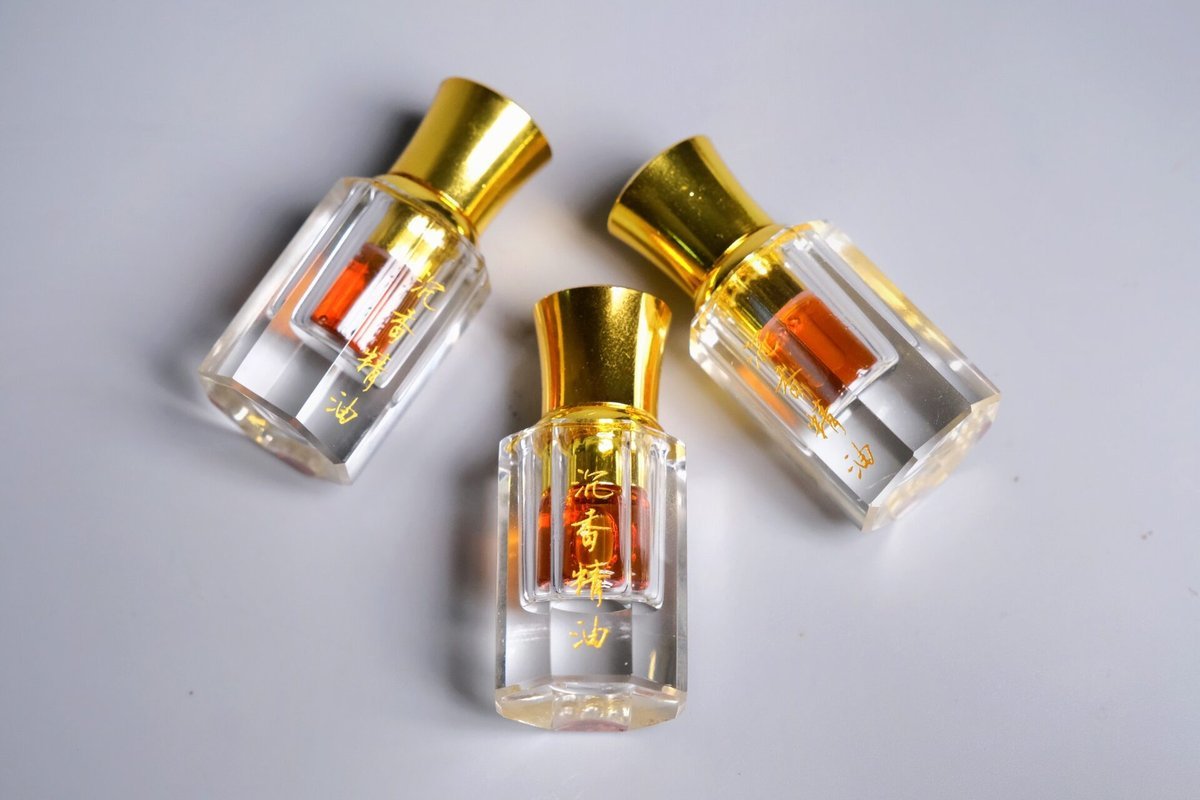
Cambodian Oud Explained: Aquilaria crassna vs Chinese Sinensis Oil for Wholesale Buyers
Buyers often open a conversation with us by asking for Cambodian oud. We have to answer honestly: we do not sell it. AgarwoodTown grows plantation Aquilaria sinensis in Dian Bai, Guangdong, and every gram of our oil comes from that species. Still, Cambodian oud shapes how many perfumers think about agarwood oil, so it deserves a clear explanation. This guide covers what the name usually means, how crassna oil tends to differ from Chinese sinensis oil, why origin labels must match the goods, and when our sinensis oil may be the better fit for your brief.

Written by
Founder & Chief Sourcing Officer, AgarwoodTown
15+ years hands-on experience grading plantation agarwood, sourcing directly from Dianbai and Maoming districts in Guangdong — the world's largest Aquilaria sinensis cultivation region. Wang has personally inspected thousands of CITES export shipments and holds plantation certification from China's National Forestry and Grassland Administration. He advises GCC, European and East Asian wholesale buyers on grade selection, CITES compliance and supply chain due diligence.
CITES Certified
In this article
- What Is Cambodian Oud?
- Why We Do Not Sell Cambodian Oud
- Where Does Cambodian Oud Come From?
- Wild vs Plantation Crassna
- What Does Cambodian Oud Smell Like?
- Why Species Is Only Part of the Story
- How Cambodian Oud Develops on Skin
- Cambodian Oud vs Chinese Sinensis Oil
- Cambodian, Chinese and Indian Oud Compared
- Why Origin Claims Matter on Invoices
- When Should a Buyer Choose Sinensis Instead?
- Our Sinensis Price Points
- How to Check Any Oud Oil Origin Claim
- Frequently Asked Questions
1. What Is Cambodian Oud?
Cambodian oud is agarwood oil or wood traded under a Cambodian origin, and in practice the name almost always points to the species Aquilaria crassna. That tree grows naturally across mainland Southeast Asia, including Cambodia, Vietnam, Laos and Thailand.[1]
Why is resinous agarwood scarce? According to Liu et al. (2013), only about 10% of Aquilaria trees form agarwood naturally; the rest stay pale, almost scentless wood unless they are wounded and infected.[7]
In the perfume trade, "Cambodian" has become a style label as much as a place name. Perfumers use it to describe a family of oils they associate with crassna wood and with certain distillation traditions in the region.
However, a style label and a verified origin are two different things. An oil sold as Cambodian oud may come from wood harvested in Cambodia, from crassna grown in a neighbouring country, or simply from an oil that smells the way a seller expects "Cambodian" to smell. The name alone tells you little.
The tree behind it, Aquilaria crassna, is assessed as Critically Endangered on the IUCN Red List, and according to CITES rules every Aquilaria species has needed Appendix II paperwork since 2004.
Why We Do Not Sell Cambodian Oud
We are growers, not traders of other people's wood. Our stock is plantation Aquilaria sinensis from our 100+ mu plantation in Guan Zhu Town, Dian Bai District, Maoming, plus wood from more than 100 contracted plantation farmers in the same region.
Because of that, we never label our oil as Cambodian, and we never blend it to imitate a Cambodian profile and sell it under that name. Our CITES export permits state the species we actually grow.
So why write about it at all? Because buyers compare. A perfumer who knows what Cambodian oud is and is not will judge our sinensis oil more fairly, and will spot misleading offers from anyone else more quickly.
2. Where Does Cambodian Oud Come From?
Cambodian oud comes from Aquilaria crassna, a tree native to Indochina. Like every Aquilaria species, healthy crassna wood is pale and nearly scentless; oud forms only where the tree has been wounded and infected and has filled the damaged tissue with resin.[1]
Historically, the wood came from wild trees in the forests of Cambodia and its neighbours. Collectors searched for trees that had formed resin naturally, and that pressure reduced wild stands heavily. As a result, the species is listed as threatened on international conservation assessments, and all Aquilaria species sit in CITES Appendix II.[5]
Meanwhile, the trade did not stop. It moved, slowly, toward cultivated trees, and today the question "where does Cambodian oud come from?" rarely has a single answer.
Wild vs Plantation Crassna
Today a great deal of crassna is grown on plantations across mainland Southeast Asia, and growers induce resin in those trees on purpose, much as we do with sinensis in Guangdong. Plantation crassna is real crassna, but it is not the same material as old wild wood.
That distinction matters for pricing and for honesty. Wild-harvested wood usually commands far higher prices, while plantation material is more consistent and easier to document. Our comparison of wild and cultivated agarwood prices explains why the gap exists and why it is so wide.
Furthermore, plantation crassna is not always grown in Cambodia. Trees of the same species are cultivated in several countries. Therefore an oil can be genuine crassna and still not be Cambodian in any geographic sense.
3. What Does Cambodian Oud Smell Like?
Cambodian oud is generally described as sweeter and softer than many other oud styles. Perfumers commonly mention honeyed, fruity or jammy facets over a woody, resinous base, sometimes with a leathery edge. These are trade descriptions, not fixed rules.
We do not distil crassna, so we describe its scent from the market's general vocabulary rather than from our own production. Any single oil may sit far from that typical picture, depending on the wood and the still.
By contrast, the oils we produce from sinensis usually come across on our blotters as drier and woodier, with a cooler, slightly spicy or herbal side and less obvious sweetness. Again, that is a tendency we see on the grading table, not a promise for every batch. Our guide to what oud smells like sets out the full scent vocabulary we use.
Why Species Is Only Part of the Story
Species shapes the scent, but it does not decide it alone. Agarwood oil is a complex mix of sesquiterpenes and 2-(2-phenylethyl)chromones, and published analyses show wide variation in that mix across samples, species and origins.[4]
In practice, at least five factors move the profile. They are the grade of the feedstock, whether the wood was wild or induced, how long resin had to form, whether the wood was soaked or fermented before distillation, and how long and how hot the still ran.
Consequently, two crassna oils can differ more from each other than one crassna oil differs from a sinensis oil. That is why we always tell buyers to judge an oil by its sample and documents, never by its country label.
How Cambodian Oud Develops on Skin
Traders usually describe Cambodian oud as opening sweet and fruity, often with a honeyed or jammy note. Over the next few hours it settles into a drier, woody and slightly leathery base that can last well into the next day.
How quickly that happens depends on the oil, its age and the wearer's skin, so we suggest judging any sample over a full day rather than in the first ten minutes. That habit also makes side-by-side tests with sinensis oil fairer.

4. Cambodian Oud vs Chinese Sinensis Oil
| Feature | Cambodian oud (A. crassna) | Our Chinese oil (A. sinensis) |
|---|---|---|
| Species | Aquilaria crassna, native to Indochina | Aquilaria sinensis, native to southern China |
| Typical scent description | Often called sweet, honeyed or fruity over wood; varies widely | On our blotters usually drier and woodier, with a cool, spicy or herbal side |
| Wood source | Historically wild; now largely plantation-grown in several countries | Our own induced plantation trees and contracted plantation farmers |
| Origin certainty | Depends on the seller; the label is often used loosely | Grown, distilled and documented in one place in Guangdong |
| Extraction | Mostly traditional distillation; methods differ by distiller | Hydro/steam distillation and supercritical CO₂, both in-house |
| Lab data | Available only if the seller commissions it | GC-MS report on request |
| CITES status | Appendix II, like all Aquilaria species | Appendix II; export permit supplied where required |
| Wholesale price | Varies with wood, grade and claimed origin; often positioned at the upper end | Hydro oil from $7.00/g, CO₂ oil from $1.50/g, both MOQ 10 g |
The table shows tendencies, not a ranking. Neither species is better in absolute terms; they answer different briefs. A perfumer chasing a sweet, fruity oud heart may look toward crassna, while a perfumer who wants a dry, woody backbone may prefer sinensis.
Moreover, Chinese sinensis has its own long history. The species is the traditional source of agarwood in southern China, where the wood is known as chén xiāng and the Guangdong coast has grown it for centuries.[2] It is not a substitute species; it is a distinct origin with its own character.


5. Cambodian, Chinese and Indian Oud Compared
| Trade name | Usual species | Commonly described as | What drives the style | Supplied by us? |
|---|---|---|---|---|
| Cambodian oud | Aquilaria crassna | Sweet, fruity, honeyed wood; sometimes leathery | Species, regional distilling habits, wild vs plantation wood | No |
| Chinese oud (chén xiāng) | Aquilaria sinensis | Dry, woody, cool and slightly spicy or herbal | Species, induction method, feedstock grade, still settings | Yes — hydro and CO₂ oil, chips, logs |
| Indian / Assam oud | Aquilaria malaccensis | Earthy and animalic, often with a fermented or barnyard edge | Species plus the custom of soaking wood before distillation | No |
| Thai or Vietnamese oud | Often A. crassna | Overlaps with Cambodian descriptions; wide range | Same species family, different growers and stills | No |
Scent descriptions are general trade descriptions and vary widely by batch, grade and distiller. AgarwoodTown produces and sells only Chinese plantation Aquilaria sinensis.
Indian and Assam oils deserve a short note because buyers often set them against Cambodian oud. They usually come from Aquilaria malaccensis, a species found from northeast India through to Southeast Asia.[3] Their famous animalic depth is linked by many in the trade to soaking the wood before it goes into the still.
In short, the three common trade origins map loosely onto three species and three distilling cultures. Nevertheless, the borders blur, because plantation trees and wood now move between countries. For that reason, the species name on your documents is a firmer anchor than any regional nickname.
6. Why Origin Claims Matter on Invoices
An origin claim is a legal statement, not just marketing copy. Whatever a price list calls an oil, the commercial invoice and the CITES documents must describe the goods truthfully, including the species and the country of origin.[5]
- Species must match: a CITES export permit names the species. If a shipment of "Cambodian oud" travels on a permit for a different species or origin, the labels contradict each other, and that is a problem at customs.
- Country of origin must match: oil distilled in China from Chinese wood is Chinese in origin. Calling it Cambodian on an invoice misdescribes the goods.
- Importers carry risk too: in the EU, CITES rules are applied through Council Regulation (EC) No 338/97, and goods with inconsistent paperwork can be held or seized.[6]
- Your own labels inherit the claim: if you sell an oil as Cambodian to your customers, you need paperwork that supports it.
- Annotation #14: some finished, retail-packaged products are exempt; check the current annotation text before you plan a shipment.
The rule is simple: an oil should carry its true species and origin. Ours is Aquilaria sinensis from China, and the CITES export permit says so. For the paperwork itself, see our step-by-step CITES agarwood permit guide.
7. When Should a Buyer Choose Sinensis Instead?
Choose our sinensis oil when traceable origin, consistent supply and a dry, woody oud character matter more to you than a specifically Cambodian name. If your brief requires Cambodian oud by name, you need a crassna supplier, and we will tell you so.
There are four common reasons to choose sinensis. Each one is practical rather than a matter of taste.
- Documentation: one grower, one species, one origin. The grading note, invoice, GC-MS report and CITES permit all describe the same goods.
- Repeatability: we produce around 500 kg of oud oil per year from our own and contracted plantation wood, so repeat orders draw on the same supply base.
- Profile: a dry, woody oud often sits better in Western fine fragrance or in blends where a sweet oud would compete with the other notes.
- Budget: our list prices give perfumers a real-agarwood option at several cost levels, from CO₂ oil for formulation work to hydro-distilled oil for oud-forward compositions.
Equally, there are cases where sinensis is not the right answer. If your customers in the Gulf ask specifically for a Cambodian-style sweetness, or your product story is built around Cambodia, sinensis will not honestly fill that brief. We would rather lose the order than mislabel the oil.
Our Sinensis Price Points
Our hydro-distilled sinensis oud oil starts from $7.00/g with a 10 g MOQ. It is the closer choice for buyers who want a traditional distilled oud character.
For formulation and lighter applications, our supercritical CO₂ agarwood oil starts from $1.50/g, also with a 10 g MOQ. The extraction differences between the two are covered in our oud oil extraction explainer.
Some buyers prefer to judge the raw material first. Our sinensis oud wood chips start from $0.24/g (MOQ 100 g, grades D–AAA), and whole resinated agarwood logs start from $88 per piece. Grades follow our internal D, C, B, A, AAA scale, which is our own and not an ISO or CITES standard.
Step-by-Step Process
8. How to Check Any Oud Oil Origin Claim
Ask which species, in writing
Start with the botanical name, not the trade name. A seller offering Cambodian oud should be able to state Aquilaria crassna, or explain clearly if the oil is something else. If the answer is vague, treat the origin claim as unverified.
Ask where the wood grew and where it was distilled
Wood origin and distillation site can differ. Wood grown in one country and distilled in another creates two origins to explain. A credible supplier will tell you both and will show you how the paperwork reflects them.
Ask whether the wood was wild or plantation
This shapes price, scent and legal risk. Plantation material is easier to document. A seller who claims wild wood at a plantation price, or plantation wood at a wild price, should explain the gap before you go further.
Request a paid sample and a GC-MS report
Smell the sample on blotters over several hours, ideally next to a reference oil whose origin you trust. Gas chromatography–mass spectrometry shows whether the compound families typical of agarwood are present. We supply GC-MS reports on request and samples from 1 g of oil.
Compare the documents with the label
Before shipment, check that the invoice, the CITES export permit and any grading note name the same species and origin as the price list. Where those documents disagree, the label is the part to doubt.
Keep the file for your own customers
Store the permit, invoice and lab report with each batch number. If you resell the oil under an origin name, those records are what support your own label in your market.
Want to compare our sinensis oil against your Cambodian reference?
Tell us the profile you are working toward and the reference oil you use. We will suggest which of our sinensis oils to sample, and we will say plainly if we think a crassna supplier would serve you better. We reply within 4 business hours, Monday to Saturday, 9:00–18:00 China time.
Request a sinensis oil sample and quote → Samples are paid and non-refundable; we resolve genuine problems by replacement or credit as set out in our replacement and credit terms.
Frequently Asked Questions
Usually, yes. In the trade, Cambodian oud almost always refers to oil or wood from Aquilaria crassna, the agarwood species native to Cambodia and its neighbours. However, the label is used loosely, so an oil sold as Cambodian may be crassna grown elsewhere, or occasionally not crassna at all. Always ask for the species in writing.
No. We grow and sell plantation Aquilaria sinensis from Dian Bai, Guangdong, China, and every oil we ship is sinensis oil. We do not label our oil as Cambodian and we do not blend it to pass as Cambodian. If your brief requires Cambodian oud by name, a crassna supplier is the right source.
In general terms, Cambodian oud is often described as sweeter, with honeyed or fruity facets, while the sinensis oils we produce usually come across as drier and woodier, with a cooler, slightly spicy side. These are tendencies only. Feedstock grade, induction method and distillation settings can shift any single oil a long way.
Neither is better in absolute terms. They suit different briefs. A perfumer building a sweet, fruity oud heart may prefer crassna, while a dry, woody backbone for Western fine fragrance often fits sinensis well. Price, documentation and supply consistency usually matter as much as scent when a wholesale buyer chooses between them.
Only if the oil truly is Cambodian in origin and the documents show it. Oil distilled in China from Chinese sinensis wood is Chinese in origin, and the invoice and CITES permit must say so. Labelling it Cambodian would misdescribe the goods and could cause problems for both the exporter and the importer at customs.
Yes. All Aquilaria species, including crassna, are listed in CITES Appendix II, so commercial shipments of wood and oil generally need an export permit from the country of export. Annotation #14 exempts some finished, retail-packaged products, so check the current annotation text and your own national rules before planning a shipment.
A large share of crassna in today's trade comes from plantations in mainland Southeast Asia, where growers induce resin deliberately. Wild material still exists but is scarce and expensive. Because sellers describe their sources differently, ask directly whether the wood was wild or plantation, and expect the price to reflect the answer.
No single test proves a country of origin. Instead, combine evidence: the species stated in writing, a CITES permit that matches it, a GC-MS report showing typical agarwood compounds, and a blotter comparison against a reference oil you trust. When these line up, the origin claim is credible; when they conflict, treat it with caution.
Our hydro-distilled sinensis oud oil starts from $7.00/g and our CO₂ agarwood oil from $1.50/g, both with a 10 g MOQ. We do not quote Cambodian oud, and its price varies widely with wood grade, wild or plantation source and seller. Compare documented samples rather than headline prices.
Yes. Oil samples start from 1 g, and wood samples from 100 g. Samples are paid and non-refundable, which keeps them affordable for us to prepare. We suggest testing our oil side by side with your current reference over several hours on blotters, and in your actual formula, before you decide.
Cambodian oudh prices vary hugely with the age of the oil, the wood and whether the material is wild or plantation, so list prices are hard to compare. Ask for species, origin and a GC-MS report before comparing numbers. For reference, our Aquilaria sinensis oils start from $7.00/g (hydro) and $1.50/g (CO₂), MOQ 10 g.
References
- 1
- 2Yuan H.W., Zhao J.P., Liu Y.B., et al.. Advance in studies on chemical constituents, pharmacology and quality control of Aquilaria sinensis. Digital Chinese Medicine, 2018.View source
- 3Barden A., Anak N.A., Mulliken T., Song M.. Heart of the Matter: Agarwood Use and Trade and CITES Implementation for Aquilaria malaccensis. TRAFFIC International, 2000.View source
- 4Naef R.. The volatile and semi-volatile constituents of agarwood, the infected heartwood of Aquilaria species: a review. Flavour and Fragrance Journal, 2011.View source
- 5
- 6European Commission. Wildlife trade — implementation of CITES through Council Regulation (EC) No 338/97. European Commission, Environment, 2025.View source
- 7Liu Y., Chen H., Yang Y., et al.. Whole-tree agarwood-inducing technique: an efficient novel technique for producing high-quality agarwood in cultivated Aquilaria sinensis trees. Molecules, 2013.View source
All scientific references are provided for transparency. AgarwoodTown summarises peer-reviewed findings for educational purposes and does not claim to provide medical or regulatory advice.
Wholesale Catalog
Buy the products discussed in this article


Related Articles
Source Direct from Origin
Discuss Your Requirements with Our Team
We respond within 24 hours. Share your target grade, quantity and destination — we'll send current pricing, a sample pack option, and CITES documentation details.