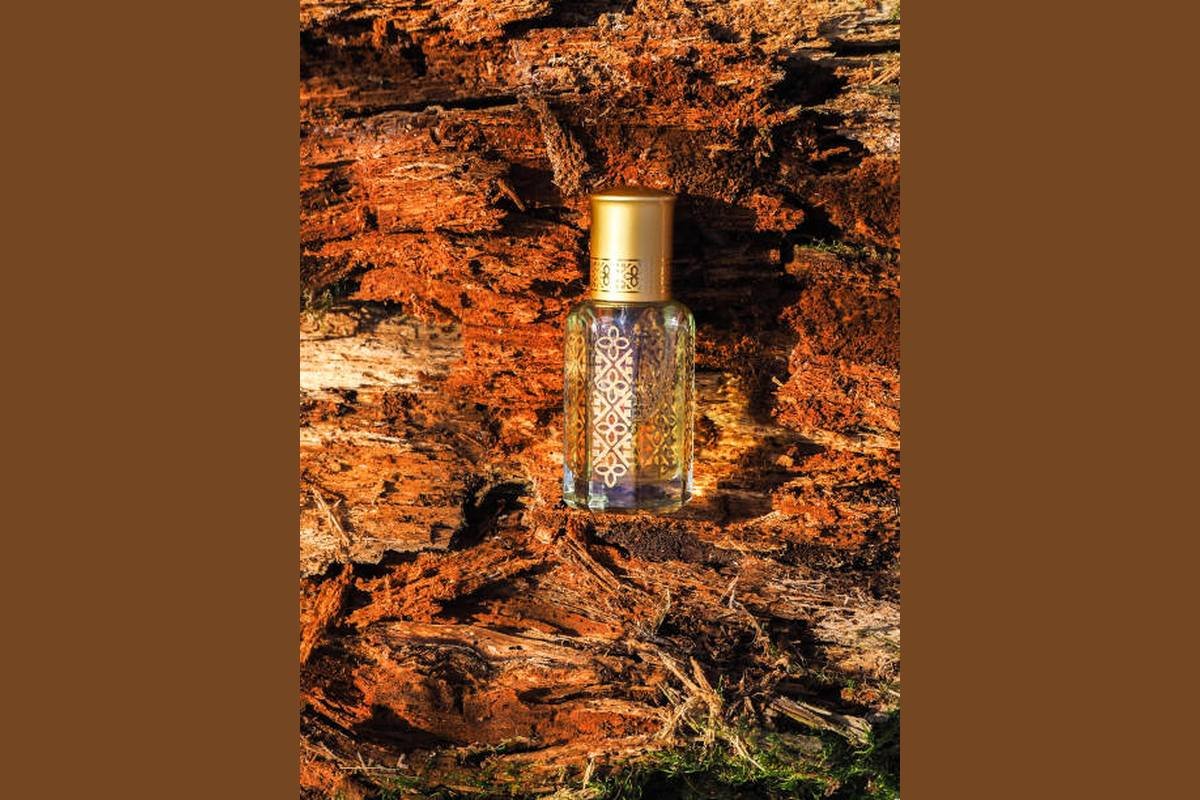
Agarwood Oil Dilution: Ratios, Math and Cost for Every Product Type
Pure oud is too strong and too costly to use neat in most products, so almost every buyer ends up diluting it. Agarwood oil dilution sounds like simple arithmetic, and the arithmetic is simple. The mistakes come from measuring by drops, mixing up percentages, and forgetting what the oud actually costs once it is in the bottle. This guide gives you the formulas, a ratio table, the stock-dilution method, sensible starting points by product type, and the cost math.

Written by
Founder & Chief Sourcing Officer, AgarwoodTown
15+ years hands-on experience grading plantation agarwood, sourcing directly from Dianbai and Maoming districts in Guangdong — the world's largest Aquilaria sinensis cultivation region. Wang has personally inspected thousands of CITES export shipments and holds plantation certification from China's National Forestry and Grassland Administration. He advises GCC, European and East Asian wholesale buyers on grade selection, CITES compliance and supply chain due diligence.
CITES Certified
In this article
- Why Dilute Agarwood Oil at All?
- Measure by Weight, Not Drops
- Agarwood Oil Uses That Need Dilution
- Pre-Diluted Agarwood Oil on the Market
- How Do You Calculate an Agarwood Oil Dilution?
- Two Common Dilution Mistakes
- Agarwood Oil Dilution Table by Weight
- How to Make a Stock Dilution
- Using a Stock for a Test Series
- Starting Points by Product Type
- A Note on Candles
- Which Oil Dilutes Better: Hydro or CO₂?
- Check Purity Before You Dilute
- What Does Diluted Oud Cost per Unit?
- Large Products, Low Percentages
- Safety, IFRA and Labelling
- Frequently Asked Questions
1. Why Dilute Agarwood Oil at All?
Agarwood oil dilution means mixing pure oud with a carrier, base or product so that the final item contains a planned share of oud. It is done for three reasons: scent balance, cost and suitability for the product.
Supply sets the tone for everything that follows. According to a 2013 study in Molecules (Liu 2013), agarwood forms naturally in only about 10% of Aquilaria trees, so genuine oud oil always starts from a limited raw material.[4]
First, oud is intense. Many oils smell harsh or overwhelming when used neat in a room product, while a well-chosen dilution lets the woody, resinous character open up. Second, oud is priced by the gram, so dilution decides what each unit costs. Third, most finished products, from soap to candles, simply cannot take neat oil.
Agarwood oil is also chemically complex, with many sesquiterpenes and chromones that differ between oils.[1] Therefore two oils at the same dilution can smell quite different, and any ratio in this guide is a starting point to test, not a rule.
Measure by Weight, Not Drops
Drops are the most common source of dilution errors. Drop size changes with the dropper, the bottle neck, the temperature and the oil's thickness, and oud oils vary widely in viscosity.
A small digital scale that reads to 0.01 g removes the guesswork. In addition, weights can be written into a specification and repeated exactly by anyone, while drop counts cannot. Every number below is therefore by weight.
Agarwood Oil Uses That Need Dilution
Almost every agarwood oil use outside neat wear needs a dilution. The common ones are attar and roll-on perfume oils, alcohol-based perfumes, diffuser and room-spray blends, soap, candles and dipped incense. Each one has its own base, its own safe range and its own cost per unit, which is why this guide works by product type.
The one exception is neat wear. Some buyers in the Gulf wear pure oud straight from a small bottle, a dab at a time. That is a personal choice, not a product format, so we leave it out of the dilution tables below.
Pre-Diluted Agarwood Oil on the Market
Some retailers sell agarwood oil already diluted, often around 5% in fractionated coconut oil. That is convenient for trying the scent, but it is a finished product, not a raw material.
If you make your own products, buy the pure oil and dilute it yourself. You then control the carrier, the strength and the cost per unit, using the method below.
2. How Do You Calculate an Agarwood Oil Dilution?
You need one formula: oud weight = total batch weight × target percentage. Everything else follows from it.
For example, to make 100 g of a 5% blend, you need 100 × 0.05 = 5 g of oud and 95 g of carrier. To make 30 g at 2%, you need 0.6 g of oud and 29.4 g of carrier.
Two Common Dilution Mistakes
A common mistake is to add the oud on top of the full carrier amount. For instance, 5 g of oud added to 100 g of carrier gives 105 g at about 4.8%, not 5%. The difference is small at low strengths, but it grows at higher ones and across many batches.
Another trap is mixing up "parts" and "percent". A 1:10 ratio means 1 part oud to 10 parts carrier, which is about 9.1% oud, not 10%. Write which convention you use on every batch sheet.
3. Agarwood Oil Dilution Table by Weight
| Target oud % | Oud in a 10 g batch | Oud in a 30 g batch | Oud in a 100 g batch | Oud in a 1 kg batch | Equivalent ratio (oud : carrier) |
|---|---|---|---|---|---|
| 0.5% | 0.05 g | 0.15 g | 0.5 g | 5 g | 1 : 199 |
| 1% | 0.1 g | 0.3 g | 1 g | 10 g | 1 : 99 |
| 2% | 0.2 g | 0.6 g | 2 g | 20 g | 1 : 49 |
| 5% | 0.5 g | 1.5 g | 5 g | 50 g | 1 : 19 |
| 10% | 1 g | 3 g | 10 g | 100 g | 1 : 9 |
| 20% | 2 g | 6 g | 20 g | 200 g | 1 : 4 |
| 30% | 3 g | 9 g | 30 g | 300 g | 1 : 2.33 |
Pure arithmetic, by weight. For volume planning only, treat 1 ml of oil as roughly 1 g, then weigh your own oil to confirm, because density varies.
Step-by-Step Process
4. How to Make a Stock Dilution
Choose a stock strength
For small or low-percentage batches, weighing tiny amounts of pure oud is hard and wasteful. A stock dilution solves this. A 10% stock in a neutral carrier is a common choice, because it makes later arithmetic easy.
Weigh the oud, then the carrier
For 50 g of 10% stock, weigh 5 g of oud into a clean glass bottle, then add 45 g of carrier. Mix gently until clear. Label it with the oud lot, the carrier, the strength, the date and "STOCK 10%".
Use the stock in your batches
To reach a 1% final batch, use 10 g of 10% stock per 100 g of finished product, and reduce the other carrier by the same 10 g. The stock's carrier then becomes part of the batch's carrier.
Record the conversion
Write both numbers on the batch sheet: the stock used and the resulting pure oud share. This avoids confusion later when someone asks how much oud is really in the product.
Store the stock like the pure oil
Keep the stock sealed in glass, in the dark, at steady room temperature, with little headspace. Remember that the carrier may age faster than pure oud, so make stock in amounts you will use within a sensible time.
Using a Stock for a Test Series
A stock dilution is also the best way to test strengths. With a 10% stock, a 1%, 2% and 3% test series is just 1 g, 2 g and 3 g of stock per 10 g of finished blend.
The storage rules matter because diluted oud changes over time too. Our guide to oud oil aging and storage explains why glass, darkness and small headspace protect both pure and diluted oil.
5. Starting Points by Product Type
| Product | How oud is used | Where many makers start testing | Key watch-points | Further reading |
|---|---|---|---|---|
| Traditional attar-style oil | Oud in a sandalwood or neutral oil base, often with florals | Wide range, from a light accent to a dominant share | Quality of the base; cost rises steeply with strength | Our attar guide |
| Roll-on perfume oil | Oud in jojoba or fractionated coconut oil | Low single digits up to around 10–20% for oud-forward products | Skin feel, clarity, cost per bottle | Our perfume oil blending guide |
| Body or massage oil | Oud as a minor note in a larger oil volume | Low, often around 1% total essential oils or less | Skin safety; avoid leave-on overdosing | IFRA documents for your oil |
| Reed diffuser | Oud in a diffuser base with other fragrance | Oud as part of the fragrance share, not the whole load | Base compatibility, flash point, throw | Your diffuser base supplier |
| Soap | Oud added to oils or melt-and-pour base | A few percent of fragrance at most, of which oud is a part | Lye can change scent; discoloration; cost | Soap supplier guidance |
| Candle | Oud within the candle's fragrance load | Oud as a share of the total fragrance load | Flash point, wax compatibility, throw | Our oud candle guide |
Broad starting points from general fragrance and cosmetic practice, expressed as the share of oud in the finished product. They are not limits: always check the IFRA and safety documents for your exact oil and product type, and wear-test or burn-test before production.
The table deliberately gives ranges and directions, not exact recipes. The right level depends on your oil, your base and your customer, and products applied to skin have stricter limits than products that stay in a jar or a wax pool.
For more detail on each format, see our attar explainer, our guide to blending oud perfume oil and our oud candle making guide. Attar has its own long tradition of oil-based perfumery, which shapes what buyers expect from strength and base.[2]
A Note on Candles
Candles deserve one extra note. The fragrance in a candle is released from the melted wax pool, and wax type changes how much fragrance a candle can hold and throw. Therefore oud in candles is usually one part of a larger fragrance blend.


6. Which Oil Dilutes Better: Hydro or CO₂?
| Feature | Hydro-distilled oud oil | Supercritical CO₂ agarwood oil |
|---|---|---|
| Scent at low dilution | Deep, smoky and resinous; stays recognisable as "oud" | Brighter, cleaner wood; can read softer at very low levels |
| Best uses | Attar-style oils, oud-forward roll-ons, traditional blends | Modern perfume oils, body products, lighter home fragrance |
| Cost per gram | From $7.00/g · MOQ 10 g | From $1.50/g · MOQ 10 g |
| Dilution tip | Often reaches the target scent at a lower % | May need a slightly higher % for the same oud presence |
| Testing | Let blends rest; fresh harshness may soften | Usually more stable from day one |
The table shows why cost per gram is not the full story. A stronger oil may reach your target at a lower percentage, which narrows the price gap per finished unit. Conversely, a cheaper oil used at a higher share can still cost less per product.
The only reliable way to decide is a side-by-side test at matched scent strength rather than matched percentage. You can request paid 1 g samples of our hydro-distilled agarwood oil and our CO₂-extracted agarwood essential oil for that comparison.
Check Purity Before You Dilute
Before any dilution, confirm that the oil is what it claims to be. A diluted or adulterated "pure" oud makes every ratio meaningless. Our oud oil purity checks explain what to look for, and we provide GC-MS reports for our oils on request.
7. What Does Diluted Oud Cost per Unit?
Oud cost per unit = product weight × oud share × oud price per gram. With that formula you can price any format in a minute.
For a 10 g roll-on at 5% oud, the unit contains 0.5 g of oud. With our hydro-distilled oil from $7.00/g, that is about $3.50 of oud per unit. With our CO₂ oil from $1.50/g, it is about $0.75.
Large Products, Low Percentages
For a 100 g soap bar with 0.5% oud, the bar holds 0.5 g of oud, the same as the roll-on above. That surprises many makers: a large product at a low percentage can carry as much oud as a small one at a higher percentage.
Keep the oud cost separate from everything else on your costing sheet. Then you can see clearly how a change in strength or oil type moves your margin, independent of packaging and labour.
| Product | Unit weight | Oud share | Oud per unit | Oud cost with hydro (from $7.00/g) | Oud cost with CO₂ (from $1.50/g) |
|---|---|---|---|---|---|
| Roll-on | 10 g | 5% | 0.5 g | about $3.50 | about $0.75 |
| Roll-on, oud-forward | 10 g | 15% | 1.5 g | about $10.50 | about $2.25 |
| Body oil | 100 g | 0.5% | 0.5 g | about $3.50 | about $0.75 |
| Soap bar | 100 g | 0.5% | 0.5 g | about $3.50 | about $0.75 |
| Candle (oud within the fragrance) | 200 g | 0.5% | 1 g | about $7.00 | about $1.50 |
Illustrative arithmetic at our starting list prices; higher grades cost more. The percentages are examples for the calculation, not recommended levels for your product.
8. Safety, IFRA and Labelling
Dilution is also a safety decision, especially for products that stay on the skin. This is general guidance, not legal advice, and rules differ by market.
- Use the IFRA documents. Many brands and retailers expect fragrance ingredients to comply with the IFRA Standards for each product category. Ask your oil supplier for the documents they can provide, and check the limits that apply to your product type.
- Patch-test leave-on products. Wear-test on several people before launch, and stop if irritation appears.
- Check flash points. Candles, diffusers and shipped liquids raise fire and transport questions. Ask for safety data sheets for both the oud and the base.
- Label honestly. If a product says "real oud", be ready to show what share it contains. Avoid health or mood claims unless your market's rules allow them and you hold the evidence.
- Keep CITES documents. Agarwood comes from Aquilaria species listed in CITES Appendix II, so keep the export permit and grading note that came with your oil.[3]
If you would rather skip dilution entirely, our pre-diluted agarwood perfume oil is ready to wear. Brands that sell home fragrance alongside oil can also add agarwood incense sticks or oud wood chips for heating to the same scent family.
For the bigger picture of planning a product line around oud, read our oud perfume brand startup guide. For extraction background, see what oud oil is and how it is made.
Need help choosing an oil for your dilution?
Tell us your product type, unit size and target cost, and we will suggest which of our oils to sample. Oil samples start from 1 g, paid and non-refundable. We reply within 4 business hours, Monday to Saturday, 9:00–18:00 China time.
Frequently Asked Questions
Decide the total batch weight and the target percentage, then multiply them to get the oud weight. Weigh the oud into a clean glass container, add carrier to reach the total weight, and mix until clear. For example, 100 g at 5% needs 5 g of oud and 95 g of carrier.
There is no single ratio. Skin products such as body oils usually sit at low levels, while roll-on perfume oils can range from low single digits to oud-forward blends. Start with a test series, check the IFRA documents for your oil and product type, and choose the lowest level that gives the scent you want.
Drop size changes with the dropper, temperature and viscosity, and oud oils vary widely in thickness. Weighing with a scale that reads to 0.01 g gives exact, repeatable batches and lets anyone follow your specification. Drop counts are fine for rough personal tests, but not for production.
A 1:10 ratio means one part oud to ten parts carrier, so the oud makes up one part in eleven, or about 9.1%. A 10% dilution means 10 g of oud in a 100 g total batch, which is a 1:9 ratio. Always state which convention you use on batch sheets.
A stock dilution is a pre-mixed, labelled strength, such as 10% oud in a neutral carrier, used as an ingredient in later batches. It makes small and low-percentage batches easier to weigh accurately and reduces waste of pure oil. Record both the stock used and the resulting pure oud share.
Yes, but the soap process can change how fragrance smells, and some oils discolour soap. Use oud as part of a modest fragrance share, follow your soap supplier's guidance and the IFRA limits for rinse-off products, and test a small batch before scaling. Because oud is costly, many soapmakers use it as an accent.
Multiply the product weight by the oud share and the oud price per gram. A 10 g roll-on at 5% contains 0.5 g of oud, which costs about $3.50 with our hydro-distilled oil from $7.00/g or about $0.75 with our CO₂ oil from $1.50/g at starting prices.
Pure oud keeps very well, but the carrier in a dilution can oxidise over time, depending on the oil chosen. Store dilutions sealed in glass, in the dark, at a steady temperature, and make stock in quantities you will use within a sensible period. Give finished products a realistic shelf life.
Hydro-distilled oil often stays recognisably oud at lower percentages, while CO₂ oil is brighter and cheaper per gram. Compare them at matched scent strength rather than matched percentage, because the stronger oil may need less. Our oils start at $7.00/g (hydro) and $1.50/g (CO₂), with 1 g paid samples.
References
- 1Naef R.. The volatile and semi-volatile constituents of agarwood, the infected heartwood of Aquilaria species: a review. Flavour and Fragrance Journal, 2011.View source
- 2
- 3
- 4Liu Y., Chen H., Yang Y., et al.. Whole-tree agarwood-inducing technique: an efficient novel technique for producing high-quality agarwood in cultivated Aquilaria sinensis trees. Molecules, 2013.View source
All scientific references are provided for transparency. AgarwoodTown summarises peer-reviewed findings for educational purposes and does not claim to provide medical or regulatory advice.
Wholesale Catalog
Buy the products discussed in this article


Related Articles
Source Direct from Origin
Discuss Your Requirements with Our Team
We respond within 24 hours. Share your target grade, quantity and destination — we'll send current pricing, a sample pack option, and CITES documentation details.