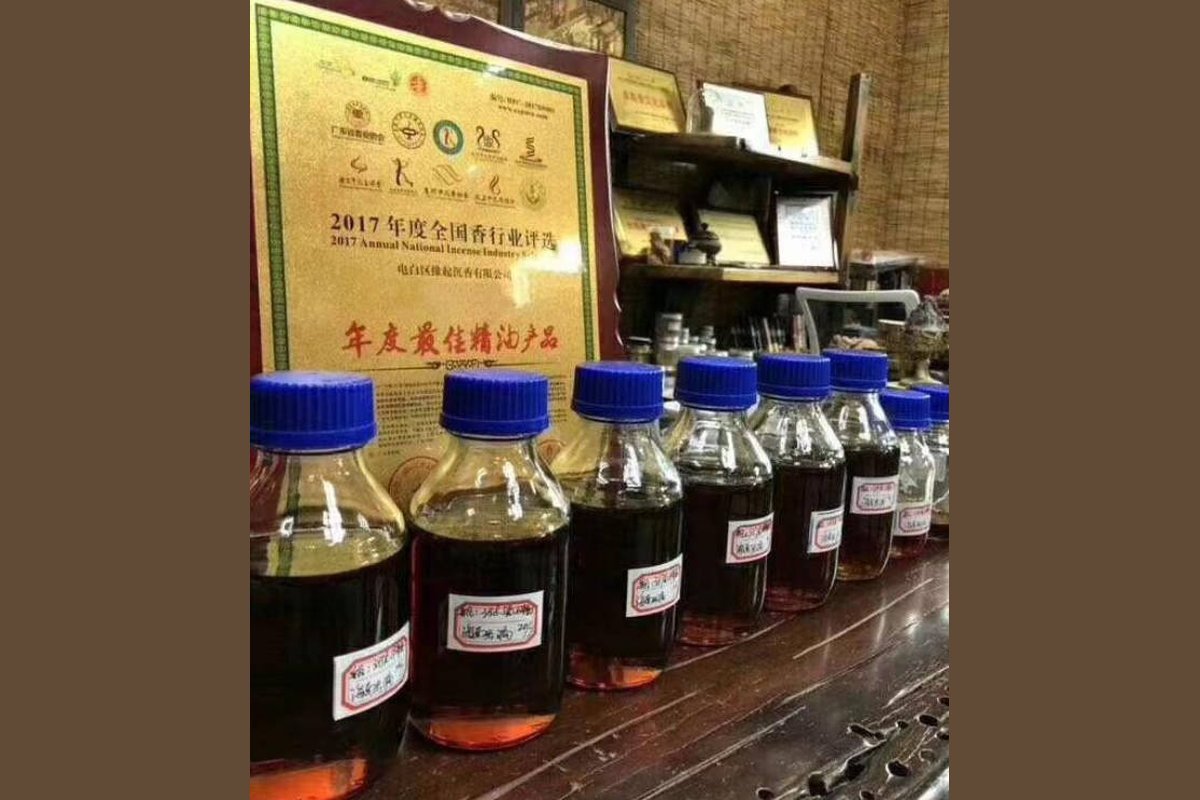
Oud Oil Aging: How Oud Changes With Time and How to Store It
Buyers who have spent time with oud almost always raise the same topic sooner or later. Oud oil aging — does a bottle really improve if you leave it alone for years? The honest answer is "often, but not always, and not by magic". Fresh oud can smell sharp and smoky, and many oils settle and round out with rest. However, poor storage can just as easily flatten or spoil an oil. This guide explains what changes, how to store oil properly, when aging is worth it, and what to ask a supplier before you buy.

Written by
Founder & Chief Sourcing Officer, AgarwoodTown
15+ years hands-on experience grading plantation agarwood, sourcing directly from Dianbai and Maoming districts in Guangdong — the world's largest Aquilaria sinensis cultivation region. Wang has personally inspected thousands of CITES export shipments and holds plantation certification from China's National Forestry and Grassland Administration. He advises GCC, European and East Asian wholesale buyers on grade selection, CITES compliance and supply chain due diligence.
CITES Certified
In this article
- What Is Oud Oil Aging?
- Why Fresh Oud Can Smell Rough
- What Changes Inside the Bottle
- How Does Oud Oil Change With Age?
- When Does Oud Oil Aging Help, and When Doesn't It?
- When Does Oud Oil Aging Help, and When Doesn't It?
- How Should You Store Oud Oil?
- Glass, Not Plastic
- Keep It Dark
- Manage the Headspace
- Steady, Moderate Temperature
- A Simple Storage Routine for Oud Oil Stock
- What Aging Cannot Fix
- Do Hydro and CO₂ Oils Age the Same Way?
- Blends, Attars and Diluted Oils
- Buying Oud Oil With Aging in Mind
- Frequently Asked Questions
1. What Is Oud Oil Aging?
Oud oil aging is the slow change in scent and texture that happens after distillation, while the oil rests in a sealed container. In the trade it is also called maturing or resting, and it is one of the most discussed topics among oud collectors.
Supply sets the tone for everything that follows. According to a 2013 study in Molecules (Liu 2013), agarwood forms naturally in only about 10% of Aquilaria trees, so genuine oud oil always starts from a limited raw material.[5]
Agarwood oil is not a single compound. Published analyses describe a long list of sesquiterpenes, chromones and other volatile and semi-volatile molecules, and the balance between them differs from batch to batch.[1] Therefore an oil has many parts that can shift a little over time, and that is what aging means in practice.
Aging is not a process you perform. It is something that happens, for better or worse, depending on how the oil was made and how it is kept. A good bottle stored badly can lose more than it gains.
Why Fresh Oud Can Smell Rough
Oil straight from the still often smells louder than it will later. Buyers describe notes such as smoke, scorched wood, a sour or fermented edge, and sometimes a "still" or cooked smell. These come partly from the process itself.
Traditional hydro distillation soaks ground wood and then heats it with water and steam for a long time.[2] Moreover, the soaking stage is a fermentation of sorts, so some freshly distilled oils carry a barnyard or sour note on top of the wood. Our guide to what oud smells like covers this scent vocabulary in more detail.
It is commonly said in the trade that these sharp top notes are the first thing to soften. Many buyers therefore avoid judging an oil by its first impression straight off the still.
What Changes Inside the Bottle
Nobody can give a precise recipe for how a given oud will age, and we will not pretend otherwise. Still, three general mechanisms apply to most natural oils, and they explain most of what buyers notice.
First, the lightest, most volatile molecules escape whenever the bottle is opened, so the sharpest notes thin out. Second, oxygen in the bottle reacts slowly with some components, which can mellow an oil or, if it goes too far, dull it. Third, molecules in a complex oil can react with each other over time, a process perfumers loosely call "marrying".
The net effect depends on the starting oil. An oil with a rich heart and base usually has more to reveal once the noisy top settles. By contrast, a thin oil has little underneath, so rest mostly makes it quieter.
2. How Does Oud Oil Change With Age?
| Aspect | Typical fresh oil | Often reported after rest in good storage | Signs storage has gone wrong |
|---|---|---|---|
| Top notes | Sharp, smoky, sometimes sour or "still-like" | Softer opening; harsh edges less obvious | Opening smells flat, stale or faintly rancid |
| Heart and base | Can feel crowded or partly hidden by the top | Woody, resinous and sweet notes read more clearly | Little left beyond a dull, generic woodiness |
| Texture | Varies; some oils are thin, some thick | Many oils feel slightly thicker on the skin | Sticky residue, cloudiness or sediment of unknown origin |
| Colour | Amber to dark brown, depending on the wood | Often a little darker | Unusual colour shift together with an off smell |
| Projection | Loud close to the bottle | Usually calmer but more even over time on skin | Weak from the start and fades fast |
| Overall | Raw, energetic, sometimes unbalanced | Rounder and more integrated | Tired, oxidised or contaminated |
These are qualitative trade observations, not lab measurements. How far and how fast an oil changes varies with the wood, the distillation, the container and storage conditions.
The table describes a direction, not a timetable. We deliberately give no "after X years" figures, because no reliable data ties a fixed number of years to a fixed result. In the trade, people speak loosely of months for the first settling and years for deeper change, but every oil is different.
In our view, darker colour is a weak signal on its own. Many oils darken with time, yet colour also depends on the wood and the still. Therefore colour should never be used as proof of age or of quality.
The same caution applies to thickness. Some sellers present a thick oil as automatically "aged", although viscosity varies from the very first day. Our pure oud oil purity tests explain why viscosity alone proves little.
3. When Does Oud Oil Aging Help, and When Doesn't It?
| Feature | Aging is more likely to help | Aging is unlikely to help |
|---|---|---|
| Starting oil | Pure oil from well-resinated wood with a full heart and base | Thin oil from low-resin material, or oil already stretched |
| Fresh character | Harsh top notes over a rich, complex core | Weak, flat or one-dimensional from the start |
| Content | Undiluted agarwood oil | Oil cut with a carrier, solvent or synthetic accord |
| Container | Clean glass, tightly sealed, filled close to the top | Plastic, a leaky cap or a bottle mostly full of air |
| Storage | Dark, steady, moderate temperature | Sunlight, heat, car boots, warehouses with big temperature swings |
| Handling | Opened rarely; sampled with clean tools | Opened daily, used with fingers or dirty droppers |
| Purpose | Personal collection or a slow-selling premium line | A production ingredient that must match a fixed reference |
Aging helps most when the oil was good to begin with. It cannot create depth that the wood never held. Moreover, an oil that relies on a sharp, smoky top for its character may lose what some buyers liked about it.
We would say the purpose of the oil matters just as much. A collector wants a bottle to evolve. A perfumer building a formula wants the opposite: an ingredient that smells the same in every production run. For that buyer, aging is a variable to control, not a goal.
Tastes also differ by market. Some buyers prize the wild, animalic energy of fresh oil, while others prefer a calmer, rounder profile. Neither preference is wrong, so define which one your customers want before you plan stock around aging.
4. How Should You Store Oud Oil?
Store oud oil in clean glass, in the dark, with as little air in the bottle as practical, at a steady and moderate temperature. Those four rules cover most of what decides whether oud oil aging goes well or badly.
None of what we suggest here is exotic. These are the same habits that protect any valuable natural oil. However, oud is expensive enough that small mistakes cost real money, so it pays to be strict.
Glass, Not Plastic
Glass is the standard container for oud, and the one we would always choose, for good reason. It is inert, it does not absorb the oil and it does not leach anything into it. Many plastics, by contrast, can interact with concentrated aromatic oils over time.
Amber or other dark glass adds light protection. Clear crystal bottles look beautiful in retail displays, and they are traditional for presentation. In practice, though, they are better for display stock that sells quickly than for long-term storage.
The cap matters as much as the bottle. A tight, clean seal limits evaporation and air exchange. For example, a cap liner that has been softened by oil or a dropper bulb that has perished can let the oil slowly breathe and lose its top notes.
Keep It Dark
Light, especially direct sunlight, speeds up chemical change in natural oils. Light-driven change is rarely the gentle maturing that buyers hope for. More often it flattens the scent.
The simplest fix we know is a closed box, drawer or cabinet. Retailers who display oud in bright windows should keep the display bottles separate from their aging stock, and rotate display bottles regularly.
Manage the Headspace
Headspace is the air gap between the oil and the cap. That air holds oxygen, and every time you open the bottle the air is refreshed. A small amount of oil in a large bottle therefore sits with a lot of oxygen.
A practical approach, and the one we suggest to buyers, is to split a larger lot into several smaller bottles, each filled close to the neck. You then open one at a time, while the rest stay sealed. As a bottle empties, many keepers decant the remainder into a smaller one to reduce the air gap.
Some oxygen contact is part of normal maturing, and nobody stores oud under vacuum. Even so, the trade consensus is that less air and fewer openings are safer than more.
Steady, Moderate Temperature
Heat accelerates evaporation and oxidation, and repeated swings between hot and cool make a bottle "pump" air in and out around the seal. A steady room temperature away from heaters, windows and outside walls is a sensible target.
Refrigeration is debated, and we take no firm side. Some keepers like it, while others avoid it because condensation can form when a cold bottle is opened in warm, humid air. If you do keep oil cool, let the sealed bottle reach room temperature before you open it.
In our view, warehouses deserve special attention. Stock that sits through a hot summer in an unconditioned unit, or in a vehicle, can age far faster and less pleasantly than stock kept indoors.
Step-by-Step Process
A Simple Storage Routine for Oud Oil Stock
Record the lot on arrival
Write down the supplier, the product, the extraction method, the date you received it and any distillation date the supplier gives. Without that record, any later claim about the age of the oil is guesswork, including your own.
Smell and photograph a reference
Put a drop on a smelling strip, write short notes, and photograph the oil against a white background. Keep a small sealed reference vial untouched, so you can compare the stock with its starting point later.
Split into smaller glass bottles
Decant into clean, dry glass bottles filled close to the neck, using clean glass tools. Label each bottle with the lot code and date. Smaller bottles mean fewer openings and less headspace for each one.
Store dark, steady and away from heat
Place the bottles in a closed box or cabinet at a steady room temperature, away from sunlight, radiators and outside walls. Keep them upright so the oil does not sit against the cap liner.
Check rarely, and against the reference
Open a working bottle only when you need it, and compare it with your notes and the reference vial now and then. If you notice an off smell, cloudiness or stickiness, isolate that bottle before it affects decisions about the rest of the lot.
5. What Aging Cannot Fix
Aging improves balance, not substance. It cannot turn adulterated oil into pure oil, low-resin oil into high-grade oil, or a synthetic accord into agarwood. Be wary of any sales pitch that relies on age to justify a price.
- Adulteration stays adulteration. A carrier oil, solvent or synthetic added to oud remains in the bottle however long it rests. Purity has to be checked on its own merits.
- "Aged" is an unverified label. There is no standard test that proves how old an oud oil is. An age claim is only as reliable as the supplier's records and reputation.
- Bad storage is not aging. Oil that has sat in heat or light may have changed a lot, but not in the way collectors value.
- Contamination grows worse. Water, dust or skin residue introduced into a bottle can lead to off smells and cloudiness over time.
- Paperwork still applies. All Aquilaria species are listed in CITES Appendix II, so an older oil in commercial trade still needs proper documents where required.[3]


6. Do Hydro and CO₂ Oils Age the Same Way?
Not exactly. Hydro-distilled and CO₂-extracted oils start from different profiles, so they tend to have different things to "settle". In our experience on the smelling strip, the difference between fresh and rested oil is usually more noticeable in hydro oils.
Hydro distillation uses long heating with water and steam. As described above, fresh hydro oils often carry the smoky, cooked or sour notes that buyers associate with oud straight from the still. Those are exactly the notes people expect to soften with rest.
Supercritical CO₂ extraction works at much lower temperatures, using carbon dioxide above its critical point as the solvent. The resulting oils often smell brighter and closer to the raw wood from the start. Consequently, they tend to have less harshness to lose, and some buyers value them precisely for that fresh profile.
We produce both in-house. Our hydro-distilled oud oil starts from $7.00/g with a 10 g MOQ, while our supercritical CO₂ agarwood oil starts from $1.50/g, also with a 10 g MOQ. For the extraction methods themselves, see our oud oil extraction overview.
Blends, Attars and Diluted Oils
Blends age differently from pure oud, because every ingredient changes at its own pace. A traditional attar, an oil-based perfume often built on a sandalwood base, will develop as a whole rather than as oud alone.[4]
Diluted oils add another variable we should flag. The carrier itself may oxidise, sometimes faster than the oud. Therefore a ready-to-wear agarwood perfume oil is best treated as a finished product with a sensible sell-through window, not as a candidate for long aging.
In the Gulf, pure oud worn as dehn al oud is often discussed in terms of age and maturity. Our dehn al oud guide for GCC buyers covers how it is worn and what buyers there expect.

Step-by-Step Process
7. Buying Oud Oil With Aging in Mind
Decide whether you want aged character or a stable ingredient
Collectors and premium retailers may want oil that evolves. Perfumers and manufacturers usually want consistency between orders. Decide which you are before you talk to suppliers, because it changes what you ask for and how you store it.
Judge the oil on its quality, not its age claim
Ask for the species, the extraction method and the source material. Check purity first with the methods in our purity testing guide, and ask for a GC-MS report if your market expects lab data. We provide GC-MS reports for our oils on request.
Ask for dates in writing
If a supplier sells oil as aged, ask for the distillation date and how the oil was stored since. A vague answer is not proof of fraud, but it does mean the age claim adds nothing you can verify, so it should not add much to the price.
Start with a paid sample
Order a small sample and evaluate it fresh, then again after a few weeks of correct storage. Our oil samples start from 1 g; they are paid and non-refundable. Watching a sample change is cheaper than discovering a problem in a full lot.
Plan storage before the stock arrives
Have glass bottles, labels and a dark, steady storage place ready. Hot docks, parcel lockers and vehicles are where oil often spends its worst days, so arrange prompt collection on arrival.
Keep documents with the lot
File the invoice, grading note, any GC-MS report and the CITES export permit where one was required together with your lot record. When you later sell the oil, those documents support both your age claims and your compliance.
A note on pricing logic. In parts of the market, oils described as aged sell above fresh oil from similar wood, because someone has carried the cost of holding stock. That premium is reasonable when the age is documented and the oil is good. However, it is hard to justify when the only evidence is the seller's word.
We do not sell oil on the basis of age claims. Our list prices reflect extraction method and grade, and buyers who want to rest oil themselves can do so with the storage routine above. If you are also sourcing the raw wood behind the oil, our graded oud chips and plantation agarwood logs are listed with grades on our product pages.
Finally, our advice is to choose oil with a scent you already like. Aging can polish a good oil, but it rarely changes its basic character. If a fresh sample is not for you, years in a cabinet will probably not change your mind.
Want to compare fresh hydro and CO₂ oud side by side?
Tell us your market and how you plan to use the oil, and we will suggest a sample pair from our hydro-distilled and CO₂ lines. We reply to enquiries within 4 business hours, Monday to Saturday, 9:00–18:00 China time.
Request oud oil samples and a quote → or read our replacement and credit policy first.
Frequently Asked Questions
Often, but not always. Many pure oud oils lose harsh, smoky or sour top notes and feel rounder after resting in good storage. However, aging cannot add depth that the oil never had, and poor storage in heat, light or a half-empty bottle can flatten or spoil it instead of improving it.
There is no fixed answer, and we do not give one. People in the trade speak loosely of months for an initial settling and years for deeper change, but every oil differs. The practical approach is to keep a sealed reference sample and compare your stock with it from time to time.
Pure oud oil kept sealed in glass, away from light and heat, is generally regarded as very long-lasting. It does not have a fixed expiry in the way many cosmetics do. Diluted oils and blends are different, because the carrier oil can oxidise, so they should be treated as finished products with a sensible shelf life.
Clean glass with a tight, oil-resistant cap is the standard. Amber or other dark glass adds protection from light. Avoid plastic for long-term storage, check that cap liners and dropper bulbs are in good condition, and choose a bottle size that the oil fills close to the neck.
Headspace is the air above the oil, and it contains oxygen. A small amount of oil in a large bottle sits with a lot of air, and every opening refreshes it. Splitting stock into smaller, well-filled bottles and opening them rarely keeps oxidation and evaporation under better control.
Opinions differ. A cool, steady temperature slows change, but a cold bottle opened in warm, humid air can collect condensation inside. If you refrigerate oil, let the sealed bottle reach room temperature before opening it. For most buyers, a dark cabinet at steady room temperature is simpler and safe.
No. Colour and viscosity depend heavily on the wood, the species and the distillation, so a fresh oil can be dark and thick while an old one is lighter. Many oils do darken somewhat with time, but neither colour nor thickness proves age, purity or quality on its own.
There is no standard test that dates an oud oil. A GC-MS report shows the composition of the oil at the time of testing, which helps with purity and consistency checks, but it does not reveal a distillation date. Age claims therefore rest on the supplier's records and reputation.
They change too, but usually less dramatically. CO₂ extraction runs at low temperature and tends to give a brighter profile close to the raw wood, with fewer of the cooked or smoky notes found in fresh hydro oil. Hydro oils often show a bigger difference between fresh and rested.
We sell hydro-distilled oud oil from $7.00/g and supercritical CO₂ agarwood oil from $1.50/g, both with a 10 g MOQ, priced by extraction method and grade rather than by age claims. Buyers who want rested oil can store it themselves using the routine in this guide, starting from a 1 g paid sample.
References
- 1Naef R.. The volatile and semi-volatile constituents of agarwood, the infected heartwood of Aquilaria species: a review. Flavour and Fragrance Journal, 2011.View source
- 2Ismail N., Ali N.A.M., Jamil M., Rahiman M.H.F., Tajuddin S.N., Taib M.N.. A Review Study of Agarwood Oil and Its Quality Analysis. Jurnal Teknologi, 2014.View source
- 3
- 4
- 5Liu Y., Chen H., Yang Y., et al.. Whole-tree agarwood-inducing technique: an efficient novel technique for producing high-quality agarwood in cultivated Aquilaria sinensis trees. Molecules, 2013.View source
All scientific references are provided for transparency. AgarwoodTown summarises peer-reviewed findings for educational purposes and does not claim to provide medical or regulatory advice.
Wholesale Catalog
Buy the products discussed in this article


Related Articles
Source Direct from Origin
Discuss Your Requirements with Our Team
We respond within 24 hours. Share your target grade, quantity and destination — we'll send current pricing, a sample pack option, and CITES documentation details.