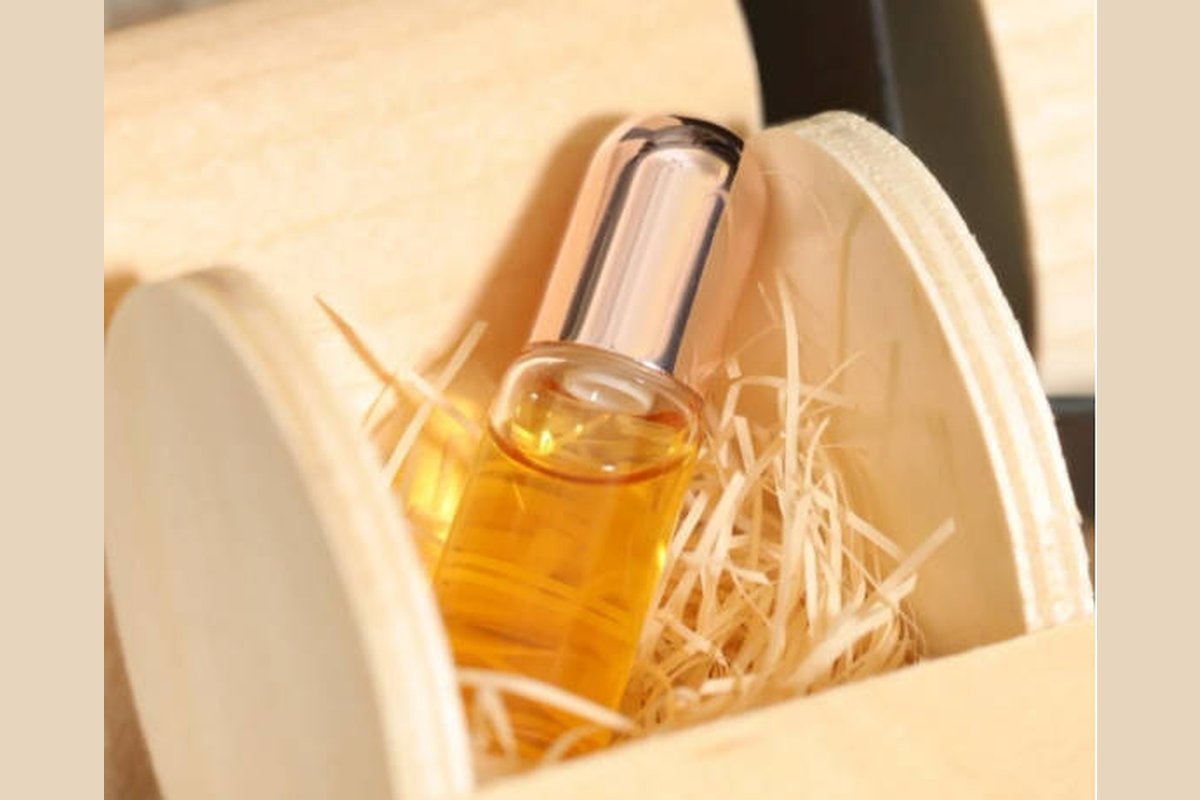
Oud Perfume Oil: How to Blend Oud Into Jojoba, Coconut and Sandalwood Bases
Pure oud is powerful, costly and sold by the gram, so most people meet it in a diluted form. Oud perfume oil is oud blended into a skin-friendly oil base and sold in roll-ons or small dropper bottles. Making a good one looks simple, yet the choice of base, the strength and the resting time all change the result. This guide walks through each decision, from carrier oil to cost per bottle, for brands and perfumers making their own blends.

Written by
Founder & Chief Sourcing Officer, AgarwoodTown
15+ years hands-on experience grading plantation agarwood, sourcing directly from Dianbai and Maoming districts in Guangdong — the world's largest Aquilaria sinensis cultivation region. Wang has personally inspected thousands of CITES export shipments and holds plantation certification from China's National Forestry and Grassland Administration. He advises GCC, European and East Asian wholesale buyers on grade selection, CITES compliance and supply chain due diligence.
CITES Certified
In this article
- What Is Oud Perfume Oil?
- Oud Fragrance Oil vs Oud Attar Oil
- Perfume Oil, Attar and Pure Oud
- How Long Does Oud Perfume Oil Last on Skin?
- Which Carrier Oil Should You Use?
- Jojoba
- Fractionated Coconut Oil
- Sandalwood as a Base
- Carrier Oils Compared
- How Strong Should an Oud Perfume Oil Be?
- How to Blend and Macerate Oud Perfume Oil
- Hydro or CO₂ Oud for Perfume Oil?
- What Does a Bottle Cost to Make?
- Testing, Labelling and Safety Basics
- Frequently Asked Questions
1. What Is Oud Perfume Oil?
Oud perfume oil is a fragrance made by diluting agarwood oil, alone or with other aromatics, in a carrier oil instead of alcohol. It is worn directly on the skin, usually from a roll-on or a dropper, and it stays close to the body rather than projecting like a spray.
Real oud oil is scarce for a simple reason. According to Liu et al. (2013), only about 10% of Aquilaria trees form agarwood naturally, and only that resinated wood yields oud oil when it is distilled.[4]
Oil-based perfume has a long history in the Middle East and South Asia. Moreover, many customers prefer it because it contains no alcohol and feels gentle on the skin. For brands, an oil format also needs less equipment than a spray perfume.
Perfume Oil, Attar and Pure Oud
The three terms overlap, so it helps to separate them. Pure oud is undiluted agarwood oil. A traditional attar is a natural oil-based perfume, often made by distilling flowers or spices into a sandalwood oil base.[1]
Perfume oil is the broadest term. It covers any fragrance diluted in a carrier oil, from a simple oud-in-jojoba roll-on to a complex blend with rose, amber and musk. Our attar explainer for wholesale buyers covers the traditional side in more depth.
Oud Fragrance Oil vs Oud Attar Oil
Two other labels sit close to oud perfume oil, and they do not always mean the same thing. "Oud fragrance oil" often describes a fragrance compound, an oud-style accord built from aroma chemicals, diluted in a carrier. It is common in candles, diffusers and budget perfume oils, and it may contain little or no real agarwood oil.
"Oud attar oil" points to the attar tradition: an oil-based perfume, classically built on a sandalwood base. A true oud attar contains real agarwood oil, but the share varies widely. In our view the only safe rule is to ask what percentage of natural agarwood oil the bottle holds, whichever label it carries.
How Long Does Oud Perfume Oil Last on Skin?
Oil-based perfume sits close to the skin and evaporates slowly, so an oud perfume oil usually lasts longer than an alcohol spray of similar strength. A rich agarwood perfume oil can stay noticeable for many hours.
Its cost explains why many products use an accord instead. Natural agarwood oil is distilled from resinated wood at a low yield, and our own oils start from $1.50/g for CO₂ and $7.00/g for hydro-distilled. That is the main reason natural oud content varies so much between bottles.
2. Which Carrier Oil Should You Use?
For most oud perfume oils, jojoba and fractionated coconut oil are the practical choices, and sandalwood oil is the traditional luxury base. The right one depends on scent, texture, shelf life and budget.
A carrier should be nearly odourless, stable against oxidation and pleasant on skin. It should also mix fully with your oud, without clouding or separating. Therefore always test a small batch with your exact oil before buying carrier in bulk.
Jojoba
Jojoba is technically a liquid wax rather than a true oil. It is widely used in cosmetics because it is light, has very little smell and resists going rancid better than many plant oils.
Its main drawback is that it can turn hazy or partly solid in cold conditions. However, it clears again at room temperature. Golden jojoba has a faint nutty note, so many perfumers prefer refined or clear grades for oud.
Fractionated Coconut Oil
Fractionated coconut oil is coconut oil with the heavier fats removed, so it stays liquid and clear. It is thin, almost odourless and usually cheaper than jojoba.
Because it is so thin, it spreads easily from a roll-on. On the other hand, some perfumers feel it lets a blend evaporate a little faster on skin. In practice, many brands test both and choose by feel.
Sandalwood as a Base
Sandalwood oil is the classic base for Indian attars and a natural partner for oud. Its soft, creamy woodiness rounds off oud's sharper edges.
However, sandalwood is not neutral. It is a fragrance ingredient in its own right, and genuine sandalwood oil is expensive. Many brands therefore use a neutral carrier with a smaller share of sandalwood, rather than a pure sandalwood base.
3. Carrier Oils Compared
| Carrier | Scent | Texture on skin | Stability | Relative cost | Best suited to |
|---|---|---|---|---|---|
| Jojoba (clear/refined) | Almost none | Silky, light | Good resistance to rancidity | Medium | Premium roll-ons, longer shelf life |
| Fractionated coconut oil | Almost none | Very light, fast-spreading | Good | Low to medium | Everyday roll-ons, testers, larger volumes |
| Sandalwood oil | Creamy, woody | Rich | Good | High | Luxury attar-style blends, partial base |
| Sweet almond oil | Faint | Richer, slightly oily | Shorter shelf life | Low | Fast-selling products; less ideal for aging |
| Mineral oil | None | Slick | Very stable | Low | Some mass-market oils; less appealing to natural-focused buyers |
General properties drawn from common cosmetic and perfumery practice. Grades and suppliers differ, so always test the exact carrier you plan to buy with your own oud before scaling up.
4. How Strong Should an Oud Perfume Oil Be?
There is no single correct strength. The right level depends on how strong your oud is, what else is in the blend, your price point and what your customers expect. Even so, a few principles help you set a starting point.
First, separate two numbers: the total fragrance load, and the share of that load that is real oud. A blend can contain a lot of fragrance but very little oud, or a modest load that is mostly oud. Customers increasingly ask about the second number.
Second, oud is potent. Many oils remain clearly recognisable at modest dilutions, especially in a neutral carrier. Therefore start lower than you think, smell the blend over a full day on skin, and raise the strength only if needed.
Third, write the strength into your specification by weight, not by drops. Drops vary with the dropper and the oil's thickness. For the economics of how much oud goes into each bottle at brand scale, see our guide to starting an oud perfume brand, and for ratio math across many products, our agarwood oil dilution guide.
Make a strength ladder before you choose
Mix the same oud into your chosen carrier at three or four strengths, label them only with codes, and ask several people to wear them blind over a day. The preferred strength is often lower than the formulator expects, which saves money on every bottle you later produce.
Step-by-Step Process
5. How to Blend and Macerate Oud Perfume Oil
Prepare clean glass and a scale
Use clean, dry glass beakers and bottles, glass rods or pipettes, and a scale that reads to at least 0.01 g. Avoid plastic for mixing and storage, because concentrated aromatic oils can interact with some plastics over time.
Weigh the oud first, then the carrier
Weigh the oud into the beaker, then add the carrier by weight to reach your target ratio. Record every weight on a batch sheet with the oud lot code, carrier lot and date, so the blend can be repeated exactly.
Add any supporting notes
If the formula includes rose, sandalwood, amber or other materials, add them now, also by weight. Keep each addition small at first. A supporting note should frame the oud rather than hide it.
Mix gently and check clarity
Stir or swirl until the blend is fully even. Then hold it to the light and check that it is clear, with no haze, layers or particles. Cloudiness can mean an incompatible ingredient, moisture or a carrier that is too cold.
Macerate in a sealed bottle
Fill a clean glass bottle close to the neck, seal it and rest it in a dark place at steady room temperature. Many perfumers rest blends for days to several weeks so the notes can settle together; test at intervals to find what suits your formula.
Evaluate, adjust and fill
Compare the rested blend with your notes and a retained reference sample. Adjust if needed, rest again, and only then fill roll-ons or droppers. Keep a sealed retention sample of every batch for future comparison and customer questions.
Maceration, or resting, is where a blend becomes a perfume rather than a mixture. Fresh blends can smell disjointed, with the oud and the other notes reading separately. With time, they usually integrate.
The same storage rules that protect pure oud apply here: glass, darkness, small headspace and a steady temperature. Our oud oil aging and storage guide explains why each of these matters.
If your blend includes rose, the pairing has its own techniques and balance points. Our guide to building an oud rose accord covers that combination in detail.


6. Hydro or CO₂ Oud for Perfume Oil?
| Feature | Hydro-distilled oud oil | Supercritical CO₂ agarwood oil |
|---|---|---|
| Scent profile | Deep, smoky, resinous, sometimes animalic; the classic "oud" signature | Brighter and closer to the raw wood; often smoother when fresh |
| How it is made | Long heating of soaked wood with water and steam | Extraction with carbon dioxide above its critical point, at low temperature |
| Role in a blend | Hero note in traditional and Gulf-style perfume oils | Clean woody core; good in modern and lighter blends |
| Response to resting | Often changes noticeably as harsh top notes soften | Usually changes less |
| Our starting price | From $7.00/g · MOQ 10 g | From $1.50/g · MOQ 10 g |
Neither method is better for every blend. Hydro oils give the deep, smoky character many oud lovers expect, while CO₂ extraction runs cold and keeps a fresher profile. Some perfumers combine both, using CO₂ oil for body and a touch of hydro oil for depth.
Both are produced in-house at our distillery. You can compare our hydro-distilled oud oil with our supercritical CO₂ agarwood oil, and each starts from a paid 1 g sample. For background on both extraction routes, read our overview of how oud oil is extracted.
Agarwood oil is chemically complex, with many sesquiterpenes and chromones that vary between oils.[2] That variation is why two "oud oils" can behave very differently in the same carrier, and why a sample test beats any description.
7. What Does a Bottle Cost to Make?
The oud is usually the largest ingredient cost in an oud perfume oil, so the strength you choose drives the price. A simple formula keeps the math honest.
Oud cost per bottle = bottle volume × oud share × price per gram. For planning, treat one millilitre of oil as roughly one gram, then weigh your own oil to refine the figure, because density varies.
For example, a 10 ml roll-on at 10% oud contains about 1 g of oud. With our hydro-distilled oil from $7.00/g, that is about $7.00 of oud. With our CO₂ oil from $1.50/g, it is about $1.50. The same bottle at 5% halves those figures.
Then add the carrier, any supporting notes, the bottle, roller or dropper, the label, the box, and labour. Those costs depend on your suppliers and volume. Finally, remember that our oil prices cover oil only; bottling and private-label work are quoted separately through our OEM and private-label services.
| Bottle | Oud share | Approx. oud per bottle | Oud cost with hydro oil (from $7.00/g) | Oud cost with CO₂ oil (from $1.50/g) |
|---|---|---|---|---|
| 3 ml roll-on | 10% | 0.3 g | about $2.10 | about $0.45 |
| 6 ml roll-on | 10% | 0.6 g | about $4.20 | about $0.90 |
| 10 ml roll-on | 5% | 0.5 g | about $3.50 | about $0.75 |
| 10 ml roll-on | 10% | 1.0 g | about $7.00 | about $1.50 |
| 12 ml dropper | 20% | 2.4 g | about $16.80 | about $3.60 |
Illustrative arithmetic using our starting list prices and 1 ml ≈ 1 g. Higher grades cost more, and actual density varies; weigh your oil and use your quoted price.
8. Testing, Labelling and Safety Basics
A perfume oil is a cosmetic product in most markets, so treat it as one from the start. The rules differ by country, and this is general guidance rather than legal advice.
- Patch-test and stability-test. Wear-test the blend on several people and check samples kept warm, cool and in light over time for changes in colour, clarity and smell.
- Check fragrance safety standards. Many brands follow the IFRA Standards for fragrance ingredients and ask suppliers for supporting documents. Check what your market and your retailers require.
- List ingredients correctly. Cosmetic labelling rules usually require the carrier and fragrance ingredients to be listed, and some markets require named allergens.
- Avoid health claims. Describe scent and use, not effects on health or mood, unless you have the evidence and approvals your market requires.
- Keep oud documents. Aquilaria species are listed in CITES Appendix II, so keep the grading note and any CITES export permit that came with your oil.[3]
Purity testing belongs at the start of the process, not the end. A blend can only be as good as its oud, and a diluted or adulterated oil will produce a weak perfume oil however well you macerate it. Our guide to testing oud oil purity explains practical checks, and we provide GC-MS reports for our oils on request.
If you would rather buy a finished product than blend, our ready-to-wear agarwood perfume oil is already diluted. Brands that want to add a matching home-fragrance line can pair it with agarwood bakhoor or graded oud chips for burning.
Building your first oud perfume oil?
Tell us your target strength, bottle size and price point, and we will suggest a pair of oil samples to test in your carrier. Oil samples start from 1 g, paid and non-refundable. We reply within 4 business hours, Monday to Saturday, 9:00–18:00 China time.
Frequently Asked Questions
Clear jojoba and fractionated coconut oil are the most common choices, because both are nearly odourless, stable and pleasant on skin. Jojoba feels silkier and keeps well, while fractionated coconut oil is lighter and cheaper. Sandalwood oil is the traditional luxury base, but it adds its own scent and cost.
It depends on the strength of your oud, the rest of the formula and your price point, so there is no single answer. Many makers start with a modest share, wear-test blind at several strengths, and choose the lowest level that still reads clearly as oud. Always specify the ratio by weight, not drops.
Many perfumers rest a blend for days to several weeks before filling, but the right time depends on the formula. Store it sealed in glass, in the dark, at a steady temperature, and test it at intervals against a reference. Fill once the blend smells integrated and stable.
Yes, oud is also used in alcohol-based perfumes, but that is a different product with different equipment, solubility checks and regulations. An oil-based perfume is simpler to produce in small batches and suits customers who prefer alcohol-free fragrance. This guide focuses on the oil format.
Cloudiness can come from a cold carrier such as jojoba, from moisture in the bottle or from an ingredient that does not dissolve fully. First warm the sealed bottle to room temperature. If the haze remains, test the oud and each other ingredient separately in the carrier to find the cause.
Hydro-distilled oud gives the deep, smoky signature many oud lovers expect, while CO₂ oil is brighter and closer to the raw wood. CO₂ oil also costs less per gram. Many perfumers test both in their chosen carrier, and some combine them for body and depth.
Multiply the bottle volume by the oud share and by the price per gram, treating one millilitre as roughly one gram for planning. For example, a 10 ml roll-on at 10% oud uses about 1 g, which costs about $7.00 with our hydro oil or $1.50 with our CO₂ oil at starting prices.
Pure oud keeps very well, but a perfume oil also contains a carrier that can oxidise over time. Jojoba and fractionated coconut oil are relatively stable, while some plant oils are less so. Store finished products in sealed glass away from light and heat, and give them a sensible shelf life on the label.
Yes, custom oud oil blending and bottling is part of our OEM and private-label services, quoted separately from our oil prices. Brands that blend in-house can buy hydro-distilled oud oil from $7.00/g or CO₂ agarwood oil from $1.50/g, both with a 10 g MOQ.
References
- 1
- 2Naef R.. The volatile and semi-volatile constituents of agarwood, the infected heartwood of Aquilaria species: a review. Flavour and Fragrance Journal, 2011.View source
- 3
- 4Liu Y., Chen H., Yang Y., et al.. Whole-tree agarwood-inducing technique: an efficient novel technique for producing high-quality agarwood in cultivated Aquilaria sinensis trees. Molecules, 2013.View source
All scientific references are provided for transparency. AgarwoodTown summarises peer-reviewed findings for educational purposes and does not claim to provide medical or regulatory advice.
Wholesale Catalog
Buy the products discussed in this article


Related Articles
Essential Oil
Start an Oud Perfume Brand: How to Build a Small Oud Oil Line, from First Gram to First Batch
15 min read
Essential Oil
What Is Attar? Attar Oils Explained for Wholesale Buyers and Perfume Makers
15 min read
Essential Oil
Rose Oud Accord: A Perfumer's Guide to Choosing Oud Oil, Ratios and Cost
15 min read
Source Direct from Origin
Discuss Your Requirements with Our Team
We respond within 24 hours. Share your target grade, quantity and destination — we'll send current pricing, a sample pack option, and CITES documentation details.