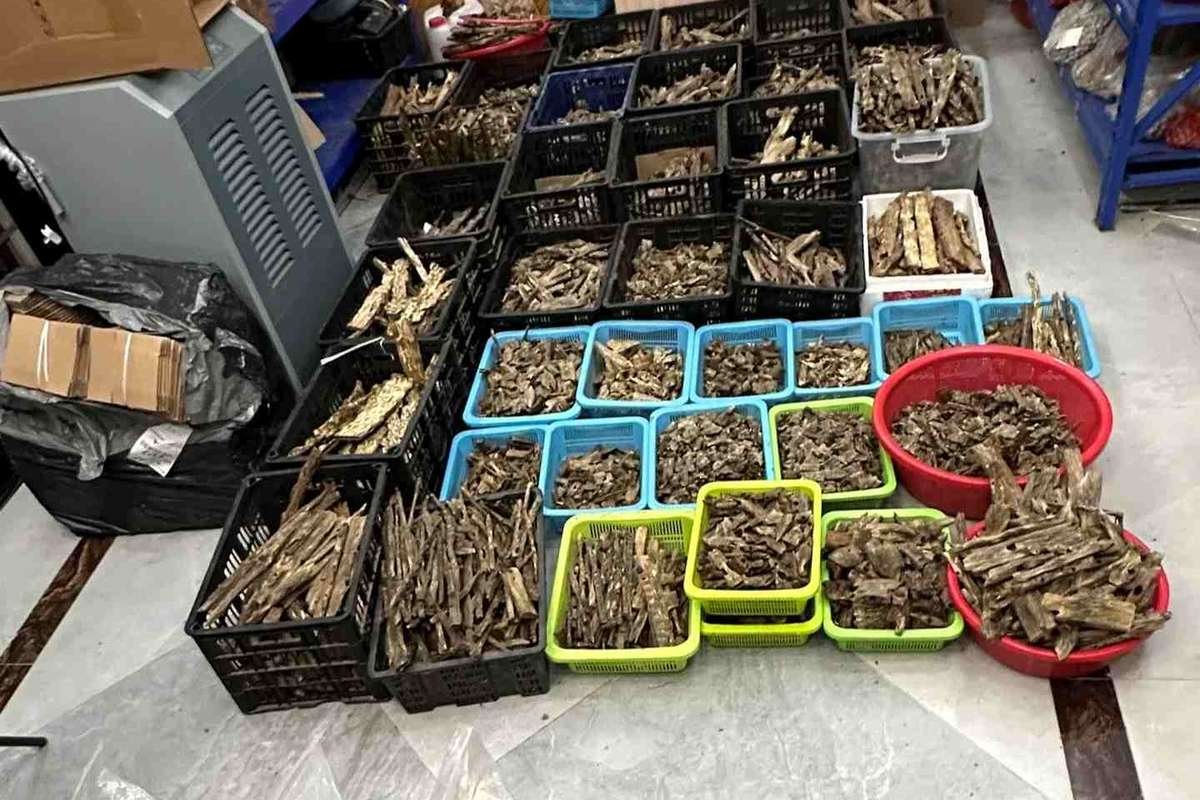
Agarwood Uses: From Oud Oil and Bakhoor to Kōdō, Beads and Carvings
Buyers who come to us for one product often learn that the same wood feeds a dozen others. Agarwood uses run from perfume oil and Gulf bakhoor to Japanese kōdō, Buddhist prayer beads and collector carvings. Each use takes a different slice of the harvest and a different grade. This guide maps the main uses we supply from our Dian Bai plantation, shows which grade fits which product, and explains where powder and offcuts end up. It is written for wholesale buyers choosing what to stock, not for retail shoppers.

Written by
Founder & Chief Sourcing Officer, AgarwoodTown
15+ years hands-on experience grading plantation agarwood, sourcing directly from Dianbai and Maoming districts in Guangdong — the world's largest Aquilaria sinensis cultivation region. Wang has personally inspected thousands of CITES export shipments and holds plantation certification from China's National Forestry and Grassland Administration. He advises GCC, European and East Asian wholesale buyers on grade selection, CITES compliance and supply chain due diligence.
CITES Certified
In this article
- What Are the Main Agarwood Uses?
- One Harvest, Many Uses
- A Short History of Agarwood Use and Trade
- Agarwood Uses by Form and Market
- How Is Agarwood Used in Perfumery?
- Hydro-Distilled Oil vs CO₂ Oil
- Attar, Perfume Oils and Western Blends
- Burning Uses: Chips, Bakhoor and Incense
- Oud Chips and Bakhoor in the Gulf
- Incense Sticks, Cones and Altar Offerings
- Kōdō: Listening to Incense in Japan
- Burning Uses vs Oil Uses: Which Should You Stock?
- Beads, Bracelets and Carvings: Agarwood Uses You Wear or Display
- Agarwood in Traditional Medicine Practice
- Agarwood Tree Uses Beyond the Resin
- Which Grade Suits Which Agarwood Use?
- How One Trunk Is Routed to Different Uses
- Frequently Asked Questions
1. What Are the Main Agarwood Uses?
The main agarwood uses fall into five groups: aromatic oil, burned fragrance, ceremony, objects you wear or display, and traditional medicine. All five start from one raw material — resin-darkened wood from Aquilaria trees.[1]
The numbers explain the price. According to Liu et al. (2013), only about 10% of Aquilaria trees produce agarwood without human help, so most supply today comes from induced, cultivated trees.[6]
Healthy Aquilaria wood is pale and almost scentless. Only the parts of a trunk that have formed resin have trade value, and resin density changes from one piece to the next. Therefore the real question is never just what agarwood is used for. It is which piece goes to which use.
In practice, agarwood uses and grades are decided together. A dense, solid piece earns far more as a bead or a collector chip than as distillation feedstock. By contrast, a thin, lightly resinated offcut is worth more in a still or a powder mill than on a display shelf.
One Harvest, Many Uses
At our plantation in Guan Zhu Town, Dian Bai, we process more than 20 tons of agarwood material a month. Very little of a harvested trunk goes to a single destination; instead, it is split across many agarwood uses.
A typical trunk gives some carving blocks, some bead blanks, chips across several grades, oil feedstock and fine dust. Sorting all of that is the operator's real job. Founder Wang Jianyu grades each lot by visual inspection, aroma, resin content and sink test, and the grade then decides the use.
If you need the background on the material itself, our plain-language explanation of oud covers how resin forms and why the trade uses so many names for it.
Historically, every one of these uses ran on wild trees across South and Southeast Asia. Heavy collecting thinned those populations, which is one reason Aquilaria trade is now regulated.[1] Our own supply for every use below is plantation Aquilaria sinensis, from our 100+ mu plantation and our 100+ contracted plantation farmers.
A Short History of Agarwood Use and Trade
Agarwood has been traded for more than two thousand years, carried from the forests of South and Southeast Asia to China, Japan, India and the Arabian Peninsula. Each region built its own uses: bakhoor and oud oil in the Gulf, incense and beads in China, kōdō in Japan, attar in India.
TRAFFIC's review of the trade traced those same routes and showed how demand for wood and oil put pressure on wild trees, which led to CITES controls.[2] Our agarwood history guide tells the full story.
2. Agarwood Uses by Form and Market
| Use | Form we supply | Main markets | Usual grades | Starting price · MOQ |
|---|---|---|---|---|
| Attar and perfume oil | Hydro-distilled oud oil | GCC attar houses, India, niche perfumers | Feedstock mostly D–B | From $7.00/g · MOQ 10 g |
| Natural perfumery and cosmetics | Supercritical CO₂ agarwood oil | EU and US formulators | Feedstock mostly D–B | From $1.50/g · MOQ 10 g |
| Home and majlis fragrance | Oud wood chips | Saudi Arabia, UAE, wider Gulf | C to AAA | From $0.24/g · MOQ 100 g |
| Blended home fragrance | Bakhoor chips | GCC households, hotels, gifting | Mostly D–C wood base | From $6/g · MOQ 250 g |
| Daily and altar incense | Agarwood incense sticks | Greater China, South Korea, Southeast Asia | Powder from D–C wood | From $2.35–$5.89 per box · MOQ 1 kg |
| Kōdō and koh incense | Japanese-style koh incense, graded slivers | Japan | B to AAA | From $6/g · MOQ 100 g |
| Incense manufacturing | Agarwood powder | Stick, cone and blend makers | Mostly D–C | From $10.30 per 50 g |
| Prayer beads and bracelets | Turned beads | China domestic, Buddhist retail | A to AAA | From $18/g, priced by weight |
| Display and collecting | Carvings and logs | Collectors, corporate gifting | B to AAA; Kynam on allocation | Carvings from $98/piece (MOQ 5) · logs from $88/piece |
| New plantations | Seedlings | Growers | Not graded | $15/plant · MOQ 10 |
Starting prices are current wholesale list prices in USD and most rise with grade. Grade ranges show how material is typically routed in the trade, not fixed rules. D–AAA is AgarwoodTown's internal scale, not an ISO or CITES standard.
The table of agarwood uses hides one point that surprises new buyers. Price per gram does not follow grade in a straight line across forms, because each form carries its own processing cost.
For example, a buyer of graded oud wood chips by the kilo pays mainly for the wood and the sorting. An oil buyer pays for many kilos of wood, days of still time and the small amount of oil that comes out. A bead buyer pays for the rare solid block and the waste created by turning it.
3. How Is Agarwood Used in Perfumery?
In perfumery, agarwood is used as an oil. It is worn neat or nearly neat in the Gulf and South Asian tradition, and it is blended as a deep base note in Western-style perfume.
Among all agarwood uses, oil absorbs the most lightly resinated wood. Distillation pulls aromatics out of material that would look unimpressive on a chip tray.
The process is slow and the yield is small. Workers grind the wood, soak it, and then run long distillation cycles. How much oil a batch gives depends on resin content, particle size and the length of the run, so we do not quote a fixed yield.
Hydro-Distilled Oil vs CO₂ Oil
We run two extraction routes in-house. Our traditional hydro-distilled oud oil comes from soaked wood carried through water and steam. It usually gives the deep, warm and sometimes animalic profile that attar buyers expect.
Supercritical CO₂ extraction, by contrast, works at a much lower temperature. The result tends to sit closer to the smell of the raw wood, which suits natural perfumery and cosmetics formulators in Europe and North America. It is also cheaper per gram at our list prices: CO₂ oil starts from $1.50/g, hydro-distilled oil from $7.00/g, both with a 10 g MOQ.
Neither route is better for every product. Our guide to how oud oil is distilled and extracted walks through the trade-offs in detail. For lab support, we provide GC-MS reports on request.
Attar, Perfume Oils and Western Blends
Attar is an oil-based, alcohol-free perfume with deep roots in India and the Middle East. Some attars use oud oil on its own; many blend it with sandalwood or floral oils. Our attar buying guide for wholesale buyers explains how to specify one.
Western perfumery uses oud differently. Here it is usually one note among many, and a large share of fragrances labelled oud rely on a synthetic accord rather than real agarwood oil. That is a cost decision, not a scandal.
However, it matters for labelling. If your product claims natural agarwood content, buy documented oil and keep the paperwork, because the claim must match what is in the bottle.

4. Burning Uses: Chips, Bakhoor and Incense
Burning is the oldest of all agarwood uses and still the one with the widest range of products. Heat releases the aromatics as smoke or warm vapour, so the wood itself is the product.
Each burning culture, however, wants something different from the wood. Gulf buyers want rich smoke that fills a room. Japanese buyers want a quiet, precise scent from a tiny sliver. Chinese and Korean buyers want a steady, affordable stick for daily use.
Oud Chips and Bakhoor in the Gulf
In Saudi Arabia, the UAE and the wider Gulf, people burn agarwood chips in a mabkhara over charcoal or an electric heater. The smoke perfumes rooms, clothes and hair, and offering it to guests is a long-standing part of hospitality.
Plain oud chips are graded wood with nothing added, so their scent comes entirely from the resin. They are the most grade-sensitive product in Gulf retail.
Bakhoor is a different product. It usually means wood chips soaked or blended with fragrant oils and other aromatics, then dried. Because the added aromatics carry part of the scent, the wood base can be a lower grade. Our bakhoor chips for Gulf retail start from $6/g with a 250 g MOQ.
Incense Sticks, Cones and Altar Offerings
Across Greater China, South Korea and much of Southeast Asia, agarwood is pressed into sticks, coils and cones. Households burn them daily, and many are offered at Buddhist altars, where the Chinese term is 供香.
Sticks are made from powder, so they draw on lower grades and offcuts rather than whole pieces. Our sticks range from $2.35 to $5.89 per box with a 1 kg MOQ, in cored and coreless styles. For specifications, binders and burn time, see our agarwood incense stick sourcing guide.
Kōdō: Listening to Incense in Japan
Kōdō, the way of incense, is the Japanese art of appreciating aromatic wood. It is counted among the classical Japanese arts of refinement, alongside the tea ceremony and flower arrangement.[3]
Participants do not burn the wood. Instead, a small sliver rests on a thin mica plate above charcoal buried in ash, and the gentle heat releases the scent. Practitioners describe this as "listening" to the incense.
That makes kōdō the most demanding of the burning agarwood uses. It needs small, consistent, precisely graded pieces, and every sliver is judged at close range. Japanese buyers also take pressed incense, and our Japanese-style koh incense starts from $6/g with a 100 g MOQ.

Burning Uses vs Oil Uses: Which Should You Stock?
| Feature | Burning uses (chips, bakhoor, sticks, kōdō) | Oil uses (oud oil, CO₂ oil, attar) |
|---|---|---|
| How the scent reaches the customer | Smoke or warm vapour from heated wood | Oil worn on skin or blended into perfume |
| What the buyer can inspect | The wood itself: colour, resin veins, density, aroma when heated | Only the liquid, so lab data and supplier trust matter more |
| Typical grade of raw wood | Whole range, from D sticks to AAA chips | Mostly lower and mid grades used as still feedstock |
| Our starting prices | Chips from $0.24/g · bakhoor from $6/g · sticks from $2.35 per box | CO₂ oil from $1.50/g · hydro oil from $7.00/g |
| Smallest first order | 100 g chips · 250 g bakhoor · 1 kg sticks | 10 g oil |
| Strongest markets | Gulf, Japan, Greater China, South Korea | Gulf attar houses, India, EU and US perfumery |
| Quality proof we provide | Grading note or certificate with every wholesale shipment | Grading note plus GC-MS report on request |
5. Beads, Bracelets and Carvings: Agarwood Uses You Wear or Display
Some agarwood uses start with the eye rather than the nose. Solid, dense wood also has value as an object. It is turned into beads for bracelets and Buddhist prayer beads, and carved into figures, pendants and display pieces.
This market sits mainly in Greater China, where sinking-grade (沉水) pieces carry particular prestige. Worn beads give off a faint scent as they warm against the skin, so buyers judge them by nose as well as by eye.
These uses need large, crack-free pieces with resin running all the way through. Pale wood shows clearly on a polished bead, and a hidden void can split a carving. As a result, beads and carvings compete with top-grade chips for the best material on our grading table.
Pricing reflects that. Our bracelets are priced by weight from $18/g, carvings start from $98/piece with an MOQ of 5, and resinated logs start from $88/piece. Kynam (奇楠), the top tier, is allocation only and quoted per enquiry. Our bracelet wholesale guide covers bead sizes, styles and how to check them.
Finally, remember that a finished bead is still Aquilaria wood. Beads and carvings fall under the same CITES Appendix II listing as chips, so plan the paperwork before you plan the display case.
6. Agarwood in Traditional Medicine Practice
Agarwood has a long record in traditional Chinese, Ayurvedic and Unani practice, as well as in several Southeast Asian folk traditions. Scientific reviews document this history alongside the chemistry of the wood.[4]
In traditional Chinese practice the material is called chén xiāng (沉香), the same name the incense trade uses.
We describe these traditional agarwood uses for context only. We make no health claims for any product we sell, and nothing on this page is medical advice. Laboratory papers on agarwood compounds are research findings, not evidence about any retail product.
For buyers, there is also a regulatory side. Selling agarwood for ingestion, or with any therapeutic claim, usually brings a product under medicine or food rules in the importing country. Those rules are separate from fragrance and CITES rules, so check with your own regulator before positioning a product that way.
7. Which Grade Suits Which Agarwood Use?
| Grade | What we see on the grading table | Best-fit uses | Where it is usually wasted |
|---|---|---|---|
| D | Mostly pale wood with thin, scattered resin lines; light aroma when heated | Distillation feedstock, powder, incense sticks, bakhoor base | Beads, carvings, kōdō |
| C | Clearer resin streaks over part of the piece; moderate aroma | Everyday bakhoor, entry retail chips, oil feedstock | Kōdō, collector lots |
| B | Resin across much of the piece; richer, longer aroma | Specialist chips, kōdō practice pieces, better oil batches | Basic powder |
| A | Dark, dense resin through most of the piece; deep, layered aroma | Premium chips, beads, kōdō, gifting | Distillation, sticks |
| AAA | Near-solid resin, heavy in the hand; many pieces sink | Collector chips, top beads, carvings, ceremonial lots | Powder, distillation |
| Kynam (奇楠) | Soft, waxy resin with a cool, sweet note | Top kōdō pieces (kyara in Japan), collector carvings | Every bulk use; allocation only |
AgarwoodTown internal grading scale. It is not an ISO or CITES standard, and other suppliers grade differently. Routing reflects general trade practice; individual lots can differ.
The rule of thumb is simple. Match the grade to the agarwood use, and do not pay for resin your customer will never notice.
For example, AAA wood ground into incense powder throws away most of its value, because a stick cannot show what a whole piece can. Equally, D-grade chips sold to a kōdō buyer will disappoint, because the use magnifies every flaw.
Our step-by-step agarwood grading guide explains our tests and how to compare our scale with others. Every wholesale shipment from us carries a grading note or certificate.
Agarwood Tree Uses Beyond the Resin
Not every use of agarwood starts with resin. In parts of Asia, dried Aquilaria leaves are sold as agarwood tea, and pale trunk wood goes to fuel or filler. These are local markets, and we make no claims about them.
On our plantation, the resin is what pays for the tree. One trunk is routed to carving blocks, bead blanks, chips, distillation feed and powder. Our agarwood powder for incense makers starts from $10.30 per 50 g and comes from the smaller pieces.
Step-by-Step Process
8. How One Trunk Is Routed to Different Uses
Strip the pale wood
After harvest, workers cut the trunk into sections and carve away the white, unresinated wood by hand. That pale wood has little aromatic value, so the aim is to keep every dark vein and lose as little resin as possible.
Pull out carving and bead blocks first
The largest solid pieces with resin running right through go to carving and bead production. They are rare, and cutting them into chips would destroy most of their value, so they are usually set aside before any other sorting.
Cut and grade chips
The next tier of material is cut into chips and graded D to AAA by visual inspection, aroma, resin content and sink test. In the trade, better grades typically go to Gulf retail, kōdō and collector buyers, while entry grades go to bakhoor and everyday chip lines.
Send thin material to the stills
Thin, lightly resinated pieces and larger offcuts become distillation feedstock for hydro-distilled or CO₂ oil. This is where wood with too little resin to impress by eye still earns its value as oil.
Mill offcuts and dust into powder
Small offcuts, shavings and carving dust are milled into agarwood powder. Powder then goes into incense sticks and to stick, cone and blend makers who buy it as a raw material.
Handle spent wood with care
After distillation, the exhausted wood has given up most of its aromatics. Whoever you buy powder from, ask whether it is milled from fresh wood or from distillation residue, because the two smell very different once burned.
Powder is one of the agarwood uses most buyers overlook. It is not glamorous, yet it decides the quality of every stick, cone and bakhoor blend made from it.
Our milled agarwood powder for incense makers starts from $10.30 per 50 g. Before you scale up, burn a test stick from the sample, because powder that looks right in the bag can still smell flat once lit.
CITES applies to almost every agarwood use
All Aquilaria species have been listed in CITES Appendix II since 2004, so international trade in chips, oil, powder, beads, carvings and logs generally needs documents.[5]
- Export permits: every wholesale shipment from us travels with a CITES Appendix II export permit where one is required, plus a grading note or certificate.
- Annotation #14: the listing exempts some finished, retail-packaged products. Check the current annotation text before you plan a shipment, because annotations can change.
- Live plants: seedlings also need a phytosanitary certificate.
- Your side: importing countries, including the EU, may add their own rules, so confirm requirements with your national CITES authority.
Not sure which agarwood uses fit your market?
Tell us where you sell, which form you have in mind and your target grade, and we will suggest a sample set. Samples start from 100 g of chips or 1 g of oil; they are paid and non-refundable. We reply within 4 business hours, Monday to Saturday, 9:00–18:00 China time.
Ask for a sample set and wholesale quote → and read our replacement and credit policy before your first order.
Frequently Asked Questions
Most agarwood uses are about fragrance. It is distilled into oud oil for attar and perfume, burned as chips, bakhoor and incense sticks, and heated gently in the Japanese kōdō ceremony. Dense pieces also become beads, bracelets and carvings. Agarwood also has a long history in traditional medicine practice, which we describe for context only.
Kōdō, top-tier beads and collector carvings need the highest grades. Kōdō judges a tiny sliver at close range, so any weakness shows. Beads and carvings need large, solid pieces with resin running right through. In our scale that usually means A, AAA or, for the very top, Kynam on allocation.
Yes. Most low-grade wood goes to distillation, powder, incense sticks and bakhoor bases, where it earns more than it would as chips. Entry-tier chips from $0.24/g also suit everyday burning. The key is matching the grade to a use that does not depend on looks or slow, close-range appreciation.
Agarwood has a long record in traditional Chinese, Ayurvedic and Unani practice, and scientific reviews document that history. We describe it for context only and make no health claims for any product. Selling agarwood for ingestion or with a therapeutic claim usually falls under medicine or food rules in the importing country.
Chips are burned or heated, so the scent arrives as smoke or warm vapour and the buyer can inspect the wood. Oil is worn on skin or blended into perfume, and the buyer sees only liquid. As a result, oil buyers rely more on documentation, such as GC-MS reports, which we provide on request.
The two cultures use the wood differently. Gulf buyers burn chips and bakhoor over charcoal or an electric heater to fill a room with rich smoke. Japanese kōdō heats a small sliver gently on a mica plate and judges it closely, so it needs small, consistent, precisely graded pieces rather than volume.
Many do. Aquilaria species are listed in CITES Appendix II, so chips, oil, powder, beads, carvings and logs usually need an export permit for international trade. Annotation #14 exempts some finished, retail-packaged products, so check the current annotation text and your own country's import rules before you book a shipment.
Yes. Samples start from 100 g of chips or 1 g of oil, and you can request samples across several product lines to compare uses side by side. Samples are paid and non-refundable. Tell us your market and target grade, and we will suggest a set that matches what you plan to sell.
Plantation agarwood covers the full range of agarwood uses in this guide, from oil and incense to beads and carvings. All our stock is plantation Aquilaria sinensis, graded D to AAA, with Kynam on allocation. Scent and density can differ from old wild wood, so we always recommend testing a sample against your own reference.
References
- 1FAO Forestry. Agarwood (Non-Wood Forest Products). Food and Agriculture Organization, 2004.View source
- 2Barden A., Anak N.A., Mulliken T., Song M.. Heart of the Matter: Agarwood Use and Trade and CITES Implementation for Aquilaria malaccensis. TRAFFIC International, 2000.View source
- 3
- 4Hashim Y.Z.H.-Y., Kerr P.G., Abbas P., Mohd Salleh H.. Aquilaria spp. (agarwood) as source of health beneficial compounds: A review of traditional use, phytochemistry and pharmacology. Journal of Ethnopharmacology, 2016.View source
- 5
- 6Liu Y., Chen H., Yang Y., et al.. Whole-tree agarwood-inducing technique: an efficient novel technique for producing high-quality agarwood in cultivated Aquilaria sinensis trees. Molecules, 2013.View source
All scientific references are provided for transparency. AgarwoodTown summarises peer-reviewed findings for educational purposes and does not claim to provide medical or regulatory advice.
Wholesale Catalog
Buy the products discussed in this article


Related Articles
Source Direct from Origin
Discuss Your Requirements with Our Team
We respond within 24 hours. Share your target grade, quantity and destination — we'll send current pricing, a sample pack option, and CITES documentation details.