Bakhoor vs Incense Sticks: Which Format Should Your Store Stock?
Retailers who add agarwood fragrance to their range usually reach the same fork early on. Bakhoor vs incense sticks is not a question of which is better, because both can be excellent. Instead, it is a question of which one your customers already know how to use. Bakhoor needs a burner and a little ritual; a stick needs a holder and a match. This guide compares the two formats on use, scent, markets, pricing logic, shipping and paperwork, so you can decide what to stock first.

Written by
Founder & Chief Sourcing Officer, AgarwoodTown
15+ years hands-on experience grading plantation agarwood, sourcing directly from Dianbai and Maoming districts in Guangdong — the world's largest Aquilaria sinensis cultivation region. Wang has personally inspected thousands of CITES export shipments and holds plantation certification from China's National Forestry and Grassland Administration. He advises GCC, European and East Asian wholesale buyers on grade selection, CITES compliance and supply chain due diligence.
CITES Certified
In this article
- What Is the Difference Between Bakhoor and Incense Sticks?
- What Bakhoor Is
- What Incense Sticks Are
- Where Incense Cones Fit
- Bakhoor vs Incense Sticks Side by Side
- Incense Bakhoor and Bakhoor Sticks: The Hybrid
- How Does Each Format Burn?
- Charcoal vs Electric for Bakhoor
- How a Stick Burns
- Which Has the Stronger Scent Throw?
- Which Markets Prefer Bakhoor, and Which Prefer Sticks?
- Pricing Logic and Margins for Retailers
- Shipping, Storage and CITES Differences
- CITES Paperwork for Each Format
- How to Choose the Right Format for Your Store
- Frequently Asked Questions
1. What Is the Difference Between Bakhoor and Incense Sticks?
The core difference in bakhoor vs incense sticks is how the fragrance is released. Bakhoor is scented wood or a scented paste that is heated on a burner. An incense stick is a self-burning stick that carries its own fuel and needs only a flame to start.
Incense is an everyday habit in the Gulf, not a special-occasion one. According to a survey of 628 households in the United Arab Emirates (Yeatts 2012), 86% burned incense such as oud and bakhoor at least once a week, and 44% burned it daily.[4]
Both formats can be built on real agarwood. Both can also be built mostly on other materials with an oud-style fragrance on top. Therefore the format name tells you little about quality, and you still need to ask what is inside.
What Bakhoor Is
Bakhoor is the Arabic name for scented bricks, chips or wood pieces that are burned on charcoal or an electric burner, a tradition strongly associated with the Arabian Peninsula.[1] Common styles include agarwood chips soaked in oils, and pressed cakes made from powdered wood, oils and binders.
The burner is part of the experience. Households in the Gulf often pass the burner around, perfume clothing and hair with the smoke, and scent a room before guests arrive. Our guide to the mabkhara burner explains this ritual in more detail.
What Incense Sticks Are
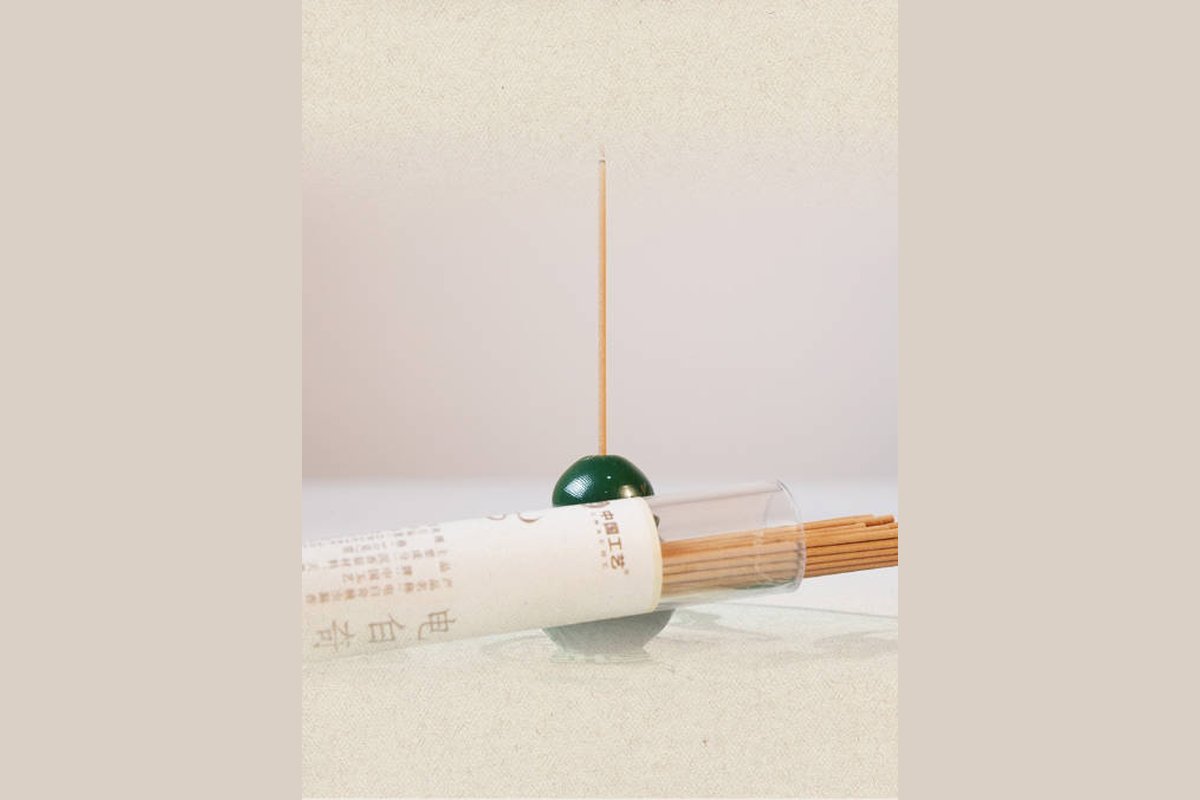
An incense stick is fragrant material formed into a stick that smoulders on its own once lit. Two broad styles exist: cored sticks, where a paste is rolled onto a thin bamboo core, and solid sticks with no core, the style typical of Japanese incense.
Agarwood sticks range from fine agarwood powder with a minimal binder to blends where agarwood is only one ingredient. Our agarwood incense sticks buying guide covers the styles and grades in depth.
Where Incense Cones Fit
Many shops add a third format: cones. Like sticks, cones burn by themselves once lit, but they release scent faster and in a shorter session, and backflow cones add a visual element. Market labels are loose, so some products sold as bakhoor are really pressed cones or sticks with a bakhoor-style scent.
If you stock all three, describe each by how it is used, not only by its name. Our guide to agarwood incense cones covers cones in detail.
2. Bakhoor vs Incense Sticks Side by Side
| Feature | Bakhoor | Incense sticks |
|---|---|---|
| What it is | Scented wood chips or pressed paste, heated on a burner | Self-burning stick, cored on bamboo or solid |
| Equipment | Charcoal burner (mabkhara) or electric burner | Simple holder or ash bowl |
| Time to start | Several minutes to light charcoal or warm an electric plate | A few seconds with a match or lighter |
| Scent character | Rich, dense smoke; can perfume fabrics and hair | Steady, lighter trail; suits a single room |
| Dosing | User decides how much to burn each time | Fixed dose per stick |
| Typical buyers | GCC households, Arab and South Asian diaspora, oud enthusiasts | Meditation, yoga and gift shops; East Asian and Western mainstream |
| Learning curve | Higher; customers need to know how to use a burner | Low; almost everyone has lit a stick |
| Our starting price | Bakhoor chips from $6/g · MOQ 250 g | Incense sticks from $2.35–$5.89 per box · MOQ 1 kg |
In our view, the table makes one point clear. Bakhoor is a ritual product, while a stick is a convenience product. Neither is a premium version of the other, and a store can sell top-grade and entry-grade items in both formats.
Incense Bakhoor and Bakhoor Sticks: The Hybrid
There is also a hybrid, often listed as incense bakhoor or incense sticks bakhoor. Some makers produce bakhoor sticks, which are incense sticks scented with a bakhoor-style blend of oud, rose, amber and musk. They give stick convenience with a Gulf scent profile. Our bakhoor-style incense sticks are an example of this middle ground.
3. How Does Each Format Burn?
Bakhoor is heated, while a stick burns itself, and we think that is the single most useful fact to explain to a new customer. That one difference shapes the scent, the smoke, the safety advice on the pack and the questions your customers will ask.
Charcoal vs Electric for Bakhoor
On charcoal, a piece of bakhoor sits on a glowing coal. The oils and resins warm, melt and release fragrant smoke in a thick burst, and the piece is usually spent within minutes. Customers then add another piece if they want more.
On an electric burner, the plate heats more gently. As a result, the scent comes out more slowly, with less smoke and less of the charred note that charcoal can add. Many apartment dwellers prefer electric burners for this reason, as our bakhoor burner comparison explains.
How a Stick Burns
An incense stick, by contrast, smoulders from the tip down at a steady rate. Its scent comes from the burning material itself, so the stick formula decides both the fragrance and the burn speed. Burn time depends on length, thickness and density, and it varies widely between products.


4. Which Has the Stronger Scent Throw?
Bakhoor usually fills a space faster and more heavily than a stick. A stick, however, gives a more even scent over a longer time with less effort. Which one counts as "stronger" depends on what your customer wants.
Scent throw is how far and how fast a fragrance spreads through a room. For bakhoor, the heavy oils and the dense smoke carry the scent into fabrics, curtains and clothing. That is exactly why it is used to perfume garments in Gulf homes.
For sticks, the smoke is lighter, so the scent stays closer to where the stick burns. In practice, many customers burn several sticks in a large room, or burn them back to back.
The wood matters in both cases. A blend with little real agarwood relies on added fragrance, which can smell loud at first and thin out quickly. On the other hand, a blend with well-resinated wood keeps a woody note right to the end, because agarwood's own sesquiterpenes and chromones keep releasing as the wood warms.[2] Our breakdown of bakhoor ingredients shows how wood, oils and binders change the result.
5. Which Markets Prefer Bakhoor, and Which Prefer Sticks?
| Market | Leading format | What buyers tend to expect | Useful starting point |
|---|---|---|---|
| Saudi Arabia, UAE and the wider GCC | Bakhoor | Rich oud, rose, amber and musk; gift boxes; burners at home and in majlis | Mabsoos chips and pressed bakhoor, plus a few bakhoor sticks |
| South Asia and diaspora | Both | Familiar with agarbatti sticks; oud and bakhoor popular for occasions | Cored sticks for daily use, bakhoor for special days |
| Japan | Sticks and kōdō materials | Solid sticks, subtle scents, careful grading | Solid agarwood sticks and small chips for heating |
| China, Taiwan and Southeast Asia | Sticks, coils and chips | Agarwood sticks for daily practice; chips heated on electric warmers | Agarwood-powder sticks and graded chips |
| Europe and North America | Sticks | Easy use; wellness and gift shops; growing interest in oud | Sticks first; bakhoor kits with an electric burner for curious buyers |
These are broad market tendencies from general trade knowledge, not survey data. Every market has buyers for both formats, and diaspora communities often follow the preferences of their home region.
Japan deserves a separate note. Incense there has a long history, from temple use to the refined art of kōdō, and its stick traditions favour solid sticks and subtle scents. A heavy Gulf-style bakhoor will rarely suit a shop selling to that audience.
Western markets are different again, as far as we can judge from the trade. Most shoppers know sticks, but few own a bakhoor burner. Therefore a store that wants to introduce bakhoor usually does better with a starter kit, short instructions and an electric burner than with bakhoor alone.
For market-specific trade notes, see our pages on sourcing for Saudi Arabia and supplying Western markets.
6. Pricing Logic and Margins for Retailers
Bakhoor is usually priced by weight and sold as a premium gift. Sticks are usually priced by the box and sold as an everyday repeat purchase. Margins can be healthy in both, but they come from different places.
With bakhoor, the cost driver is the grade of wood and the amount of real oud oil in the blend. A small jar can carry a high price because customers buy it for occasions and for gifts. In addition, the packaging often matters as much as the contents in Gulf gift retail.
With sticks, the cost driver is the share of agarwood in the stick and the labour of rolling or extruding it. Each box is cheaper, so margin depends on volume and repeat orders. Moreover, sticks travel well as add-on items at the till.
We cannot tell you what margin you will make, because that depends on your market, packaging and channel. What we can share is our starting wholesale pricing: wholesale bakhoor chips start from $6/g with a 250 g MOQ, and agarwood incense sticks in bulk start from $2.35–$5.89 per box with a 1 kg MOQ.
Price the experience, not only the material
A bakhoor customer who has never used a burner is buying a new habit. A small leaflet, a burner suggestion and a clear "how to use" card on the shelf can do more for sell-through than a lower price. Sticks need less explanation, so their shelf message can focus on scent and the share of real agarwood instead.
7. Shipping, Storage and CITES Differences
Both formats travel well if they are packed properly, but they behave differently in storage. Bakhoor soaked in oils can sweat or leak in heat, while sticks can break, absorb odours or dry out if left unwrapped.
Oil-rich bakhoor needs sealed, oil-resistant packaging and a cool storeroom; we would not compromise on either. Hot warehouses can draw oil to the surface and stain the box. For sticks, the main risks are breakage and humidity, so sturdy inner tubes or boxes are worth the cost.
CITES Paperwork for Each Format
On paperwork, all Aquilaria species are listed in CITES Appendix II, which means commercial trade in agarwood products generally needs export documentation.[3] However, the listing carries an annotation that exempts some finished products packaged for retail. Check the current annotation text for your exact product, because the rules for chips, powder, oils and finished sticks are not identical.
In practice, raw or lightly processed bakhoor chips are more likely to need a CITES export permit than retail-packed sticks. For every wholesale shipment we provide a grading note and, where required, the CITES Appendix II export permit. Our step-by-step CITES permit guide walks through the process.
Step-by-Step Process
8. How to Choose the Right Format for Your Store
Start from your customers' habits
Ask whether your customers already own a bakhoor burner. If most do, bakhoor is a natural fit. If few do, sticks are easier to sell, and bakhoor can follow later as a guided starter kit with instructions and a burner.
Decide what role the product plays
Gift and occasion products favour bakhoor in good packaging. Everyday repeat purchases favour sticks. Many stores do best with one hero product in each role rather than a long list in one format.
Ask what is inside each product
For bakhoor, ask about the wood grade, the oils, the binders and the fragrance load. For sticks, ask about the share of agarwood powder, the binder and whether a bamboo core is used. A supplier should be able to answer without revealing a confidential formula.
Order paid samples of both
Burn each sample the way your customers will, on the burner or holder you plan to sell. Judge the scent at the start, the middle and the end, plus the smoke and residue. Samples are paid and non-refundable, so compare a small selection carefully.
Check the documents for each format
Confirm with your supplier which items need a CITES export permit and which fall under the retail-packaged exemption, and check your own country's import rules. Keep grading notes and permits with each lot for later questions from customs or customers.
Launch small, then expand the winner
Begin with a short range, track what sells and listen to questions at the counter. Expand the format that customers return for, and adjust the scent profile before you commit to private-label packaging.
Some stores eventually stock both, and that is often the strongest position. Sticks bring in new customers with an easy first purchase, while bakhoor gives regulars something richer to graduate to. Moreover, a shared scent family across both formats makes the range feel deliberate rather than random.
If you plan your own label, our private-label bakhoor launch guide explains briefs, packaging and MOQs. For a third format between the two, read about oud incense cones and backflow cones.
Finally, remember that the wood decides much of the quality in both formats. If you blend in-house, our graded agarwood chips start from $0.24/g (MOQ 100 g, grades D–AAA) and pure agarwood powder starts from $10.30 per 50 g. For the broader GCC trade picture, our bakhoor sourcing overview is a good next read.
Not sure which format to start with?
Tell us your market, your customers and your target shelf price. We will suggest a small paid sample set of bakhoor and incense sticks so you can burn them side by side. We reply within 4 business hours, Monday to Saturday, 9:00–18:00 China time.
Ask for a bakhoor and incense sample set → Shipping terms are on our shipping information page.
Frequently Asked Questions
Neither is better in general. Bakhoor gives a richer, denser scent that can perfume clothes and rooms quickly, but it needs a burner and a little practice. Incense sticks are easier and steadier, and they suit everyday use. The right choice depends on your customers' habits and what role the product plays in your range.
Not safely or well. Bakhoor is designed to be heated on charcoal in a heat-proof burner or on an electric bakhoor burner. Lighting a chip directly with a flame usually gives harsh smoke and wastes the fragrance. Retailers who sell bakhoor to new customers should offer a suitable burner or at least clear instructions.
Bakhoor sticks are self-burning incense sticks scented with a bakhoor-style blend, typically oud with rose, amber or musk notes. They give the convenience of a stick with a Gulf-style scent profile. They suit stores whose customers like the bakhoor smell but do not own a burner.
A single piece of bakhoor on charcoal often gives an intense burst for a few minutes, although the scent can linger in fabrics for much longer. A stick burns for a set time determined by its length, thickness and density. Burn times vary widely between products, so check them on your samples.
Bakhoor on charcoal usually produces more smoke, especially oil-rich and sugar-bound blends. An electric burner reduces smoke considerably. Incense sticks give a thinner, steadier line of smoke. For small apartments or smoke-sensitive customers, sticks or bakhoor on an electric burner are the gentler options.
Agarwood comes from Aquilaria species listed in CITES Appendix II, so commercial shipments generally need export documents. However, the listing's annotation exempts some finished products packaged for retail. Raw bakhoor chips are more likely to need a permit than retail-packed sticks, so check the current annotation text for your exact products.
Most Western stores find incense sticks easier to start with, because shoppers already know how to use them. Bakhoor can be introduced later as a starter kit with an electric burner and short instructions. Stores serving Arab or South Asian communities may do well with bakhoor from day one.
It can be, but not always. Good bakhoor uses resinated agarwood chips or powder, and good agarwood sticks use a high share of agarwood powder. Cheaper products in both formats may rely mainly on other woods and added fragrance. Ask your supplier what share of the product is real agarwood.
Our bakhoor chips start from $6/g with a 250 g MOQ, and our incense sticks start from $2.35–$5.89 per box with a 1 kg MOQ. Samples are paid and non-refundable. If anything arrives wrong, we fix it by replacement or credit as described on our refund policy page.
References
- 1
- 2Naef R.. The volatile and semi-volatile constituents of agarwood, the infected heartwood of Aquilaria species: a review. Flavour and Fragrance Journal, 2011.View source
- 3
- 4Yeatts K.B., et al.. Indoor air pollutants and health in the United Arab Emirates. Environmental Health Perspectives, 2012.View source
All scientific references are provided for transparency. AgarwoodTown summarises peer-reviewed findings for educational purposes and does not claim to provide medical or regulatory advice.
Wholesale Catalog
Buy the products discussed in this article


Related Articles
Source Direct from Origin
Discuss Your Requirements with Our Team
We respond within 24 hours. Share your target grade, quantity and destination — we'll send current pricing, a sample pack option, and CITES documentation details.